


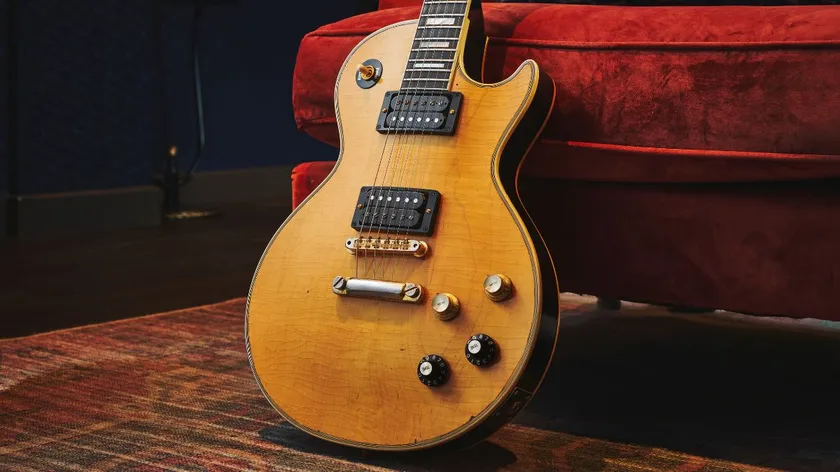


No electric guitar on earth is so uniquely recognisable as this totem of Clapton’s epochal time in Cream with Jack Bruce and Ginger Baker – but its origins remain frustratingly obscure to this day.
“There’s a lot of mystery around exactly where and when this guitar was acquired by Eric Clapton,” says Amelia Walker of Christie’s. “I’ve seen it [stated] in some places that George Harrison gave it to him, but he likely bought it in early ’67 because he was sick of getting Les Pauls stolen.”
Guitar historian Tony Bacon takes up the story here: “In the first few months of 1967, Eric Clapton went shopping and bought a circa-1964 cherry-finish SG Standard. His customary hunting ground was the West End of London and its music shops, notably the Gibson-centric Selmer store in Charing Cross Road, and that seems a likely source, though there’s no firm evidence,” Tony adds.
“Why an SG? As Amelia Walker notes, perhaps he was fed up with the fact that his two Les Paul ’Bursts had been stolen during the previous nine months or so and fancied a change of style – but keeping the familiar humbuckers and control layout.”
With Clapton now the proud owner of a then-three-year-old SG, the burgeoning psychedelic scene prompted Clapton’s management to suggest an unlikely collaboration with two in-vogue Dutch artists, who later became known by the collective name The Fool.

“I think that Robert Stigwood, who was their manager, hooked him up with The Fool, and as well as decorating their instruments, they also styled [the band] in terms of their fashion,” Amelia Walker says. “So we’ve got this fabulous photograph taken by Karl Ferris, who told me that he looked after The Fool [in a quasi-managerial sense].
“He took this amazing series of photos the day after the painting on the guitar was finished, so the paint was literally fresh, and they posed in the studio with their mad outfits and mad instruments.
“But I don’t think that the artists, Marijke Koger and Simon Posthuma, were actually known as ‘The Fool’ collective by that exact point, though they obviously became known as such and were sought out to paint the wall at Apple studios.
“They also painted John Lennon’s piano at Kenwood. We’ve got this photograph of them painting [that piano]; included in The Irsay Collection is a piano that’s behind that [painted] one, so you can see them midway through painting it.”
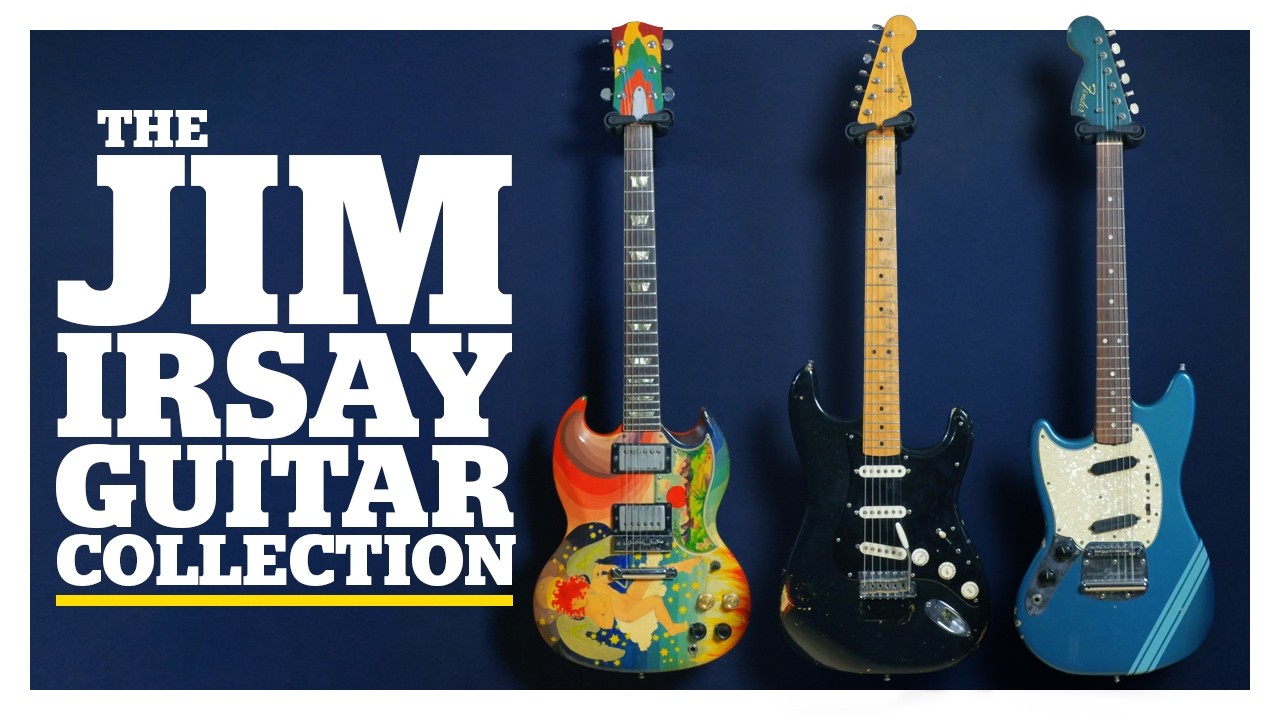
“[Cream] were very part of the whole 1966 psychedelia zeitgeist, so it’s not surprising that Robert Stigwood, Cream’s manager, wanted that look for the band: something fresh, new and hip.
“The reason The Fool SG has changed so much is because they didn’t seal the painting, so with Eric’s playing, it very quickly got very worn. There was no protective over-layer on the paint. They even painted the whole fingerboard, which clearly didn’t last very long.”
Tony Bacon says that Clapton adapted the guitar in more conventional ways, too, during his time with it: “The guitar still had its original Deluxe Vibrola when Eric bought it, but its cover plate came off to reveal more of the artwork. Soon he disengaged the Vibrola altogether, at first leaving the arm pointing backwards and out of the way.
“Later, into ’68, he had the Vibrola’s arm and mechanism removed, leaving just the frame as a simple tailpiece. He replaced the guitar’s original Kluson tuners with Grovers, a popular move and one he knew about from his Les Pauls. Paint began to flake from the rear of the neck, and he had at least some of the extra paint there permanently removed.”

Clapton, of course, moved on to other guitars – and The Fool in its turn passed into the hands of other musicians, as Tony Bacon explains: “Eric eventually let it go, perhaps to George Harrison, but it certainly went to Jackie Lomax, a musician friend of George’s from the old Liverpool days.
“Around 1971 it moved on to Todd Rundgren, who fitted a stopbar tailpiece and an incongruous Schaller ‘harmonica’ Tune-o-matic. Todd had the body paint restored and sealed, and had someone replace and re-paint part of the neck and the headstock.”

“Todd Rundgren did a very good job of restoring it,” Amelia Walker adds. “You can’t see exactly what’s been over-painted and what’s original because it now has a completely clear [topcoat] layer, so nothing fluoresces under blacklight – or rather the whole thing fluoresces.
“When we’re dealing with paintings, you can blacklight it and it will show up very obviously what’s original, where it’s been touched up, where it’s been overpainted and so on. But with this guitar, unfortunately, you can’t see it at all because of this [single, uniform clearcoat] layer that covers the whole thing.
“The headstock got pretty damaged when it was with Eric,” she adds. “I don’t know what Jackie Lomax then did to it, but by Todd Rundgren’s account, it was sort of hanging on by a thread or had been repaired badly [when he took ownership and had it restored]. Then I think what happened is the repair person was going to throw it away.
“Luckily, somebody said, ‘Don’t do that!’ [laughs] and it got rescued. The original headstock wasn’t with the guitar when it was sold by Todd at Sotheby’s in 2000, and when it was exhibited alongside the guitar at The Met Museum’s 2019 ‘Play It Loud’ exhibition, it was noted as being part of Perry Margouleff’s collection.”
- Christie’s will auction The Jim Irsay Collection: Hall of Fame on the evening of 12 March. See Christie's for more information.
- This article first appeared in Guitarist. Subscribe and save.

