


Norman Harris, the most recognized name in the vintage guitars, has been at it a long time. Nearly 60 years, to be exact.
His client list is legendary – Bob Dylan, George Harrison, Robbie Robertson, Tom Petty, Eddie Van Halen, Eric Johnson and Joe Bonamassa, just to name a few. His store, Tarzana, California’s Norman’s Rare Guitars, has been a Southern California landmark for decades.
So when the news hit in January that Harris sold his store to the North American Guitar Corporation (TNAG), it was a big surprise. But at age 77, Harris has had to consider his mortality, as well as his legacy, which he feels is in good hands with Carter Vintage Guitars, a company based in Nashville.
Harris is speaking to Guitar World about why he’s selling now after fielding offers for years, where the vintage market is today and where it, and his legacy, will be in the future.
In recent years, Harris had serious health issues, including a bout with cancer and several stents placed in his heart.
“When you’re faced with a major health scare, things become a lot more real,” he says. “I thought of my family, everybody who works at the store is like my family, and I wanted the store to have a smooth transition in case anything should happen to me.”
Norm’s health issues also prevented him from hitting the trade shows where he’d buy guitars. “We were selling more guitars than I was buying and I felt at some point I was gonna run out of good stock,” he says.
Harris had been in touch with TNAG, and they had been inquiring about buying the store for about five years. Harris liked the people at TNAG and felt they would be best to take over the reins. “They’re really professional,” he says. “And it was a very good move all around for everybody.”
The goal was to make sure these amazing mom-and-pop shops stay around
Ben Montague
It took some time for Norm to warm up to the idea of selling the company, and today he says, “It’s always bittersweet when you do something all your life, then you come toward the end. With my health issues, I just wanted to make sure I was doing the right thing. I wanted my grandchildren to drive by and say, ‘That was grandpa’s store.’”
As Ben Montague, founder and CEO of TNAG, explains, “The goal was to make sure these amazing mom-and-pop shops stay around. We have to make sure we support the employees, the customers and the inventory and try to make sure that they’re here for generations to come.” (Montague, a native of London, points out here are great vintage stores overseas as well, and he considers vintage guitar buying “a global movement.”)
While Norman’s Rare Guitars already has a good social media presence, including their popular YouTube channel, one of the reasons Harris wanted to sell to TNAG was to strengthen his social media presence and bring it up to date. “I like to describe it as we used to be the Flintstones and now we’re the Jetsons,” Harris jokes.
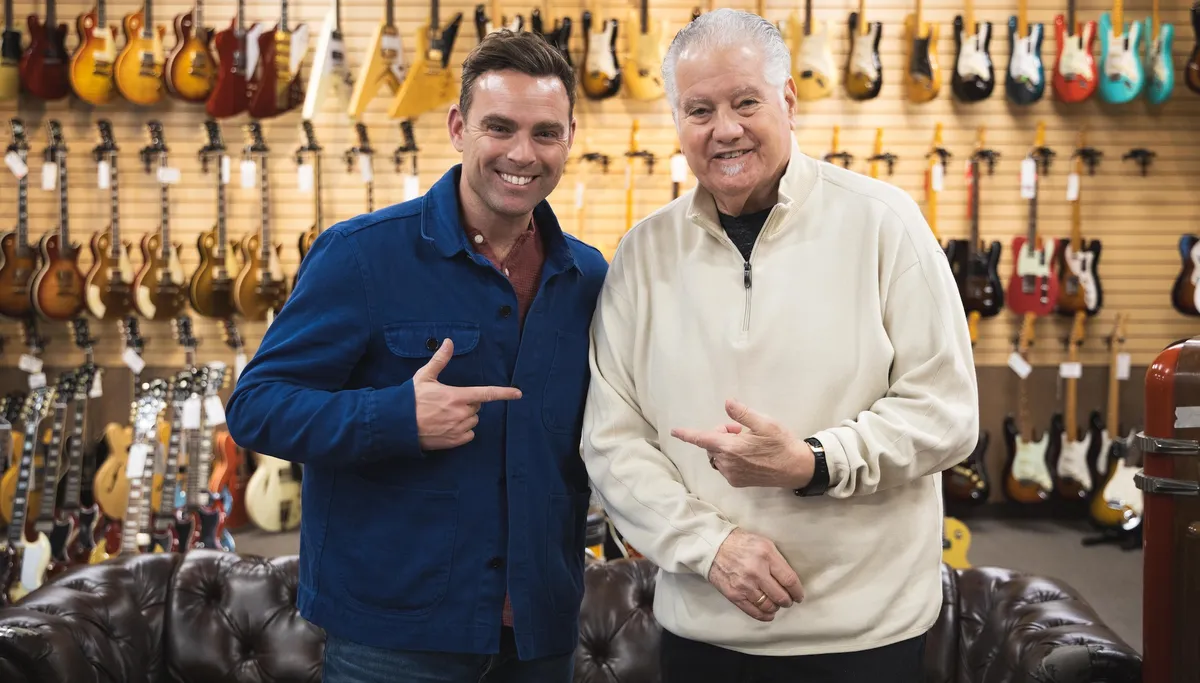
Both Harris and Montague have the same goal with social media, to give people from all over the world a feel for the store and give them a good idea of how a vintage guitar sounds before they potentially buy it
When Harris first started selling guitars in the late ’60s, there wasn’t even a vintage market, just a used guitar market, and he’s seen it go through incredible changes. Back then, you could buy a vintage ’59 Les Paul for $800, which many considered an insane amount of money.
Of course, the value of the ’59, which is considered the holy grail of the realm, kept going up and up, and people finally started to realize rare guitars could be great investments.
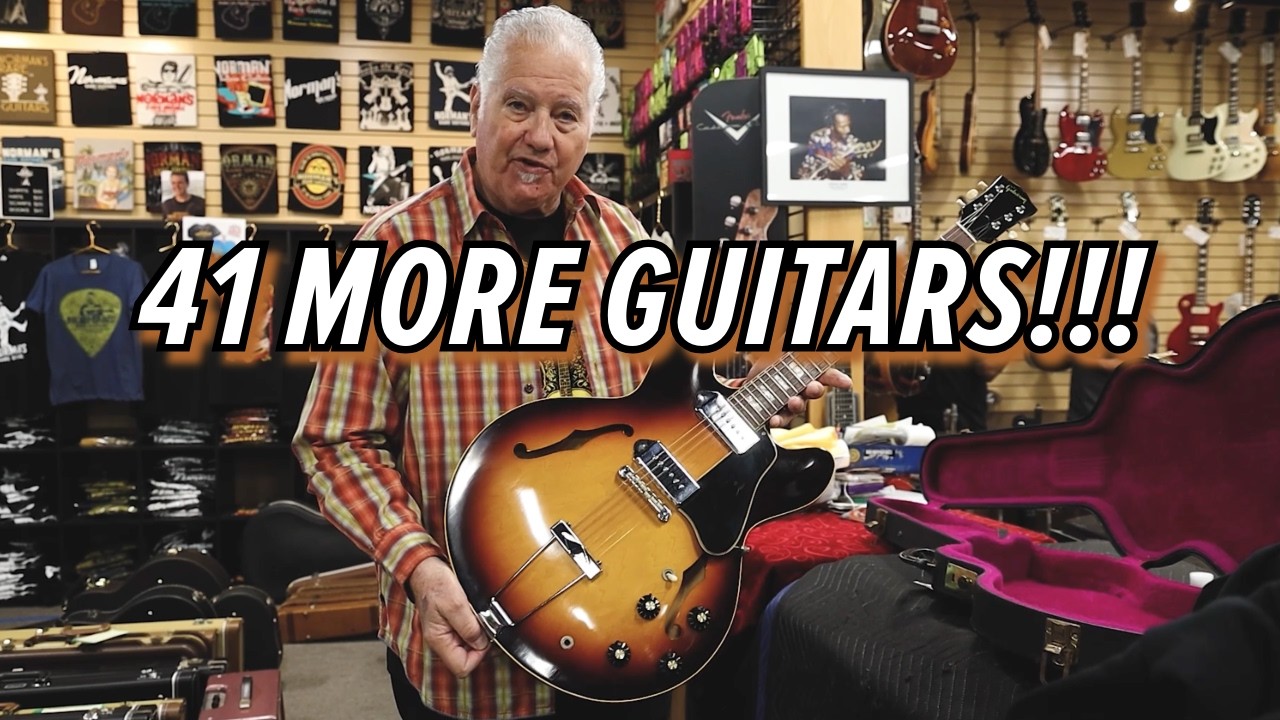
Decades later, the vintage market is still going strong. “We’ve been killing it,” Harris says, and vintage guitar prices have reached insane new levels with public auctions. One recent example is David Gilmour’s classic Black Strat, which sold for $3.9 million in 2019, and it was resold this year for $14.5 million. (Gilmour’s Strat is the current record holder for most expensive guitar ever sold.)
“The vintage market is coming into a real boom at the moment,” Montague says. “There’s a whole other asset class now, and I think more people are moving into the vintage market because they realize the value of these instruments.”

In a day and age where people are afraid of AI taking over, Montague sees the current state of guitar, and the vintage market, as a very positive sign for the future.
“We’re living in a world now where AI and creativity is done with the click of a button,” he says. “People don’t want that. They want authenticity; they want to see musicians playing an instrument, crafting a song, performing. I think that’s what we saw with the vinyl market; people buying LPs has gone up because people want authenticity.”
While Harris took a tough hit from his health issues, he says, “I’m up and about and doing my work. I still come in and do my business as if I owned it. Most people when they walk through the door wouldn’t even realize that there’s been any real change.”
And indeed, when you come to Norman’s, it still has a welcoming family vibe, there are beautiful guitars – new and rare – everywhere, and it’s also nice to walk into a guitar store where customers can actually play guitar.
“It’s a huge responsibility to make sure this store stays here forever,” Montague says, and you can tell it’s a responsibility he takes seriously.
Thankfully, after spending an afternoon with Harris and Montague, you walk away with the impression that good guitar playing, the vintage market and mom-and-pop shops like Norm's will enjoy a healthy future.
- This article first appeared in Guitar World. Subscribe and save.
