




South African guitarist and composer Derek Gripper describes himself as a former classical guitarist who’s rehabilitated himself. “In the classical scene, guitarists are at war with the guitar,” he says. “They want to be part of the greater classical tradition, which is dominated by the violin and the piano. They want the guitar to be more than it is.”
Gripper’s understanding of the guitar has been shaped by his engagement with a form of music that was never written for the instrument – and actually, never written at all: the orally-transmitted repertoire of the West African griots, played on the 21-stringed harp-like kora.
Over 10 years, Gripper painstakingly transcribed recordings of Malian kora legend Toumani Diabaté, and adapted them for the six-string classical guitar. The result is a striking sound that feels like multiple guitars playing at once, but always champions the elegant melodic lines that characterize the kora repertoire.
Across two landmark records, One Night On Earth (2012), and Libraries On Fire (2016) – which won the Songlines Best Album Africa and Middle East award – he established a fiercely original repertoire. He’s collaborated with Egberto Gismonti, John Williams, Tommy Emmanuel, Debashish Bhattacharya and, of course, Diabaté, the musician who’s had the greatest influence on his career.
He started on the violin, aged seven, in Cape Town. Soon after, he switched to guitar; and, seduced by the jargon of academic discourse, chose to study classical music at university. That’s where he found that much of it was at odds with his instrument.

Compositions were suited to more harmonically complex instruments, he says, rather than a low-volume, fixed-fret, six-string instrument that was picked and not bowed. The composers he studied were mostly pianists who’d had been writing for orchestra, not aspiring guitar soloists like Gripper.
Then, a friend gave him a copy of Toumani Diabaté’s first solo album, 1988’s Kaira. “I was like, ‘What the hell is this?’” he recalls. “I was listening to an instrument that sounded like the guitar, but like it was being played by Keith Jarrett doing The Köln Concert!”
Diabaté came from a long line of West African storyteller-musicians, steeped in an oral musical tradition that stretched back centuries. He became Gripper’s unlikely vessel of rehabilitation from the straitjacketed world of classical music.
The culture of the griots represented a paradigm starkly different from Gripper, who sees himself – and most classically-trained musicians – as interpreters who transform notes written by a composer into acoustic reality.
Gripper began interpreting Diabaté’s oeuvre for the classical guitar, but not quite as his university professors might have wanted. For starters, he threw out his knowledge of music theory and Western harmony.
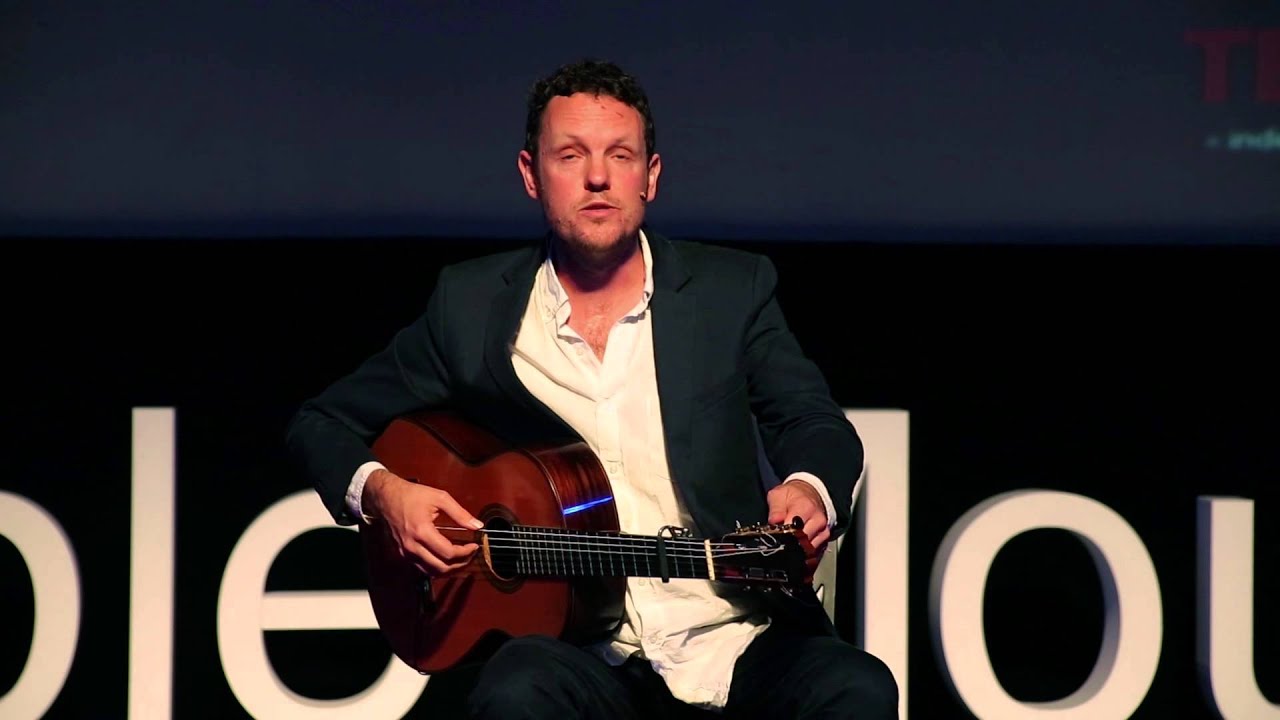
“That’s a map of sound that just doesn’t exist in African music,” he says. “They’re not thinking, ‘I’ll play a C major, then go to a G major, then an A minor.’ We don't have a real appreciation and reverence for the oral traditions, be it in music or in thoughts and language. We’re very proud of the fact that we’ve invented a 26-letter alphabet.”
Gripper listened to Diabaté’s recordings at slower tempos, parsed the distinct melodic phrases and wrote them down note-for-note using tabulature. He retuned incessantly till he found an arrangement that worked for most kora music – a dropped D with the G string flattened to an F#. He later found out it’s an established flamenco tuning, the rondeña.
It allows him to access open strings, which he uses liberally. “My style is very much pitting stopped notes with unstopped notes all the time,” he says. “In a 90-minute concert I’ll never play a barre chord. That's not for me; that's what capos were invented for.”
Generally, his right thumb picks out a bassline, while the other fingers dance across the higher strings to pluck rapid melodic lines, embellished by accented and ghost notes. His right hand moves thunderously fast; but counterintuitively, he uses his left to do much of the articulation.

For instance, there’s a peppering of short staccato notes in his playing, which he achieves by pulling off his fretting finger right after plucking the note, then muting the string with the same finger.
“It allows you to draw attention to different lines,” he explains, “and to create a sense of polyphony inside the natural rhythms that go across the strings. You play the whole rhythm with your right hand, but the left hand decides what the ear hears as being the line.”
I realized that when it’s made properly, the guitar does everything for you. It’s all about celebrating that
The centuries-old compositions are recursive in nature, with melodic phrases cycling through with subtle variations. “The organizing principle is not the fact that it's written on a grid in 4/4 or 3/8,” he says. “It’s the melodic lines and the interplay between them.”
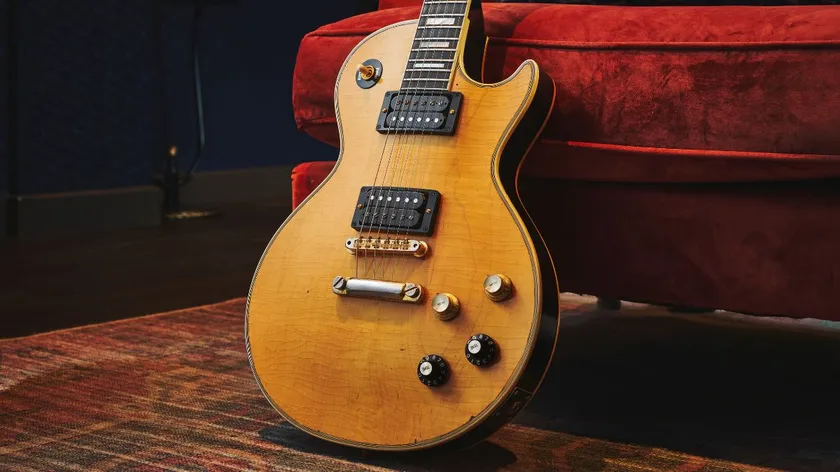
Gripper has used the same guitar since 2004, one that “looks like something you’d pick up for $100.” In fact, it’s a classical guitar arranged by Herman Hauser III, a Bavarian luthier from the family that built Segovia’s guitars. “Before that, I thought the guitar was too quiet and that it was a technically imperfect instrument,” he recalls.
“But when I got it, I realized that when it’s made properly, the guitar does everything for you. The way the strings make overtones together, the way two notes become one note, the intimacy of the sound – it’s all about celebrating that.”
Medium-tension Hannebach nylon strings worked just fine, meaning he could focus his gearhead tendencies towards experimenting with ways to augment the Hauser. Despite being in love with the warmth of ribbon mics recorded straight to tape, he found the setup doesn’t lend itself to all venues. Instead he uses a Schoeps mic or a Shertler stick-on microphone when performing solo.
I’ve never had a conversation with Ballaké Sissoko. We’ve never had a rehearsal. We’re like the Grateful Dead for kora and guitar!
Railing against the surgical precision of digital recording, he uses retro Neve pre-amps to get “beautiful artifacts from real transformers and real electronics,” and a Nagra reel-to-reel tape recorder. To achieve the rhythmic doubling effect found in many African music traditions, he opts for a legacy tape delay machine made by Australian company Echo Fix, and a Moog 500 Series Analog Delay from 20 years ago.
“I do these tiny little things that cost a lot of money and are kind of crazy, but the end result for me is pleasing,” he reflects.

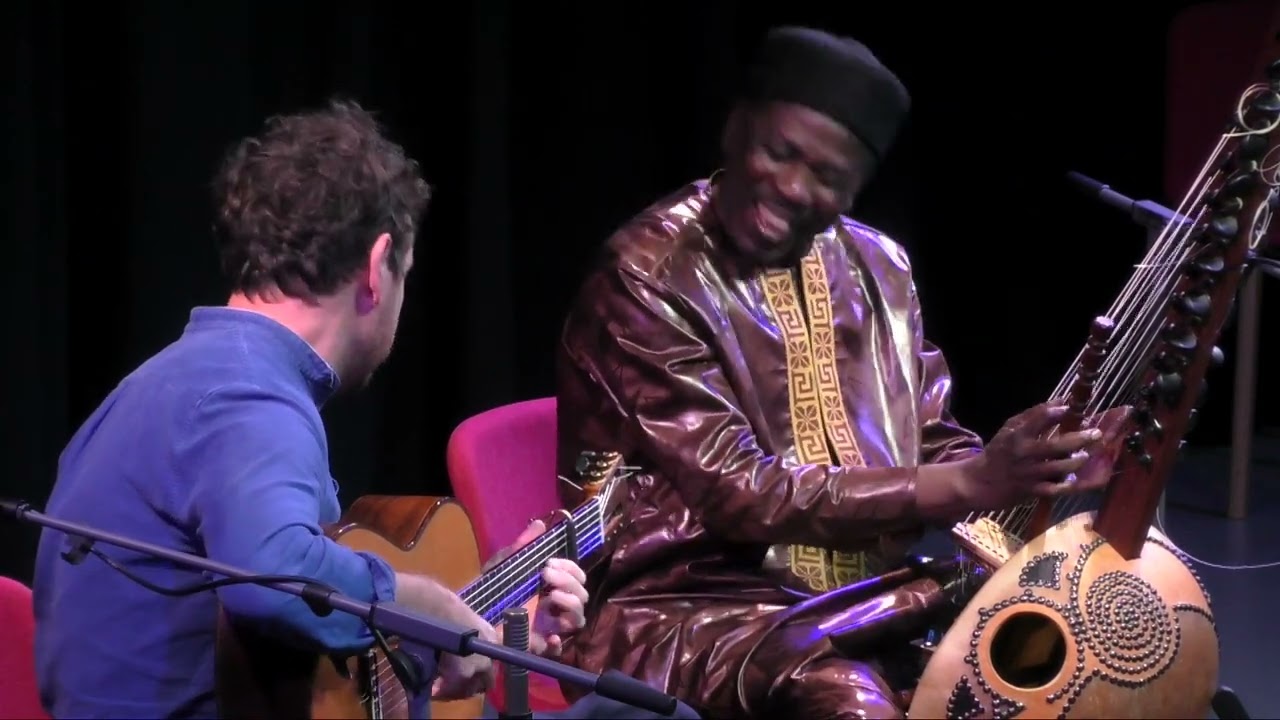
Gripper is currently on tour in the United States with Ballaké Sissoko, another kora legend from Mali; they recorded an album together in 2024. For Gripper, it’s been a creative highlight – especially since the two don’t share a spoken language. “We've never had a conversation about music. We’ve never had a rehearsal. We’re kind of like the Grateful Dead for kora and guitar!”
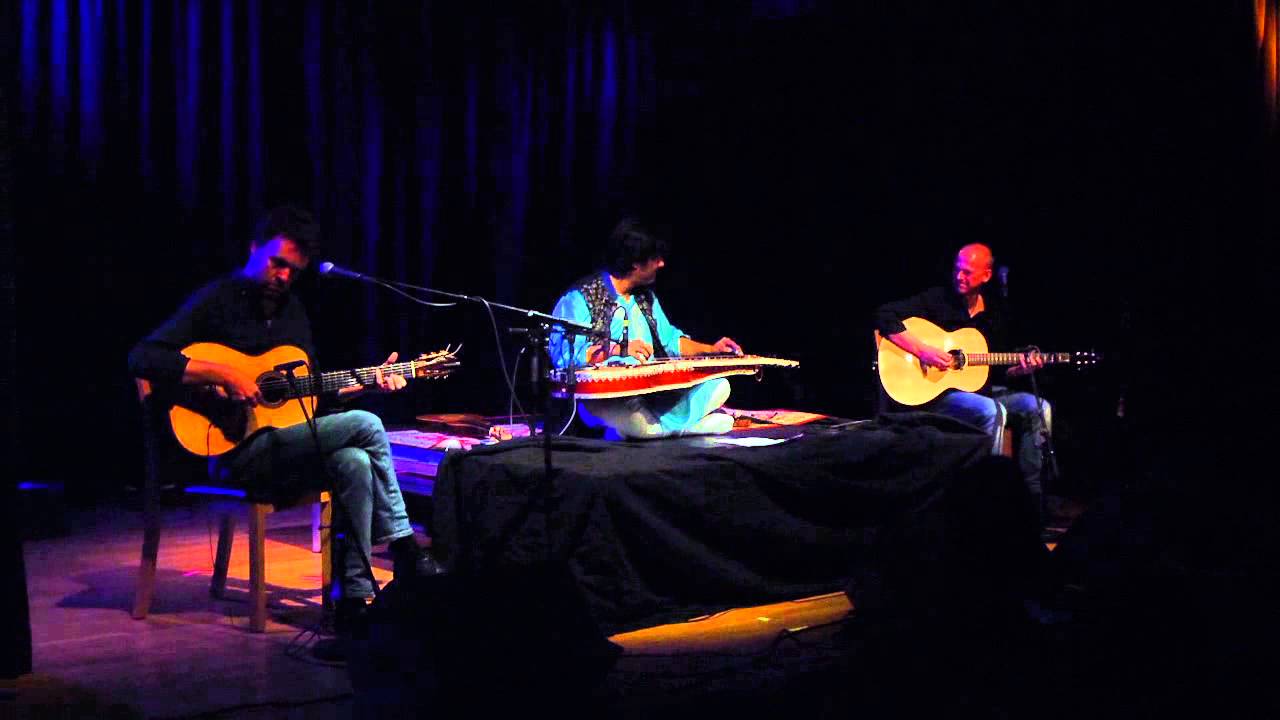
But they do converse at length on stage, building extended improvisational sets with a 21-stringed harp that can only play in one seven-note key at a time, a six-string guitar, and a shared knowledge of the kora repertoire.
Gripper says that from Sissoko and other musicians from the world music scene, he’s built an acceptance – if not reverence – for the imperfect, and an emphasis on musical possibilities over rules.
“I've been to Germany and I've played Bach, and people say afterwards, ‘It’s very nice, but why did you play that note, on the third page, down an octave?’ In the kora world, when I do something wrong, they go, ‘Oh, that’s interesting! How do you do that?’”
As part of his rehabilitation, Gripper no longer thinks in terms of intervals, but instead relies on instinct to come up with notes to play. His metronome hasn’t had batteries since the 90s; he draws on the rhythmic language he picked up from Carnatic music. Above all, he trusts the inherent human logic of melody over notes written on paper.
“If a computer can do it, that's not my job. Computers can play perfectly in time? Good – it’s not my job to play perfectly in time then,” he says. “What you or I can do is play badly, play out of tune, or have that G string lower than it should be so that it sounds shit. Those are the things that humans do, and it’s awesome!”
- Derek Gripper will be touring the United States later this year as part of a trio with sarodist Alam Khan and fellow South African guitarist Guy Battery. For more, visit his Patreon page.
