




With their 2020 debut, Hull-based folk collective Pavey Ark established themselves as a firm addition to the UK’s thriving indie-folk scene, mixing the vintage warmth of their old-school heroes with the cinematic ambience of the modern age.
Their second album, More Time, More Speed, takes the sound further with singer/guitarist Neil Thomas’s gentle fingerpicked guitars and emotive vocals supported with strings, trumpets and horns.
Easy Influences
New tracks such as Out Of Here, Stop These Games and Yesterday Is Done have many influences due to Neil’s use of streaming service Spotify as a mood board.
“I’m more into albums than the artists who made them,” he says. “Fully Qualified Survivor by Michael Chapman is a perfect record. I like compositions that feel rich, anything from Rob Rodriguez and Laura Marling to Father John Misty.
“One of my favourite albums is My Finest Work Yet by Andrew Bird. I had the guy who mixed that record, Paul Butler, to help with [our new album].”
Strength In Numbers
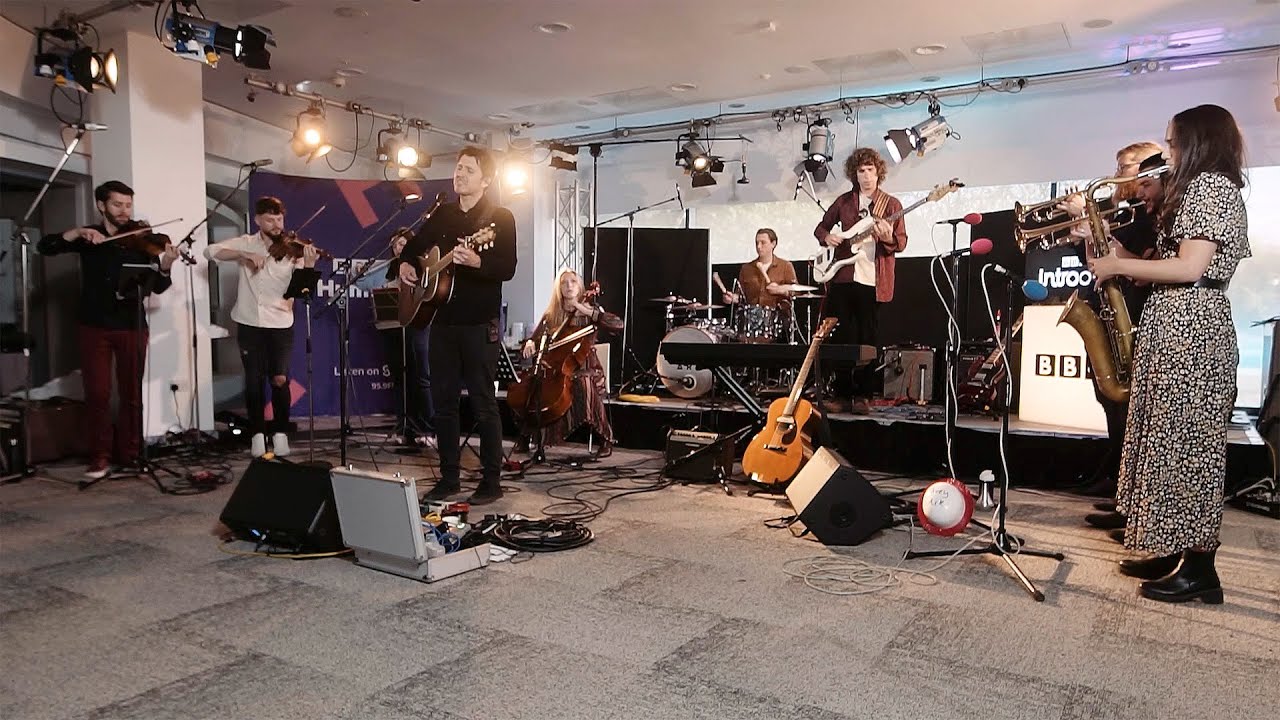
Neil’s background was mostly solo acoustic before he grew Pavey Ark into a nine-piece collective.
“The first gig we did was a BBC Introducing session,” he says. “I wanted strings, so I contacted the music department at a local university. Chris Heron, who played violin on that first session, now writes all the strings for the band. We have a core group of six players and then the others rotate, but they’re all part of the band.”
Special Selection
For the recordings, Neil stayed with his Martin OM-21 Special, but also had a little help from his Cordoba C9 Crossover as well as a nylon-string he picked up on his travels.
“I’ve had that OM-21 Special for about seven years,” he says, “I found it on eBay. I had my eye on an OM-21 or 28 because they’re both good for picking and strumming. I use a mixture of the two. On Your Sweet Time, you can hear a nylon acoustic that I picked up for $60 in New Zealand. I don’t even know the brand.
“I used my Cordoba C9 Crossover a bit, too. I also have a Larrivée OM-03, but it’s not on the album because the Martin sounded so nice.”
Both Sides Now
“I might be an acoustic player, but it’s nice to find extra texture using pedals,” says Neil. “There’s a track called Stop These Games where I play this big solo on my acoustic. I’ll run my Martin through distortion and reverb. I love the sound of acoustics and electrics, which is why I try to merge the two. If you go to a folk night, people play acoustics all night long, but I prefer bigger textures.
“I have a fairly big pedalboard, there’s this [Fire-Eye] Red-Eye preamp that sounds warm, with a boost that I leave off for the strummy songs and kick in for the fingerpicking. I love tremolo, so you can hear that on some tracks. It’s the green Boss one, but Keeley-modded, which allows me to adjust the volume.”
String Theory
When it comes to tunings, Neil likes to take his guitars a step down to D, and occasionally he goes even further from there.
“Detuning a whole step sounds fuller and is easier to play,” he says. “Sometimes I’ll bring my G string down another half-step – it’s the kind of thing Nick Drake used to do. I don’t know the names of the chords to most songs I’ve written. It’s nice to experiment and find what sounds nice. All that matters is you like what you hear and it gives you that buzz.”
Take your pick: How Neil nailed fingerstyle
Ditching plectrums and switching to fingerstyle opened a lot of doors for Neil, musically and otherwise.
He says: “I stopped using a pick a while back, but my fingernails were always breaking, so I ended up going down the salon and asking them to put clear acrylic nails on the three I use. I’ve become a regular! If we’re playing a festival, I’ll even ask them to put on some colour.”
- More Time, More Speed is out now via Sunk Island.
- This article first appeared in Guitarist. Subscribe and save.

