




![Geese featuring guitarists Emily Green [left] and Cameron Winter [center] — perform “Taxes” on Jimmy Kimmel Live! in October](https://cdn.mos.cms.futurecdn.net/RmQ9PmkKunsAJzk6qH5DVX-1920-80.jpg.webp)
I’m not sure if it’s the three-inch heels on her Doc Martens, but Emily Green dwarfs me as she strides across the stage. It’s about an hour before her band, Geese, soundchecks for their sold-out show at Detroit’s Majestic Theatre.
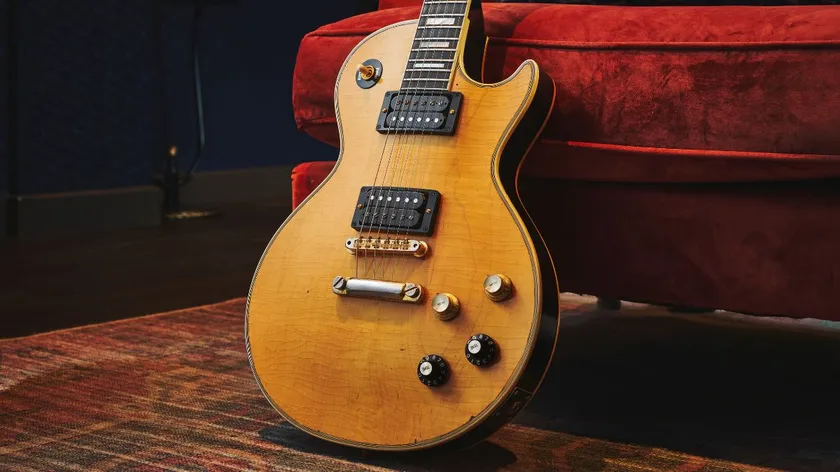
Officially, it’s day two of the band’s tour, save for a surprise hometown album release show at Banker’s Anchor in Brooklyn. That 100-yard stare that only a grueling tour can bestow has yet to set in for Green, and maybe that’s why she’s patient enough to let me put my grubby hands on her guitars. I pick up a short-scale Silvertone first. The aluminum edging is the most eye-catching, and the neck is massive.
“I got that guitar at a shop in Brooklyn called RetroFret Vintage Guitars. I went there to buy this old Diastone from the ’70s, but I picked up the Silvertone just to see, and I walked out with that one. It’s a ’56 Silvertone Stratotone Newport Model H 42/2. Quite the mouthful.”
“It’s like a baseball bat,” she continues. “It doesn’t play like any modern guitar I’ve ever used. I suspect builders were building guitars for a different type of player back then. It’s better for the warmer, scuzzy amp that you found in the corner of a garage that is sort of breaking up and sounds dusty. That’s a bag I like to pull from. I’m using it on, like, half of the new record live.”
The hype surrounding Geese’s new record, Getting Killed, is palpable, and for good reason. It’s a dynamic, relentless guitar-driven rock album with echoes of the Velvet Underground, Television and Radiohead. Endorsements from Patti Smith, Nick Cave and Julian Casablancas have added fuel to hyperbolic press statements that Geese are here to reanimate rock’s corpse.
“We make rock ’n’ roll music,” Green says with a shrug. “We have a classic rock setup. We fly in a V formation with a singer-songwriter at the head of the pack!”

But as Geese rips through their main set, ending with a 10-plus-minute version of album closer Long Island City Here I Come, it’s obvious Green is just shrugging off the hype. Her towering boots and howling guitar place her squarely in the driver’s seat of one of rock’s most exciting new bands.
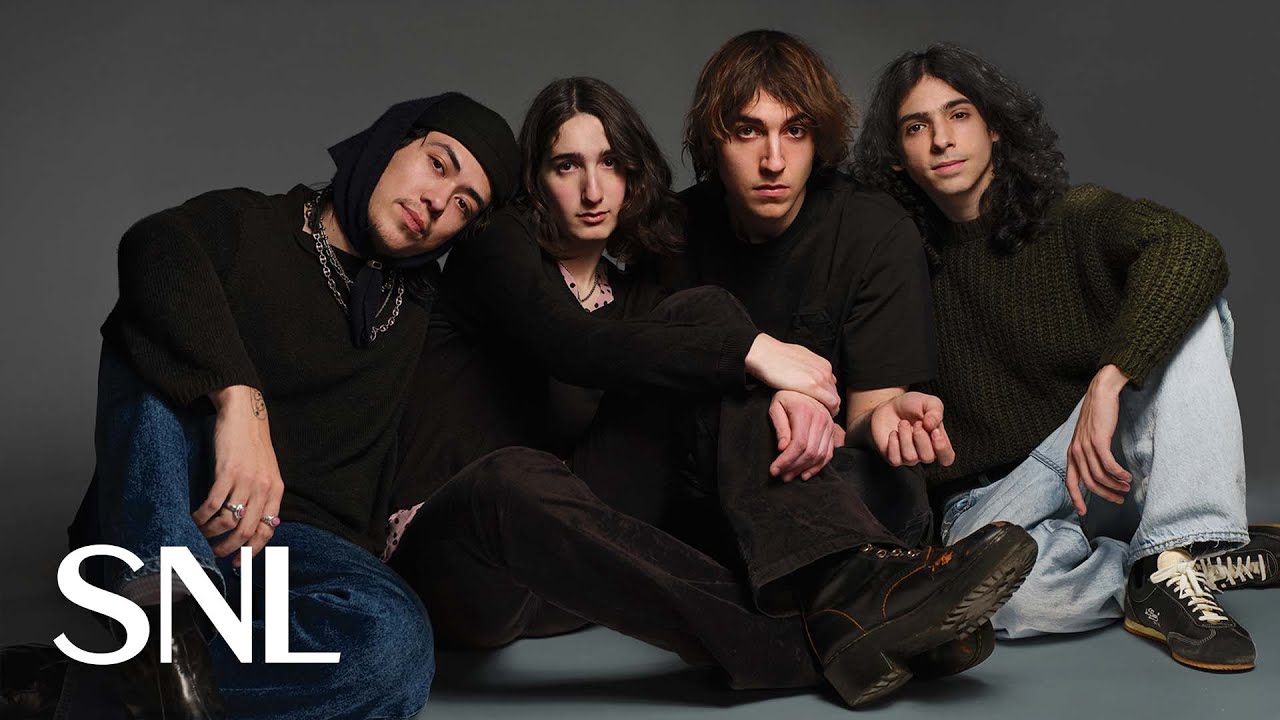
“Here I come, motherfucker, here I come!” screams singer Cameron Winter. As he howls about the fall of Jericho, drummer Max Bassin locks in with Dominic Digesu’s monster bass riff, steering the song into the breakdown.
From my vantage point, Winter, Digesu and Bassin are obscured by Green, who’s moving as if she were attached to the rafters by an invisible string. Arms and legs flail as a mosh pit erupts in the middle of the floor and the band pushes down further on the gas. Before the band can send us sailing off of a cliff into a pile of rubble, they bring the song screeching to a halt, and you can almost smell a hint of burning rubber.
At Green’s feet lies a tattered setlist and no-frills pedalboard. A worn Blues Driver and a handpainted Z.Vex Fuzz Factory anchor the front of her chain, followed by a Pearl Parametric EQ.
“With this band, I can’t turn the amp up too high,” she says. “You get a power suck for it and it gets too loud on stage. I throw an EQ on to emphasize the highs and lows and I don’t really touch the mids.” For touring, though, Green reaches for her Boss DD-5 delay before anything else.
“That’s definitely essential on the road. I don’t use it in the studio quite as much, but I’ll take that pedal anywhere. I think that’s the best delay that exists. It does a lot of things I haven’t seen in other delays. It’s digital, so it doesn’t get away from you. You can just set it to repeat forever, very fast, and it won’t blow up on you. Also, when you change the time, it doesn’t change the pitch of it. It just glitches it out in a weird way. You get some really cool ‘cloudy’ stuff.
“When Cameron works with me to make a guitar part, the metaphor I use is that it’s like those little connect-the-dots coloring books for children. He’s kind of like, ‘It’s this chord, and it’s got to be cloudy. Don’t play it totally in time. And can you bend this note here?’”
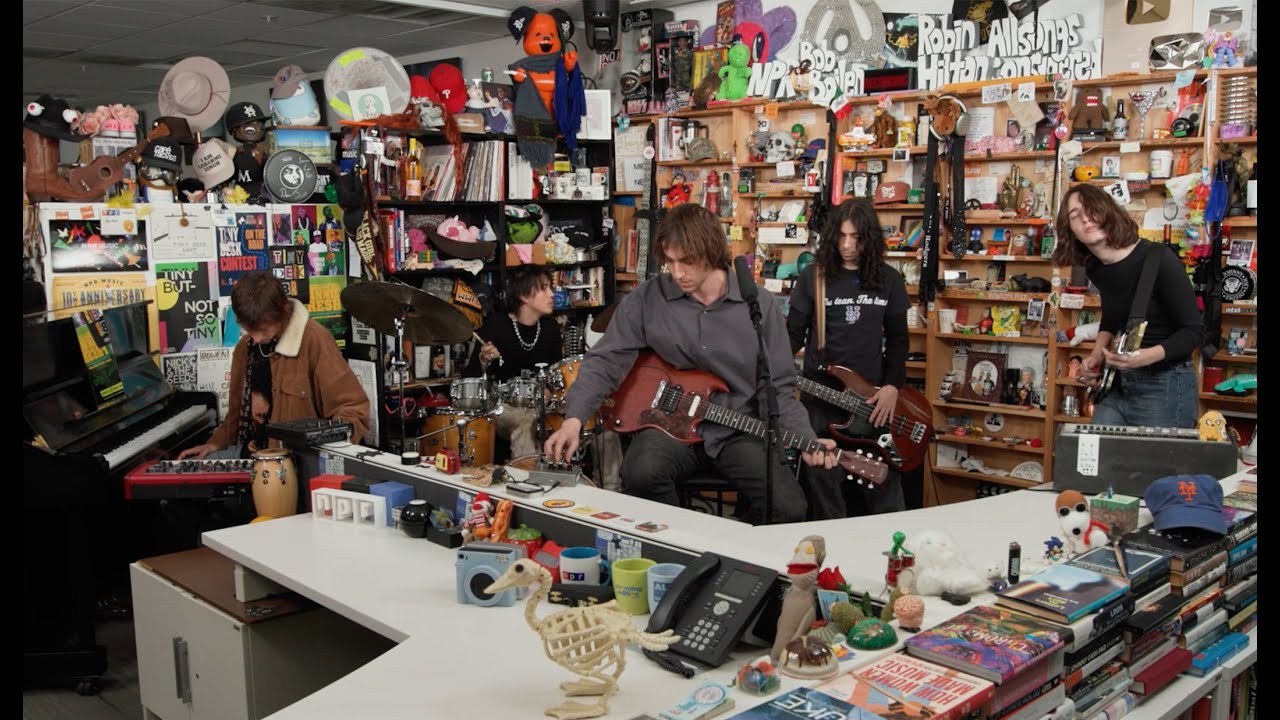
Green and Winter have been collaborating since they were kids, so when Winter comes to her with adjectives like cloudy to describe a musical moment, it’s easy.
“That language is understood between us,” she says. “Cloudy means something that is not played on the grid, not played on time.”
Only five percent of a jam is usually good, in my experience. We try to find the five percent from that
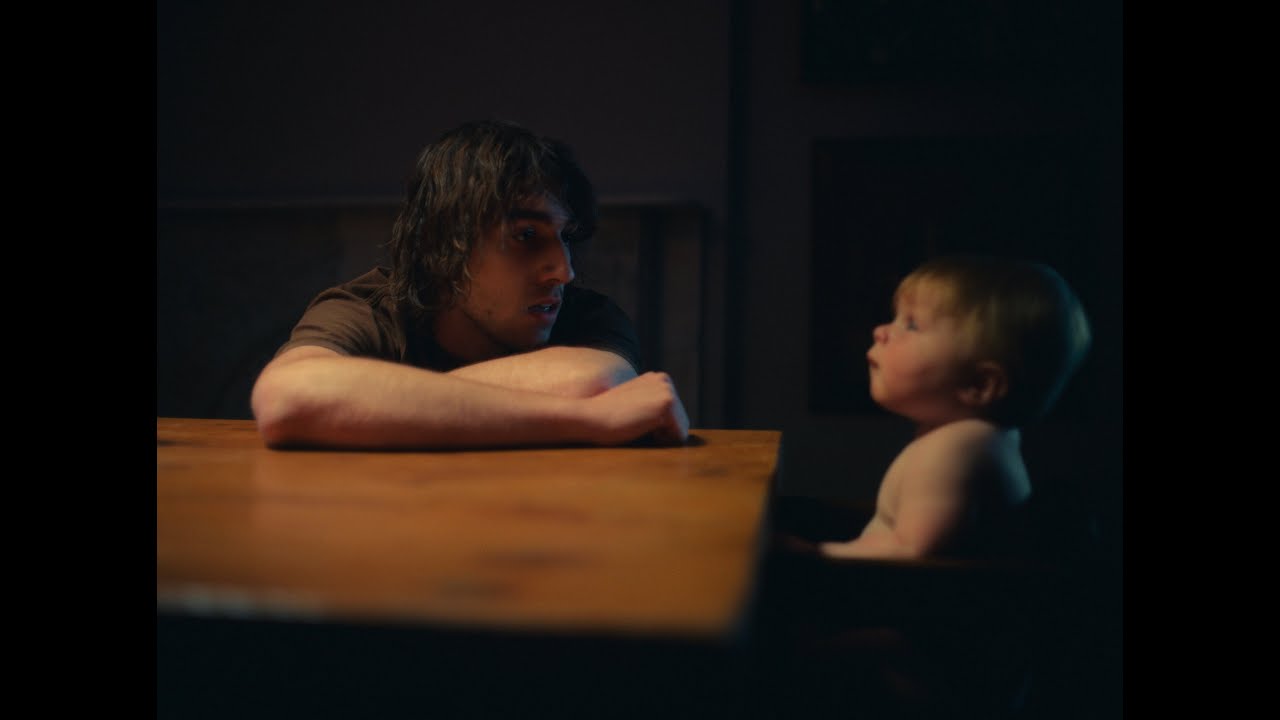
The final song of the night is Trinidad, a moody song with jazz undertones, born out of an idea that Winter brought to the band. “That idea was what started a jam and became something different at the end,” Green recalls. “It was like a 25-minute jam. Only five percent of a jam is usually good, in my experience. We try to find the five percent from that.”
“I learned how to play music by playing with Max and Cameron,” she says. “Practicing is boring. Getting better at guitar by playing in a band with people is much more interesting [and] the best way to learn how to play guitar. The scales and stuff just feel very dry to me.
“I don’t really know practical theory. It’s like I’m in a room with the lights off, and I know how to find my way around because I’ve been in that room my whole life. I know where everything is, but wouldn’t it be so much easier if the lights were turned on?”
Back on stage, for Trinidad, the lights are off. Smoke rolls out as Green furiously bangs a chaotic, Jonny Greenwood-inspired, tremolo-picked pattern out of her blue and silver Reverend Double Agent, dropped down to D.
“The Reverend is the first guitar I bought for myself,” she says. “I worked a two-week internship at a headphone company. It was a desk job. I took all the money from that to buy the guitar. It’s a precision machine. There’s a lot of good note separation on that guitar, and clarity. Strats have clarity too, but they’re a bit too thin for my taste.”
As Green wails on the Reverend, Winter’s lyrics perfectly mirror her guitar’s building urgency. “My son is in bed/My daughters are dead/My wife’s in the shed/My husband’s burning lead.” That is, until the chorus. “There’s a bomb in my car!” Winter bellows as the band seemingly detonates the explosive itself on stage.
It’s Green’s admiration for Tom Verlaine that keeps her reaching for guitars like the Double Agent. “[I love] the guitars on Television’s Marquee Moon. They’re not overdriven, per se, but they’re not crystal clear. They break up when you play them harder, and they are defined when you play a bit softer, so you have to rely on how you play it for tone. The Reverend is really good at that.”
So how is Green handling her band’s newfound success?
“I’ll see how much I can leverage it to get as many free guitars as I possibly can,” she says with a laugh.
“I’m glad a lot of people are receiving the record well. I think it’s going to give us a lot more room to keep doing this for a long time in a way we’d like to. Going forward, it would be nice to do things less out of obligation and make more deliberate choices that we think will result in better art. Or, we’ll sell out.” [Laughs]
- Getting Killed is out now via Partisan.
- This article first appeared in Guitar World. Subscribe and save.

