


As the CEO and president of Taylor Guitars, which has been in the upper echelon of acoustic guitar-making since 1974, Andy Powers has a lot on his plate. And while the business side of things is paramount, Powers’ passion is forever centered around the making of the instruments.
“It stems around trying to create an instrument that feels inspiring to a player,” Powers says. “It could be inspiring in familiar, fresh and new ways. But I want somebody to feel joy when they pick up the instrument.”
Taylor’s lines range from high-quality, budget-friendly instruments to ornate guitars that’ll make your jaw drop – but the approach never changes.
“The trick is to try and take that one individual instrument and then scale that up in a way where you don’t lose the magic of the first one,” Powers says.
“That’s difficult to do, so most of what we spend our time working on is eliminating the accidental customization that might happen on a shop floor. You’re trying to create a method where every single guitar you build comes out exactly the way you intended it to – even when your own hands weren’t the ones touching it.”
At over a half-century old, Taylor is still a new kid on the block, which means Taylor lives in a gray area, straddling the line between classic design and modern innovation. With this in mind, as far as Powers is concerned, the sky is the limit.
To that end, he says, “One of the things that makes us unique is that our history is defined by changing what we see fit to change.”
You come from a guitar-building background, so how would you describe your role at Taylor?
I come from a guitar-making and playing background, not really so much of a business background. But I started building and playing guitars from a young age, so all I’d ever really done was build. A lot of my focus was on actually building the instrument itself.
I still think about an instrument that might be interesting to a player – maybe an adaptation of a guitar we’re making now, maybe something totally new or something that might be an improvement to an existing guitar. I’ll go build those instruments by hand.
So you’ve still got a hand in that aspect of the company?
I maintain a shop here at our Taylor campus as well as a shop at my home. I’m working like Geppetto. [Laughs] It’s like a lot of old hand tools and a very traditional, craft-oriented kind of construction. That gives me a lot of flexibility to create what might be interesting for us to make next.
Is it a challenge to match and raise the bar on Taylor’s well-known standards?
It depends on which way we look at it. You’re right; Taylor, as a guitar manufacturer, is known for building a very consistent, high-quality guitar. Now, coming from the guitar-making world, that’s not really hard to achieve.
It would be expected for a high-end instrument to be built at a very high level – the fit and finish, the way the parts work, the way it feels. I’d expect it to be working at a high level. And really, a lot of the credit I would give to Bob Taylor, a designer who’s trying to design something for a manufacturing scale.

Of note with Taylor is that your budget models sometimes outpace other companies’ higher-end models.
A lot of it comes down to the process you use, the way you’re gonna build the instrument. So if we’re gonna build a high-end instrument, we’re going to create a process to result in a really great guitar every time. We’re gonna go through that same process, even for a more modest instrument where it might not have lavish trimmings, the rarest woods or something like that.
But that doesn’t simply mean we’re going to import loads of low-end guitars, slap our name on them and sell them. That’s not how we do it. We actually design a thing to go, “This guitar is for a musician of modest means, so we’re going to use more commonly available materials – but I want the musical experience to be a great one.”

What’s it been like trying to source materials these days, where tariffs have hampered companies and there are far more restrictions on the harvesting of certain woods?
It is a challenge. But I would say that at no point was it ever not a challenge, right? Let’s say I went back a couple of hundred years and worked in Stradivari’s day; it’d be a real challenge to get great material. [Laughs] Not so much because the materials aren’t there to be had, but just the logistics and transportation mean you’re gonna be working really close to home to get that piece of ebony for a fretboard.
Man, that is really gonna be hard. So there’s a challenge there as you come into a more modern era where you face depleting resources.
One of the challenges in procurement is actually sourcing the material and how it is harvested. So we’re working a lot closer, a lot deeper into the forest, and oftentimes looking at alternate structures for the future.

What do those alternate structures look like?
Whether that’s plantation-grown wood, whether that’s deliberately planting trees for future generations of instrument use, or whether it’s different forestry models altogether, like using reclaimed urban-harvested wood. There are all kinds of different ways we approach it, and they have their own unique challenges.
One of them is a design challenge, which is to work with what options you have available. As an example, we started pursuing what I describe as urban forest harvested wood – city trees, street trees – trees that cities plant to control soil erosion, create shade, wind barriers, noise barriers, things like that.
When those trees grow larger, because they’re in a more densely populated area, they become a liability. A storm might knock that tree over, and it could fall on buildings, cars or people. Those trees have a managed lifespan. We look at it and go, “Why are you chipping that up for mulch? There’s gotta be some end-of-life usage in that tree.”

With this, the age-old debate over tonewood arises, which is even more critical when discussing acoustic guitars. Do you think a street tree versus a forest-harvest tree would produce a very different-sounding guitar?
It’s interesting to think about wood material over time and how the instrument world has constantly changed its appetite and developed new materials
Oh, yeah – it’s been super-interesting. The most interesting part of it is that there are no direct comparisons. So what should I do with that to make an equally appealing sound musically on a guitar? It means you’ve gotta start changing the guitar a little bit.
You change your design, maybe you voice the bracing a little differently, you use it in a different spot, you cut it to a different thickness. There are all kinds of different things you could do as an instrument designer to create a musically appealing instrument.
It seems as if this particular challenge is an opportunity to unlock new tones and designs.
It absolutely is. It’s interesting to think about wood material over time and how the instrument world has constantly changed its appetite and developed new materials. It’s become common practice for guitar makers to like what we call Honduran mahogany for a neck, right? That’s pretty common. It’s been used for a lot over the last century.
Well, that was a substitute material for Spanish cedar. Spanish cedar was preferable for nylon-string or early classical guitars. A lot of classical makers still swear by it. But it was commonly used for necks well into the teens, Twenties and beyond.
But Honduran mahogany was more obtainable. It was easier to get in big pieces, and it had a similar enough character to Spanish cedar that it became popular. Instrument making is a slow evolution, influenced by the maker’s skill and the musician’s taste.

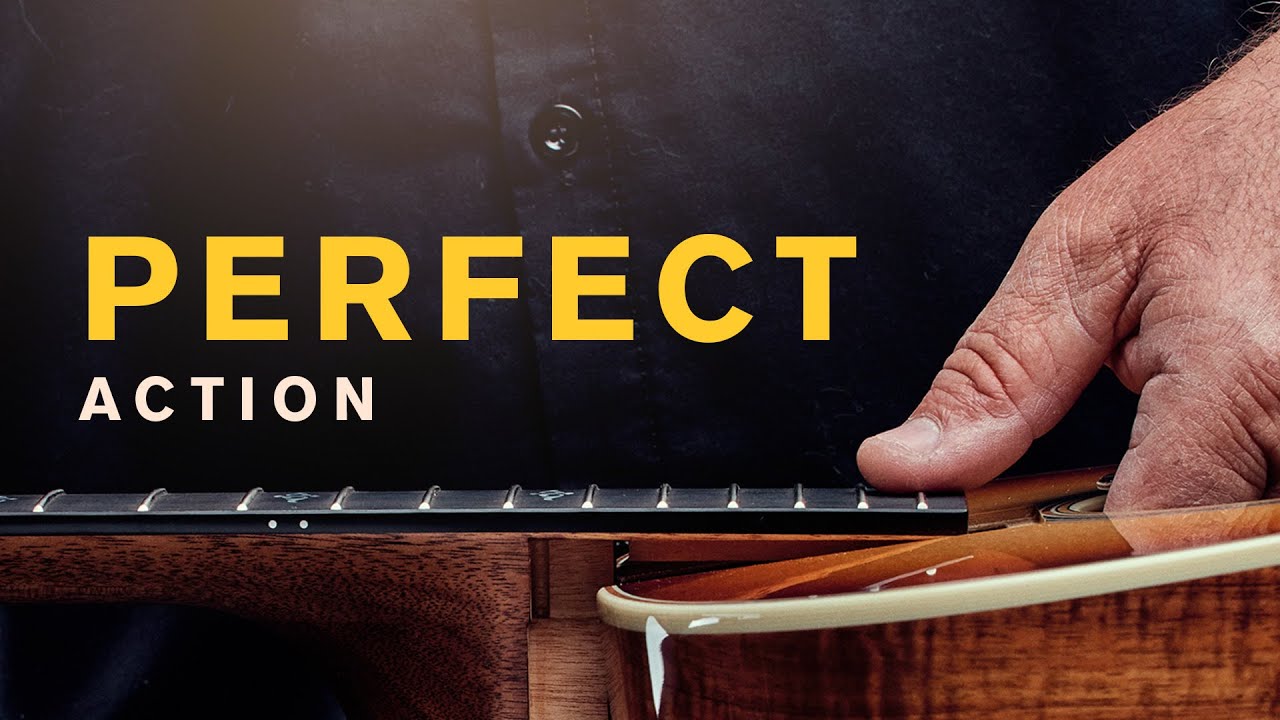
At NAMM 2024, Taylor launched the Action Control neck, which allows players to make micro-adjustments to string height without removing the neck.
One of the things we like to do is make a genuine improvement to the instruments we’re building when we can. I like to be able to work that idea into more places because what excites me as a builder and a player is having a wider variety of guitars. I like that we get to choose our voice.
We get to choose whether we wanna play a big-body strummer, powerhouse guitars, smaller finger-style instruments or more modern, heritage-based sounds. I like exploring different flavors. Now something like the Action Control neck is a feature or aspect I’d been working on for almost 10 years before those guitars came out – even before I was really happy with the design.
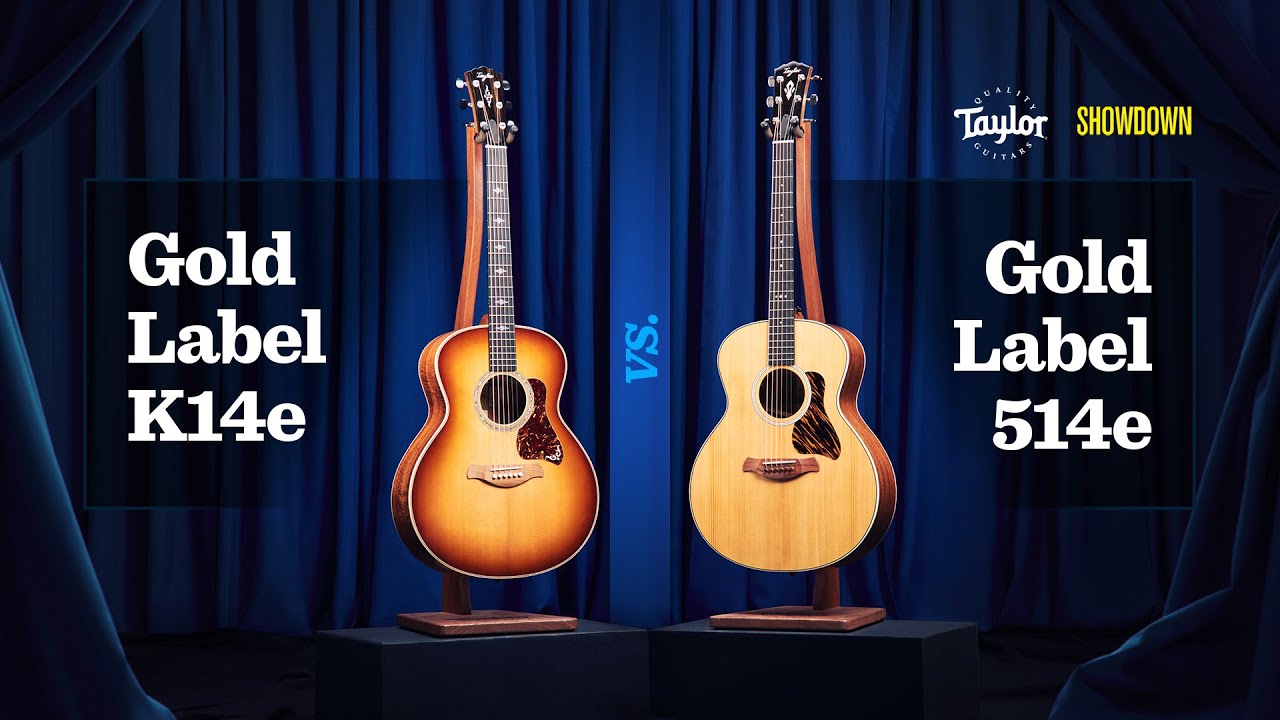
So we introduced that on the Gold Label guitars, and over the course of 2025, we introduced more iterations and variations of that into our Gold Label collection. We’ve added it to the Grand Pacific body shape guitars in that collection. We’ve done more Super Auditoriums and different wood combinations. That’s something I’ll start to spread into other models because of how well that serves the player.
What will you do to match that in the coming years?
There’s instrument development. It comes in kind of waves, but ideas come through different instruments so that all the different players can find what best suits their taste. There are going to be different voicings of the V-Class bracing architecture that we developed a number of years ago.
That’s a very adaptable kind of design that lets us manipulate the sound of the guitar in a lot of different ways. It brings out different nuances of the guitar’s voice, so you’ll see some different flavors there. And you’ll see some different amplification developments from us.
What’s on tap there?
As much as I love to play an acoustic guitar in front of a microphone, you’re gonna see that most players still take a guitar on a stage, grab a cord and plug it in.
We’ve used the Expression System, what we call the Expression System 2, for a number of years. That’s worked really well for a lot of players on a lot of stages. But our development didn’t stop there. So there are other developments coming into our amplification space that I think might serve players even better in an even wider variety of scenarios.

Taylor is as much about classic designs as it is innovation. How do you see the future shaking out?
We’re not afraid to change something. I like to think our best days are still ahead of us as guitar makers. We’re really not all that young anymore; five decades and counting is a pretty good run, and we’ve got a couple of miles on us. At the same time, amongst a lot of guitar makers, we’re still relatively young, so we have a lot of permission to continue developing our instruments.
I like to look ahead and go, “At this point, we have a history we can draw from as well as a still-unwritten future.” You can see designs that are influenced by our past designs, and we’ve got a library of things we’ve built and a body of work we can draw from, kind of a “greatest hits.” We have our modern benchmark guitars like the 814 Standard, the quintessential modern acoustic cutaway electric.
Then we have these other collections, and we’re still developing and pushing boundaries with our Builder’s Edition collection. We’re exploring ergonomics influenced by an electric guitar on an acoustic guitar.
Then we have our Gold Label collection that’s steeped in the tradition of instrument-making. There are all these varieties that we get to continue developing and exploring.
- This article first appeared in Guitar World. Subscribe and save.

