


By 1982, Richard and Linda Thompson had been married and recording together as a duo for about a decade.
They’d had some success, but things had gone lean – not only musically, but also in their marriage. However, things seemed to be looking up when Stealers Wheel founder Gerry Rafferty, who had enjoyed a 1978 hit with Baker Street, contacted the Thompsons about making an album.
Initially, Richard and Linda were all for it, but once in the studio, Richard in particular didn’t jive with Rafferty. It was nothing personal, he recalls; it was just a matter of taste. Thompson says the Rafferty recordings were ultimately “too pop” and “a bit lifeless.” This led to Richard and Linda shelving the album and going back to the drawing board.
Thankfully, Richard’s old friend, producer Joe Boyd, was interested and signed the couple to his label, Hannibal Records. He suggested reworking six of the tracks recorded with Rafferty and adding two more into the mix. Still, Hannibal was a small label, meaning the budget was slim and the duo would have to move with purpose.
“When we were in the studio, we recorded it very quickly,” Thompson says. “The songs sounded a lot better and had a lot more life to them.” Tracks like Don’t Renege on Our Love, Shoot Out the Lights and Man in Need had the vibe the Thompsons wanted, mainly because Boyd asked Richard, Linda and the band to record live.
“You just basically react,” Thompson says of this approach. “The way records used to go down is live. The more choices you have, the more of a tendency there is to delay decisions until mixing. I much prefer to make front-end decisions to back-end decisions. As far as I’m concerned, the music sounds better that way.”
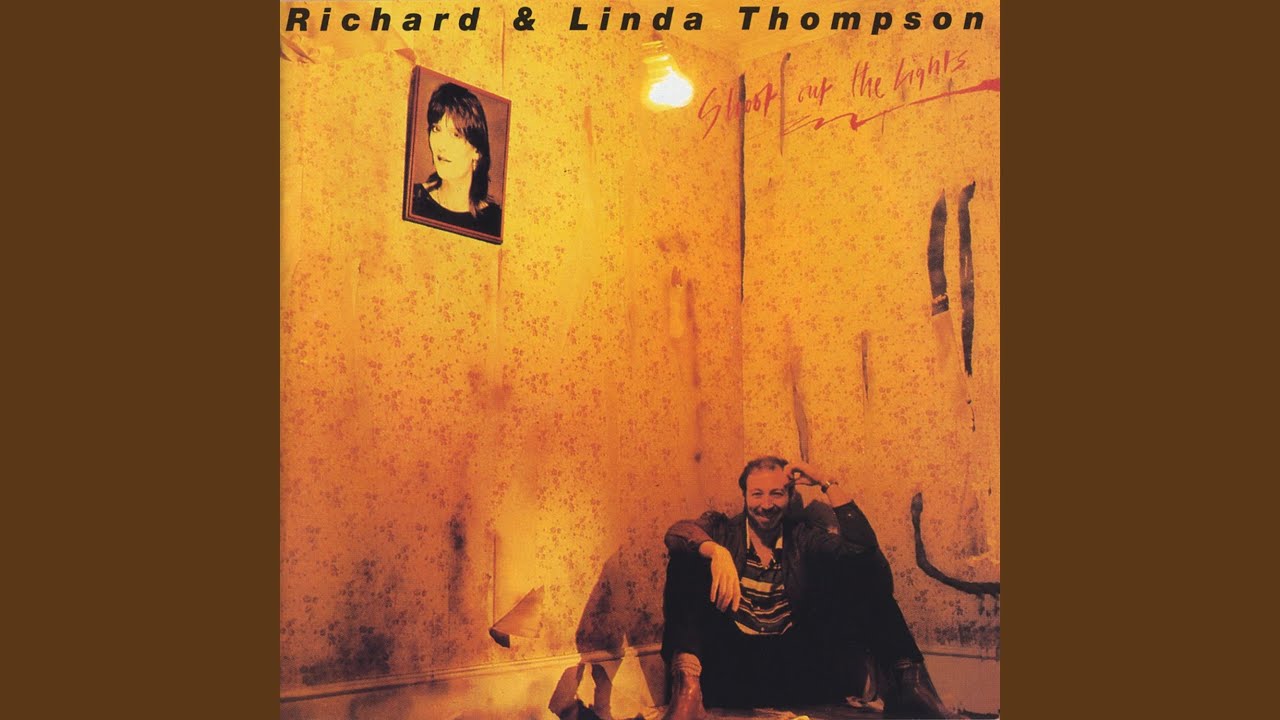
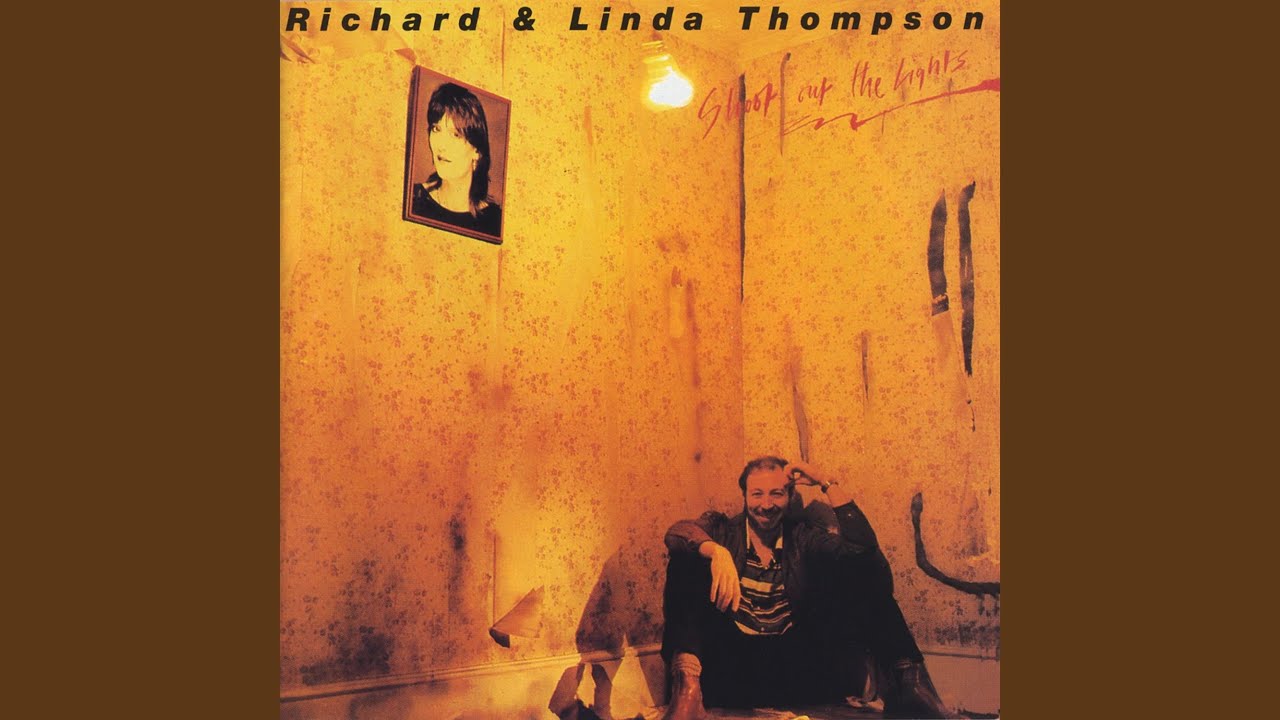
As well as the recording sessions went, that didn’t change the fact that the marriage of Richard and Linda – who was several months pregnant – was on the rocks. By the time that Shoot Out the Lights was released in March 1982, their marriage was over. On the bright side, the reviews were glowing.
It was well received at the end of the day. I’m not sure it sold in the millions, but it was well reviewed
This led to an infamous tour, dubbed by Thompson fans “the Tour from Hell,” which found Richard and Linda on the road together for professional reasons only. Still, the tour shifted the perception of the former back toward being a first-rate songwriter and guitarist.
Retrospectively, Shoot Out the Lights is regarded as Thompson’s defining artistic achievement, although he doesn’t quite see it that way.
“It’s hard to hit 100 percent on an album,” he says. “It’s really easy to not be satisfied with a record right after you’ve made it. Three months or six months later, you start thinking, ‘We shouldn’t have put that track on.’ But it was well received at the end of the day. I’m not sure it sold in the millions, but it was well reviewed.”

Six tracks from Shoot Out the Lights originated in an aborted album helmed by Gerry Rafferty. Tell us how that happened.
Gerry wanted to produce a record for us, and we thought, “He’s a massively successful artist and just had a hit with Baker Street, so why not? What could possibly go wrong?” We went into the studio and recorded, but I thought it sounded too pop.
You know, like, lots of triple tracking, lots of overdubs. I thought it sounded a bit lifeless at the end of the day. We really didn’t like the results, so we didn’t give permission for it to be released.
You shifted to producer Joe Boyd’s Hannibal label.
I’d known Joe forever, and he said, “Why don’t we record it? We can do it very cheaply. Here’s the budget. Here are the musicians. Here’s how we do it – you know, here’s the promotional schedule.” We had a whole plan for it. We thought, “Great!”
What was Joe’s approach to tracking guitars?
He was a fairly hands-off producer. On that record, as on many previous records, there was an approach to recording where you don’t necessarily use a lot in there. You basically get the mic in the right position, get the tone out of the amp and the guitar. Mic distance was very important.
Were most of the tracks cut live, or was there a lot of overdubbing?
I think every track from Shoot Out the Lights is live. Joe was very fond of a stereo picture, where it’s like you’re looking at the band onstage, with the drums in the middle.
The vocalists are in certain positions, and the amps are in certain positions, so you get this kind of stereo picture, using different amounts of reverb and a different depth perception. It’s very old-school; I still subscribe to that way of recording.
Did recording live lead you toward a different approach to guitar?
I think it did. We didn’t do a lot of overdubs on that record, although maybe there were some vocal overdubs, so it becomes more of a performance as opposed to something you sit down and work out.
What gear did you use on Don’t Renege on Our Love?
Just my Fender Deluxe. I’ve got an old one from, I think, 1965, that’s been reconditioned various times. It’s had different speakers put in it at various times, too. That was my go-to amp for that album.
For guitars, I think the whole record was me using a ’59 Fender Strat, although maybe there was a ’52 Telecaster on some things. At that point, I didn’t own a lot of guitars.
What was the meaning behind Shoot Out the Lights?
It was a metaphor for the Russian invasion of Afghanistan. You know, the big bully country invading a much smaller, weaker, less well-armed one. But the Russians, of course, bit off more than they could chew.
Afghanistan is an impossible country to invade. It’s so mountainous that the locals are going to win every time. That was in my mind, although I wouldn’t expect anybody else to pick up on my particular view of it.
After hearing the final mix, did you have a sense that you’d made an album to remember?
There are a few tracks I would swap out, probably. We also lost a couple of drum tracks somewhere. They just got wiped
There are a few tracks I would swap out, probably. We also lost a couple of drum tracks somewhere. They just got wiped, so we had to recreate that drum sound, and it was never quite the same so I have slight reservations about it. But I still perform six songs off the album, which, for an album from that long ago, is exceptional. I’m still fond of a lot of the songs.
A lot of people regard it as your best work. Do you agree?
Probably not. I think there’s a good half-dozen songs there, but in terms of creating a whole record, Mock Tudor [1999] is probably better. I think the songs are just as good, but the recording is better.
Why does Shoot Out the Lights come up in conversation so often, then?
I just think we got lucky on that one, you know? And the songs – it’s just luck. You know, things fall into place. It’s about making the right decisions and having the right energy. There are so many factors.
- This article first appeared in Guitar World. Subscribe and save.

