


Some would have you believe that rock is dead – but Godsmack’s Sully Erna is not one of them. “Rock is on the rise, dude! Let’s fucking go!” he says ahead of a summer tour alongside Stone Temple Pilots and Dorothy.
The longtime frontman and rhythm guitarist is kicking off what he refers to as “Godsmack 2.0”, necessitated by the retirements of guitarist Tony Rombola and drummer Shannon Larkin in 2025.
“Let me just say you’re going to love the new guys,” Erna says. “This guitar player, Sam Koltun, is the real deal. He really does take the band to another level visually and playing-wise.”
He says of how his own playing contributes to Godsmack’s many-times-platinum sound: “I’m not a super technical guy; I’m not a top-level player. Doing Guitar World is funny to me because I’m like the donkey that doesn’t know anything about guitars!”
But he does have an instinct for tones. “I know what I like,” he agrees. “And I know what I want my guitar to sound like. I have a great ear for music.”
He’s always understood his role: “It’s about being a solid rhythm player behind the lead player. He can put all the colors and textures around what I do.”
Things have certainly changed for his band, from nearly retiring to realizing a “bucket list” dream of a double-live record, Live at Mohegan Sun. “It’s a matter of, ‘Let’s set this thing up one more time, and see where it goes,’” says Erna. “It may go downward, or it may go up to stadium level. Who knows? Life is uncertain.”
A few years ago, the word was that Godsmack were retiring. What changed?
Obviously there was talk – but it was really more about when Shannon and Tony announced their retirement. [Bassist] Robbie Merrill and I had to decide what we were going to do. Were we going to retire the whole band or keep going? We decided we wanted to run a little longer with two new guys.
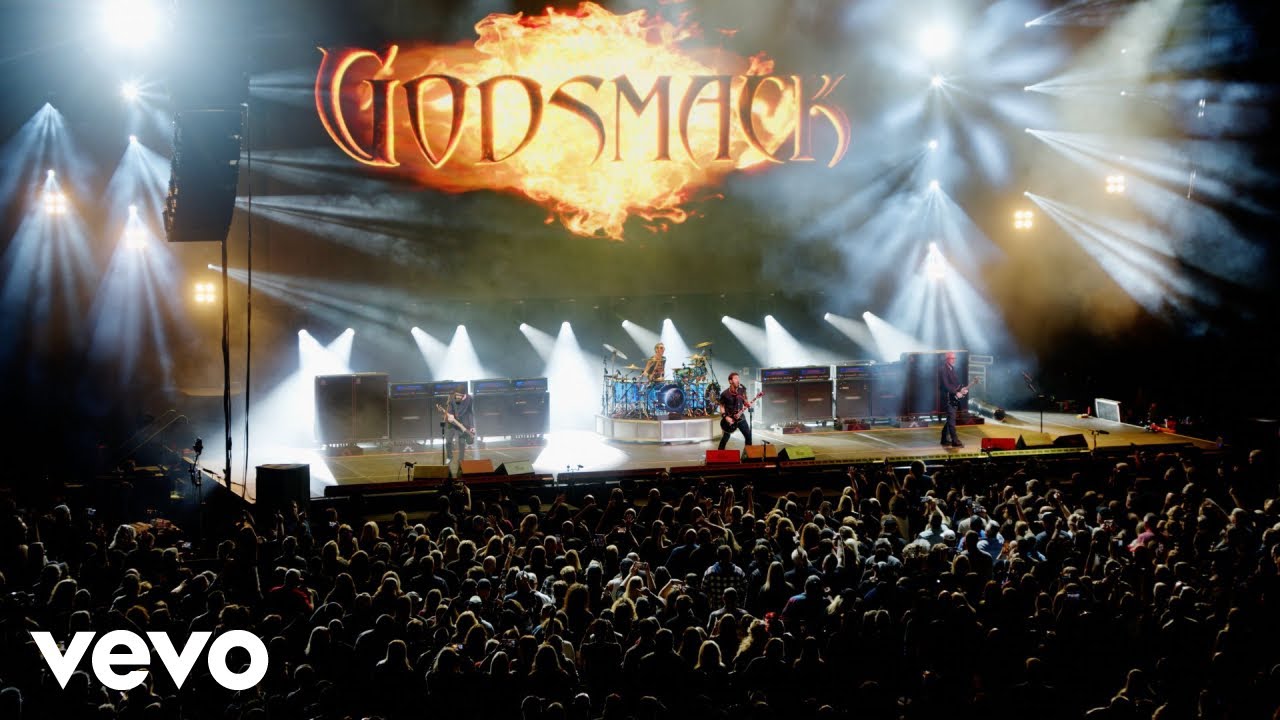
How’s it going with the new members, Sam Koltun and Wade Muff?
It’s given us some new inspiration and new life, and it feels great! We’re going to try and take it to a new level. But if it feels too foreign, we’ll give each other a big hug, call it a day – and a career – and have no regrets.
Where did you leave things with Tony and Shannon?
There’s no bad blood. Everyone went out on a good note. They were just tired and wanted to be home with their families. We ran for almost three decades, so we have nothing but respect and honor for those guys.
It must be tough losing a player like Tony.
I have the ultimate respect for Tony as a player. That dude has really studied guitarists. He could play anything I threw at him, and he’s just so valuable in the history of Godsmack. But he decided to part ways and be at home with his wife.
What made Sam Koltun the right player to replace him?
It took time to look at other players. We auditioned at least a dozen people out of the 100 we scoped out. But it was very clear that, when Sam started playing with us, his attention to detail was immaculate.

At one point I looked over at Robbie and he looked back, like, ‘What the fuck?’ Sam really did his homework. Even his expressions on the wah pedal – he emulated that stuff perfectly.
With Sam in the band, do you feel reinvigorated?
I don’t know yet, but I know it’s really comfortable. He plays at a very high level, he has a great stage presence, and he elevates the performance. Tony was more of a stand-there-and-play guy. Sam can play his ass off, and he brings more energy to the front line than Tony, without being over-the-top.
What’s the story behind the Live at Mohegan Sun record?
There was a picture of Joe Perry with the red B.C. Rich. I went, ‘This is the coolest-looking thing! I want to be that!’
It’s something I always wanted to do. I grew up with ‘70s live albums – when I skipped school, I’d go home and listen to Rush’s Exit Stage Left and Aerosmith’s Live Bootleg. It was a bucket list thing – to put out a really strong double live album that captured the audience and the performance.
I feel strongly that we not only did that, but we were able to document, for the last time, the four members taking the stage together. That was really special to me; it became a very emotional performance. I think people are going to feel that.
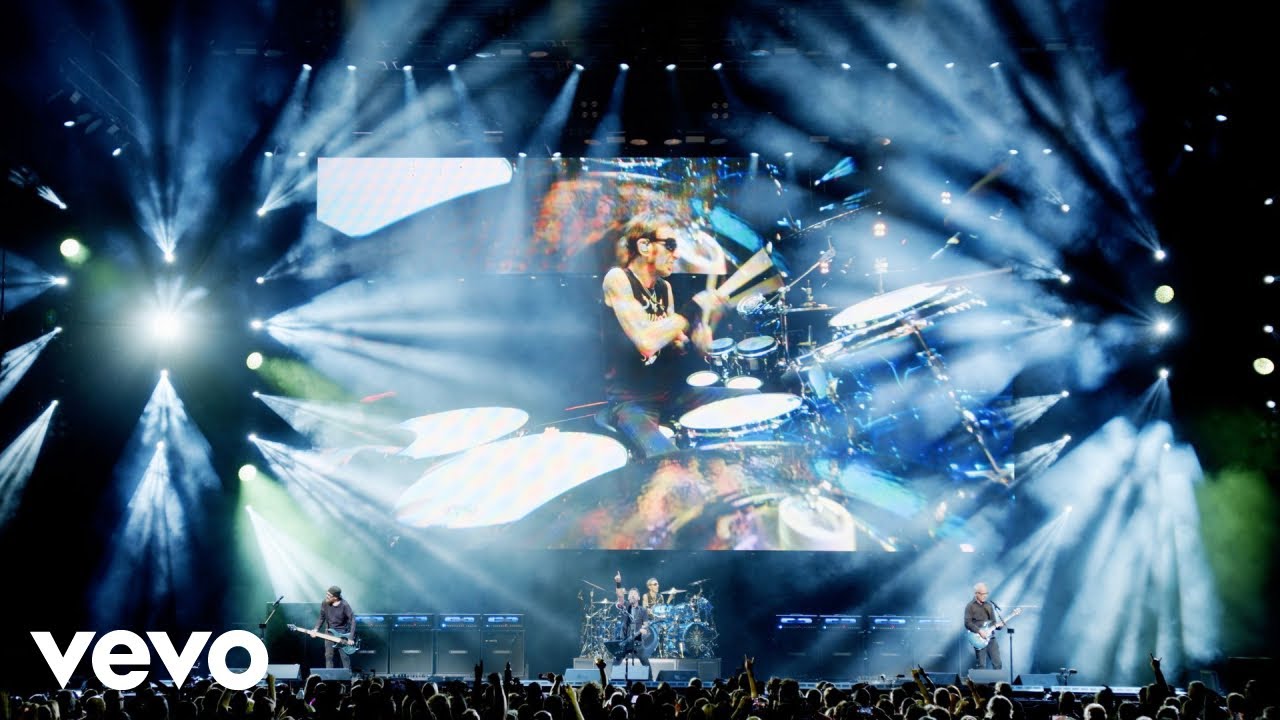
What shaped the guitar player you are today?
I was raised as a drummer, but in the early ‘90s, a friend of mine – also a drummer – showed me drop D tuning. That was critical for me. So I started the band to write my own music. I was very new to it, so it was very basic, but I enjoyed figuring out the guitar from a percussive standpoint.
I wasn’t a great solo player, so that never translated with me, but rhythm playing came naturally. I love bands like Metallica – James Hetfield is probably one of the strongest rhythm players I’ve ever heard.
So it was like, ‘Let me be a great rhythm player for the foundation of the band. I’ll bring in players with the technique, melodies, and solos, who’ll do that much better than I could.’
What’s your most valuable asset as a rhythm guitarist?
I encourage anybody who’s going to take up music to have some kind of foundation behind the drums. It’s the most primitive instrument, if you think about it. When you have rhythm, timing, tempo and pocket, that’ll translate to any other instrument you play.

What made you gravitate to playing Les Pauls?
My biggest influences for wanting to be a rock star one day were Joe Perry and Jimmy Page. Especially Joe – when I opened up that Live Bootleg album, there was this picture of Joe with the red B.C. Rich with his hair in front of his face.
Producers say, ‘We A to B’d the modeler and we couldn’t tell the difference.’ I’m like, ‘Well, I can hear it!’
I went, ‘This is the coolest-looking thing I’ve ever seen! I want to be that!’ Joe and Jimmy, who were cooler than anything I’d ever seen, and played Les Pauls, made me want to play that guitar.
The tone is just really beefy, tight, dirty, and solid. When you put it through the right amps there are so many different characteristics. You can make it sound clean and beautiful, or super crunchy and swampy.
Do you have a favorite Gibson?
I have a black Les Paul Standard. I don’t know what my tech did to it over the years, but we’ve messed with different pickups, and it's always been my main workhorse.
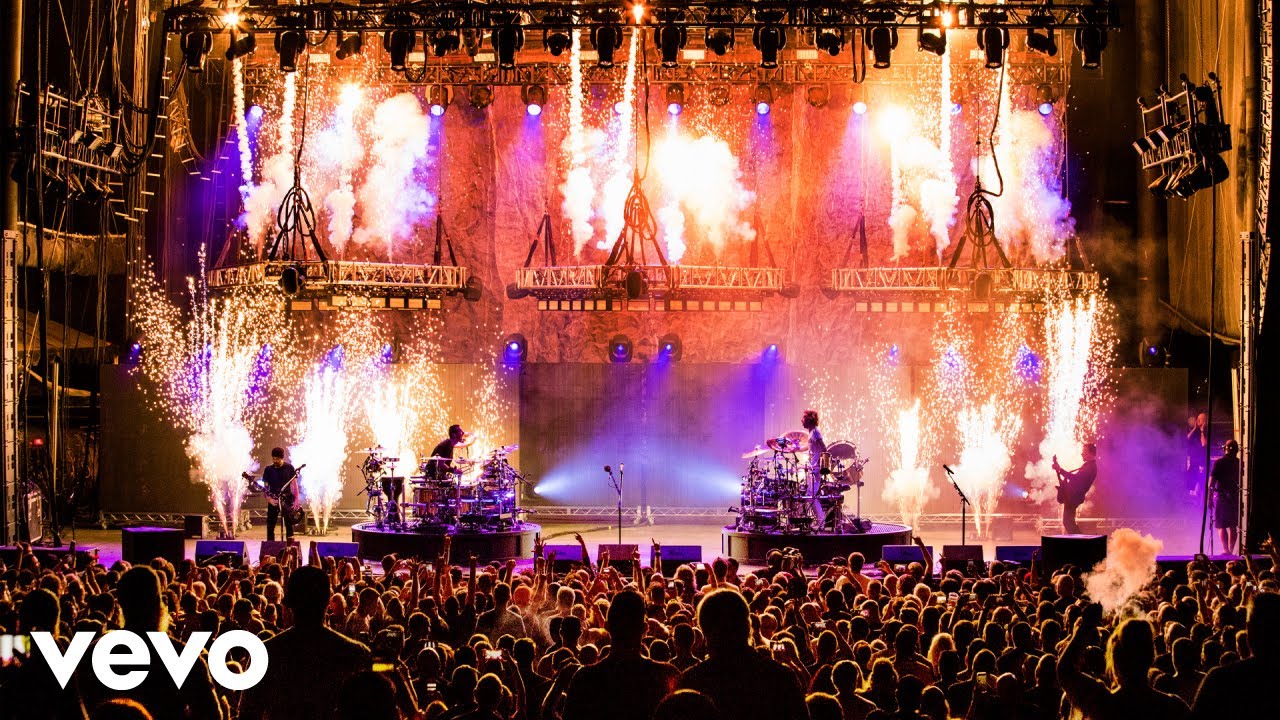
And I have a black gothic Gibson Explorer. I usually use it for drop C tunings; it holds tune really well. I also have a black hollowbody that I use a lot. Those three guitars are consistent, comfortable, sound great, and always come through for me. I know the playability with them.
What types of amps do you prefer?
I’m an old-school tube guy. I love tube amps – especially when you push them beyond their limit a little bit. I’ve always been a fan of ‘70s live performances that have those Marshall-style rock sounds. There’s just something about the quality of those amps.
These digital Kempers and all this other shit today, I’m sorry, man. I’m not a fan! I don’t know if it’s the gift I have as a musician, but I can hear the difference very clearly. I’ve had arguments with producers, who say, ‘We A to B’d it blindly, and we couldn’t tell the difference.’ I’m like, ‘Well, I can hear it!’
I love Marshalls. I also use Diamond amps. Dimbag Darrell turned me on to Diamonds, then I used Mesa/Boogie for a while, then Hetfield turned me on to Diezel amps. Those things are indestructible – just warriors.

Sometimes I’ll blend a Marshall with a Diamond. I can make the Diamond do anything with the sweeps, the mids, and the bass. With Mesa it was a very scooped sound, and I would sweep the mids, but I couldn’t hear the sweep as much as with the Diamond, which is more responsive, I guess.
Are you writing music for Godsmack’s next record?
We’re just starting to noodle around to get some ideas. It’s a little early to say, but I would think that in the first quarter of ’27, you’ll hear whispers of our new music.
What’s your outlook moving forward?
I’m optimistic that there’s a second wind coming for Godsmack. I’m really curious to hear it myself, and see whether it’s accepted and loved by the fans. I do feel that something really strong is about to happen.
Now that we’ve solidified the new members and can dive into rehearsals, that’s going to tell me a lot. And when we hit the stage night after night, I’ll start to understand what kind of life this thing is going to have.
- Live at Mohegan Sun is on sale now. Godsmack are on the road with the Rise Of Rock tour now, alongside Stone Temple Pilots and Dorothy.

