


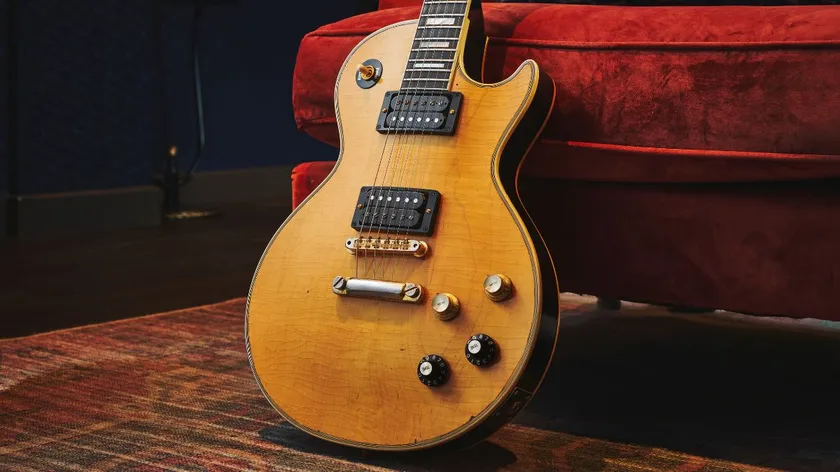


Few musicians affected the guitar landscape quite like Eddie Van Halen, and Steve Stevens has said that seeing his virtuosity firsthand hit him so hard, it forced him to temporarily leave rock guitar behind.
As Wolfgang Van Halen once said, Eddie “kind of ruined” the 1980s guitar scene as his dazzling talents created an influx of copyists all desperate to be the next best thing. But not everyone was as eager to follow suit.
For Stevens, who earned his name making guitar solos with toy ray guns as Billy Idol’s guitarist, sharing a tour bill with Van Halen had the opposite effect.
“After a run playing with Vince Neil, opening for Van Halen for about six weeks, it just got to be total rock 'n' roll excess. I came off the road and had to reassess why I was even playing guitar,” Steven relays in a new Guitarist interview.
The rock 'n' roll overstimulation prompted Stevens to pivot. He spent some time away, focussing solely on another genre far removed from his usual work. And it gave way to his most experimental album to date.
“One of my first loves is flamenco, and my first guitar teacher was a flamenco guitarist," he continues. “I remember going to see Paco de Lucia, and that reignited a spark in me.”
That resulted in the album Flamenco A Go-Go in 1999. Although it proved a temporary detour into flamenco music, Stevens was leaving his comfort zone behind. He never wanted to compete with EVH, so he changed tactics.
“I stopped playing electric guitar for a year,” he reveals. “I went to Japan, France, and England to make that record and travelled the world with just my nylon-string guitar."
Stevens basked in the creative challenge brought on by his stylistic switch. And he was able to bring ideas from outside of the guitar’s long-standing traditions into the record’s picture.

“One of the unique things about my style is how I was influenced by early synthesizers and keyboards like Keith Emerson with The Nice, Rick Wakeman, all that stuff,” he details. “A lot of my guitar ideas come from keyboard sounds from the ‘70s.
“Same with flamenco rhythms applied to my acoustic work. I also listen to a lot of film scores and classical music. For me, being a successful guitarist is about coming up with parts that move the song along and not just doubling the bass line.”
Elsewhere, Stevens has discussed the pedalboard he had custom-made by amp-building genius Dave Friedman and how Paul Stanley sparked his love affair with Hamer guitars.
He's also explained why he turned down the chance to work with David Lee Roth, and what it was like recording with Michael Jackson. He’s had a busy career.

