


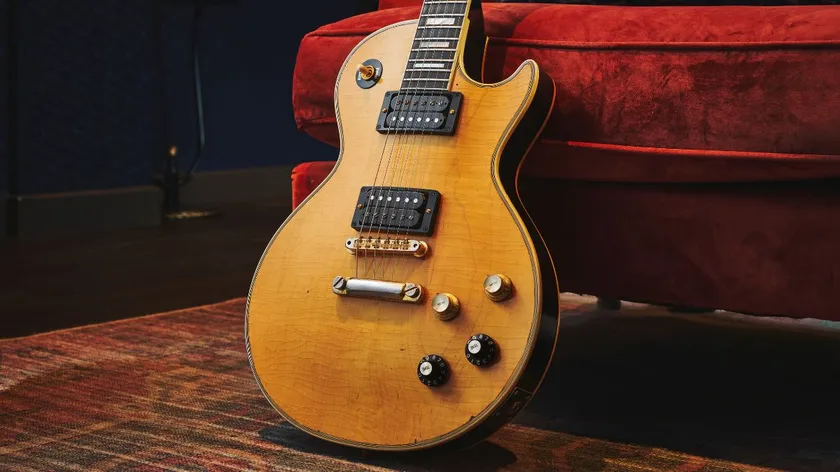


“Dad let me organically follow whatever I wanted. That was his main mantra: ‘Just play.’ It’s that simple”: Wolfgang Van Halen on Allan Holdsworth, unintentional Van Halen-isms, and his go-to guitar-test riffs
As the son of one of the world’s most influential rock guitar players, it’s understandably taken Wolfgang Van Halen some time to feel comfortable in his own skin. Mammoth’s third full-length, The End, is undoubtedly the sound of his confidence growing stronger and stronger

He may have kickstarted his career playing bass alongside his dad in one of America’s most important rock bands, but over the past four years Wolfgang Van Halen has proven he’s very much an artist in his own right.
So much so that he’s written and recorded everything you hear on the three Mammoth albums released thus far – including latest full-length, The End, which sees him taking his songwriting to new creative peaks.
Naturally, the son of Edward Van Halen is no slouch on guitar. You can hear plenty of fret-burning wizardry on the title track and other impressive cuts such as Same Old Song and I Really Wanna. But it’s the sheer quality of his compositions that’s helped set him apart from his peers, reimagining the stadium-conquering hooks of groups like Foo Fighters and Alter Bridge through his own melodic lens, often with staggering results.
This album, he explains, came from a more relaxed state of mind, having already escaped the preconceptions that go hand-in-hand with having one of the most instantly recognizable surnames in rock ’n’ roll…
The top-line melodies on this latest album could be your catchiest ones yet. How do you go about finding the right hooks?
Honestly, that’s one of the most important things for the average listener. They tend to listen to the vocals and main melodies. I have fun with the instrumentation and that’s always there for the musicians who want to hear something fun with the riffs here and there. But at the end of the day, the melodies are the most important thing about my music. That’s what I tend to toil [over] most.

Can you envisage where the notes are before you even pick up the guitar?
All the latest guitar news, interviews, lessons, reviews, deals and more, direct to your inbox!
Sure, there’s a lot of stuff that comes like that. Some of the best ideas come so quickly you almost feel like you’re this vessel for the music, rather than the person creating it. Bob Dylan had this great quote where he once said, “If I knew where the good songs came from, I’d go there more often!”
It’s like he was saying it’s not even a choice. These ideas come to you and reveal themselves to you as you keep working on them until you deem them ready enough. I’m not the world’s biggest Bob Dylan fan – obviously he’s an icon and a legend – but I really loved and related to that quote.
How do these ideas usually present themselves to you?
It’s just any time, really. You just have to be ready to get it down, which is why my list of voice memos is in the thousands.
I have a button on my iPhone that goes straight to voice recording because the ideas can come fast. I might hum them in, but if I’m lucky enough to have a guitar nearby I will pick that up – and the same goes for drum beat ideas. You always say, ‘I’ll remember it,’ and then you forget within two minutes.”

It’s interesting how you sometimes only use parts for very specific sections. Something New, for example, has these higher-string dyads that only come in at the very end before the closing stabs.
It’s all about using the right things at the right time. If you do certain things too much, then you’re overdoing them. It’s nice to sprinkle these little ideas in that make people want to go back and re-listen to the song. Over-seasoning music can make things quite repetitive and boring.
You’ve worked with Michael ‘Elvis’ Baskette as your producer on every album so far. What have you learned from him about the art of capturing and blending sound?
He’s the other half of the band, so to speak. Even the Beatles had George Martin. It’s important to have an outside perspective to keep the artist from second-guessing. I trust him explicitly and could never see myself doing it without him.
I don’t ever take in much information in terms of what I’d do in the future without him because I’ll always let him handle that stuff. I focus on the writing and the playing. I leave the capturing of it all to him. I trust him more than I trust myself when it comes to production.

Do you listen to The Beatles much, then?
For sure. It might be a bit overplayed, I guess, but I would say Abbey Road is a really special album to me. Front to back, I really love everything about it. I Want You (She’s So Heavy) was like metal before heavy metal existed, you know? I love that album.
Everybody has a Beatles phase at some point and there will be one album they couldn’t live without. For me, it’s definitely Abbey Road, with maybe Revolver not far behind.
You released your EVH semi-hollow signature guitar back in 2024. Is that what we’re hearing on the album?
Yeah, it was the gold relic EVH SA-126 that I got last year. That guitar ended up being the backbone of this whole record, going through the 5150 III 6L6. I used it for 95 percent of what you hear. I got the Frankenstein out for the tapping part on The End and the slap part, but other than that, it really was just one guitar.
With the second album, it was a different guitar but still the second or third prototype of that SA-126. I’ve come to know what works best for Mammoth and that’s my semi-hollow through the 5150 III, for sure.

A lot of your leads are based around the minor pentatonic scale. Which blues players left the biggest mark on you?
It’s funny, I wasn’t much of a blues guy to begin with. But I think out of all the blues-based players, I really love Angus Young from AC/DC. He sticks to what is generally pentatonic stuff but has this anarchistic way of attacking it.
That’s what makes it so attractive to me. It’s almost like he doesn’t know what he’s doing and it’s all about the way he does it, rather than the notes he’s playing. When you listen to him, it’s incredibly blues-based, but it’s the aggression he plays with that makes me enjoy it. I guess it was the same kind of thing with my dad.
I asked him how the hell I’m supposed to sing and play it all on stage and he said, ‘That’s a problem for future you!’
Which album do you find yourself listening to the most?
Powerage is one of my favorite records. In Down Payment Blues, right after the first chorus, there’s this solo where he plays just one note for eight bars. It’s how he’s playing, instead of what he’s playing. Stuff like that is so badass. It doesn’t need to be complicated.
You can hit one note with attitude and that’s all that matters. And Angus’s tone is unbelievable, with all those Marshalls just cranked to hell. The last time I saw AC/DC was on the Black Ice tour. They leave you deaf for days – it’s the best! I don’t think I’ve ever been at a show that loud; it must have been around 120dB. It was otherworldly. I started bringing earplugs to shows after that, but it’s okay if it’s Angus – he’s earned it.

What kind of riff do you play to test out a guitar?
I think it would be something by AC/DC. I’ll usually do Night Prowler because it has those big chords, which can tell you a lot about guitar. And then for single notes I might do Beating Around The Bush or something like that. I think those classic open chords can show you what a guitar is about right away. You can hear how the acoustics resonate together.
Your first big gig was playing bass in Van Halen. A lot of the material probably came very easily to you, but what would you say were the more challenging songs on the setlist?
I think it was mainly a matter of delving into the feel. The big hits were about the groove and locking in with my uncle [Alex Van Halen on drums] to create a great rhythmic base. Me being a drummer first helped because I could understand what was needed. I also had to keep dad in check whenever he made a mistake.
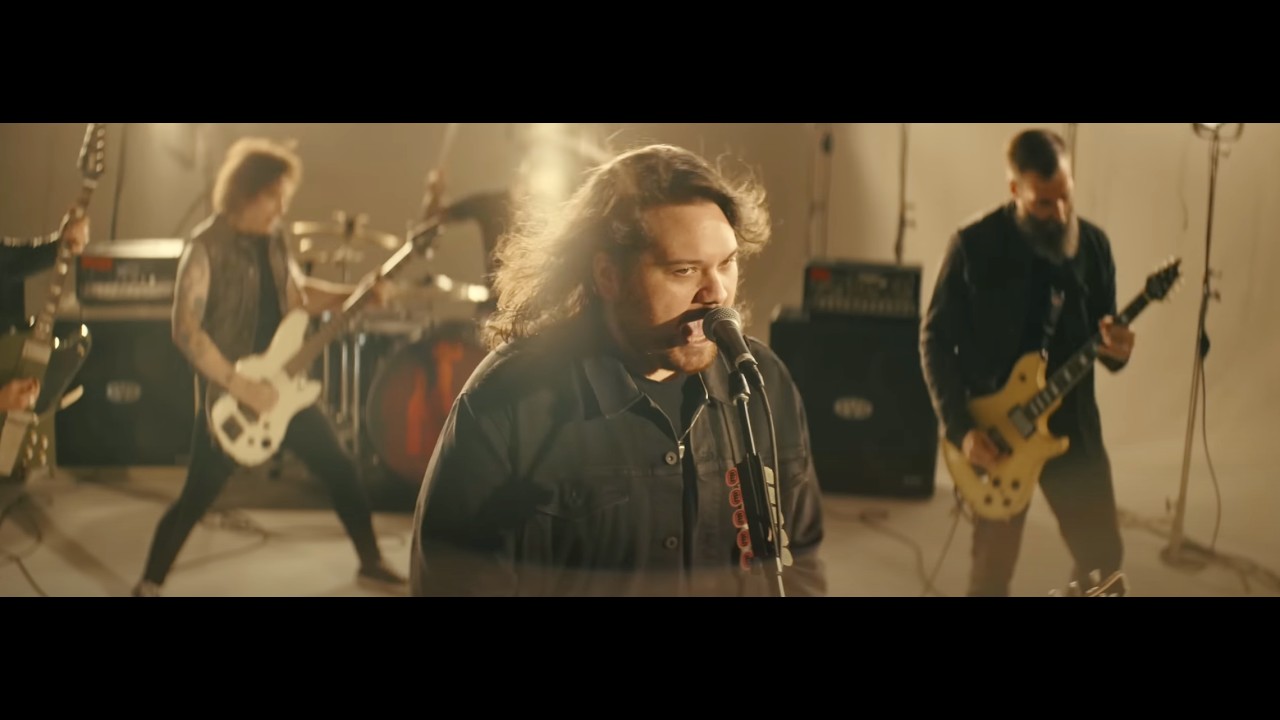
On the last tour in 2015, I really tried to get the guys to play every single B-side we possibly could, stuff like Dirty Movies, which is a really unique song. Michael Anthony [bass] was doing these interesting harmonics for that intro. Stuff like that was really experimental and I don’t think he gets enough credit for what he did.
His contributions to that track in particular were quite out there for a person who is usually holding down the groove. Dirty Movies was one of those tracks where I had to really remember how it was played on the record and check myself every time in order to ensure I didn’t mess it up.
In Mammoth you are very much going for a modern rock style that’s notably different from the sound your father pioneered in Van Halen. But the rhythmic slap and harmonic idea from The End is something that could have sat on 1981’s Fair Warning, with a Mean Street kind of feel.
Totally. It’s very percussive. It’s funny because it wasn’t supposed to be a Mean Street thing. It was actually a slap bass part. I was showing Elvis this idea but only had a guitar, so asked him to imagine it on bass. And he told me it sounded cool on guitar. It was his idea to have it carry on through the verse.

That’s when I asked him how the hell I’m supposed to sing and play it all on stage and he said, “That’s a problem for future you!” So while I was writing the melody, I was trying to play the part without thinking and eventually got it right where I was able to separate what I’m singing from what I’m playing.
I think it helps that I’m a drummer first because I’ve gotten used to that kind of separation. It was tough, but I figured it out. We’ve been playing it live and I feel confident enough.
You have forged your own path as a musician, but were there any things your dad showed you early on, to help speed up the process?
Dad never really pushed me in any direction. He just let me organically follow whatever I wanted. That was his main mantra – “Just play” – that’s why I’ve got it tattooed on me in his own handwriting, which came from a Christmas letter he gave me.
That’s as detailed as it gets. Just play. It’s that simple, really. You need to enjoy yourself and follow what makes you happy. That’s what music is all about. It should give you purpose and make you happy, and help forget about all the bullshit.

What do you remember about your first guitar?
I remember that dad got me a custom-made little Wolfgang for when I was 12. Later on, when I was in middle school, I really liked the band System Of A Down and got an Ibanez Iceman because their guitarist Daron Malakian had one. So I got one of those and had fun playing along to old-school riffs like Toxicity.
I love how Allan was very much himself. He never tried to follow any trends; it was always about his own vibe
Your dad took a lot of influence from jazz fusion mastermind Allan Holdsworth, who also inspired some of the modern metal players you would later listen to.
My dad and him were very close. Allan played an incredibly avant-garde and dissonant style of guitar. I think his whole approach was so cool.
I love how Allan was very much himself. He never tried to follow any trends; it was always about his own vibe, which was very abstract and experimental.
That’s why his legacy is so apparent when it comes to players like Fredrik Thordendal in Meshuggah, who are one of my favourite bands. Allan was always very much his own artist, and truly one of a kind.
- The End is out now via BMG
- This article first appeared in Guitarist. Subscribe and save.

Amit has been writing for titles like Total Guitar, MusicRadar and Guitar World for over a decade and counts Richie Kotzen, Guthrie Govan and Jeff Beck among his primary influences as a guitar player. He's worked for magazines like Kerrang!, Metal Hammer, Classic Rock, Prog, Record Collector, Planet Rock, Rhythm and Bass Player, as well as newspapers like Metro and The Independent, interviewing everyone from Ozzy Osbourne and Lemmy to Slash and Jimmy Page, and once even traded solos with a member of Slayer on a track released internationally. As a session guitarist, he's played alongside members of Judas Priest and Uriah Heep in London ensemble Metalworks, as well as handled lead guitars for legends like Glen Matlock (Sex Pistols, The Faces) and Stu Hamm (Steve Vai, Joe Satriani, G3).
You must confirm your public display name before commenting
Please logout and then login again, you will then be prompted to enter your display name.
