


A lot can happen in 25 years. We’ve seen digital products go from strength to strength. At the turn of the millennium, such tools were probably best described as sufficient, while even analog purists would be forced to admit that the hardware and software of today is groundbreaking.
The general template for guitar building hasn’t changed too drastically, though there has been serious innovation in places, best evidenced by the 2019 arrival of Fender’s Acoustasonic line, which blurred the line between electric and acoustic instruments.
Similar things can be said in terms of pickup manufacturing; on the surface, it seems like business as usual, but inventions like the Fishman Fluence series have completely reimagined how we go about capturing the sound of strings vibrating through wood.
The boutique pedal boom has led to people waiting months (and even years?) for their own custom-built unit, and secondhand overdrives eventually changing hands for several thousands of dollars – something few would have predicted a handful of decades ago.
And then there’s been the rise of smart amps – powerful devices small enough to fit into a backpack several times over, many of which come with an abundance of effects, backing tracks and tools to learn, all controlled via their own dedicated apps. Even smaller parts like bridges and strings have been through various stages of evolution to help players sound bigger and better.
Below, Guitar World’s editors have selected 50 of the most pioneering releases from the last 25 years, all presented in roughly chronological order.
2001 to 2005
PRS SE Series

After 16 years of making guitars almost every player wanted but few could afford, PRS stunned the world in 2001 with the introduction of the SE series, their very first overseas-made line, which started off with an affordable take on the Carlos Santana signature model.
Since then, the range has expanded with Custom 24, McCarty, semi-hollow, hollowbody, extended range and more signature models, almost always sitting as the highest-quality and best-sounding guitars of their price range.
Truth be told, there was still a fair bit of distance between the early SE instruments and the Core series, though in recent years PRS has been narrowing the gap by offering bird inlays, shallow violin carves, quilt tops and higher-grade electronics with switching – all well-considered upgrades to create the PRS “experience” regardless of an instrument’s place of birth.
Though the guitars were originally made by World Musical Instrument Co. Ltd. in Korea, since 2019 most SE models have been built at the Cor-Tek factory in Indonesia, with acoustics and hollowbody models being manufactured at Cor-Tek’s Chinese factory. It’s a winning formula that soon turned them into the third-best-selling guitar brand.
Boss RC-20 Loop Station
The very first Boss loop station was released in 2001 and changed the game in terms of what could be sonically achieved by one player, allowing users to record, overdub, save and even quantize whatever was being fed into it.
The now-discontinued twin pedal was especially versatile for singer/guitarists, with inputs and volume controls for microphones and instruments, and phrases could be saved and then recalled on up to 11 different banks.
It even came with a reverse mode – which, despite not being something you’d necessarily expect for a looper pedal, will have come in handy during any drunken heckles for Castles Made of Sand, Give It Away and I’m Only Sleeping. Since then, the line has been expanded considerably, with the manufacturers describing their all-bells-and-whistles RC-600 as “the most advanced looper on earth.”
Elixir Nanoweb Strings

Though Elixir initially launched in 1997 with their ultra-thin polymer-coated strings, it was the arrival of their anti-rust Nanoweb sets four years later that really left its mark on the guitar-playing universe.
With most of us tending to prefer the sound of new strings while also being less keen on spending the money and time required to replace each set, the idea of long-life strings that keep their clarity and resonance was always destined to be a big hit.
Thanks to the Nanoweb coating, all the sweat and grime would be kept away from the string itself, retaining the higher levels of brightness and sustain you’d expect from a fresh pack. Notable endorsees have included John Paul Jones, Kaki King, Johnny Hiland and Bernd “Bernth” Brodträger.
Analog Man King of Tone Overdrive

How long would you be prepared to wait for your own custom-made boutique pedal? In the case of Analog Man’s King of Tone dual overdrive, the current build time is estimated at around five years.
The pedal was launched in November 2003 by Mike Piera, who took inspiration from the Marshall Bluesbreaker overdrive and added in his own modifications, including the internal DIP switches to select varying modes of gain. It’s an incredibly versatile pedal in that sense, famous for its highly dynamic touch-sensitive response at lower levels and more of a full-throated roar when turned up.
Famous users over the years have included Noel Gallagher, Brad Whitford, John Petrucci, Samantha Fish, Gary Clark Jr. and Radiohead’s Ed O’Brien, which shows how it’s the kind of twin drive that can thrive in just about any kind of rig and musical environment.
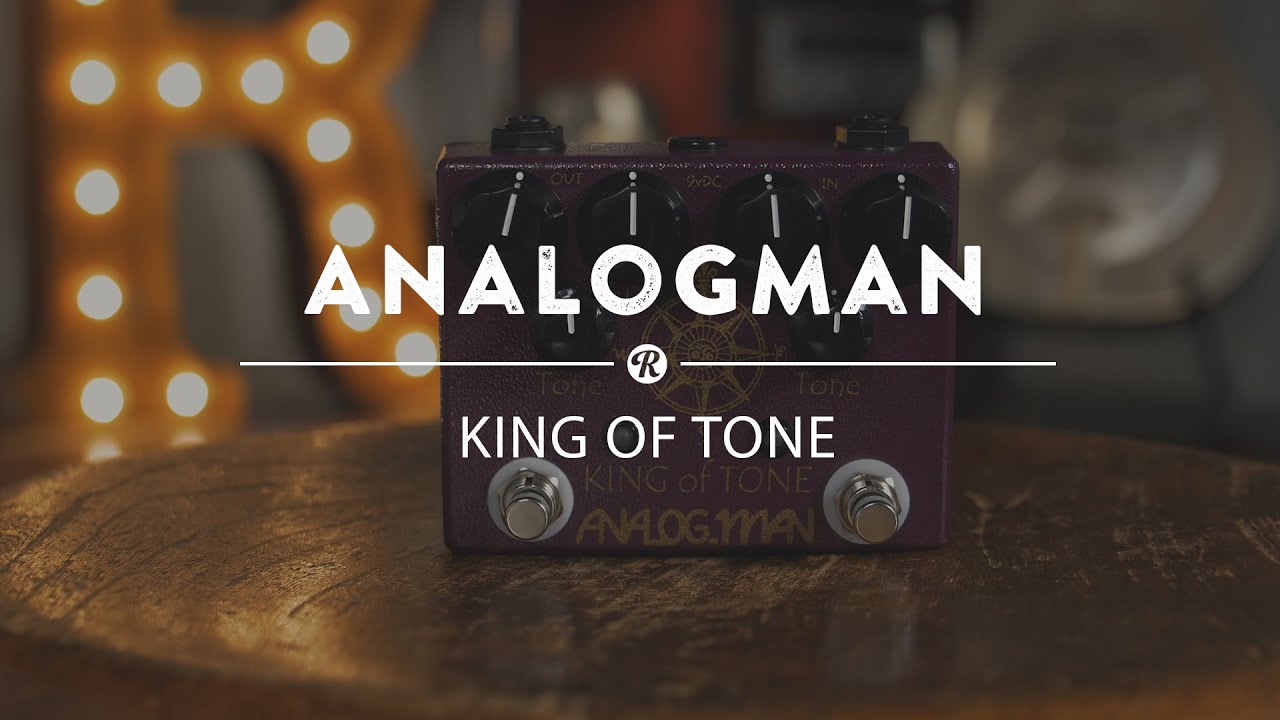
Mike Piera: “I’d been working with Jim Weider from the Band. He liked the sound of his Fender Deluxe Reverb when it was cranked up. César Díaz heavily modified it, and it sounds great, so we tried to create an OD pedal that emulates his amp. He was using an old Ibanez TS-808, but he was tired of the excessive mids, compression and loss of low end.
“By modifying the Marshall Bluesbreaker (BB), we achieved the sound he wanted and also made it compatible with other amps. It’ll make a Vox amp sound like a cranked Vox or a Marshall sound like a cranked Marshall. The way I think of the King of Tone is that it takes any amp and turns it into a four-channel amp (off, yellow, red, both sides).”
Jim Weider: “The King of Tone is more of a natural amp breakup compared to other overdrives I've tried. With the yellow channel having a slight amp crunch and the red Channel distortion, I can always count on getting my tone.
“After years of working on it with Mike Piera – changing caps, selecting the right resistors and countless hours of A/B testing against my Deluxe – I feel we've come up with a pedal you can depend on to get your tone and feel to perform at your best."
Line 6 POD XT
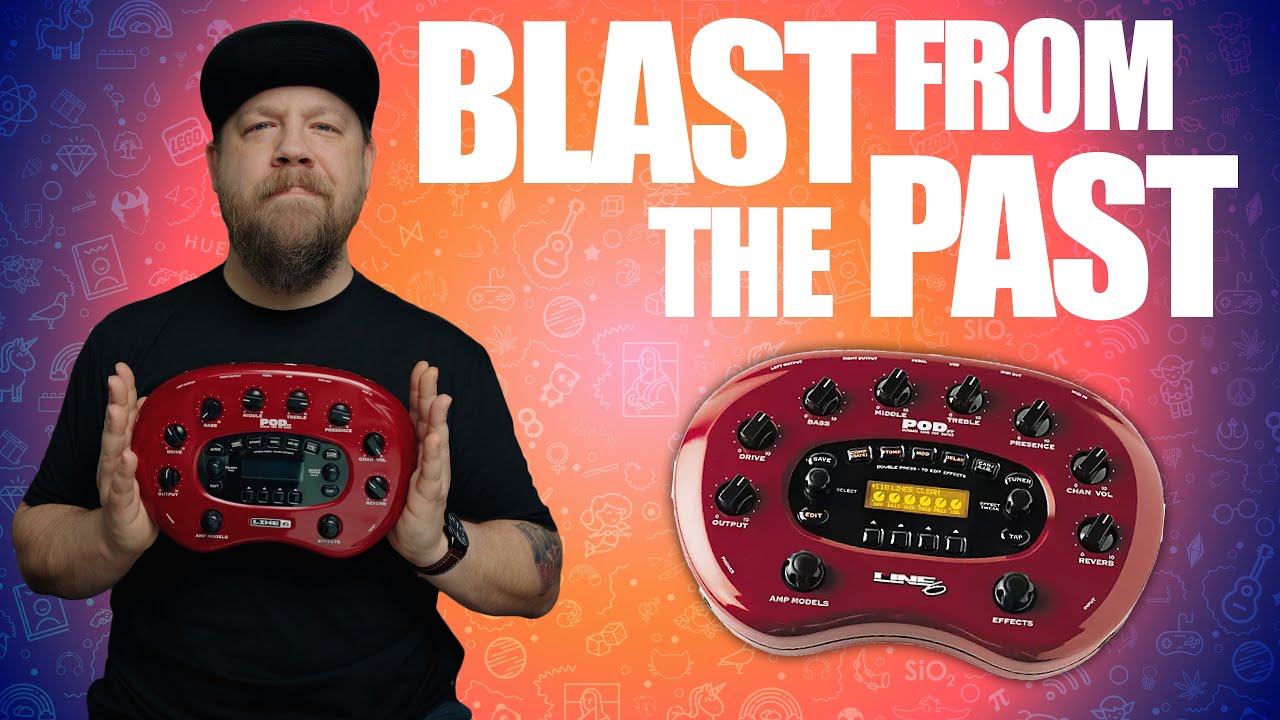
It might look severely outdated all these years later, but the original kidney-bean POD was an industry-first for bringing high-quality modeling tones to guitarists around the world for relatively little money. In 2002, they unveiled the POD XT, which featured newly updated amps and effects that felt discernibly closer to the real thing, sharing the same kind of technology found in their Vetta amps released the same year.
Looking back now, it’d be easy to think these classic Line 6 units were just for bedroom players, but guitarists like Misha Mansoor were using POD products for what would effectively go on to become Periphery.
Elsewhere, super-producer Trent Reznor was using Vetta amps in Nine Inch Nails, and Weezer even went as far as ditching their tube amps for 2001’s Hooptie Tour in favor of the POD Pro rackmount system.
IK Multimedia AmpliTube
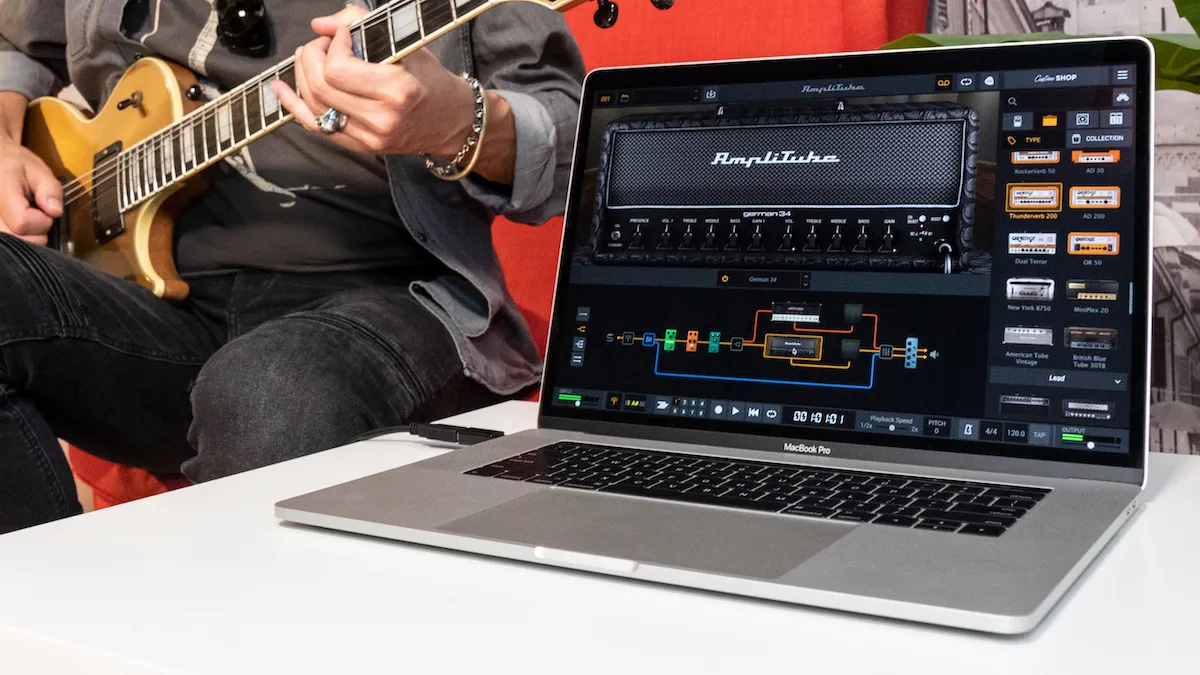
You could probably say with a degree of certainty that it's plugins in particular that have come the farthest over the last 25 years. IK Multimedia played an instrumental role in that journey, having launched AmpliTube in 2002 as a standalone amp- and effects-modeling software platform.
Since then, they’ve put out signature collections for Joe Satriani, Brian May, Alex Lifeson and Dimebag Darrell – giving users the chance to emulate the tones of their biggest heroes for relatively little money.
The latest version, AmpliTube 5, was released in 2020; the company even came out with a free version, AmpliTube 5 CS, downsized for beginners and players with less to spend.
Apple GarageBand

Released in 2004 as a more user-friendly, lightweight and free alternative to their Logic Pro flagship, GarageBand was responsible for getting new generations of music creators into the art of production.
And though it lacked the depth and control of its bigger brother, it was a wonderfully convenient entry point for those looking to expand their knowledge on recording, looping and mixing – turning any bedroom with an Apple computer into a highly functional digital studio.
John Mayer joined Steve Jobs on stage for the launch, giving the world its first taste of the revolutionary DAW’s potential, armed with some keyboards and a Jimi Hendrix Monterey Strat.
He later noted how the software had “brought music composition and production into the lives of millions of people who might have never had access to it otherwise,” praising GarageBand as “Steve’s way of giving people the tools to discover the music within themselves.” Other musicians who have used the software to demo – and even create final versions of their tracks – include Trent Reznor, Danielle Haim and St. Vincent.
Electro-Harmonix POG and 9 Series Pedals
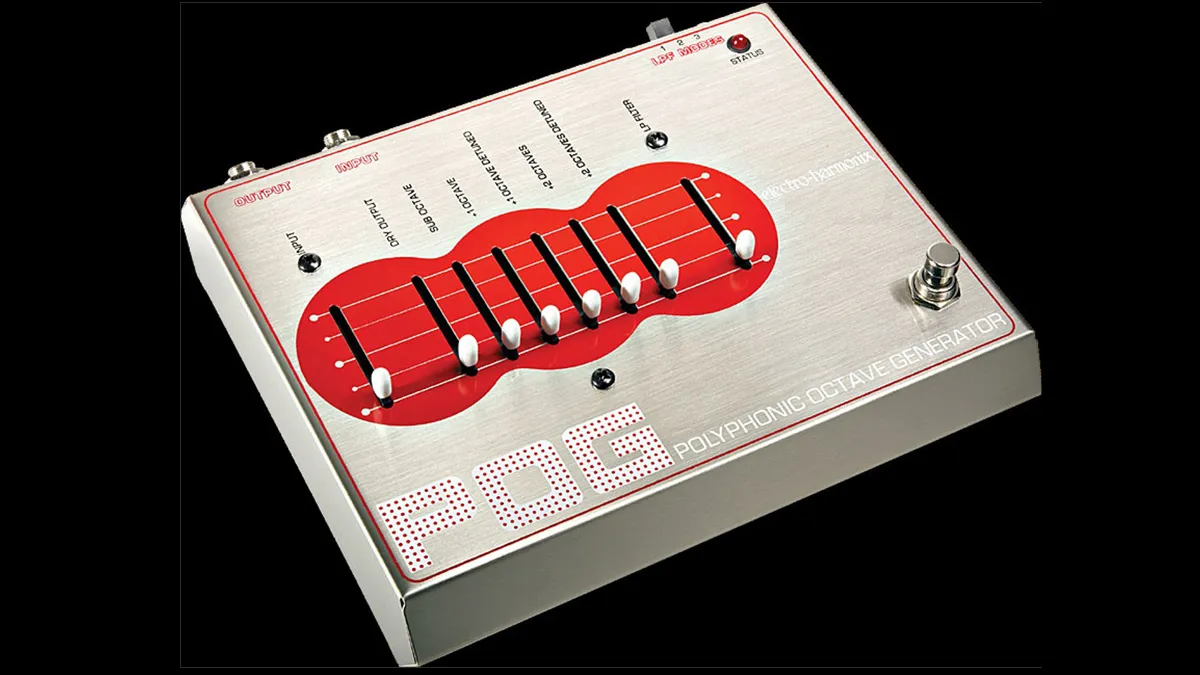
Given its legendary status as a cult classic, it’s almost hard to believe that the Electro-Harmonix POG was only first introduced in 2005; it’s the kind of pedal that feels like it’s been around a lot longer.
The Polyphonic Octave Generator, made by the New York City company founded by Mike Matthews in 1968, has been used by everyone from Jack White and John Frusciante to Josh Homme and Joe Satriani, and in more recent years we’ve seen Royal Blood frontman Mike Kerr using one to turn his bass into a guitar, with unquestionable results.
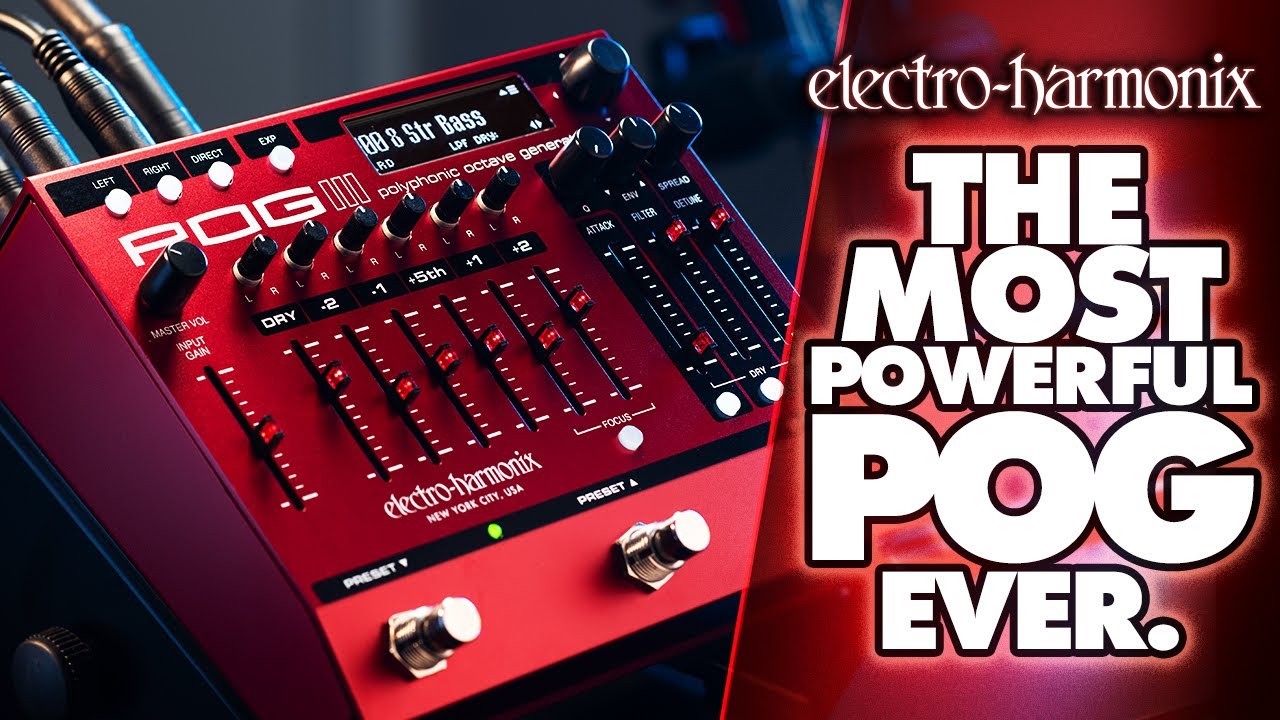
Last year, the company announced a new flagship version, the POG3, to deliver lightning-fast tracking and perfect polyphony over four octaves, covering a whole host of 12-string, baritone and organ sounds. The 9 series has been successful for similar reasons, giving guitarists an opportunity to turn their instrument into a synth, piano, choir, flute, sax or even an entire orchestra.
Joe Satriani: "The POG can make your guitar sound like Jon Lord playing his organ through a Marshall 1959 stack with everything on 10! It has its subtleties, but I use it for its brutal intensity. When you hear the pedal’s tone generation, you can’t help but be inspired to create new riffs and chord voicings.
"There’s nothing quite like it; it’s as simple as that. It instantly transforms the sound of your guitar into something bigger. EHX has a long history of creating game-changing devices; it’s in their DNA.”
2006 to 2010
Fractal Audio Axe-Fx
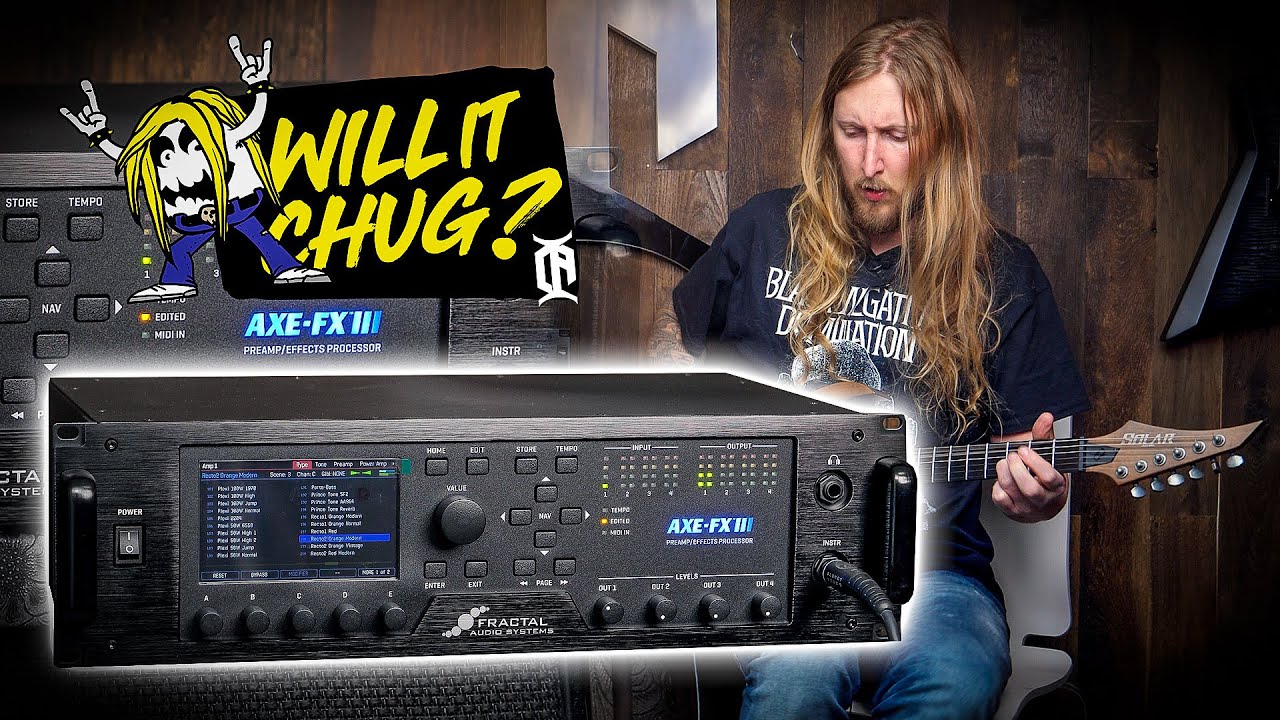
The analog-versus-digital debate wasn’t really much of a debate until 2006, when Fractal Audio released the first Axe-Fx – a modeling processor that sounded virtually as good as the gear it was cleverly emulating.
It didn’t take long for guitar giants such as Steve Vai, John Petrucci, Dave Mustaine and Phil Collen to incorporate the technology into their live rigs, with James Hetfield, Kirk Hammett and Guthrie Govan even professing to have used Fractal gear to make albums in the studio.
And it’s not just the high-gain players who have embraced the company’s innovations; John Mayer shocked the world by admitting he’d used an Axe-Fx alongside his favored Dumbles on his 2021 album, Sob Rock, while elsewhere units have been spotted on stage behind the Edge, Keith Urban and Mike Dawes.

Devin Townsend: “Axe-Fx puts all the struggle of solving how to route your patches with an analog gear into a reasonably simple, compact and infinitely tweakable package. It may not be as ‘sexy’ as analog gear, and if you have no need for extensive effects or patch switching, it might not be for you. But for me and my workflow, I’ve invested a ton of time into learning the technology, and it pays big dividends. I’d still be in the same place if it didn't exist – only with a lot more patch cables.”
Aaron Marshall (Intervals): “Axe-Fx has been the most consistent modeler of its class/kind over the last 25 years. Cliff Chase’s approach to modeling is more in-depth and accurate – in my opinion! – than Fractal’s competitors. The Axe-Fx is the only modeler I know of where dialing in an amp isn’t about aiming for approximations of sounds using a limited range of curated controls.
“It’s about sitting with the amp manufacturer’s official manual, applying those concepts to the model inside the Axe-Fx and achieving the exact results you’d get if you were dialing in the real amp. Between that level of accuracy and the front-end feel being shockingly indistinguishable at times, there really isn’t much more to say.”
Orange Tiny Terror
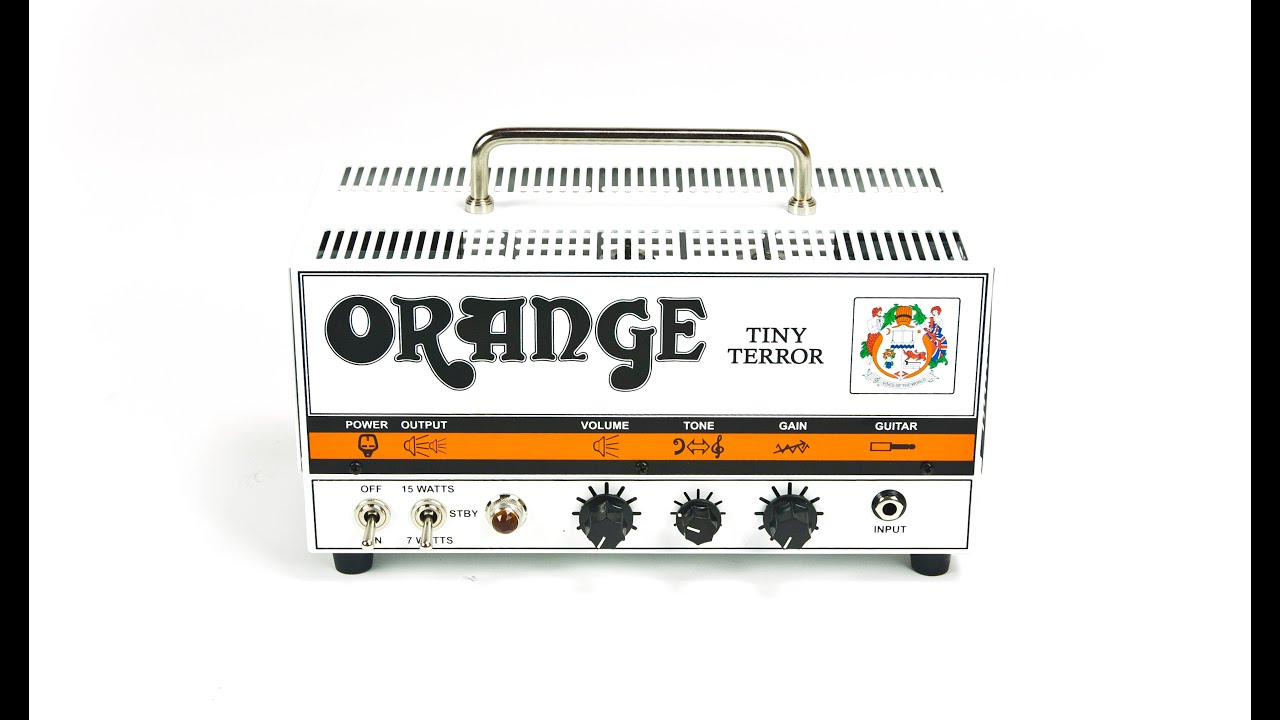
Anyone who’s toured with an Orange head or cab will tell you, they can be weighty beasts indeed – sonically and physically. Which is perhaps why the introduction of the Tiny Terror series in 2006 was such a big hit, and helped popularize the “small but mighty” concept of lunchbox amps internationally for the industry as a whole.
In the years that followed, the British company released the twin-channel Dual Terror, the metal-voiced Dark Terror and the miniature Micro Terror, as well as signature versions for Slipknot guitarist Jim Root and ex-Mastodon six-stringer Brent Hinds, who sadly passed away in August.
EVH 5150 III 100W head
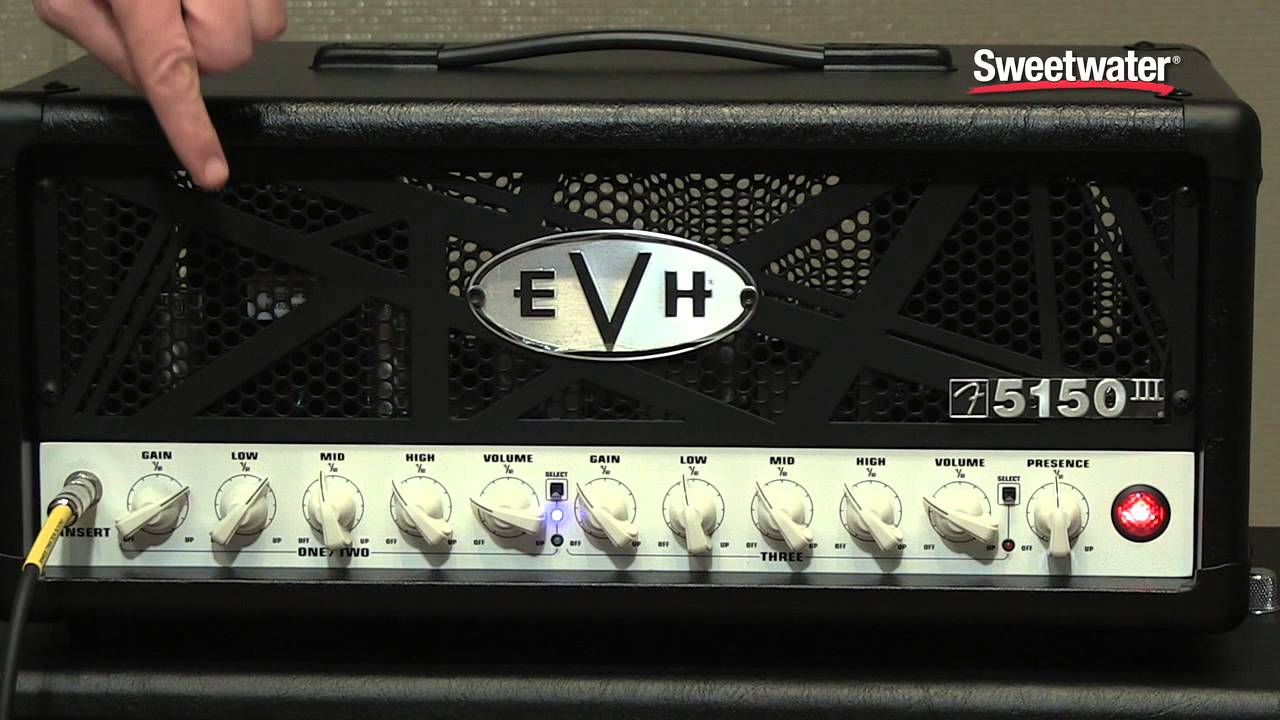
Though the 5150 name stretches as far back as the early Nineties, when Eddie Van Halen famously partnered up with Peavey for his own amp line referencing a beloved 1986 Van Halen album, the series was reborn in 2007 through a deal with Fender for the all-new EVH range.
These Mark III amps quickly struck a chord with high-gain players, with the likes of Scott Ian, Joe Duplantier and Wes Borland depending on the earth-conquering 100-watt heads live and in the studio.
With a lineup that now includes EL34 and 6L6 power tubes and lower-watt combos, they’ve become one of the most highly regarded go-to amps for modern metal. In 2021, a year after the rock virtuoso’s passing, EVH expanded the 5150 series with the Iconic line, which was co-designed with original 5150 engineer James Brown.
Ibanez RG2228
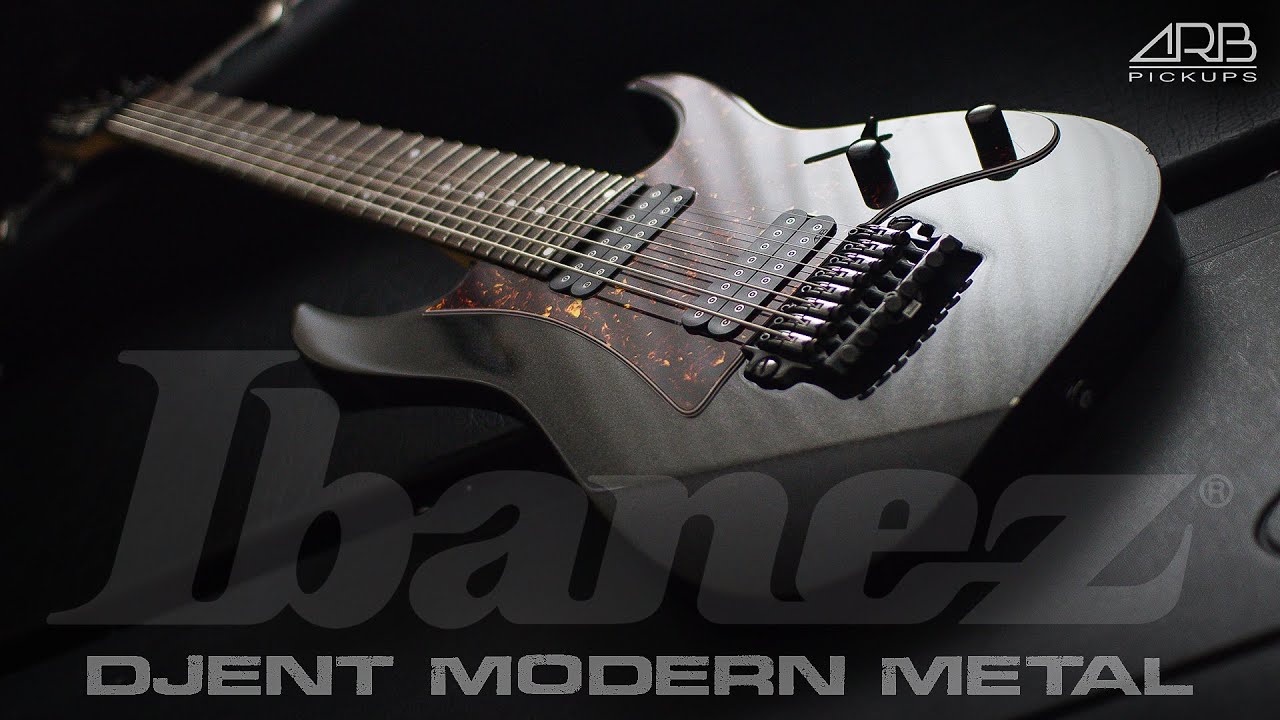
The world’s first mass-produced eight-string electric guitar was unveiled by Ibanez in 2007, and it’d be fair to say things haven’t been quite the same ever since, with other companies like Jackson, Schecter and ESP jumping on the bandwagon soon after.
This initial run of extended-range instruments from Ibanez ended up being popularized by tech-metal giants such as Meshuggah guitarists Fredrik Thordendal and Mårten Hagström, Tosin Abasi, Dino Cazares and Misha Mansoor – and since then, we’ve seen other types of eight-strings in the hands of John Petrucci, Matt Bellamy and, believe it or not, John Mayer.
However, we feel it’s important to remember that Ibanez was first on the scene, just as they were with the world’s first mass-produced seven-string guitar – Steve Vai’s UV7 Universe, launched in 1990.
Strandberg Boden

The world’s first headless guitar was released by Steinberger in 1979 and ended up becoming a hallmark of the Eighties, ending up in the hands of players like Allan Holdsworth, Eddie Van Halen and Mark Knopfler.
When the decade came to an end, however, these instruments practically disappeared into obscurity. That is, until Swedish engineer Ola Strandberg started building his first ergonomic guitars in 2007, with models like the Boden signaling a new dawn for headless instruments, which led to artists like Plini, Per Nilsson and Jordan Rudess signing up to endorse them.
Since then, other companies – including Ibanez, Schecter, Kiesel and Mayones – have released their own headless designs, though Strandberg are widely considered to be the leading modern-day specialists on this ultra-user-friendly style of guitar.
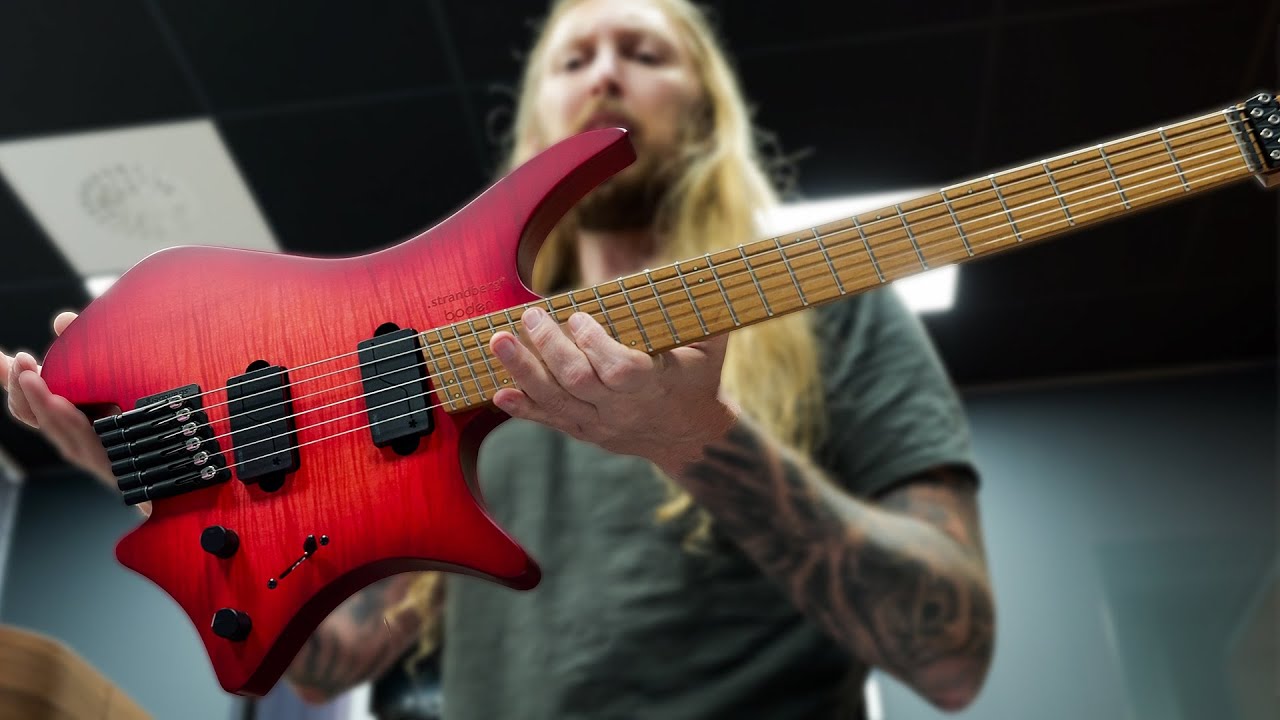
Ola Strandberg: “The headless design is a means to an end. I set out to create a guitar that would be easier and more comfortable to play, by being more ergonomic. This means making the guitar more lightweight and balanced, which is impossible to achieve with a conventional guitar construction that relies on heavy [machine heads] mounted to a headstock.
“But I didn’t stop there. I chased lower weight everywhere I could find it, starting with the hardware itself. I designed my own headless hardware out of lightweight aircraft-grade aluminum, keeping only the parts subjected to wear and tear in stainless steel and making sure they were easy to replace. I was also very careful to maximize the energy transfer from the vibrating strings.”
Sarah Longfield: “The Boden is so much more comfortable to play than other guitars. It’s lightweight, great to travel with and inspiring to write with. I’d say it’s allowed me to push the limits of my playing because I’m not restricted in literally any way, thanks to the design choices that went into it.”
MXR Carbon Copy Delay
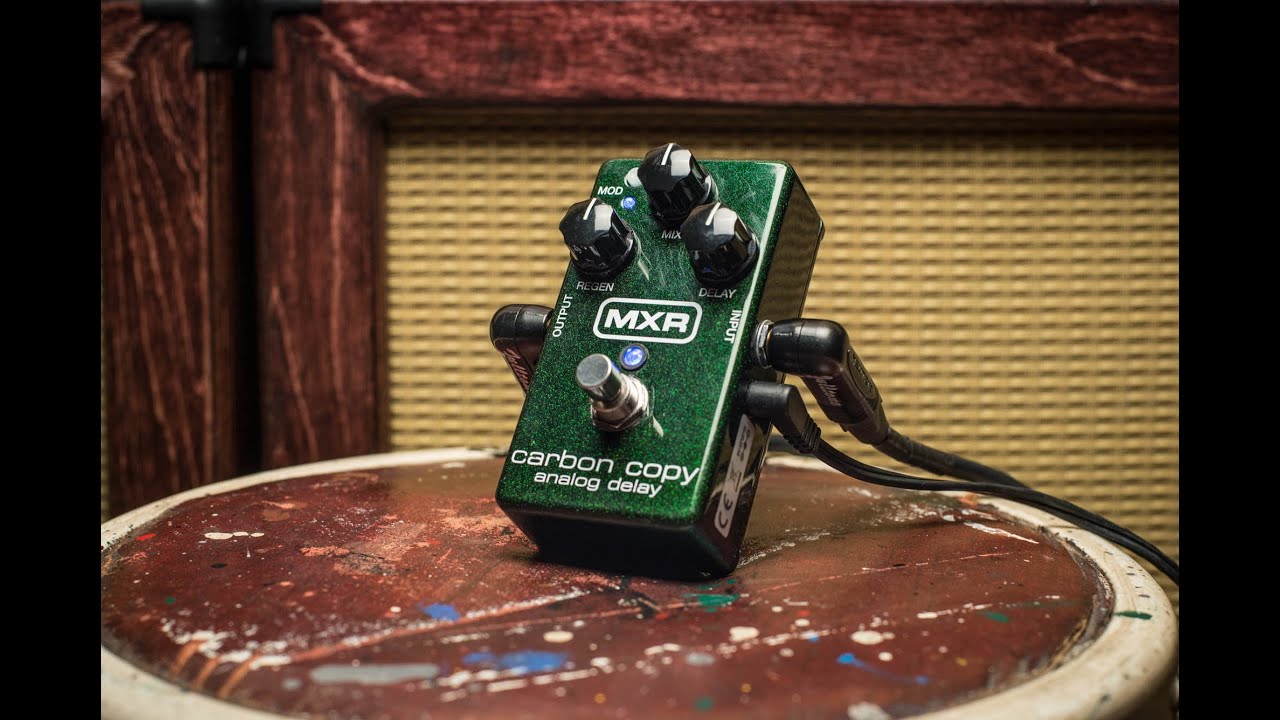
Much like the POG, the Carbon Copy is the kind of pedal that feels like it’s been around for a lot longer than it actually has. The MXR pedal was unveiled in 2008 and played a huge role in renewing the popularity of analog delay circuits, with the dark lo-fi tones of the bucket brigade repeats adding an ambience that did not distract from the notes that followed.
The term bucket brigade device (BBD) came from how firefighters would pass buckets down a line to extinguish a fire, with a certain amount of spillage and time lost with each handover. In pedal topology, it refers to how continuous filling and emptying of capacitors inside the BBD chip slow down and change the character of the signal, causing a delay as it passes through.
Yvette Young: “I became acquainted with the Carbon Copy while recording the Covet record Effloresce. My MXR rep at the time recommended it, and I love how the repeats sound – so rich and warm, especially when switched on bright. It’s a quintessential part of the Covet sound now, with any riff that involves a pronounced cascading delay.”
Charvel USA Pro-Mod San Dimas Style 1, Style 2 and So-Cal Style 1

Back in 2008, Charvel announced the return of some of their American-made classics, and it didn’t take long for people to marvel at the quality of builds and tones. Superstrat fans delighted in the San Dimas Style 1 and So-Cal Style 1, which came with DiMarzio humbuckers and a top-mounted Floyd Rose tremolo, while those more comfortable with a Telecaster shape could find similar features on the San Dimas Style 2.
These guitars are now manufactured overseas and continue to do well, though it’s the USA models from the years around the initial release that really left their mark on shredders all around the world.
Angel Vivaldi: “After eight years with Ibanez, I was looking for a new home, and was sent a few Jacksons and a Charvel. I wasn’t expecting the Charvel to resonate as much as it did, but it just felt right in my hands. That Charvel created a domino effect in terms of what I looked for. It was a balance of classic and modern specs, which was an ethos I carried in designing my signature Charvel Nova models.”
Fender Jim Root Telecaster and Jazzmaster
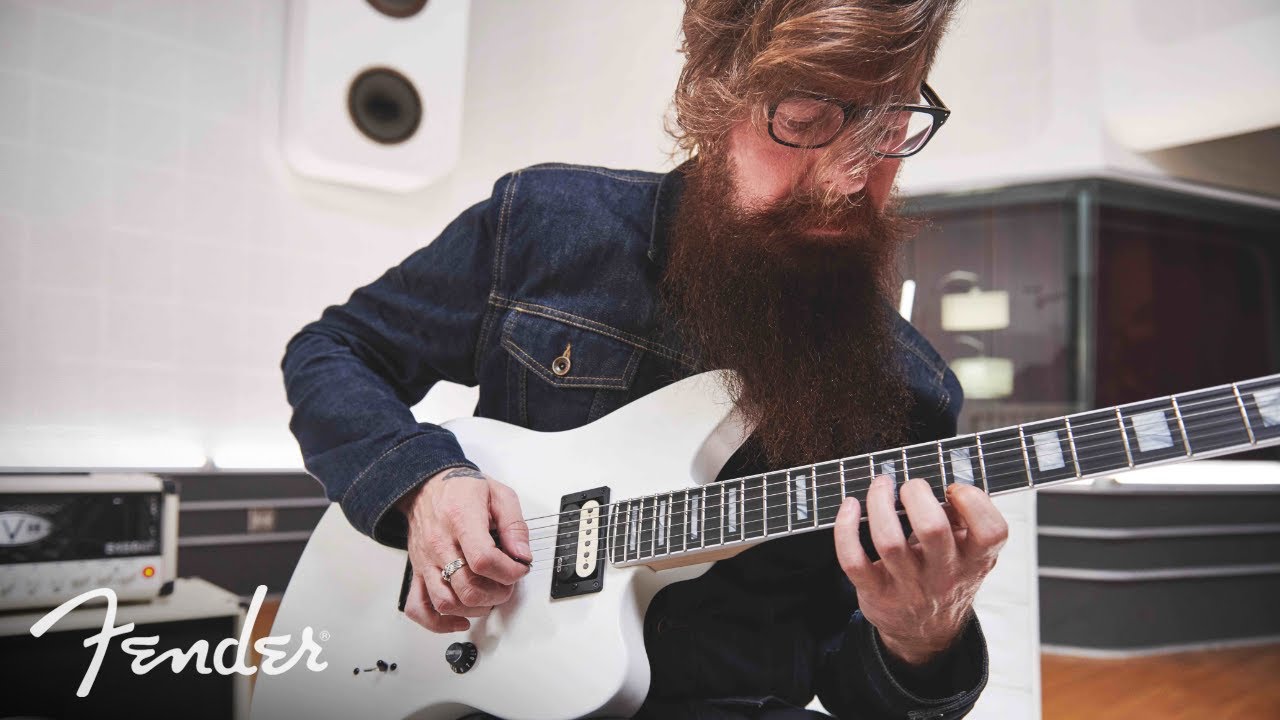
Though he started his career in Slipknot playing Jackson and PRS guitars, it was the group’s third album released in 2004 that saw Jim Root embracing classic Fender designs.
This led to the launch of his first signature model, the Jim Root Telecaster in 2007, which was later followed by his own Jazzmaster signature in 2014. At a time when most metal players were using modern-style instruments, some might say the Slipknot guitarist helped kickstart a trend of high-gain players using traditional shapes and offsets.
“When you first pick up a Tele or a Jazzmaster, you’re not sitting there thinking about doing neoclassical scales or shredding, per se,” Root told us last year. “But the more you play them, the more you start doing that kind of stuff. And then if you play the songs that are in your set that do have solos, it’s like, 'Wow! They kind of rip!'”
Mooer Mini Pedals

The arrival of Mooer in 2010 signaled the beginning of the Chinese pedal boom, with quality parts and tones coming at a fraction of the usual price. Their Micro pedals were also popular for taking up very little pedalboard real estate, allowing guitarists to have almost double the amount of tonal options at their feet.
The Shenzhen-based electronics brand took that concept even further in 2013 with the Spark series – a basic footswitch with mini knobs by the connection points at the top – and have since expanded into instruments, amps, multi-effects and audio interfaces.
It hasn’t all been smooth sailing, however. In 2019 it was reported that Electro-Harmonix had won a long court case against Mooer, citing that their Mooergan and Tender Octaver pedals were exact copies of their C9 Organ Machine and Micro POG.
Gary Holt: “I’ve got the Mooer 005 Brown Sound 3 dual-channel pre-amp, which is a 5150 Micro pedal that fits in your pocket. I’ve plugged it into the effects return of a Marshall Jubilee combo, and it’s so crushing. I sent a video of it to Scott Ian, and I said, 'Check this out, dude!' And when we did the final Slayer show in Santiago, Chile, for 60,000 people, Scott used it as his primary tone – this little Mooer pedal!”
Two Notes Torpedo VB-101
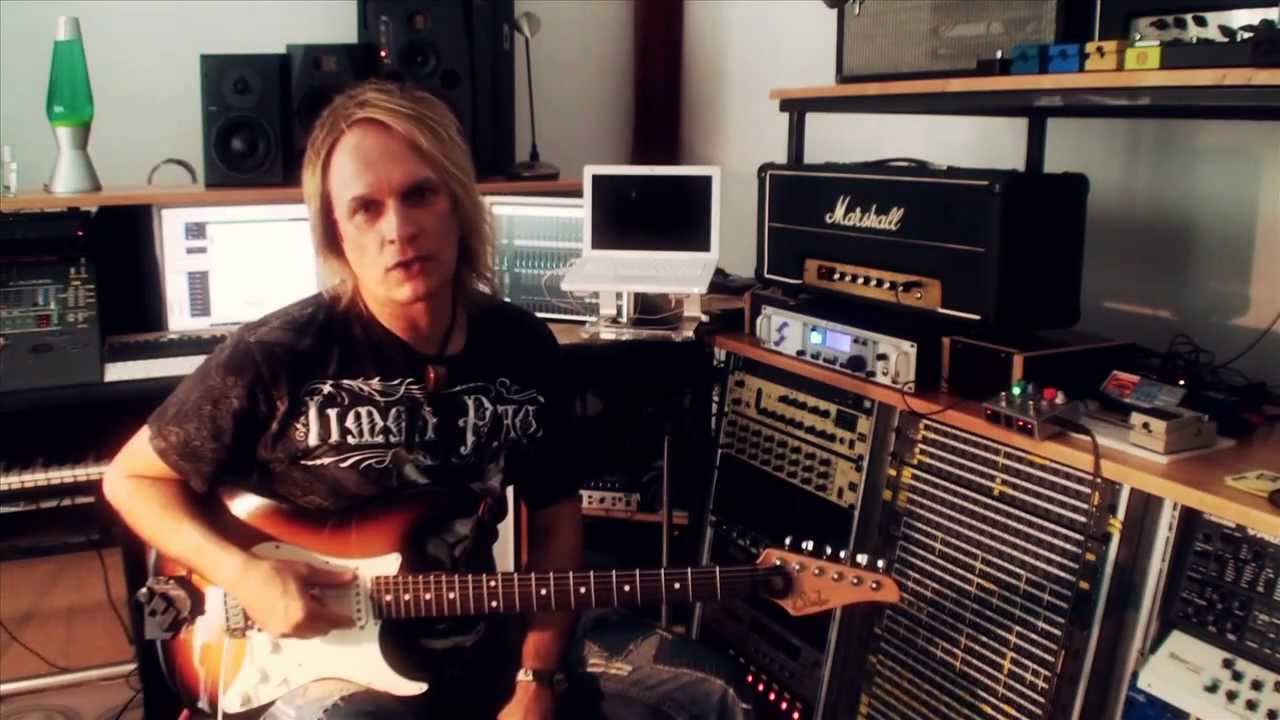
Home recording for tube-amp purists got a lot easier when French company Two Notes released their Torpedo VB-101 studio rack in 2010. The guitar speaker and microphone simulator allowed users to plug in their amplifiers direct for silent mic’ing, with control over the usual parameters such as the choice of speaker and microphone, as well as the placement of that microphone.
It would kickstart a whole wave of impulse response devices, saving time and money by streamlining the recording process with dependable studio-grade results. Two Notes would continue to innovate in this field with reactive load box products like the Torpedo Reload and Torpedo Captor, which also boasted attenuation technology for those hoping to keep levels down.
EverTune Bridge

Aftermarket bridges have been around for decades, though it’s the EverTune units that have really stolen the show over the last 15 years. It’s a mechanical system of springs and levers designed to keep your instrument in tune under any conditions while maintaining constant tension.
Naturally, it’s the kind of thing that comes in handy and saves countless hours in the studio, though more and more artists have been seen using the EverTune live on stage, from Brian "Head" Welch and Matt Heafy to Steve Stevens and Devin Townsend. At the end of the day, it really doesn’t matter how good you are if your guitar isn’t in tune, right?
Diamond Rowe (Tetrarch): “We play six-string guitars, but our main tuning is drop A, which is relatively low, especially for a six-string that isn’t a baritone. The EverTune makes everything so much more stable as far as tuning and string tension, which is such a huge help in the studio and live. With each passing year, I see more and more people with these bridges, and with the rollout of the bass bridge, I think it’s game over."
TC Electronic PolyTune

Until the PolyTune came along in 2010, it’d be fair to say that the Boss TU pedals were the industry standard for floor tuners. What set the revolutionary TC Electronic device apart, however, was the ability to check all six strings with one single strum at any given time, saving precious seconds on stage while under the unwavering glare of any crowd.
With users no longer required to check each string individually, the pedal naturally ended becoming a best-seller for the company, and its success has continued through its various incarnations including mini versions, clip-ons, darker Noir enclosures, apps and plug-ins.
Trey Gunn: “I was searching online for clip-on tuners and came across the PolyTune. It’s the only tuner I use! I have one clipped onto all of my main instruments. It’s ridiculous how well the ‘poly’ part works; for my instrument, the poly isn’t relevant since I don’t have any open strings. But just using it as a regular tuner, it’s super-accurate – and my favorite.”
Martin LX1 Little Martin and Taylor GS Mini
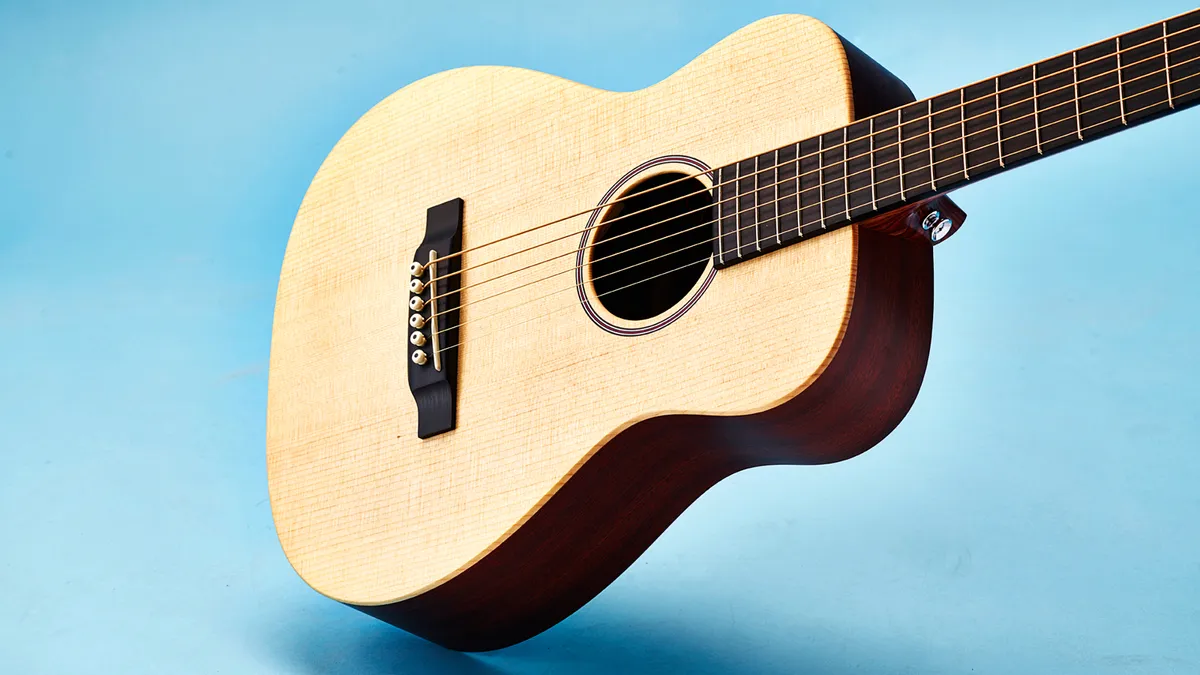
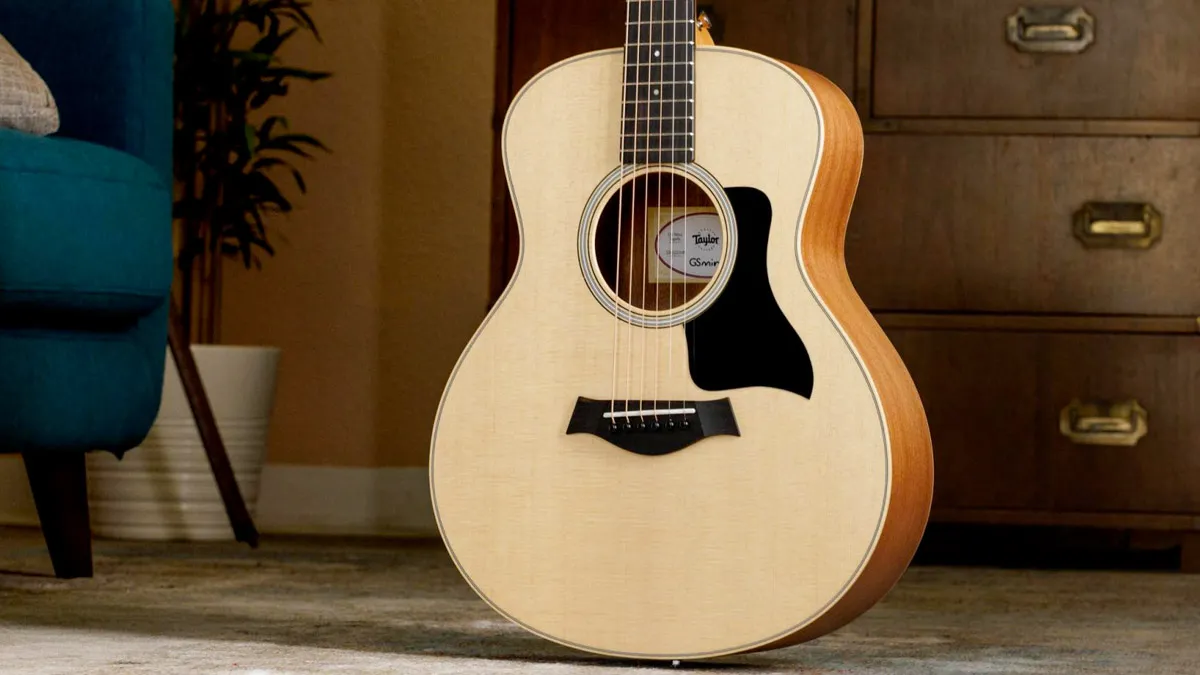
Travel guitars have become a big thing over the last few decades, with artists like Ed Sheeran, Damon Albarn and Taylor Swift being known to use mini acoustics on stage and in the studio. They’re the perfect instruments for tour-bus jams, backstage warmups, busking or even just to have lying around in the living room.
Naturally, the biggest brands in the acoustic world were quick to put out models that could produce big tones in petite packages – both of these featuring sitka spruce tops, with the main differences being the material used for the neck, back and sides, scale length and fingerboard.
Ed Sheeran (in 2013): “I had been playing this same model [Martin LX1E] for six years, carrying it on public transport, sleeping at friends’ houses. Carrying a huge case never appealed to me; I just put it all in a rucksack and had everything in one bag. I played small-ish venues then, so I didn’t need a big sound. But the bigger the venues got, I realized I could play arenas and stadiums with this guitar. It has a huge sound. It’s done everything I’ve needed it to do.”
Snark headstock tuner
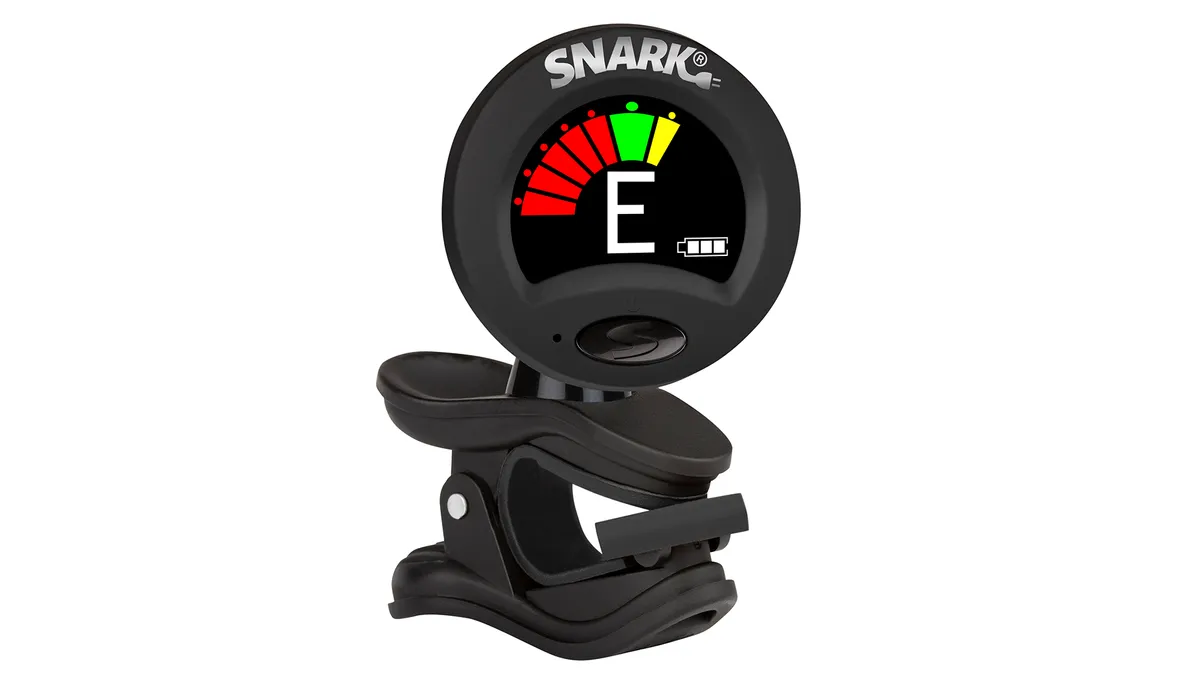
The first Intellitouch headstock guitar tuners arrived in the Nineties, measuring sound with a contact microphone that sensed vibrations from the wood in order to show the user how far off they were from any desired pitch.
Companies like Boss and Korg then came into the picture, making the units smaller and the displays larger and brighter, though it didn’t feel like clip-ons posed a threat to floor or rack tuners till the 2010 arrival of Snark tuners.
They were highly accurate and didn’t distract as much from the instrument in our hands. They’ve since launched Snark Rechargeable, Snark Super Tight and Snark Air – the latter of which remains hidden behind the headstock, leaving audiences unaware of your diligence.
2011 to 2015
Kemper Profiler

The Axe-Fx did a lot to change perceptions about digital gear, but for some guitarists, it was a little too in-depth and challenging to navigate. Kemper debuted their Profiler at NAMM 2011 and it immediately made waves for being more vintage-inspired, at least at surface level.
Back in the heyday we had huge touring budgets and room for large travel rigs. Now you can store all your best amps on a USB stick
Michael Wilton
The technology inside was in fact quite the opposite and incredibly forward-thinking, allowing guitarists to create “profiles” or captures of existing amps by sending a series of blips and beeps out, then measuring the response to create a digital replica.
With an assortment of effects and more storage space than any guitarist could ever possibly need, it soon joined Axe-Fx at the very forefront of the digital revolution and remains one of the market leaders to this day. Famous users over the years have included Tony Iommi, Pat Metheny, Cory Wong and Steve Lukather.
Michael Wilton (Queensrÿche): “Kemper is the best of the ‘box units’. It’s a sophisticated analyzer that copies your amplifier sound(s). The big difference for me is consistency. That is key, and it’s the game-changer for being on tour. For the touring musician, it’s a complete no-brainer. Back in the heyday we had huge touring budgets and room for large travel rigs. Now you can store all your best amps on a USB stick. This allows you to load and unload on any Kemper. It gives complete consistency of the sound for fans.”
TC Electronic TonePrints
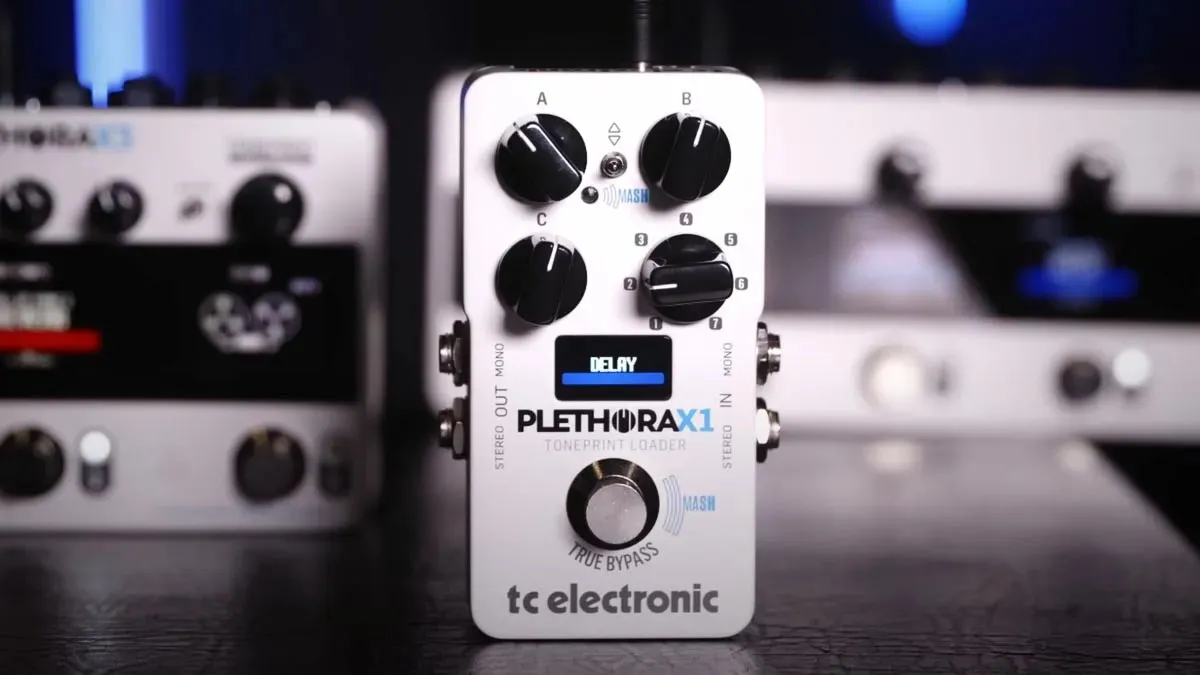
Danish company TC Electronic became front-runners in the smartphone age, thanks to the TonePrint series launched in 2011, which allowed users to beam artist and custom presents from their phones and into dedicated delay, reverb, chorus, flanger and vibrato pedals on the board.
By signing up players as esteemed as Robben Ford, Albert Lee, John Petrucci, Paul Gilbert, Joe Perry, Orianthi and Steve Morse to design their own tones, users were able to gain instant access to the sounds of the world’s greatest guitarists.
In 2020, the concept was taken a step further with the introduction of the Plethora X5, a multi-effects unit with five blanket virtual pedals that users could switch in and out at their pleasure. Its success led to the launch of the X3 in 2022 and this year’s single footswitch “Swiss army knife” X1 version.
Steve Morse: “Tore Mogensen [formerly with TC Electronic] worked with me to get a TonePrint that would work well with a short delay (like a chorus setting) and a longer, repeating one. Being able to load a nice reverse sound effect into one allowed me to recreate some of the reverse effects from our recordings.
“It’s nice that they always include a way to loop – for a quick jam session on your own… The ability to choose a carefully tailored custom TonePrint and turn it into an inexpensive, great-sounding pedal makes it a no-brainer to have."
Yamaha THR

Named after the concept of a third amp – its designers noting how musicians would have a main tube stack for larger stages and a combo for small venues and rehearsals – the THR series was launched in 2011 as a desktop answer to amplification, providing big tones at low volumes.
Users could choose between Clean, Crunch, Lead, Brit Hi and Modern channels, and also switch between a number of effects including delay, reverb, tremolo, chorus, phaser and flanger.
Another big part of the appeal was the vintage aesthetic, with faux tube lights glowing within the metal grille – when in actuality it was Yamaha’s Virtual Circuitry Modeling technology at the core of the tone.
“Each model is based on a real amp, but they’re all modified,” said Yamaha Global Guitar Strategy Manager Julian Ward at the time of release. “It’s not a copy of that amp; it’s our version. It’s a bit like boutique-amp manufacturers. They were modifying circuits with physical components and a soldering iron. We’re effectively doing the same thing with software.”
Strymon BigSky Reverb
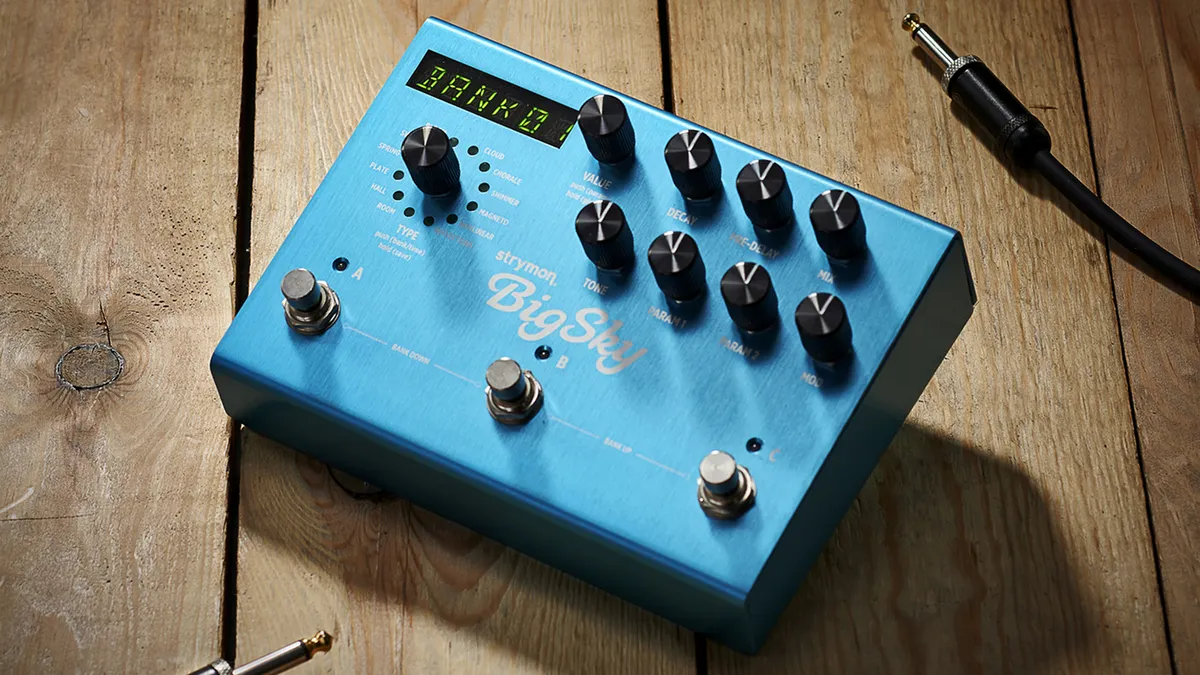
It almost feels like reverb pedals were just humble reverb pedals until the Strymon BigSky came along in 2013, ushering in a new era of pro-studio quality reverb units that sounded as gargantuan as they did pristine.
The days of choosing between spring and plate were clearly long gone: this floor-based workstation coming with more options than ever, ranging from the classic and traditional to the ultra experimental and ambient.
The BigSky also boasted hundreds of customizable preset slots, MIDI and USB functionality, a dedicated infinite/freeze footswitch for creating atmospheric pads to play over and even the option to use two reverbs at the same time. There was a good while where the BigSky and Timeline delay, released in 2011, were the cream of the crop go-to pedals for time-based effects on any professional’s board.
Blake Lee (Lana Del Rey): “I was at Electric Lady Studios working with Lana, looking at clips of the pedal, and she said, ‘We need that!’ We ordered one and used it while writing Cruel World. It’s really easy to use for the amount of sounds it can give you, and the Cloud and Bloom settings are inspiring. The BigSky has many high-quality reverbs in a compact package, and it can transition from subtle verb to smear and obscurity very quickly.”
DigiTech Drop

DigiTech has produced a number of designs over the years, but let’s face it, the Whammy will always be their greatest creation. In 2014, they reimagined some of the core features encased within their bestseller as a smaller-sized stompbox in place of the original expression pedal design.
It quickly made headlines for its smooth and natural polyphonic tracking that could take players from one semitone to one whole octave down, as well as a momentary/latching switch for new sonic textures that could be used as a rhythmic effect.
With its fast reaction time and realistic pitch-shifting, it struck a chord with guitarists looking to create baritone and seven-string sounds without wanting the hassle of traveling with one.
Fishman Fluence Pickups
In all fairness, electric guitar pickups haven’t evolved all that much since Seymour Duncan and DiMarzio started building aftermarket units for players on the hunt for new tonal horizons.
Some are vintage-voiced and passive while others might be scooped and modernistic using an active circuit, with varying degrees of brightness and power in between, though it’s all been relatively the same kind of technology. That all changed in 2014 when Fishman – a company highly lauded in the acoustic world for their pickups and amps – decided to move into the electric field with their all-new Fluence line, consisting of one single-coil set and a choice between Classic or Modern humbuckers.
Instead of using the traditional wire-wound coils that are susceptible to the manufacturing tolerances and tonal inconsistencies, their designs incorporate a combination of new technologies including Fluence Core “coils” and true Multi-Voice electronics, benefiting from the same kind of quality control you get with 3D printing.
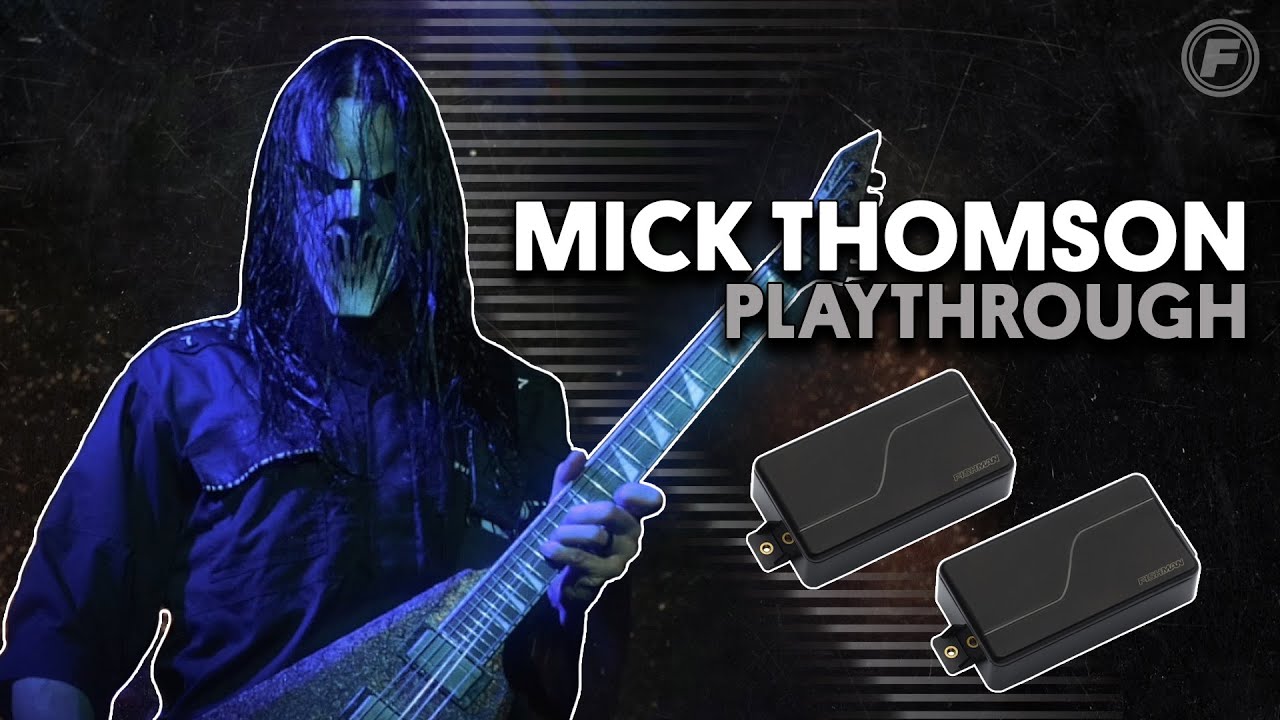
Since then they’ve released signature sets for the likes of Mick Thomson, Tosin Abasi, Devin Townsend, Stephen Carpenter and Tim Henson, stealing some of the thunder from active-circuit specialists EMG.

Jennifer Batten: “I was using – and later demoing – the Fishman TriplePlay MIDI system, so I got to know the Fishman staff. Then, hearing about how quiet the pickups are was intriguing; finally, knowing that Greg Koch uses them exclusively made me dip my toe in the water. He’s always got a killer, fat, beefy tone.
“He tours with a big casket-sized guitar case with a Tele, Strat and Les Paul, which are all stocked with Fishmans. Anyone who has ever had miserable buzzing through their pickups in a club with crap electric would be impressed by these. I’ve had that club noise ruin entire nights for me. Ground lifts and various hum eliminators rarely work, but the pickups do.
“The happier you are with your sound, the easier it is to create without fighting the sonic elements. I really like the Modern in the bridge plus Fishman’s Strat singles HSS combination. The modern breaks up in a really pleasing way, and I’m super happy with it on recordings. I’m really doing a deep dive into the modeling world, combined with IEMs.”
Blackstar Fly 3 Mini Amp

Until the Blackstar Fly 3 arrived in 2014, mini amps were quiet and sterile-sounding tools that didn’t make practice all that fun. Blackstar, however, had other ideas and designed something that was impressively loud for three Watts – with two channels, tape delay and their patented Infinite Shape Feature (ISF) to fine-tune your sound accordingly.
Since then, it’s been a big hit in dressing rooms and tour buses around the world – the perfect portable warm-up tool for any kind of guitarist before they hit the stage. As well as versions for bass, acoustic and Bluetooth, they’ve also released signature runs for artists like Def Leppard, Jared James Nichols, the Dead Daisies and Bones UK.
Doug Aldrich (The Dead Daisies): “I love that it’s battery-powered, so it’s easy to take anywhere. It’s super lightweight and sounds better than anything I’ve heard like it. The sounds out of this amp are amazing and truly give you the sound of a big backline amp. For practice, the clean channel is perfect; it has a tiny kind of compression, and you can really work on things. Its sounds have kept me occupied for hours in a hotel room, and I’ve used it for years to write songs.”
ToneWoodAmp and Yamaha TransAcoustic

Some might say adding effects to an acoustic guitar will end up being a distraction from the acoustic experience as a whole. That’s fair enough; there are plenty of people out there who just want to strum without needing to plug anything in. Which is precisely why the ToneWoodAmp, released in 2014, was such a brilliant invention and ended up receiving a big thumbs-up from players like Andy McKee, Mike Dawes and Larry Mitchell.
The concept of getting essentially wireless reverb and other effects to emerge from the sound hole of my favorite guitar was something I’d never considered
Mike Dawes
A non-invasive unit attaching to the back of any acoustic using an internal magnetic X-brace, it could add effects like reverb, delay and tremolo to the guitar’s natural sound.
Two years later, Yamaha announced their first TransAcoustic model, which came with built-in reverb and chorus, thus giving users another way of hearing effects without the need to plug anything in.
Mike Dawes: “The concept of getting essentially wireless reverb and other effects to emerge from the soundhole of my favorite guitar was something I’d never considered, and it's been a total creative game-changer. It’s just better and easier, honestly. I can stay on my couch, or on tour in a hotel away from my nice studio gear. I can get studio-grade effects anywhere, and because I’m often travelling, it’s just perfect for me. It’s also great for writing, as you’d imagine, as it’s always ready to accompany inspiration.”
Ernie Ball Music Man St. Vincent Signature
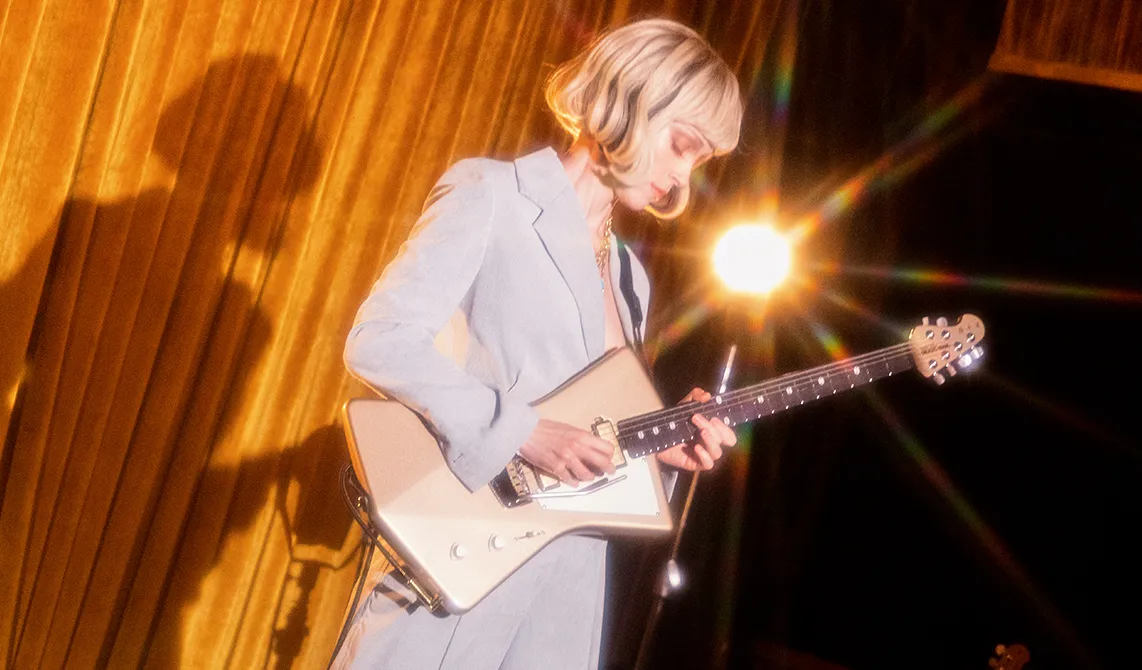
Though St. Vincent’s signature model is technically a gender-neutral affair, it made waves in 2015 for being the first guitar designed from the perspective of a female player. “For me a guitar that is not too heavy is really important because I’m not a very big person,” she told Guitar World not long after the launch. “I can’t even play a Sixties Strat or Seventies Les Paul. I would need to travel with a chiropractor on tour in order to play those guitars.”
In the same interview, she revealed how most guitars would “cut across one of the best features of the female body, which is your waist” and why she was “glad that another guitar exists that is sympathetic to the female form,” bringing her great pride in her role as “a beacon for women.”
The St. Vincent line has gone from strength to strength with various updates since its launch, and it has ended up in the hands of Tom Morello, J Mascis, Emily Roberts, Mateus Asato, Willow Smith and – most impressively – Spinal Tap’s Nigel Tufnel.
Line 6 Helix and HX Stomp
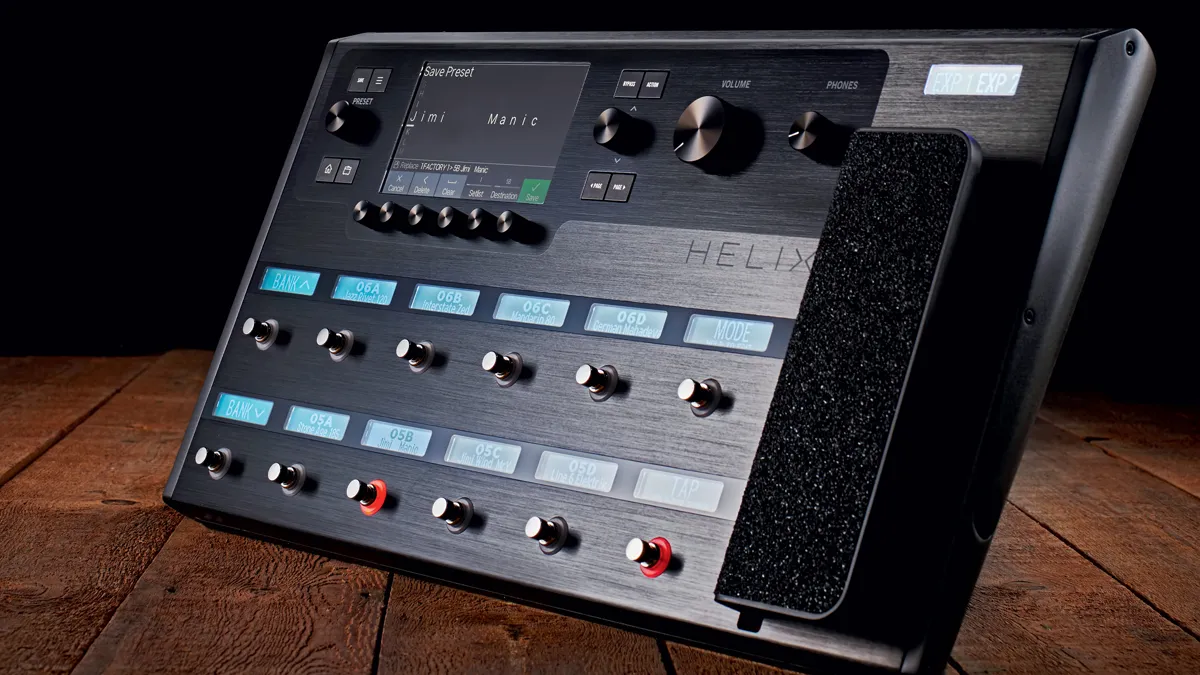
Announced in 2015, the Helix series was Line 6’s way of declaring they were not going to get left behind in the modeling phenomenon they were instrumental in pioneering. The breakthrough HX engine boasted dual-DSP processing to deliver a level of realism that the company had never achieved before, bringing with it a whole new playing experience.
With 12 footswitches, multi-color LED rings and a graphic display, plus MIDI capabilities and four assignable effects loops, it was the most comprehensive floor-based system of its time.
“Helix is the start of a new chapter in the way guitarists relate to technology,” said Line 6 President Marcus Ryle around the release. “Line 6 has spent over 25 years refining and evolving modeling technology. We are confident that Helix will sound and feel amazing to both analog purists and tech savvy players alike.”
Vernon Reid: “It’s remarkable that the same pedal [HX Stomp] has been supported through firmware updates a decade on. It’s further remarkable that the Helix line will still support that multi-effects pedal after the introduction of its new Stadium flagship model.
“There’s a loyalty to its customer base that is unprecedented. There are many other modern guitar products I admire, but the support I’ve gotten from Line 6 Director of Artist Relations Matt Ferguson and Chief Product Design Architect Eric Klein has been phenomenal.”
Yamaha Revstar

The first new guitar line from Yamaha in over a decade was launched in 2015, with many noting how it seemed more vintage-leaning in both sound and aesthetic. The instruments took influence from classic Yamaha designs from over the years – such as the headstock of the SA15 from 1966, the double cutaway associated with their Bob Marley-approved SG1000 and the contoured scratchplate and offset silhouette of the Super Flighter series from the late Seventies.
The new range ended up being adopted by modern trailblazers like Matteo Mancuso and Chris Buck, who had no trouble showing the world just how good these guitars could sound in the right hands.
From the super affordable and Indonesian-made Element and Standard models to the Japanese-manufactured Professional flagships, they soon built up a reputation for being some of the finest instruments to be found in various price brackets.

Chris Buck: “I loved the idea of being able to put my stamp on a new guitar that didn’t come with the baggage of legacy guitars. It felt like an opportunity to grow with the guitar.
“On a purely practical level, one thing that drew me to the Revstar was that it combined elements of two of my favorite guitars: the simplicity and versatility of the Telecaster, but with the gravitas and presence of a Les Paul. Over time, it has become an integral part of my sound, and of all the guitars I’ve played, it is the one on which I’ve felt most at home.”
2016 to 2025
PRS Silver Sky
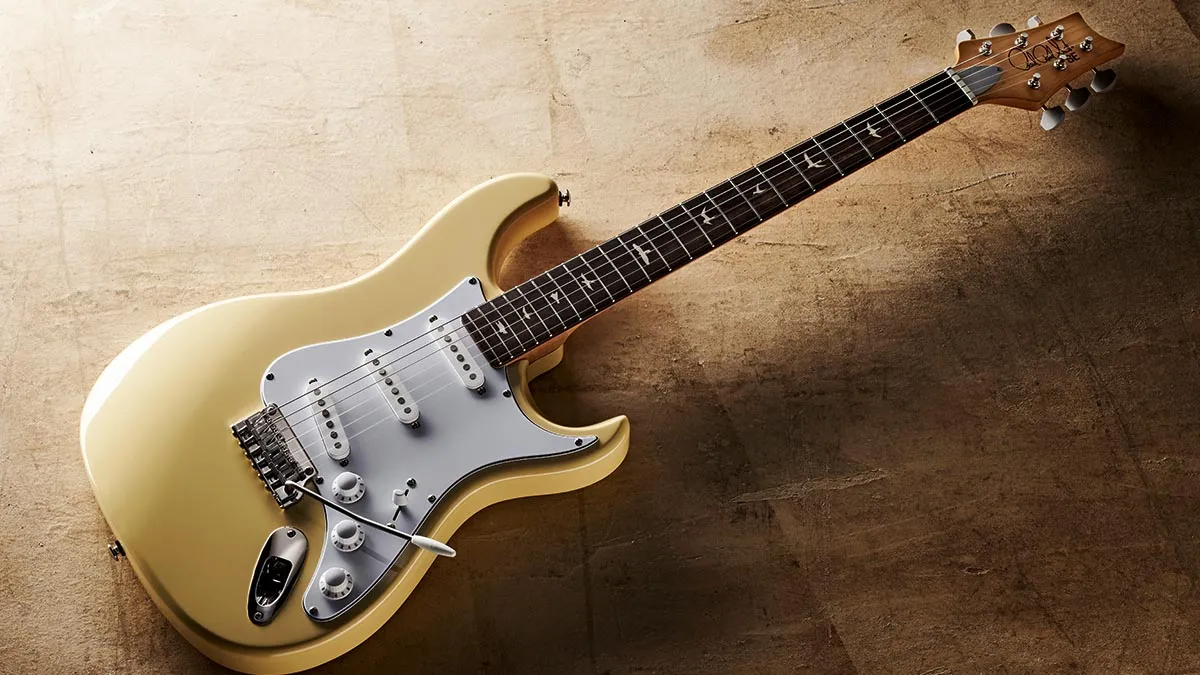
The Silver Sky, first launched in 2018 as part of the American-made PRS Core series, may not have been the company’s first John Mayer signature guitar, but it certainly will be remembered as the bluesman’s most infamous.
Taking obvious cues from vintage Stratocasters – specifically a 1964 model belonging to Mayer – it also blended in some of the modern features PRS is renowned for, offering players a best-of-both-worlds kind of scenario.
To be able to call the guy who started the company and talk directly about ideas and how to build them, that’s good for you
But PRS borrowing so heavily from arguably the world’s most nostalgic design brought its fair share of criticism, becoming one of the industry’s most controversial releases since Gibson’s ill-fated robot tuners of 2007.
“It was not going to work with Fender,” said Mayer in a 40-minute Instagram livestream. “They weren’t gonna be able – one way or another – to bring the vision I had to life. So, not pissed off, I wanted to go somewhere where they could bring that vision to life. And it made a lot of sense to go to Paul Reed Smith because that’s the guy who started the company.
“To be able to call the guy who started the company and talk directly about ideas and how to build them, that’s good for you. It’s good to have artists be able to call the guy who runs the company.”
The SE Silver Sky was introduced in 2022, built with a poplar body instead of alder; it ended up becoming the best-selling guitar on Reverb for two consecutive years.
Taylor V-Class Bracing

A revolutionary approach to bracing from Taylor, unveiled at NAMM 2018, could very well be the biggest development in the acoustic world since the introduction of the electro-acoustic.
Instead of relying on the traditional X-style design that was by that point more than a century old – a tried-and-tested method that created an inherent trade-off between volume and sustain – Master Designer Andy Powers engineered a way to increase both while also improving intonation.
The company explained how the new V-Class bracing method controlled the flexibility of an acoustic’s top, creating a more orderly rocking motion across both sides to produce greater volume, while maintaining stiffness along the middle for extra rigidity to keep the strings in motion. The general consensus was overwhelmingly positive, with users noting how these newest models were resonating and ringing better than ever before.
Andy Powers: “We believe V-Class bracing allows the acoustic guitar to do things it had never really done before. For decades, electric guitars had been evolving with new pickups, amps, pedals and other technology, but acoustics were largely sticking to what had become a common form.
“With V-Class, the acoustic guitar offers fundamental musical improvements – it plays more in tune across the neck, sustains like crazy and – at the same time – has the volume and dynamics players want. It opened the door to a new era of design for us that allows us to evolve as musicians evolve – and gave musicians a tool that can inspire them in new ways.
“To me, fresh musical inspiration is what makes a game-changing idea. At Taylor, V-Class reinvigorated our passion to improve the options we offer players. We feel this platform will allow us to continue developing a wider range of voices to serve and inspire players long into the future.”
Boss Katana

First introduced in 2016, the Katana helped turn Boss into one of the world’s biggest amp companies in a relatively short space of time. Using a combination of analog circuitry and digital signal processing, the series became famous for offering a whole range of amp models and effects as well as other extras in one complete package, with more functionality, versatility and affordability than almost anything else out there.
Another key factor in their rise to fame was the sheer amount of power they could offer – though they shared a lot in common with practice amps, the Katanas were made loud enough to grace all kinds of stages the world over.
The updated Katana Gen 3 models were unveiled last year, joining the higher spec Katana Artist, the wireless Katana-Air, the Katana:Go for headphones and Katana-Mini.
Fender American Acoustasonic Series

Is it an electric or an acoustic? The answer is neither, or perhaps both, depending on your viewpoint. In any case, when Fender launched their very first guitar from the Acoustasonic series in 2019, the world stopped and took notice because it was unlike anything else we’d ever seen.
“Our objective was to develop an acoustic guitar for contemporary artists,” said Fender CEO Andy Mooney around its release. “The end result of our three-year R&D exploration met all these criteria and exceeded our most optimistic expectations with the launch of the American Acoustasonic Series.
“If the American Acoustasonic were a car, it would be a high-performance SUV. It is not just a state-of-the-art acoustic guitar that sounds great on stage – it’s a state-of-the-art electric guitar that sounds great on stage. That’s a challenge Fender was proud to take on.”
Fender Tone Master Amps and Tone Master Pro

At Summer NAMM 2019, Fender debuted the Tone Master series, reimagining some of their best-selling amps using digital technology – which, against all odds – ended up sounding very close indeed.
Even the aesthetic was kept faithfully close to the originals, with only the keen-eyed among us being able to discern the differences between a real Deluxe Reverb and Twin Reverb against these latest iterations.
Given how nostalgic guitar players are about amps of this ilk, the new designs had to deliver the goods tonally, and their success led to the release of the Tone Master Pro in 2023, housing all kinds of amps, effects and impulse responses into one cutting-edge floor processor.
The digital workstation soon ended up in the hands of tone connoisseurs like Jim Root, Joe Satriani and Mike McCready, which helped confirm their ingenuity.
Neural DSP Quad Cortex and Plug-ins

For a company founded in 2017, Neural DSP has come a very long way. The Archetype plug-in series saw them partner up with artists like John Petrucci, Cory Wong, Plini and Gojira, and it was this technology that paved the way for them to launch their first hardware device, the Quad Cortex, back in 2020 – which quickly developed a reputation for being the gold-standard in digital modeling.
In 2024, they continued these industry-leading innovations with the introduction of the Nano Cortex. “One of the conversations we had was about what type of gear guitarists will use in 20 or 30 years from now,” CEO Doug Castro told us last year.
“From that, the dream of the Quad Cortex came about. A lot of the features that are in the Quad Cortex stem from asking those simple questions, and then we realized there’s no reason to wait 20 or 30 years to do it. We thought, ‘Can we do it 10 times faster?’”

Cory Wong: “I started using the Quad Cortex because I developed the Archetype Cory Wong plugin with Neural DSP, and I knew they were the most capable of creating great-sounding and feeling amp models and pedals. I’ve tried them all, and after developing the Archetype CW, I knew I had to have it in my touring rig.
“It’s made it so much easier to have a consistent rig from the studio to the stage, and it ensures every show has a consistent and reliable tone. It’s all I use now; I can have the same studio and stage setup/sound. I found that certain modeling gear was good for one or the other. The QC just works for everything.”
Positive Grid Spark

Having started out as software specialists before moving into the realms of hardware, it’s hardly surprising that Positive Grid ended up being responsible for the world's most successful smart amp series – through which they kick-started a whole revolution of feature-rich and app-controlled devices to help us practice, develop and learn.
From designing your own digital pedalboard to lessons and backing tracks, there was certainly a lot to like, but what really stole headlines was the Smart Jam function where users could play a riff into the amp and have a virtual band join them in a matter of seconds.
Since then, the company has launched the Positive Grid Spark 2, which Nuno Bettencourt famously described as “like taking Madison Square Garden wherever you go” – as well as the Spark Mini, the pocket-sized Spark Go, the wireless Spark Link and various XLR-equipped PA versions.
Gibson Murphy Lab
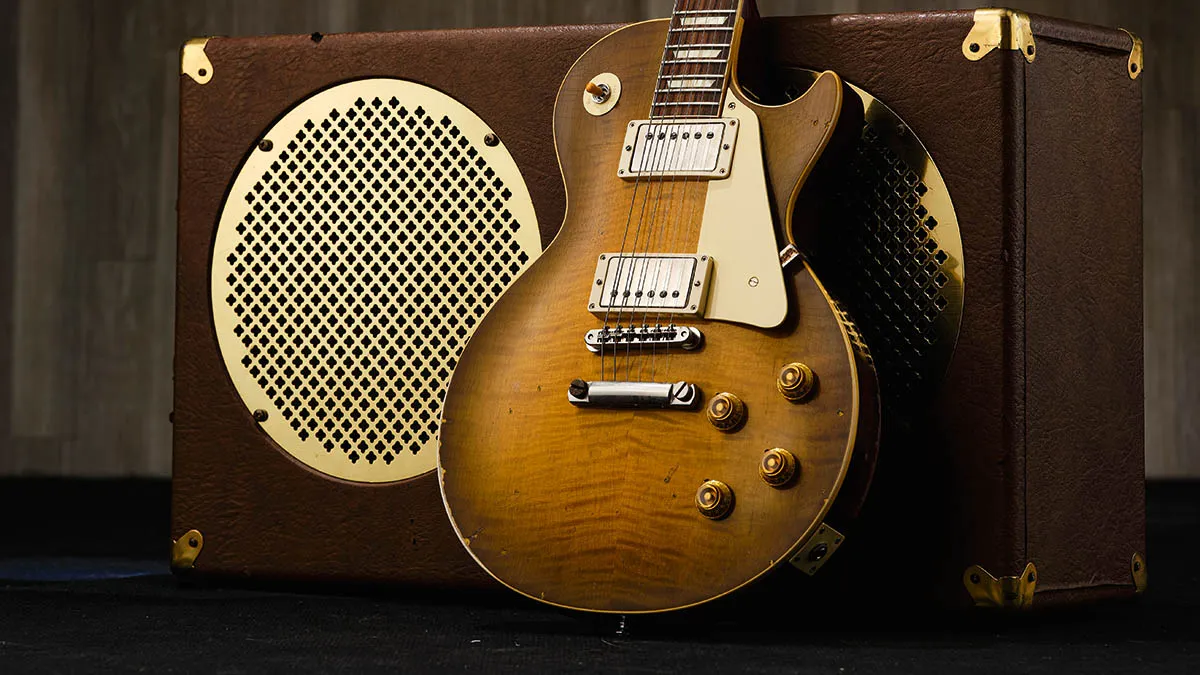
After establishing Gibson’s Historic Division and Custom Shop in the early Nineties, Master Artisan Tom Murphy has built up an impressive reputation for being the company’s in-house expert on the process of aging guitars.
He is practically unrivalled on the art of accurately making new guitars look, well, aged, with extensive knowledge on the tools and techniques required to do it well. Which is precisely why Gibson announced the Murphy Lab back in 2019 – a back-to-the-future department within the Custom Shop where the man himself would be overseeing meticulously aged reissues of golden-era guitars and signature models.

Joe Bonamassa: “In terms of the ‘vintage Les Paul’ world, there isn’t one 1959 neck shape. Different serial-number ranges within ’59 have different shapes and contours. They tend to be slightly more tapered than ’58s (with exceptions) and slightly larger than mid-to-late 1960s.
“The Murphy Lab has done a good job coming up with a version that represents all the different variations of a ’59 neck. And the aging is great, if that’s your thing; it’s not for some, but to each their own. As for other models, we can delve just as deeply into the subtleties and variations, particularly by model/year and in some cases, by color.
“I just used the ’59 Les Paul as the main example. [It’s the] same as buying a vintage Les Paul or Gibson; the instrument should make you want to play. It should inspire you, challenge you and – when it's sitting on the stand – make you feel like you own the coolest guitar in the world.
“Gibson loaned me a killer Murphy Lab Les Paul for a Brazilian tour last year and didn’t get it back. [Laughs] The Amos Flying Vs came out great. That was particularly a challenge for them because the aging was so specific. I thought they nailed it, though.”
Martin SC-13E
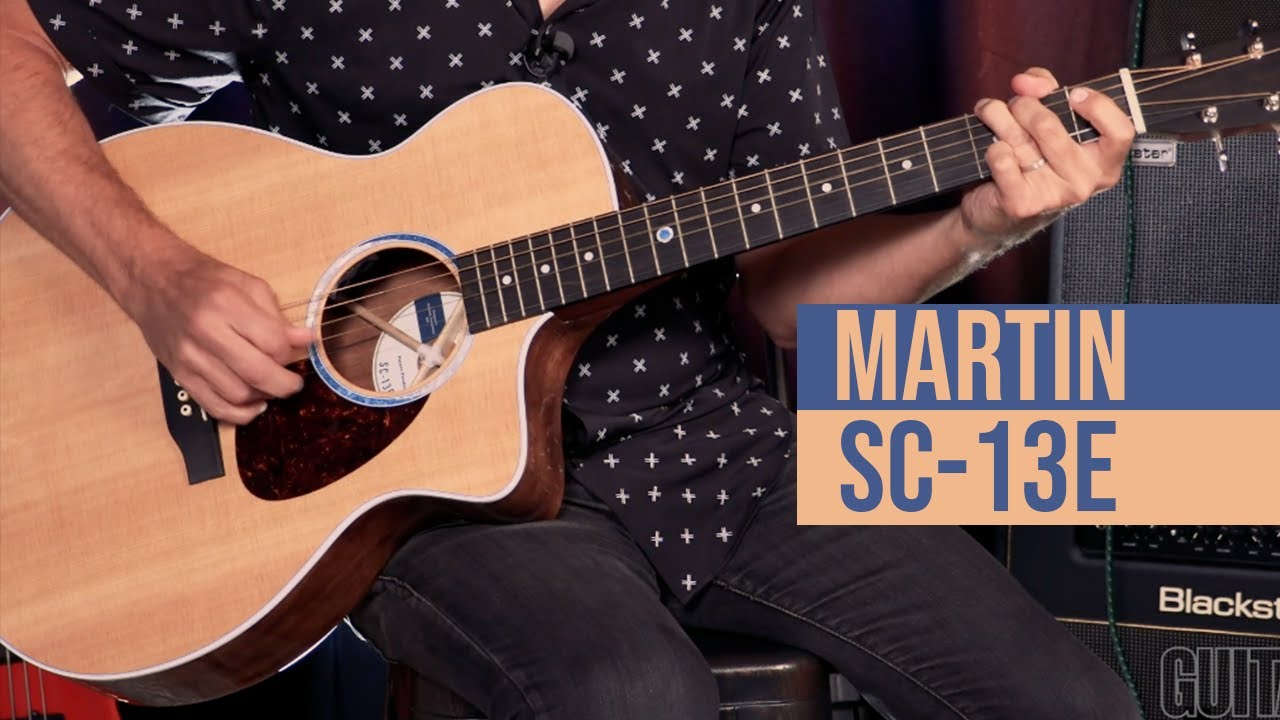
One of the more memorable moments of NAMM 2020 was the unveiling of the Martin SC-13E, which challenged tradition with its offset body shape and accessible cutaway for easy reach into the upper frets.
The innovative Sure Align Linear Dovetail Neck Joint is what helped this instrument offer electric-like playability. The company also revealed how this development allowed the neck to be removed in just three minutes, opening up a whole world of possibilities for replacement necks further down the line.
Other notable specs included the Tore Tension X Brace visible underneath the soundhole and the Fishman MX-T system, also placed in the soundhole, with the tuner, volume and tone controls stealthily facing up as the player looks down.
Angela Petrilli: “Back in 2019, Martin invited me to Nazareth, Pennsylvania, to check out the SC-13E a few months before its unveiling at the 2020 NAMM Show. This guitar is all about innovation. The linear dovetail neck joint design, which allows access to the fretboard, makes this guitar the one I often use at acoustic gigs where I play lead. Its S body shape visually sets it apart from other acoustics. It has its own unique sound, yet it reminds me of a cross between an OM and 000 – my favorite acoustic body shapes.”
Fender H.E.R. Stratocaster
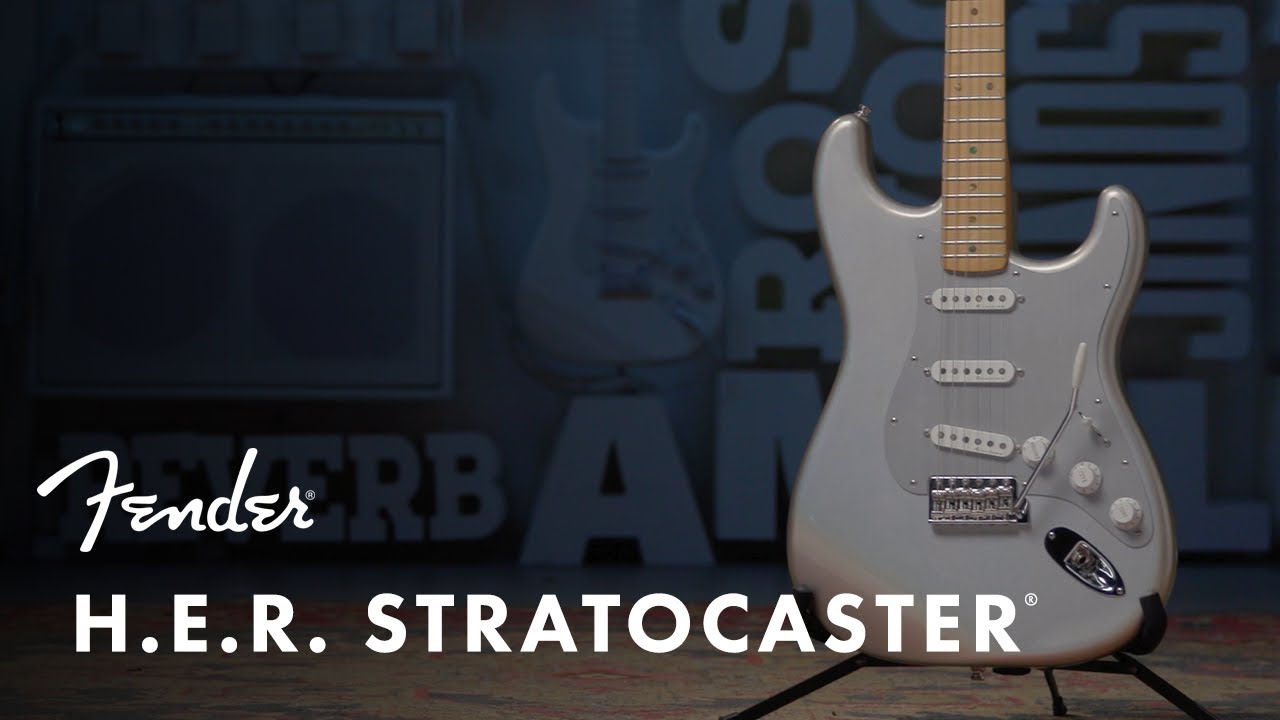
In 2020, American R&B singer/songwriter made history as the first Black female artist to have a signature guitar. It was also one of the most visually distinctive Strats Fender have ever produced, thanks to its Chrome Glow finish, inspired by the multiple Grammy winner’s favorite nail polish color.
“I think it will inspire a lot of young Black girls – and actually a lot of young girls in general – to pick up the guitar, which is something we don’t see enough of,” she told Guitar World in the days following the big announcement.
“I used to walk into Guitar Center and pick out a pink bass or something I might have seen another female artist play. That’s the key thing for me, just to inspire, so I can’t wait to see this thing I created in the stores and in the hands of people who love my music!”
Universal Audio UAFX Pedals
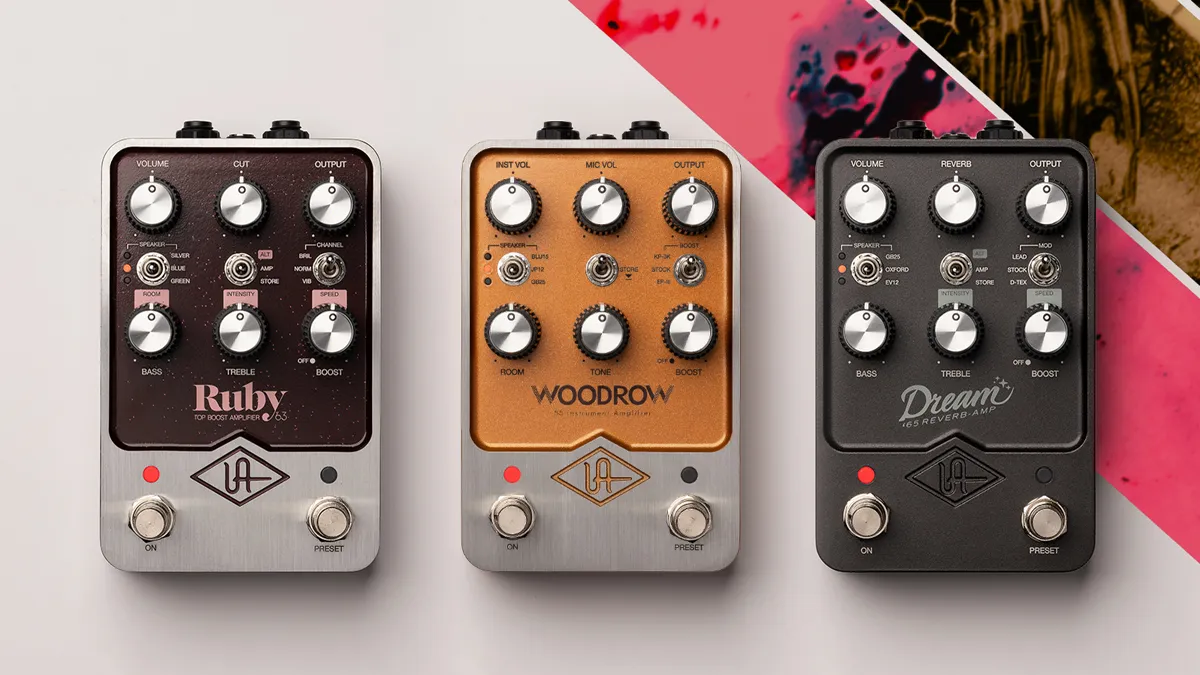
The studio and recording gear specialists announced their expansion into the world of guitar effects in 2021 with the introduction of the dual-footswitch Golden Reverberator, Starlight Echo Station and Astra Modulation Machine. And though these products were virtually guaranteed to be of high quality given the level of expertise behind them, there was still a big buzz coming from people surprised by the brilliance of what they heard.
This led to the more pedals following suit, with a notable emphasis on amp emulators – from the Dream ’65 Reverb, Ruby ’63 Top Boost and Woodrow '55 launched the following year to the Lion ’68 Super Lead, Enigmatic ’82 Overdrive Special and ANTI 1992 which came soon after.
The UAFX line was also updated with single footswitch pedals like the 1176 Studio Compressor, the Brigade Chorus & Vibrato and the Heavenly Plate Reverb.
Gibson/Epiphone Greeny Les Paul Standard
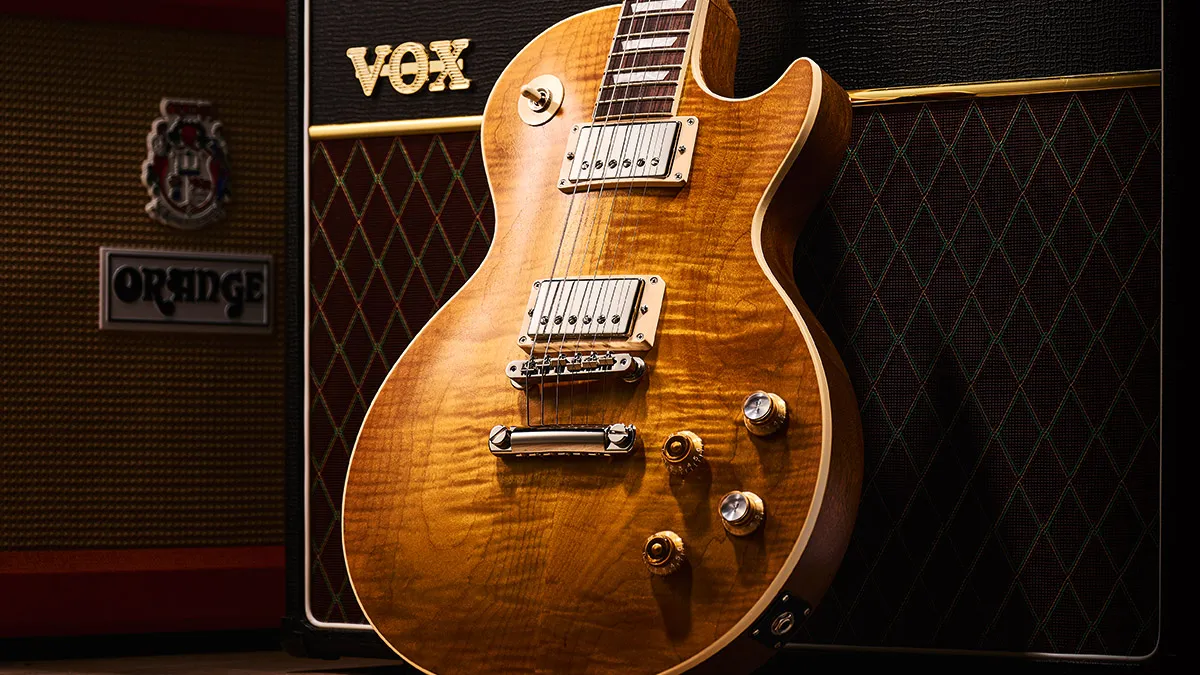
There have been a lot of changes in recent years at Gibson, and they’ve all been steps in the right direction. Some might say the Greeny series was emblematic of a new strategy that saw them signing high-profile artists for a run of guitars, starting with a limited run through the Custom Shop before making their way to the regular Nashville team and trickling down to Epiphone and Kramer.
Of course, there can only be one Greeny – the ’59 Les Paul first owned by Peter Green before ending up in the hands of Kirk Hammett – but the reissues gave everyone the chance to own a piece of history, at just about every kind of price point.
Since the Greeny line, similar things have happened with signatures for Jerry Cantrell, Adam Jones and Dave Mustaine, and given how well it’s working, the trend looks set to continue.
Ibanez TOD10N Tim Henson Signature

Polyphia guitarist Tim Henson got his first Ibanez signature back in 2019, though it’s the TOD10N model of 2022 that really got the industry talking, mainly thanks to the hollowbody electric nylon-string guitar design.
Henson took influence from a late-Nineties Ibanez guitar, the SC500N, and decided to make his own version of it some 20 years later, featuring a solid Sitka spruce top, sapele back and sides, a walnut fretboard and a Tree of Death pearloid inlay.
“Basically, it’s really thin, really light and really fun to play,” he said in a demo video for Sweetwater not long after the release. “When you play unplugged, there’s this nice little soundhole that hits you up in the face, so only you get to hear yourself practicing, which is kinda cool.”
Jackson American Series

Starting with the Soloist SL3 launched in 2022, Jackson’s American series ushered in the brand’s first range of guitars to be made entirely in Fender’s California factory.
The company likened the new line to a “long-awaited homecoming” and promised these instruments would be “radically engineered for speed” while also delivering “precision and power, taking the best of the best from Jackson design history to create an elite tool for the modern player”.

Given the success of the range so far, it would be fair to say it’s been “mission accomplished.” The Virtuoso models, launched the following year, were equally as impressive – as was the campaign behind it, roping in the likes of Marty Friedman, Misha Mansoor, Debbie Gough, Dave Davidson and Clint Tustin for an explosive instrumental collaboration aptly named “The Virtuoso Mega Shred.”
Marty Friedman: “Because of that rare kind of dedication to a guitar ad from everyone, I was inspired to play some wild stuff on the track, which I am quite happy with. I’m sure the others felt the same, and the vibe at the shoot was like no other guitar ad I’ve ever done. It was like we were at the forefront of the image of 'heavy rock guitar,' either getting a massive facelift or going down in flames. Of course, the guitar itself is awesome, but Jacksons have always been!”
IK Multimedia TONEX and TONEX One

Having brought their software credentials into the physical market over recent years with products like the AmpliTube X-Gear range, IK Multimedia debuted their TONEX pedal in 2023, allowing guitarists to store and play AI Machine Modeling sounds live on stage.
As well as offering thousands of amps, pedals and effects, players are also given the ability to capture their own rigs using the dedicated app in as little as five minutes, and then save those rigs onto the device itself.
The following year, they released the TONEX One – a set and forget single pedal version with less controls but the same kind of technology – blowing minds for being the most powerful amp modeler of its size.
JHS Notaklön Overdrive

There’s no pedal more mythical than the Klon Centaur designed by Bill Finnegan in the mid-Nineties, which explains the amount of copies – affectionately referred to as klones – being produced by various companies around the world at a fraction of the resale price. JHS took the concept one step further in 2023 by designing a Klon-style pedal that users had to assemble themselves, adding an element of DIY and creative adventure to tonal crafting.
What made it even more innovative was the simple-to-follow instructions and solderless design, which even came with a tube of that infamous black goop used to conceal the “magical” diodes encased within the original pedals. It was a masterclass in marketing, bolstered by the now-legendary slogan “It’s not a Klon ’til you build it.”
Retailing for just $119, JHS was also very vocal about how its version saved you $7,881 off the going rate for a secondhand original, which in many ways felt like the deal of the century.
Marshall 1959 and JCM Modified Series Amps
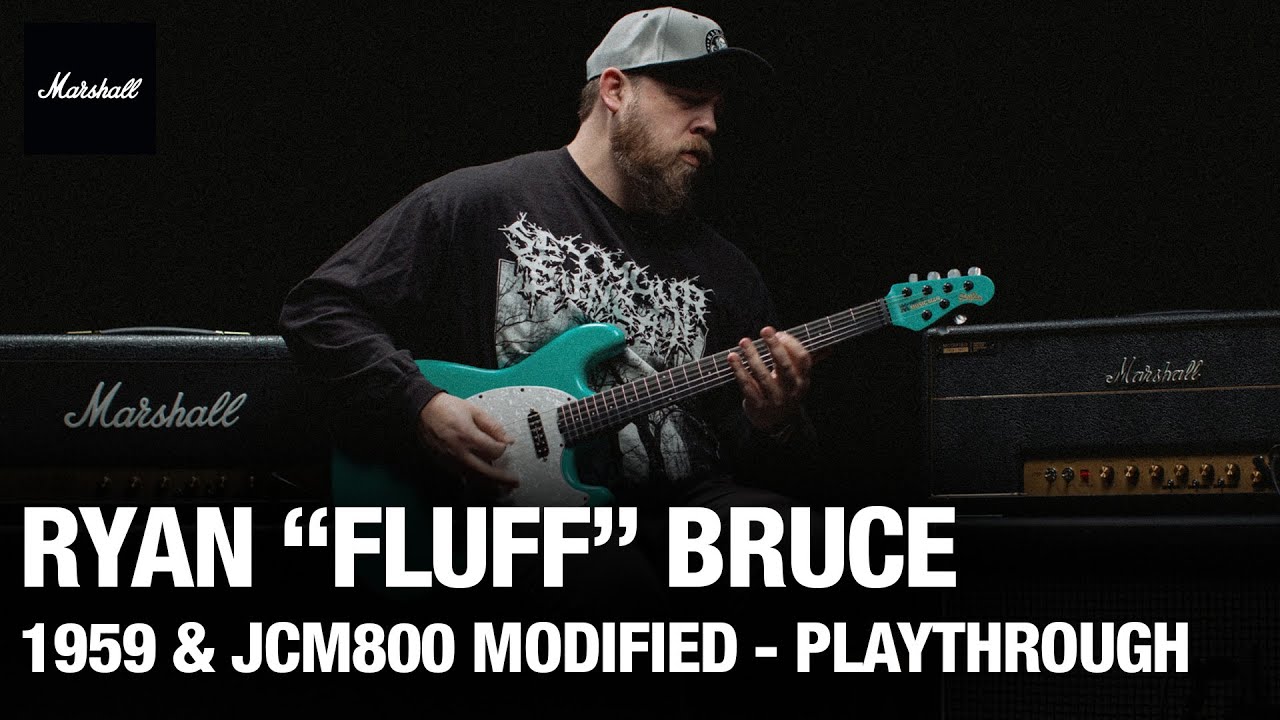
When we think of famous recordings by GN’R, Van Halen and Mötley Crüe, it’s hard not to envision the Marshall logo. Of course, these game-changing guitar players weren’t using stock Marshalls; engineers like José Arredondo and Frank Levi modded the circuits to shape the EQ curve and amount of gain available.
This year, the U.K. company finally caved in and released their own official versions of these modded amps in the form of the 1959 plexi and the JCM800. New plexi features include the Master Volume tweak, a switchable bright cap, a gain boost and a switch to choose between diode or transistor clipping, while the JCM800 boasted a gain boost, a mid-boost and a tight switch.
“Modified connects us with a long-standing tradition of modifying Marshall amps that dates to the 1970s,” Marshall said upon the amps’ release.
“Artists were looking to get something different from the industry-standard amps of the time. Marshall mods were sometimes about getting ‘more’ – more distortion, more sustain, a bigger sound. Other times, they were about versatility, allowing musicians to achieve sweeter tones or to get the best from their heads without driving them to ear-splitting volume levels.”

