



Sheryl Crow’s career has the perfect level of fame: she spent two years as a backup singer for Michael Jackson’s Bad tour, her debut album earned her three Grammy Awards, she’s collaborated with the likes of Don Henley, Bob Dylan, Eric Clapton, Johnny Cash, John Mayer, and Justin Timberlake, and even wrote a Bond song, for Tomorrow Never Dies.
Yet there is one element to her success that may not be common knowledge, which is that her favourite writing tool is no longer the guitar.
“I find it's better to write on something I'm less sure of, so I write songs on bass now, rather than the guitar,” said Crow in the November 2017 issue of Bass Player. “Sometimes it helps you come up with something that's really interesting, whereas the other way around you're just creating melodies that go with the chords you've played. To me, that's counter-productive.”
Originally a trained pianist, Crow started playing guitar right before her first album, Tuesday Night Music Club, but while many have seen her playing bass onstage over the years, few know how deep her bond is with the instrument.
When did the bass first become a crucial part of the creative process?
I’d say in 1996, when I wrote my first song on bass guitar, My Favorite Mistake. I’d been feeling like I was in a rut. Knowing the keyboard so well, my hands would go to those comfortable positions and familiar chord sequences. So I tried writing on bass by starting to play and following whatever melody was in my head, and that would dictate when the bass note would change.
The bonus was it set up a deep groove for the songs. I could work with a drummer or a loop and have the bass establish the groove and have the melody determine where the song was going. The process sort of liberated me from thinking about chord progressions; it took me out of a box I’d been locked into.
I’ve been writing that way ever since, including Be Myself, which I co-wrote with my guitarist, Jeff Trott. We would get together, I’d get a feel going on bass and sing a melody, and he’d come in with chords. But basically it’s all dictated by the melody. I’m much more drawn to melodic songs now, whereas it used to be all about rocking out when I was younger.
Were there a few key bass influences?
I’m a huge fan of the Carol King / James Taylor singer–songwriter era, so of course, Lee Sklar. He’s a creative freak of nature, and he has a personal depth that goes beyond his bass playing, which he brings to the table. I’m also a huge fan of jazz-based bass playing and melodic bass playing, so now we’re talking about James Jamerson and Paul McCartney.
I love and listen avidly to great bass playing. Growing up in a musical family, I was one of those kids who read every album cover and knew every musician’s name. And I’ve been spoiled to get to work with Lee Sklar, Jimmy Johnson, Neil Stubenhaus, Nate Watts, Michael Rhodes, and Glenn Worf.
I’ve gotten to see Anthony Jackson play. I had Pino Palladino on my first album. So I’ve been able to observe them all up close and absorb some of that bass-playing mojo. That’s where my heart is, with great musicians who make us songwriters sound even better than we are.
What led you toward Guild?
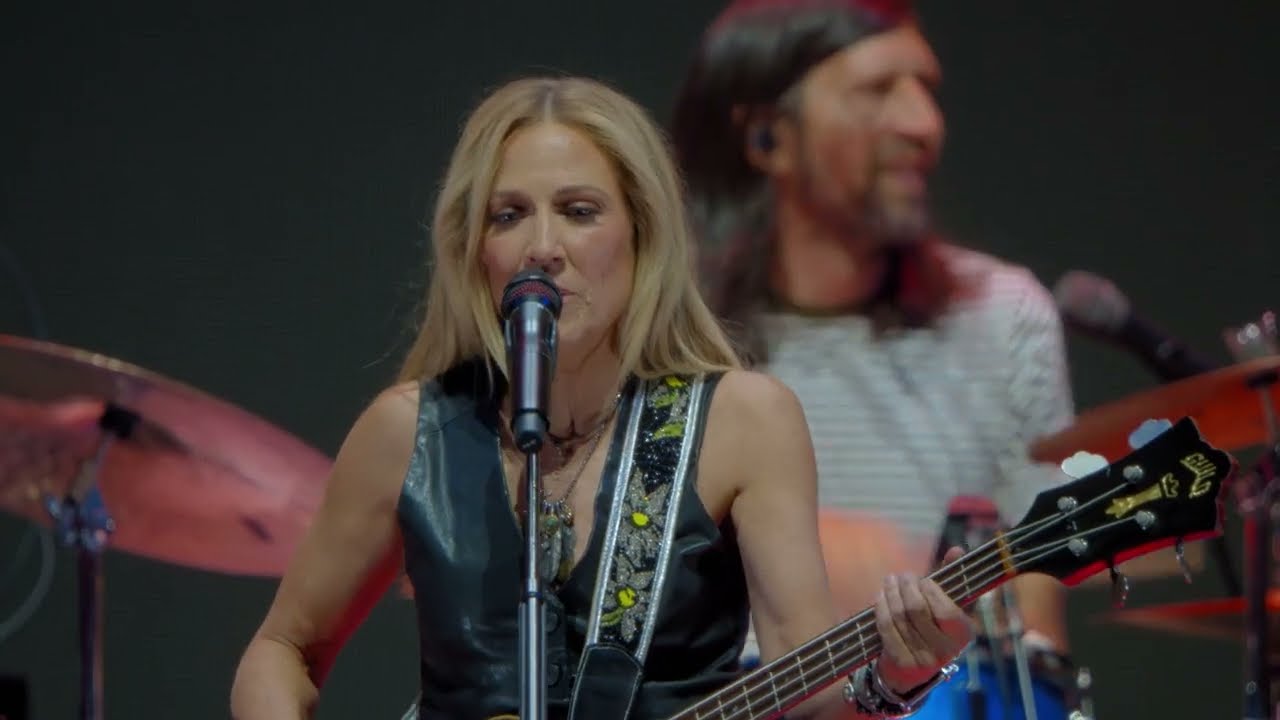
I started out on an old Kay bass, and I liked it; it sounded like a standup bass, but it was too difficult to play, so in 1996 I got a ’72 Guild M-85 II solidbody from Guitars ’R Us in Hollywood. I fell in love with the way it sounded, and the size and feel, and I’ve been using it live ever since.

