




Anyone who has played bass guitar in a dance band is familiar with songs like Parliament's Flashlight and Give Up the Funk (Tear the Roof off the Sucker), Funkadelic's One Nation Under a Groove and Cosmic Slop, and group leader George Clinton's solo smash Atomic Dog – classic funk tunes with widely divergent bass styles.
Less commonly known are the bassists behind those styles, and how they influenced the sound and direction of the P-Funk collective over a history of nearly 40 years.
From the late 1950s doo-wop days in Clinton's Plainfield, New Jersey, barbershop, to the hip-hop leanings of the collective’s later albums, the P-Funk story, and the story of its bassists, is complicated.
For starters, the group’s name has changed, often for legal reasons. They were the Parliaments, then Funkadelic, then Parliament and Funkadelic.
Speaking to Bass Player in 2010, William ‘Billy Bass’ Nelson – who passed away on January 31, 2025 – said: “One day, Eddie Hazel and I were tossing ideas back and forth when we came up with the name ‘Funkadelic’, which perfectly fit the psychedelic funk music.”
Then there were the offshoots: the Brides of Funkenstein, Parlet, Fred Wesley's Horny Horns, and Bootsy Collins's Rubber Band.
While most are aware of William ‘Bootsy’ Collins, whose contributions to James Brown were as significant as those to P-Funk, less may know of Cordell ‘Boogie’ Mosson, Rodney ‘Skeet’ Curtis, Lige ‘Ligedelic’ Curry, and Billy ‘Bass’ Nelson.
“I'd hung around George Clinton's barbershop since I was a little kid, and I started to work there when I was 15,” Nelson told Bass Player. “Eddie Hazel inspired me to learn guitar, and when the Parliaments would go on the road, I would work out the arrangements for the house-band rhythm section.
“When we moved to Detroit, I met James Jamerson, who taught me how to play bass guitar. Music for My Mother is a good example of how he taught me to stay in the lower register. I used an Ampeg bass on that song.”
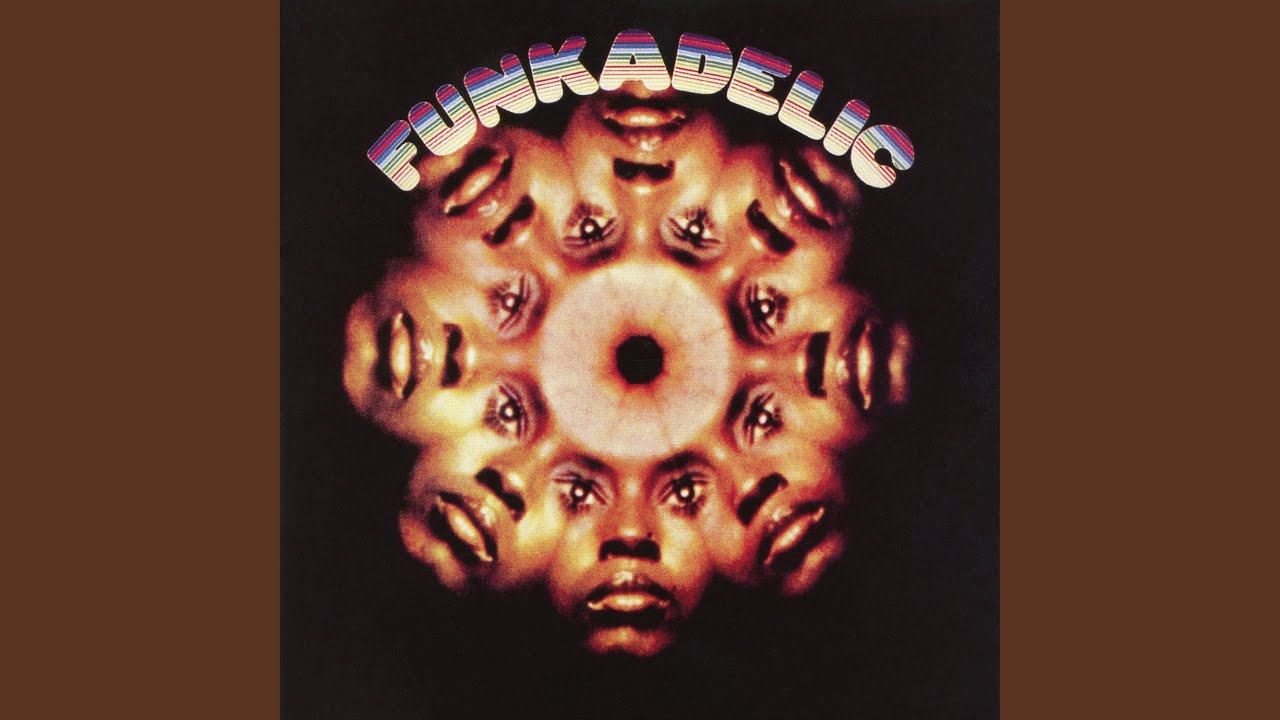
By the mid ’70s, Parliament/Funkadelic comprised a loose collection of musicians – including several bassists – whose abundant studio sessions ended up on albums by both bands, with Clinton often tending to put the more mainstream, horn-oriented tracks on Parliament records, while reserving the edgier, guitar-led tracks for Funkadelic.
Clinton eventually assembled a backing band consisting of Lucius ‘Tawl’ Ross on rhythm guitar, Ramon ‘Tiki’ Fulwood on drums, Bernie Worrell on keyboards, Nelson on bass guitar, and Eddie Hazel on lead guitar, but there was a definite rift between the vocalists and the backing band.
Due to compensation, and various other issues, the entire band split in 1971.

“I'm very outspoken, so I was the most vocal about being unhappy. That's when George grabbed Bootsy Collins and his band to replace us, but the sound wasn't nearly the same, because those guys were from the James Brown funk school.
“They didn't take what we were doing seriously, especially the look, and they lasted on the road for only about seven months before George wisely began to split the thing into Parliament and Funkadelic.”
Following his split from Clinton, Nelson continued to rely on his funk influences to create the sound that carried him across different bands and projects.
“I moved on to play with Ruth Copeland. We spent two years opening for Sly & the Family Stone, so I picked up a lot from Larry Graham, as he did from me.
“I freaked him out because instead of slap-and-pop, my technique is more like hit-and-pinch, where I use my thumb or index finger to hit the low note, and then use my thumb and index finger to pinch. The attack is more aggressive.
“I did session work for Motown, too, and you can hear me using that technique on the Temptations’ hit Shakey Ground from A Song for You.”
As has always been traditional in the US funk scene, Nelson started off by playing whatever he could blag or borrow, but his signature sound would often come from an unexpected source.
“It surprises people to find out that I sometimes used a Hagstrom 8-string, which produces an almost synth-bass tone when played with a pick. You can hear it on I Got a Thing, You Got a Thing, Everybody's Got a Thing and Free Your Mind….. and Your Ass Will Follow.
“We were touring primarily with Kustom amps until one very important gig opening for the Vanilla Fudge in 1968. We were forced to use their Marshall guitar amps and Ampeg SVT bass amps, and the sound was so huge.
“We already had the look and the material, but it was at that moment that the true Funkadelic sound was born.”
After touring with several Parliament/Funkadelic lineups in the early ’90s, Nelson rejoined the group in 1994, released solo material under the name O.G. Funk, and also toured with 420 Funk Mob and Sons of F.U.N.K.
According to Nelson, he would never age out of the genre.
“I sat in with P-Funk when they came to Pittsburgh in 1994. George really dug having me play on the old tunes and asked me to come on the road, which I did for 10 years.
“I was disappointed it became a settle-for-less organization, but despite the shortcomings, I really enjoyed coming back and working with the band again. It gave me more confidence in my abilities as a bass player than ever before.”
