


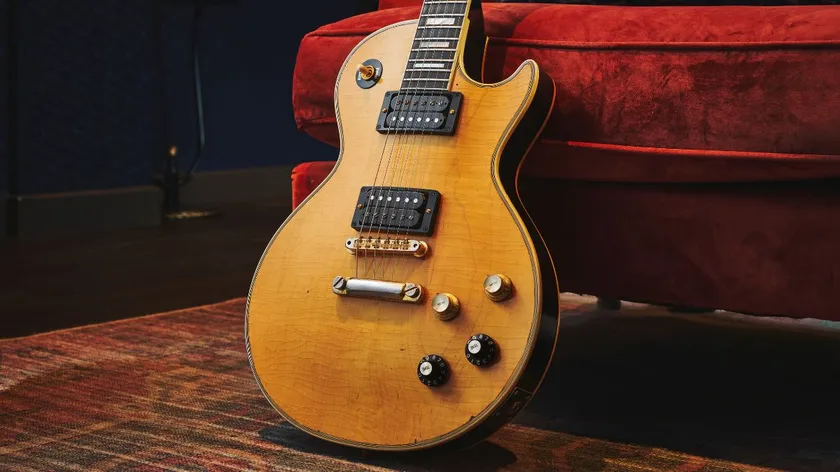


Those of you old enough to remember acid jazz will recall the slippery-smooth basslines at the heart of the music made by Galliano, Young Disciples, Corduroy and the Brand New Heavies.
The slickest and most commercially successful of the lot came from Stuart Zender, who laid down three albums’ worth of funky lines in Jamiroquai, the band led by Jason ‘Jay’ Kay and propelled to stardom by the singer's unearthly songwriting and tabloid-friendly antics.
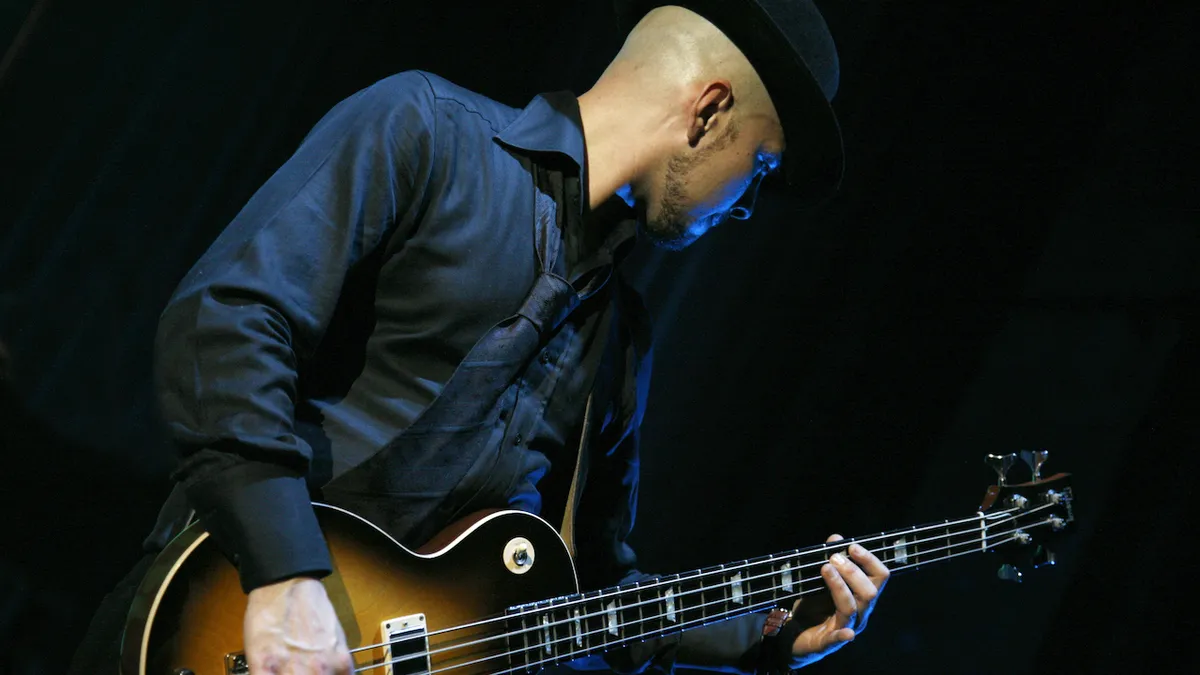
After playing on the Emergency On Planet Earth, Return Of The Space Cowboy and Travelling Without Moving albums, Zender quit the band, and became an in-demand session bassist, jamming with All Saints, sometime Amy Winehouse cowriter Mark Ronson, Gorillaz and Stevie Wonder.
“Working with Stevie Wonder was one of the most amazing things that's ever happened to me,” Zender told Bass Player back in 2018. “I’d done a track with Omar [Lye-Fook] and he called me up and said, ‘Do you want to come to the studio and work with Stevie?’ I said, ‘Stevie who?’, and he said ‘Stevie Wonder.’ I've never been starstruck before, but when we went to meet him I was speechless.
“We were at his hotel listening to this track that he wanted us to play on. He had the whole thing mapped out in MIDI, and he didn't have his glasses on. He was staring at me. I swear to God, I thought he could see me, because he can feel everything in the room – he knows exactly where everything and everyone is.”
“So we thought, ‘We should get out of here, we might be overstaying our welcome,’ and said ‘We have to go, Stevie, because we're going to a party.’ And he said, ‘Oh, you're not going to leave Stevie Wonder alone in a hotel room, are you?’ He wanted to come with us, and said to give him half an hour.
“Then we found out that it wasn't happening, so when he called us we had to tell him the party was over. He said, ‘OK, I'll hook up with you guys in the week.’ We looked at each other and said, ‘We've just blown out Stevie Wonder!’”
How do you write your bass parts?
To be honest with you, I don't think about it – I just do it. Most of the stuff is an accident, it just works out! In Jamiroquai, Jay would come up with some bassline ideas, and I'd further it from there. He's the most amazing songwriter.
Which bassists inspired you?
I got inspired by listening to Weather Report, and then later on a friend of mine introduced me to the Ozric Tentacles. Ed Wynne's late brother Roly was a good friend of mine and inspired me to pick up the bass guitar – he was an amazing bass player and I was in awe of him.
How did you get the squelchy bass tone you had on the Jamiroquai song Revolution 1993?
I used a 5-string Warwick Streamer, and really subtly underneath it I played a Minimoog. Live, I used to trigger the Minimoog with a Boss ME8B effects processor. That song was just jammed. Jamming was an important part of it – I mean, the name is ‘Jam’-iroquai, right?
What did you do before Jamiroquai?
I was in a crap punk band before that. It was made up out of a bunch of NME journalists and we were managed by James Brown, who went on to launch Loaded magazine. I was 16 when I started taking it seriously and practicing, and then I was 17 or 18 when I did the first Jamiroquai album. We have a bunch of musicians in our family – my cousins are the MacNamara brothers in Embrace.
What was your first instrument?
My first instrument was the drums, actually. I spoke to Larry Graham about this once: he started out as a drummer, too, and we come from the same approach, which is where you make ghost notes and bass-drum patterns on the bass when the drummer isn't doing certain things. For me, the groove and the rhythm is absolutely essential.

