


Nevermind the incongruity. To watch a beloved alt-rock pioneer like Kim Deal open arena concerts for a mainstream pop star, three decades after her lo-fi crossover hit Cannonball shot up the charts, is to see the enduring influence of the ’90s alternative nation.
That’s exactly where she and her bandmates in the Breeders stood for four sold-out nights at Madison Square Garden in 2024, as a special guest of Olivia Rodrigo – a devout fan of Deal’s work as well as bands like Hole and the Riot Grrrl scene.
With more than a dozen albums and EPs scattered across her work with the Pixies, the Breeders and the Amps – and with monster crowd-pleasers like Gigantic in her back pocket – Deal, now 64, has earned the right to be jaded. But she’s too curious and good-natured to fall into that trap, so, after finishing her nightly set fronting the Breeders, she made sure to stick around for the headliner.
Deal was equally enthralled by Rodrigo’s dramatic entrance and the roar of thousands of fans collectively losing their shit as the tension reached a crescendo. At the moment when Rodrigo rose up to stage level from below, those screaming fans sent the decibel readings sky high.
“She finally emerges on stage, and then come the screams,” Deal says on a call from her home in Dayton, Ohio, still impressed. “It’s the loudest thing I’ve ever heard at a rock show. And I saw Tad in the ’90s, man.”
Deal may be unaccustomed to such expressions of youthful fervor these days, but that wide-eyed charm is part of what endears her to generations of fans. The bigger reason, of course, is her music – and how she naturally exudes cool as she coos lullaby melodies over grungy riffs, most often banged out on a battered Seagull acoustic or a Fender Stratocaster.
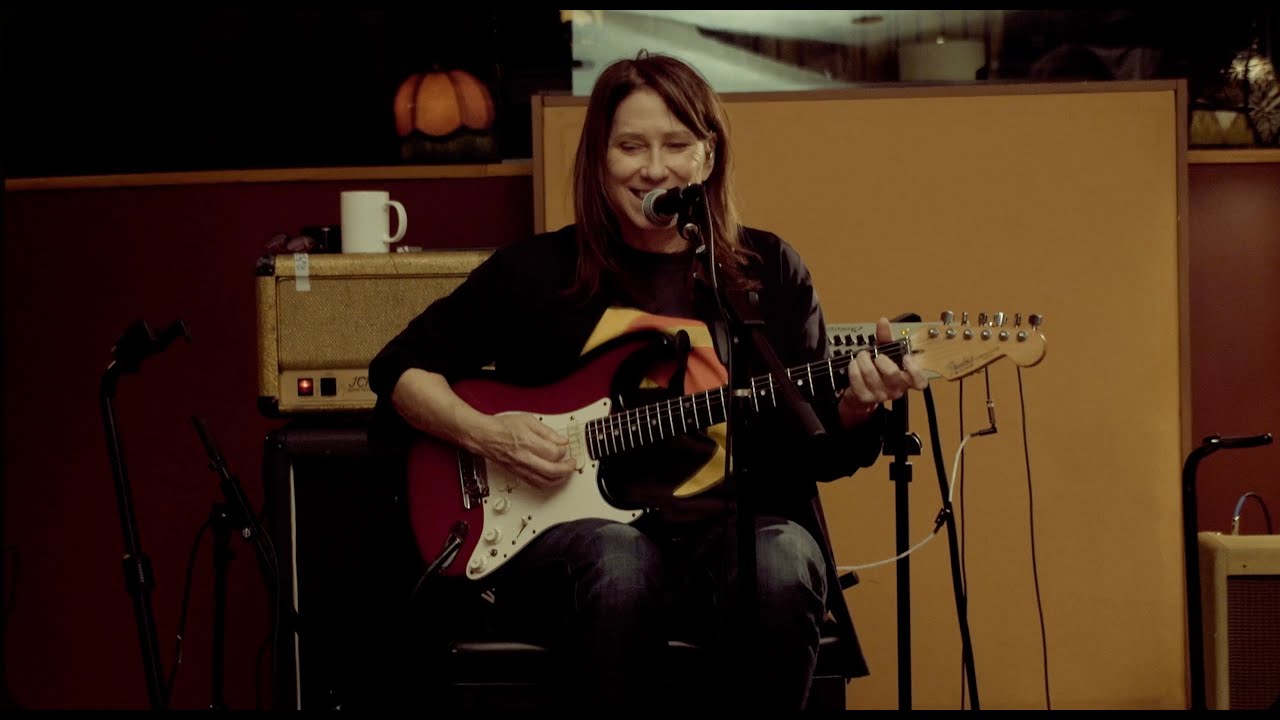
With the Breeders on a break, Deal decided to channel her songwriting into her first solo album, Nobody Loves You More. Arriving at the end of 2024, the record made it clear how integral her songwriting, voice and presence were to the Pixies in their classic era, and why Kurt Cobain took the Breeders on tour in 1993, introducing them to larger audiences and paving the way for their breakthrough with that year’s Last Splash.
On Nobody Loves You More, Deal took her songwriting and arrangements in a different direction. Within the first 10 seconds of the album-opening title song, after introducing the vocal melody over a single guitar chord, the song turns with a swell of orchestral strings and a bossanova drum beat. A minute and a half later, a blast of big-band brass sits where a guitar solo might have appeared on a Breeders song.
But when the orchestral elements subside, the horns turn into boozy accents for Deal’s clean strumming on Coast, one of three songs where sister and Breeders bandmate Kelley Deal contributes guitar. Disobedience and Wish I Was would’ve fit perfectly on Pacer, her 1995 album with the Amps.
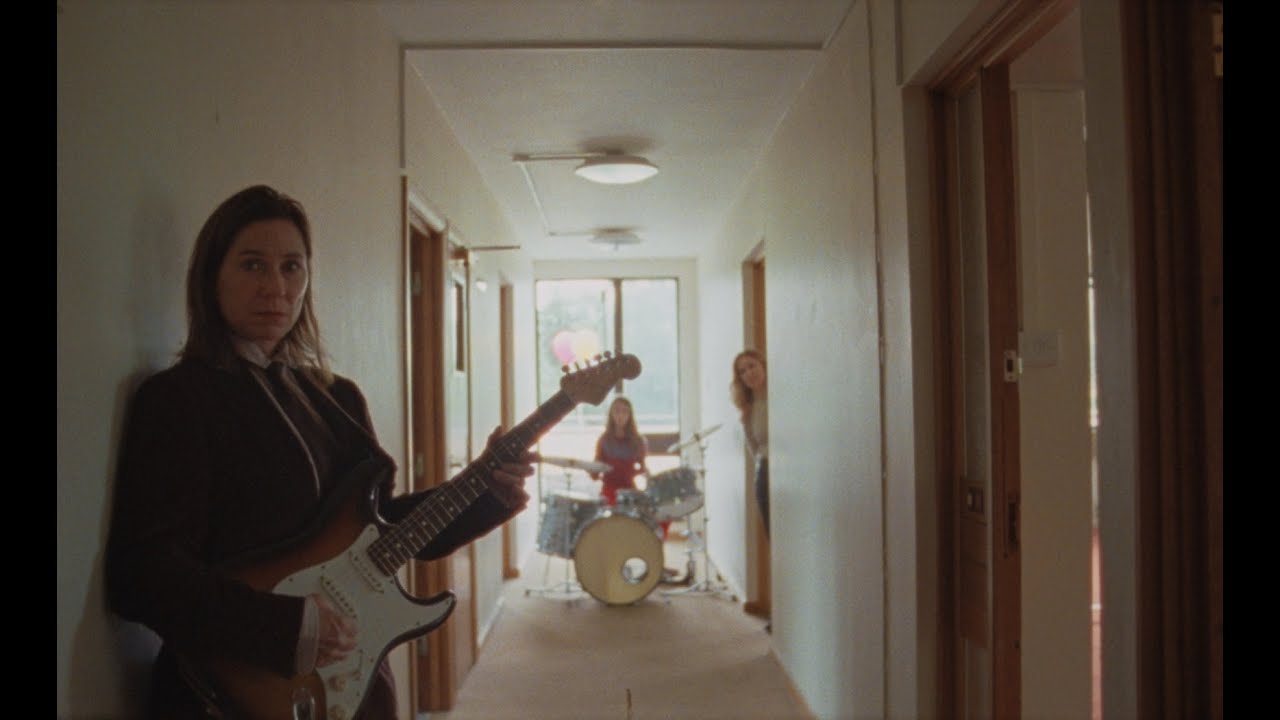
The soothing Are You Mine? shows how much doo-wop still influences her music, nodding towards the guitar picking and slow shuffle of Bob Marley’s early ballad Chances Are, which the Breeders recorded for the Fate to Fatal EP in 2009.
She goes fully post-rock on Crystal Breath and Big Ben Beat, a collision of scattered drum beats driven by a grinding bassline, punctuated with stabs of electric guitar, and accented with a clean, surfy-sounding descending lick.
Since releasing Nobody Loves You More, Deal has been touring with an eight-piece band to properly recreate the album’s array of instrumentation. We caught up with her to find out how it all came together.
On the surface, this album doesn’t seem to have a lot to do with guitar. Instrument-wise, how did these songs begin for you?
Well, I don’t know if I’d buy what you’re selling there, Mister Mister. There is definitely no shredding going on, but I don’t know. I’m trying to go through all the songs…
[Laughs] Well, it’s all there underpinning everything, but the ornamentation is different.
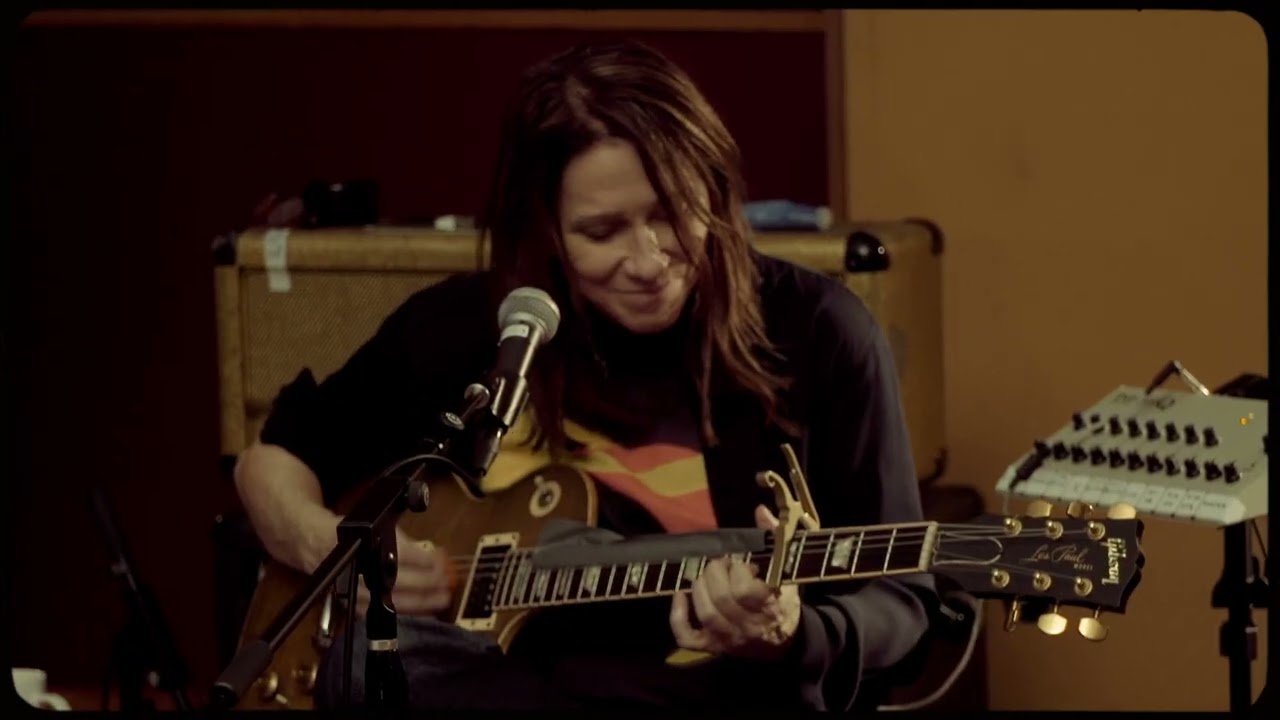
There are some songs that focus on the strings, but even on Summerland, there are two guitars. It’s got the ukulele going, but ukulele sounds weird. Whatever. But if you take the Les Paul and you put the capo on the fifth fret, and I gaffer-tape the top two strings so I can just flow and not have to worry about hitting them, that’s a ukulele.
It’s not, [sing-speaks] “My dog has fleas” – there’s no octave – it’s got this sort of bandstand, Lawrence Welk thing. So that song to me is built on guitar, even though the strings come in.

But I guess you’re right. Are You Mine? has one little tiny lead, which is a simple melody played in 3rds on the G and B strings. The lap steel is real pretty. That’s the feature on that one. A Good Time Pushed has Raymond McGinley from Teenage Fanclub on it. There’s a lot of guitar. And Big Ben Beat, that’s a bass guitar. That’s Ayse Hassan of Savages.
That sounds like a fun song to put together. You have this clean, Hawaiian-sounding guitar part and then that descending riff.
That’s my Philly soul, because I’m singing it on a mic and it’s like, there was my little harmony, like the Jones [Girls] sisters. I saw them at the Agora Theatre in Cleveland in 1979. Anyway, she had really long fingernails, and I said, “How can you play with those?”
She goes, “Honey, I don’t do much but sing.” And she looked gorgeous. I was cleaning the toilets at the Agora, and then I saw them perform. It was just like, wow, they are fancy. But anyway, that’s my Philly soul, but I ended up throwing it on a guitar. Does it sound Hawaiian?
That was just the quickest go-to connection for me.
Somebody said Mariachi, and it’s like, no, it’s Philly soul.
Are you the type of person who has a guitar in every room at home?
Let me show you my Candelas. Hold on. [Returns a minute later carrying a nylon-string guitar.] It’s beautiful, isn’t it? I got it in East Los Angeles at a shop called Candelas Guitars. I have this around, but my Strat, we went to Chicago and I did some stuff for Steve Albini, so that got packed up. I think it’s back over at his studio.
You’re so associated with the Seagull acoustic you played on Cannonball.
Yeah. I grew up with Ovations and that bright Ovation sound. I was really into bands like Sabbath, and that high, bright, shimmery acoustic sound, I didn’t love that. The Seagull sounds very flat and dull, and I just liked that already, and then the L.R. Baggs pickups on it – those are good-sounding ones that I liked in the ’90s.
It’s a different profile.
Yeah, exactly. I like the Sabbath sound. It’s a dark sound that I like. I remember [engineer] Greg Norman coming to my amplifier while he was recording me at Electrical Audio and standing next to the knobs, and he’s just like, “This is really dark. You want to add something else?” But big, shrill, bright sounds – it’s just like, ah, stop! I just like hearing it heavy.
You’ve collaborated with a lot of people in the past, especially on the Breeders’ albums. What makes this a Kim Deal album?
The people that I have collaborated on in the past were in the band. And then it was basically 2010 that I was here writing music, and I didn’t really have a Breeders organization anymore. Me and Jim [Macpherson, drummer] hadn’t talked to each other since 1996 or ’97.
I got home after an Amps tour, went down to my basement, and he had taken his drums out of my basement, and I just went, “Oh, what did I do?” And like good alcoholics, we didn’t talk to each other or discuss it at all until 2012, and we don’t even remember why it was a thing.
So I went to L.A. and stayed there for about two years, and I began doing stuff on my own. I met some drummers out there, I did some solo seven-inches, and I kept writing songs. And then I got to recording with Jack Lawrence from the Greenhorns, the Raconteurs, who’s in, like, fucking Kentucky – I recorded with him at Candyland. I thought, I don’t want this to be a seven-inch, I think this should be an album track. And that’s when I began to stir everything I did and make it like an album.
You also worked on these songs while holed up in Key West during Covid. What guitars and amps did you have with you?
The Candelas, Les Paul, Strat and the Precision bass. And I brought a uke and a cute little Kalamazoo amplifier. It’s got a beautiful tremolo and a nice ’verb, and it sounds very mellow and sort of beery, which I like. Beery. Actually, you know what I’d like to get is a Flying V. I saw James Hetfield of Metallica playing [one] live, and I thought, “He’s got such a great guitar sound.”
Are you much of a gear head?
I’m in Dayton, and I’m going to say it. I’m just going to say it out loud. You ready? Horrible place to find anything. I mean, we’ve got a Guitar Center. That’s where you go. That’s it. There used to be a place that was pretty good, but they closed.
I went to L.A. and I got a little Music Man amp that sounded cool and a Supro amp that has a 15-inch speaker. Oh, and I got this weird P.A. speaker. It’s on Crystal Breath. It’s on Big Ben Beat. I think it’s on Come Running, bi-amped with a Marshall.
Your sister guests on a few songs. Did you find yourself producing her guitar playing?
I just said, “Kelley, thank you so much for coming over and bringing your bass pedal”
Oh, for sure. And she’s producing me, too. I was just talking to her about this, how she’s playing those bass pedals on Crystal Breath. I just said, “Kelley, thank you so much for coming over and bringing your bass pedal.”
That’s a Taurus. And just even fucking around with how hard to hit the attack, and then how long to let it go and dissolve and the sustain of all that. I had this conversation with her yesterday, thanking her for doing this. So, it’s not like producing. It’s like, Kelley did me a favor, man.
You had a long working relationship with Steve Albini, who we lost in 2024. Where do you hear him most on this record?
The strings, actually, which is weird. I think it’s because I’m used to his drum sound, his room that he made. I can definitely hear his room when I’m playing drums on Come Running, because the verse is so quiet, so you can really hear the room ringing a bit.
But the strings were a big surprise for me. He had 11 players and the whole room was mic’d up beautifully. Everything was run smoothly. Nobody’s in a hurry, nobody’s rushed. And he did such a fantastic job, it was one take. But even though it was done beautifully and it was so elegant, it’s still Albini – he looks at us and goes, “You guys like that? So we don’t need to do it again then, right?” [Laughs]
- Nobody Loves You More is out now via 4AD.
- This article first appeared in Guitar World. Subscribe and save.

