




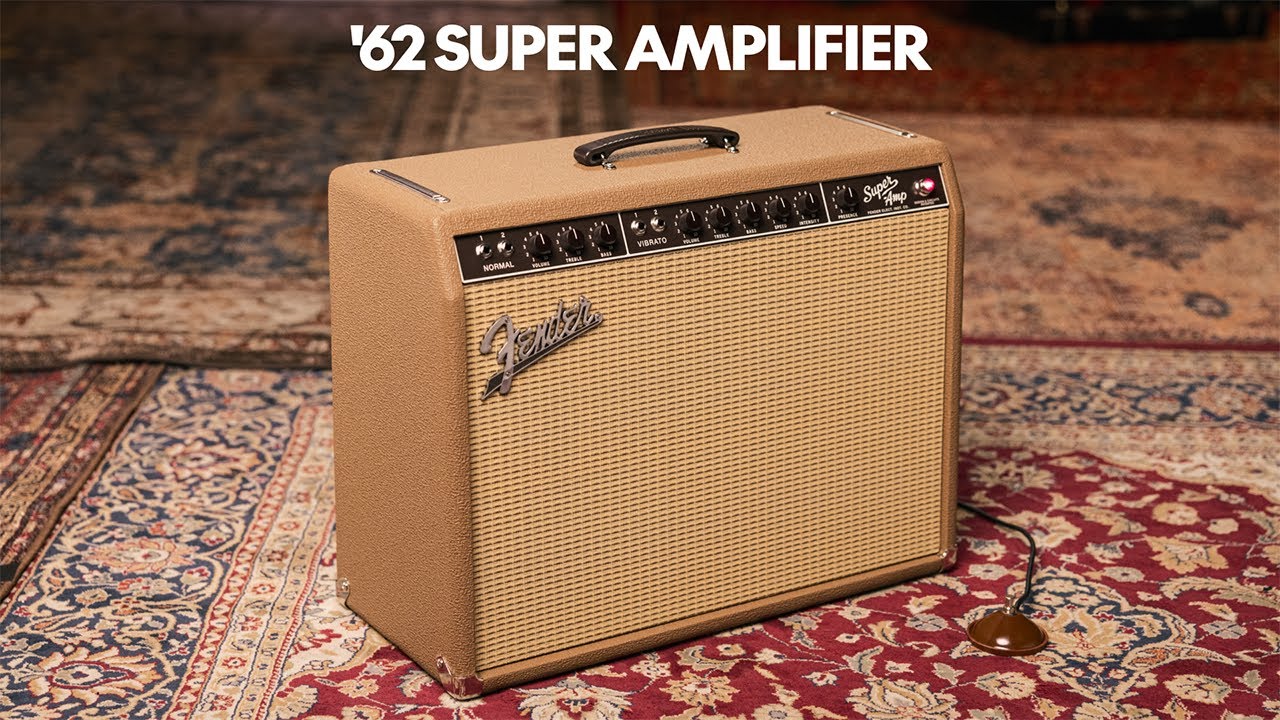
When Fender announced the return of the ’62 Super Amp as part of its American Vintage series, tone-chasers took notice.
Often overshadowed by its tweed and black-panel siblings, the original brown-panel Super, produced briefly between 1960 and 1963, bridged the gap between the raw sag of the late-’50s tweeds and the glassy, high-headroom clarity of the later black-panel amplifiers.
Because production numbers were relatively low, authentic brown-panel Supers are rare and their tone has become almost mythical among collectors.
For decades, these Supers have been prized for their unique warm, woody, harmonically rich tone, commanding serious prices on the vintage market. In fact, the early ’60s brown-panel Supers remain some of the most sought-after amps ever made.
With a 40-watt 6L6 power section, a pair of 10-inch speakers and a unique Harmonic Tremolo circuit, the Super delivered a rich, warm clean sound that bloomed into sweet, chewy overdrive when cranked. The new ’62 Super Amp aims to deliver that brown-panel era experience once again. And the result is far more than a reissue; it’s a vivid resurrection of the brown-panel era, capturing the organic depth and expressive feel of early ’60s Fender tone.
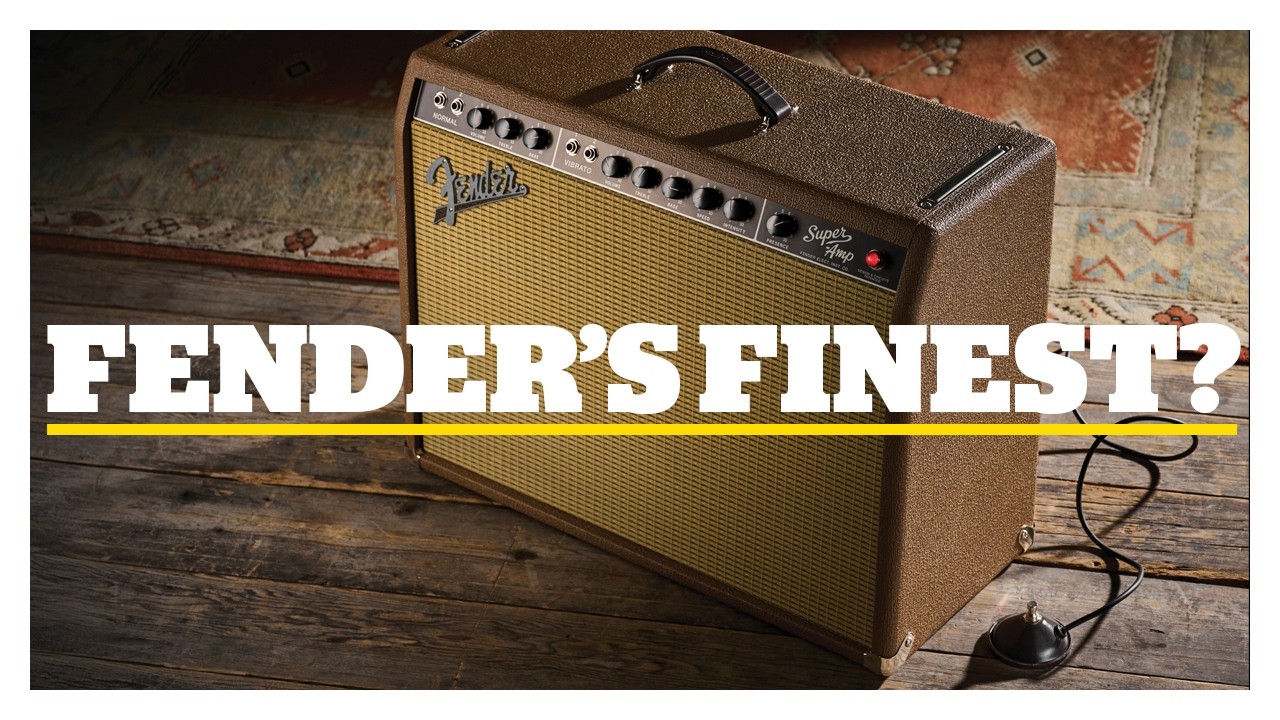
Fender’s design team studied and replicated the original circuitry with remarkable precision, meticulously engineering the amp from the ground up. Working closely with Celestion, the team developed a new pair of 10-inch speakers voiced specifically for this amp, delivering the same punch, warmth and responsiveness that defined the original.
From its period-correct brown Tolex to its unmistakable sonic character, the new ’62 Super Amp offers an authentic brown-era experience for a new generation of players.
Senior product manager, Rick Heins, reveals how this classic was brought roaring back to life.

What inspired Fender to revisit the brown-panel-era Super Amp?
I remember being in New York for work and wandering into a Guitar Center that had a vintage room. I picked up a guitar and plugged into what I think was a ’61 or ’62 Super. It just floored me
The ’62 Super has such an interesting place in Fender’s history. The brown-panel amps are one of those eras not many players have experienced. They’re rare, expensive, getting harder to find and almost unobtainable at this point. We’re always looking at vintage Fender amps that people still talk about as ‘the ones that got away’, and the Super kept popping up in those conversations.
I remember being in New York for work and wandering into a Guitar Center that had a vintage room. I picked up a guitar and plugged into what I think was a ’61 or ’62 Super. It just floored me – that throaty overdrive, the warmth, the Harmonic Tremolo.

It had such a unique voice. People literally started coming into the room asking what amp I was playing. That stuck with me. I thought, ‘If we ever expand the American Vintage line, this could be something really special.’
We’d also noticed on forums and in player discussions that the brown-panel amps, especially those with Harmonic Tremolo, were getting a lot of love and commanding serious prices. That told us there was real interest.
Between the sound, the scarcity and the story, it just felt like the right time to bring the Super back and reintroduce an era of Fender that a lot of players have never had the chance to hear or feel.

How long did the original Super run in the Fender line-up?
I want to say they started making it around 1960. And then I think probably there was some crossover, like in ’63 or ’64, when the black-panels started coming out, so there was some overhang between both.
But I would say the last ones were probably around ’63. So you’re talking like three years or so that it was around, might even be a little longer. I’ve seen ’60s, I’ve seen ’62s. I’m not sure I’ve ever seen any ’63s. They soon transitioned into the black-panel with a different circuit, so it wasn’t a long run.

Brown-panel amps fit in between the tweeds and the black-panels. What’s your take on the tonal differences?
It was an interesting time for Fender amp circuits. When Leo was working on the tweeds, people forget, the amps were designed to amplify clean tone, not distortion. Tweeds ended up distorted and guitarists loved that, but Leo was kind of unhappy with it.
So with the browns, he started working on the circuits to get them cleaner. They still had a bit of hair, still distorted a touch, but [were] more refined. That’s why he moved on to the black-panels later and those got cleaner again.
When Leo was working on the tweeds, people forget, the amps were designed to amplify clean tone, not distortion. Tweeds ended up distorted and guitarists loved that, but Leo was kind of unhappy with it
But the brown-panels have a sound that’s really hard to classify. Very warm and woody. When you play a Strat, especially on the neck pickup, through a brown-panel, there’s this organic, woody tone. Black-panels can be bright, which is great and what was intended, but they can lack some of that warmth in the midrange.
Browns have a punchiness, a sort of immediate feel. They don’t sag like tweeds. The power section feels more robust. Crank one and it’s a warm, fat overdrive. Not thin, not ‘paper tear’ distortion, but a fuller, fatter sound. That midrange and warmth sits perfectly in a mix, whether live or recording.

A lot of times, when you record a guitar, you end up chopping lows and highs to fit it with drums, bass and everything else. A brown-panel naturally sits in that sweet spot where you’re not fighting with the bass or cymbals. When you’re playing, it has a unique feel under your fingers, so very tactile.
Why are the original Supers considered hidden treasures and why are they so rare?
Well, there just weren’t as many made as the tweeds or black-panels. You don’t see them on the market often. I think it’s just one of those transitional amps. Leo was always tinkering, trying to make them cleaner.
There are a few amps from that era that are cool but don’t get their due, mostly because people haven’t played them. It’s hard to get excited about an amp if you’ve never heard it, right?

How closely does the new version follow the original circuit?
We bought an original in really good shape and spent a lot of time dialling it in. We tried to get it as close as possible to the sound of the original.
But there are things that you just can’t replicate – such as ageing a cabinet 60-plus years, original tubes like RCA – but aside from that, we went through a very rigorous process and compared it over and over again. Initially, it sounded good, but it just wasn’t close enough, so we’d send it back to R&D, tweak it and try again.
Some original components aren’t available any more, so we had to find ways to match the sound with modern tech. And I think we did really well. We compared it using the same speakers as the original and, to my ears, it’s very close. You can tell the difference if you’re listening for it, but it feels authentic.

Were there any changes that you had to make to the circuit?
No major changes. Everything was intentional. We did slow down the tremolo, though. The original tremolo is fast, even at its lowest setting it’s pretty quick, and at its fastest, you almost can’t hear it.
We figured most players today would want it slower, more gradual. Otherwise, everything’s the same. Same tube count, same Harmonic Tremolo design.
What features make the Harmonic Tremolo unique?
It’s phase-shifting, tube-based tremolo, so it’s different from bias tremolo or Opto units in ’60s Twins and Deluxes. It uses extra tubes to create this effect. It almost sounds like the pitch is shifting, similar to a Rotovibe or that Hendrix vibe – very subtle and musical.
Leo probably moved on from this design because the extra tubes needed to make it work cost money. He was also experimenting more with tube-driven reverb.

How did you recreate the speakers?
The original had Jensen Alnico speakers. Great clean tone, but they collapse when you crank it
The original had Jensen Alnico speakers. Great clean tone, but they collapse when you crank it. In the early ’60s, guitarists played differently and really didn’t crank the amps past clean, so there was no issue with Alnicos.
For the reissue, we wanted something that handles clean and cranked tones and that retains warmth and woody character. We worked closely with Celestion to make a custom ceramic speaker, not based on originals but entirely unique.
We undertook A/B testing against other modern replacement speakers, even double-blind testing, to make sure we weren’t just choosing with our eyes. We got something that holds up under volume, sounds clean and warm, and is great for rock or country. It’s still unmistakably a Super, with just a touch of flavour difference.
When placed side by side with the original speakers, do they sound the same at moderate volume?
Close enough that you wouldn’t mistake one for the other. Alnicos push differently from ceramics, but it’s subtle. We’re comfortable saying it sounds like a Super.
Are there any other modern features aside from the tremolo tweak?
Not really. The rectifier is the same, the circuit’s the same. We’re using PCB instead of full hand-wiring, but critical tube sockets and areas are hand-wired. The footswitch and cover match the original. The goal was a true American Vintage feel without driving the price through the roof.
What did you use to voice the amp?
We used Strats, Teles, humbuckers – they all sound great. Crank it up and it gets fuller and fatter, really meaner, but it doesn’t collapse. Also the volume knob on the reissue is gradual, unlike some black-panels where volume jumps from zero to 50.

Did you encounter any challenges when replicating the warm woody tone or the sparkling clean tone?
Yes, balancing warmth and sparkle with modern components was tricky. You want that warm, woody tone, but you also need sparkle on top, especially when playing a Strat in position 4; you want that spanky, quacky sound.
Our R&D team knows these amps inside and out and wanted [the reissue] to sound right with a Strat, Tele or humbuckers. When you crank the volume it fattens up without falling apart. It’s got great overdrive that’s full, fat and musical. Midrange punch and warmth are the key signatures for this amp, but they also have a lot of presence so you won’t get lost in the mix.
Are there any other defining features of this new ’62 Super Amp?
Turn it up! That’s where it really sings. You’ll feel the difference from clean to fat overdrive. You can get usable sounds at low volumes, but it gets bigger as you turn up – really nice. These amps are fun to play and really special.
- Leo Fender’s favorite amp, recreated? Fender ’62 Super Amp review
- This article first appeared in Guitarist. Subscribe and save.

