


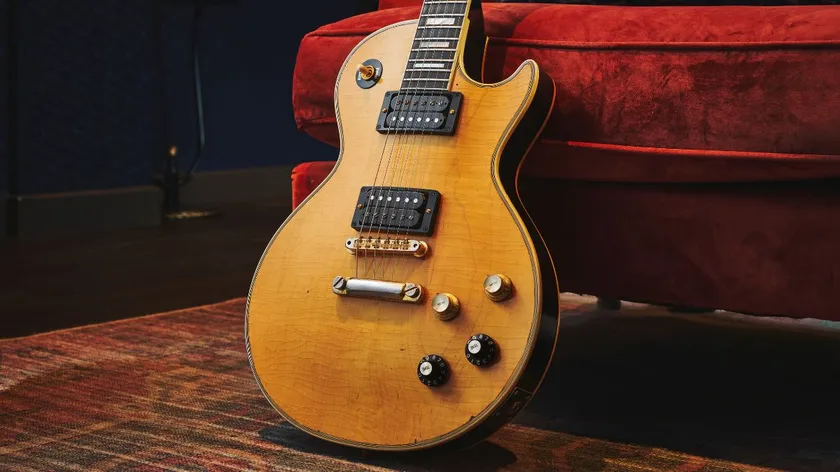


Acoustic guitars are designed to project their sound, with centuries of innovation that make them loud and proud, but no matter how loud an acoustic goes, there will always be occasions where they can’t quite compete with their electrified counterparts. This is where the best acoustic guitar amps come into play.
Acoustic amps are optimized to amplify the characteristics of acoustic guitars and project them through their built-in speakers, and, when even more volume is needed, often through a PA system via their DI outputs. This makes them super valuable for gigging musicians who need a little more oomph, be that for street performers whose sound can be lost outside, or on the stage where an acoustic struggles to compete with a drum kit.
As with electric guitar amplifiers, acoustic amps can range from entry-level, accessible price points to professional-standard models. The very best acoustic amplifier you can buy right now is the AER Compact 60. The AER Compact 60 might not look that exciting, but for sheer sound and practicality, it is the perfect choice for us. If you're looking for something more affordable, the compact Orange Crush Acoustic 30 would be a wise budget choice. It has separate inputs for a guitar and a microphone, and separate EQ sections for each, making it ideal for home practice or small gigs.

New to the world of acoustic guitar amps? Well, I've included a wealth of advice in this guide, including an FAQ section and an in-depth glossary to help you better understand the jargon. So without further ado, here are the best acoustic guitar amps money can buy right now.

How we test: Each acoustic guitar amp was thoroughly tested by either me or another member of the Guitar World team, paying careful attention to everything from build quality and tone to usability and value. Find out more about how we make our recommendations and how we test each of the products in our buyer's guides.
Best overall

✅ Buy if you want the best tone: Okay, the AER Compact 60 isn't the cheapest option, but for me, it sounds the best.
❌ Avoid if you are on a tight budget: Looking for a wallet-friendly option? Well, in that case, the Boss or Orange option may be better for you.
The AER Compact 60 has been an industry benchmark for acoustic amplification since the '90s, and the fourth-generation model shows exactly why it has endured and why it takes our top slot as the best acoustic amp.
Build: From the moment you pull it from its included padded gig bag, the Compact 60 feels premium. This is sophisticated German engineering at its finest. The compact footprint gives it an almost armored toughness, and its dimensions (260mm x 325mm x 235mm) mean it’ll fit comfortably on any stage or in any rehearsal space. The only minor gripe is a slightly flimsy carry bag, but that’s a very small complaint for an otherwise impeccably built amplifier.
Features: The Compact 60 follows a simple, effective two-channel design. Channel 1 offers a standard ¼-inch input, while Channel 2 features a combo jack for both instruments and microphones, complete with 9V phantom power. Both channels share three-band EQ (bass, mid, treble), a high/low -10dB attenuator for hotter pickups, and a tone color filter that scoops the mids and adds top-end sparkle. Around the back, there’s an XLR DI out with pre/post FX switching, ¼-inch line out, headphone output, AUX input with its own level control, tuner input, footswitch connection, and a full send/return effects loop. Onboard effects can be used across both channels, with a pan control to route effects between them. The only limitation is that you can only use one effect at a time.
Sound: Now, an acoustic amp’s job is simple in theory but difficult in practice: faithfully represent your instrument’s tone, just louder. The Compact 60 does this with aplomb. The onboard effects are equally impressive; the chorus in particular is lush and musical, while the reverb options suit everything from subtle room ambiance to longer, more expressive trails. One honest caveat is that the 60 watts won’t shake the walls. It’s ideal for coffee shop gigs and intimate venues, but for larger stages or louder ensembles, you’ll likely be leaning on the DI out. For pure, inspiring acoustic tone at a manageable volume, though, it’s hard to beat.

"After hours with the Compact 60, I’m hooked. It sounds detailed and natural, it feels premium, and it keeps things refreshingly simple. It won’t blow the roof off and deliver huge volume on its own, but for an honest, inspiring acoustic tone, this is right up there with the very best."
Read our full AER Compact 60 review
Best for singer songwriters

✅ Buy if you are a singer-songwriter: If you value the tone of your voice as much as your guitar, then this is the model for you.
❌ Avoid if you are not gigging: At 60W, this is a fairly loud amp and not really designed for playing at home.
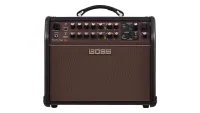
Build: Now, don’t let the size fool you. Yes, the Acoustic Singer Live is a compact little unit, roughly 14.5” x 10” x 12” and tipping the scales at just 23 pounds, but it’s built like a tank. The tilt-back cabinet is solid and road-ready, and the angled control panel keeps everything accessible whether the amp’s on the floor or up on a stand. Under the hood, Boss has gone with a bi-amp design, running a 6.5” woofer and a 1” dome tweeter off two independent power amps. This means the lows and highs are handled separately, giving you a much cleaner, more focused full-range response than you’d normally expect from something this size.
Features: This is where the Acoustic Singer Live really earns its keep. You get two fully independent channels, one for guitar and one for vocals, each with its own three-band EQ and reverb. The guitar channel adds a chorus and an Acoustic Resonance switch, which is Boss’s way of dealing with that thin, harsh piezo tone that plagues so many acoustic players going direct.
The mic channel gets an Enhance button that fattens up vocals nicely, plus delay and a genuine vocal harmonizer that listens to your guitar chords and generates harmonies in real time, and thankfully, it’s more accurate than you’d expect. There’s also a built-in looper, an anti-feedback notch filter, a mute button, and a tweeter attenuation switch for dialing back the top end. Around the back, you’ll find XLR DI outs, an aux in for backing tracks, and USB audio connectivity for recording straight to your DAW. It’s a lot of kit for the money.
Sound: Plug in, and the Acoustic Singer Live immediately impresses. The bi-amp design pays dividends here; there’s a warmth and fullness to the sound that you wouldn’t necessarily bank on from a 6.5” speaker. The Acoustic Resonance control is genuinely useful for rescuing piezo-equipped guitars from that brittle, toppy character, and the reverb is lush without getting out of hand. Of course, Boss’s effects are reliably good across the board, with the chorus being a standout for me. At small-to-medium gigs, it handles itself confidently, and if you need more headroom, the DI outs mean you can run it into a PA. For solo singer-songwriters who want one box to do it all, it’s a seriously capable bit of kit.

“An all-in-one amp solution for singer-songwriters that makes a neat recording tool, the Live LT will cover you for open-mic night and beyond.”
Read our full Boss Acoustic Singer Live review
Best for portability

✅ Buy if you need it to be portable: This is a small and very portable amp that's ideal for players on the go.
❌ Avoid if you need big volumes: This isn't a very loud amp at only 40W.
Build: Fishman has a habit of making things look deceptively simple, and the Loudbox Micro is no exception. It’s tiny, roughly the size of a lunchbox, and at a little over nine pounds, you can carry it in one hand while your guitar’s in the other. Job done. Despite the compact footprint, Fishman hasn’t cut corners on the cabinet design. It’s a sealed enclosure running a bi-amplified two-way speaker setup, which is a smarter approach than just chucking a single driver in a box and hoping for the best. Build quality is solid throughout, very much in keeping with Fishman’s reputation for making gear that just keeps working.
Features: For a box this size, the Micro punches well above its weight on the features front. You get two independent channels. a 1/4” instrument input and an XLR mic input, each with its own EQ and reverb controls. The guitar channel gets the full treatment: three-band EQ, reverb, chorus with mild and heavy presets, and a phase switch for keeping feedback in check. The mic channel is more stripped back, with just gain, two-band EQ, and reverb. As you’d expect, there’s a balanced XLR DI output, and there’s also a 3.5mm aux input for backing tracks and a headphone out for late-night practice.
Sound: Now, I’d say the 40 watts feels like more than the number suggests; there’s some real headroom here, and even pushed hard, there’s no breakup or harshness creeping in. The bi-amp design pays off in the low end too; yes, a 5.25” speaker has its limits, but the bass is surprisingly full and well-defined rather than thin and weedy. Acoustic guitars sound natural and open. Fishman’s whole thing has always been transparency, and the Micro absolutely delivers on that. For solo singer-songwriters playing cafes, house gigs, or small venues, this is a genuinely brilliant little amp.

“Whether you’re a serious player or maybe you’re just after an easy entry into acoustic amplification, the Loudbox Micro could be just what you’re after.”
Read our full Fishman Loudbox Micro acoustic combo amp revie
Best on a budget
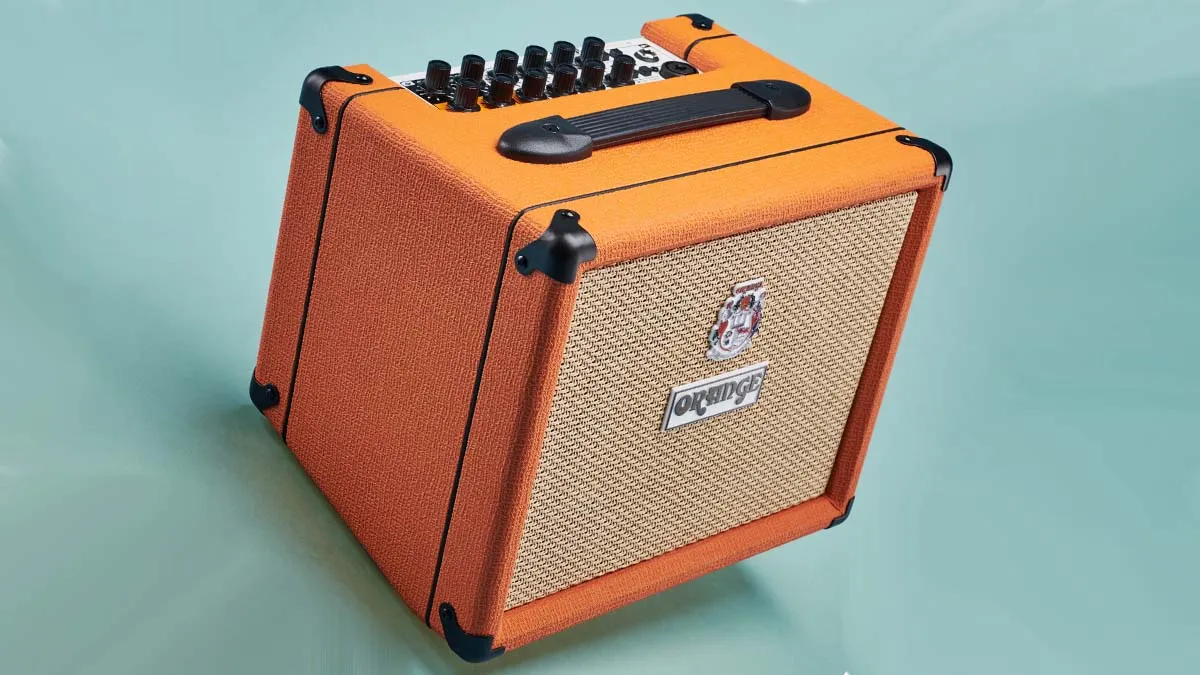
✅ Buy if you need to keep costs down: This is probably the most cost-effective amp on the market.
❌ Avoid if you need lots of features: This is a fairly basic amp and therefore doesn't have the bags of features others do.
Build: The Crush Acoustic 30 is the British brand’s first proper foray into acoustic amplification, and they’ve brought their usual no-nonsense approach with them. The cabinet is classic Orange, orange vinyl tolex, wheat-coloured grille cloth, built like it could survive a tour van, and the angled, tilt-back wedge design means the sound fires upward toward your ears rather than at your shins. Inside there’s a custom-designed 8” speaker driven by a Class D power amp delivering 30 watts. At around 13.5 pounds, it’s genuinely portable, and the top-mounted control panel keeps things accessible on stage.
Features: The headline feature here is battery power, and it’s a must-have for buskers and outdoor performers. Pop in 10 AA batteries and you get around five hours at 50% volume or up to eight hours at lower levels. Now, I’d say stock up on rechargeables, because this thing will eat through disposables fast. Two channels cover guitar and mic duties: Channel 1 is the main guitar channel with a 1/4” input, three-band EQ, a semi-parametric mid sweep, a -10dB Pad switch for hotter pickups, and a Colour switch that adds a treble boost with a slight mid scoop. Channel 2 handles your mic or a second instrument via XLR, with phantom power for condenser mics, plus Gain, Treble, and Bass.
Sound: Now, I found that the Crush Acoustic 30 is louder than you’d expect. There’s a punchy and focused quality to it that belies the single 8” driver. Of course, it’s not going to fill a big room on its own, but for small rooms or outdoor busking spots, it holds its own.

“For a small but perfectly formed acoustic combo for solo performances, the Orange Crush Acoustic 30 offers a very respectable performance.”
Read our full Orange Crush Acoustic 30 review
Best for pros
✅ Buy if you need a pro option: This is a professional-grade amp designed for career musicians.
❌ Avoid if you are on a budget: Quality like this doesn't come cheap, unfortunately.
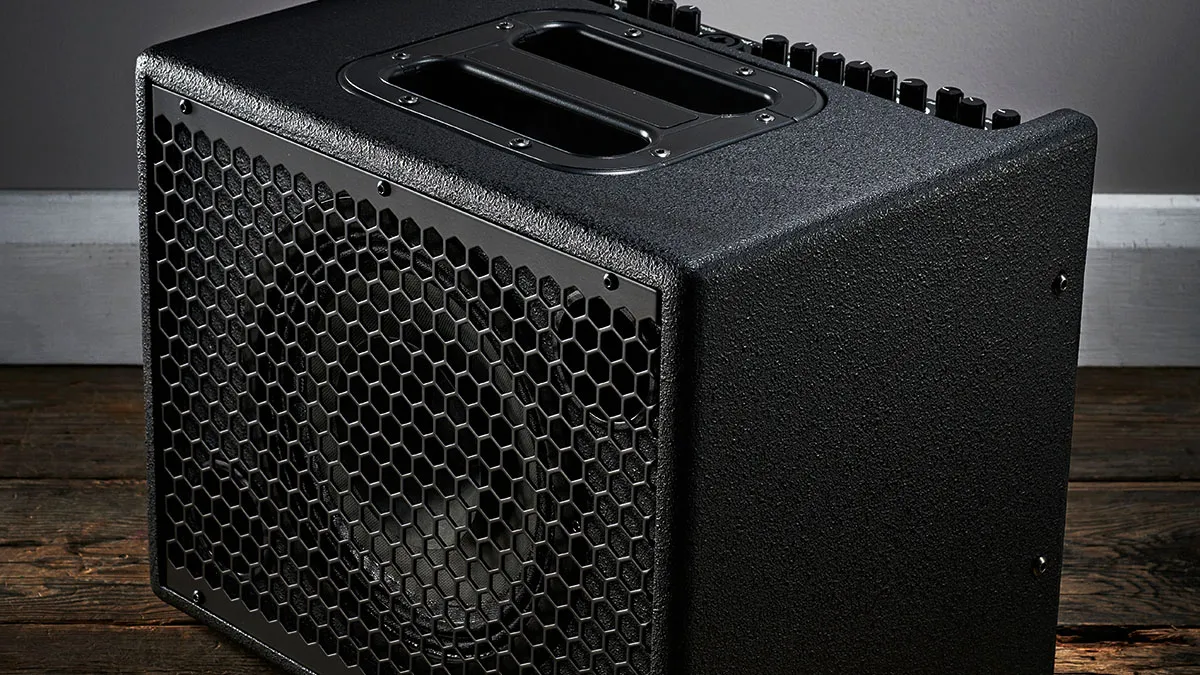
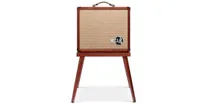
Build: Okay, so the backstory here matters. Udo Roesner is the man who co-founded AER and spent three decades designing some of the most respected acoustic amps on the planet. When he parted ways with AER and launched his own brand, the first thing out of the gate was the Da Capo 75 — and the name says it all. Da Capo means “repeat from the beginning” in music, and that’s exactly what Udo did: went back to first principles and rethought everything. The result is a compact plywood box that measures roughly 325 x 245 x 265mm and weighs around 7.5kg, a touch heavier than the AER Compact 60, and that’s deliberate. The extra weight comes from a larger output transformer, which is at the heart of what makes this amp sound different from the competition. It’s a Class A/B analogue power amp rather than the Class D digital designs most compact acoustic amps use, and that choice has real sonic consequences.
Features: Two channels, both with combo XLR/jack inputs, 48V phantom power, three-band EQ, and access to six onboard digital effects; that’s the headline. Channel 1 is set up for guitar, with a Gain control, Bass, Middle, Treble, and a Tone push-button that adds a treble boost for a bit of extra shimmer when you need to cut through. Channel 2 swaps that Tone button for a high-pass filter, which is genuinely useful for large-bodied acoustics prone to low-end feedback, or for reining in a mic’s proximity effect. The effects section offers Long Reverb, Short Reverb, Chorus, Custom Delay, My Delay, and Tap ‘n’ Delay, all controlled via a Pan knob that lets you distribute the effect between channels — full left for Channel 1 only, full right for Channel 2, or anywhere in between. A footswitch jack is included for switching effects on and off, though the footswitch itself isn’t in the box.
Sound: This is where the Da Capo 75 really separates itself from the pack. The Class A/B analogue power amp and the custom-tuned cabinet combine to produce a warmth and richness that most compact acoustic amps simply can’t match. The low end is full and controlled rather than flabby, the mids are relaxed and natural rather than honky or pokey, and the highs are smooth. That said, the interactive preamp design means it takes a bit more time to dial in than simpler amps. Stick with it, because the results are worth it.

“A familiar face with a totally new personality – everything you need in one compact unit.”
Read our full Udo Roesner Da Capo 75 Acoustic Amp review
Best for busking

✅ Buy if you are busking: This is our option for busking musicians, but remember you need to purchase the Spark battery pack to make it fully portable.
❌ Avoid if you only play guitar: This amp is designed for multiple instruments, so if you only play guitar, you may get on better with a single-channel guitar amp.
Build: Positive Grid built their reputation on the Spark 40, a desktop practice amp that became a phenomenon, largely because it sounded brilliant and came with an app that actually made practicing fun. The Spark Live is what happens when they take that formula and ask: what if we made it gig-worthy? The result is a 150-watt, four-channel unit that sits somewhere between a smart amp and a compact PA system. The clean lines, retro grille cloth, and tidy control layout are very much in keeping with the rest of the Spark family, and when you flip it on its side, it has a certain vintage combo charm about it. Build quality is reassuringly solid, the controls feel smooth and responsive, and there's a neat kickstand at the rear for angling the unit on the floor. It's compact enough to fit in the van without eating everyone else's space, and light enough that you won't dread load-in.
Features: Four channels are what’s onboard here. Channel 1 is the full-fat Spark experience, 33 amp models, 43 effects, three-band EQ, Gain, and up to eight storable presets accessed via a push-turn encoder on the front panel. Channel 2 gets its own preset dial and three amp models tailored for vocals, bass, or acoustic guitar, with 50 effects to play with. Channels 3 and 4 are simpler stereo inputs with a shared volume control, handy for a keyboard or backing track, less handy if you were hoping to add reverb to everything - you can’t, and it’s a genuine frustration. The Spark app ties it all together with a mixer view for balancing all four channels, and the Sonic IQ adaptive EQ system automatically adjusts the sound depending on how the unit is positioned.
Sound: This is where Spark Live earns its stripes. The amp modeling on Channel 1 is exactly as good as you’d expect from Positive Grid, the same BIAS-powered tones that made the Spark 40 so popular, now loud enough to actually use on a stage. At 150 watts, it holds its own against a drummer in smaller rooms, though on the floor it can struggle in a dense band mix; get it up on a speaker stand, and it performs considerably better. The acoustic and vocal treatments on Channel 2 are solid rather than spectacular, but they do the job for coffee shop gigs and busking. The one real gripe is that Channels 3 and 4 have no access to effects at all, not even a touch of reverb. That said, for solo singer-songwriters and acoustic duos, the Spark Live is a genuinely exciting bit of kit.
“With the Spark Live, Positive Grid proves yet again that they know exactly what they are doing. If you've been looking for a giggable version of your beloved practice amp, then this is most definitely the amplifier for you.”
Read our full Positive Grid Spark Live review
Also tested
How to choose

If you’ve never bought an acoustic amp before, or perhaps just need a refresher on what to look out for, this is the section for you. Having worked for years in a busy guitar store, I’ve helped countless players land on an acoustic amplifier that suits their needs. Over time, I sharpened a fool proof approach that focuses on a few key considerations. Keep these in mind, and you won’t go far wrong.
Volume
Firstly, and much like electric amps, starting with volume is a good place to begin. While there are other factors involved, the amplifier’s power, otherwise known as wattage, is the quickest and easiest way to get a rough idea of volume. If you’re practicing at home and don’t plan on playing elsewhere, 10 to 30 watts will be more than enough. Even pushing up to 50 watts is fine, but it’s worth checking for a power control so you can keep things manageable at lower volumes.
If you’re planning on gigging, you’ll need something bigger. Around 100 watts and above will generally cover most situations, but it does depend on the venue size, how many people are there, and whether you’re playing with other musicians.
Features
The two main features to consider are effects and EQ. It’s worth looking for an acoustic amp with a few built-in effects like chorus, delay, and reverb. If you’re just starting out, and especially if you’re mainly an acoustic player, chances are you won’t have a pedalboard. Having these effects built in means you can experiment without needing extra gear.
A solid EQ section is just as important. Not only does it let you shape your tone, but it can also help control unwanted feedback if it crops up.
Size
Since this may be your first acoustic amp, size is another key consideration. We’ve all got to work within the space we have, and acoustic amps come in everything from compact desktop units to models that start creeping into PA territory, so it’s worth measuring up before pulling the trigger.
Size also plays a role in tone. Generally speaking, the bigger the amp, the larger the speaker inside. Bigger speakers tend to produce more low-end, while smaller speakers are a bit tighter and more focused in the mid-range, so there are tonal considerations here too.
Glossary/Key Terms
- Acoustic preamp: This is the electronic component found in electro-acoustic guitars that boosts the weak signal from the pickups into a stronger signal suitable for amplification.
- Anti-feedback control: A control found on many acoustic amps designed to reduce feedback caused by sound looping between the guitar and the speaker, which results in that familiar howling noise.
- Balanced output: A type of output connection that reduces noise and interference over longer cable runs, commonly used to connect your amp to a PA system or mixing desk.
- Channel: This refers to an individual input on an amplifier. Acoustic amps often have multiple channels, allowing you to plug in a guitar and/or a microphone separately, each with its own controls.
- DI output: A direct output that sends your amp’s signal straight to a PA system or audio interface, often via XLR, allowing your sound to be amplified through larger systems.
- EQ (Equalization): These are controls that allow you to adjust specific frequency ranges, typically bass, middle, and treble.
- Feedback: A high-pitched howl or low rumble caused when the amplified sound re-enters the guitar and loops continuously. It is common in acoustic guitars, whose bodies are fully hollow, providing more opportunity for sound to loop and for resonant frequencies to be picked up.
- Full-range speaker: This is a type of speaker designed to reproduce a wide frequency range as accurately as possible, ideal for acoustic guitar, where clarity and detail are important.
- Headroom: The amount of clean volume an amp can produce before it starts to distort. More headroom means louder, clearer sound.
- Line out: An output that sends your signal to another device, such as a PA system or mixer, usually at line level rather than speaker level.
- Notch filter: A type of control found on acoustic amps that is used to remove specific problem frequencies, often used to eliminate feedback without affecting your overall tone too much.
- Piezo pickup: A type of pickup commonly found in acoustic guitars, usually located under the saddle, that captures string vibrations and produces a bright tone.
FAQs

What is an acoustic guitar amp and how is it different from a regular amp?
Although they are in the same family, electric and acoustic amps are different in practice and serve different purposes. Where an electric guitar amp is designed to accentuate and flavor your tone, an acoustic amplifier doesn’t need to do that to the same extent. This is because acoustic guitars produce most, if not all, of their tonal characteristics from the tonewood and construction.
The best acoustic amps aim to amplify your sound with a fairly flat response, providing a clean platform that lets your guitar’s natural character shine through with a lovely, natural acoustic quality. An electric guitar amp, on the other hand, typically adds its own tonal characteristics to your sound, often thanks to its preamp design and circuitry.
Can I use an electric guitar amp for an acoustic guitar?
If you plug an electro-acoustic guitar into an electric amp, yes, it will work. However, that doesn’t mean you should. In fact, I would generally advise against it, unless you want it to sound like an angry wasp in a tin can. Okay, that’s a bit dramatic, but the wider frequency range of an acoustic guitar isn’t what electric guitar speakers are designed for, especially at higher volumes.
Electric guitar amps are built to shape and colour your tone, which works great for electric guitars, but can make an acoustic sound a little unnatural. On top of that, electric guitar speakers aren’t designed to handle full-range frequencies, so your tone can end up sounding thin and lacking depth.
Do acoustic guitar amps color your tone?
Typically, no, acoustic guitar amps are designed not to color your tone. In fact, they aim to do the opposite. The best acoustic amps offer a full frequency range with a relatively flat response, allowing your guitar’s natural sound to come through clearly.
That’s because most, if not all, of your tone comes from the acoustic guitar itself. From the tonewood to the bracing and body shape, all of the resonance and harmonic detail is generated by the instrument. As a result, you don’t need the amp to add character in the same way you would with an electric guitar amp.
Of course, you’ll still find EQ controls like bass, middle, and treble, along with onboard effects, but generally speaking, the amp shouldn’t add too much flavor; that’s exactly the point.
What wattage do I need for an acoustic guitar amp?
The wattage you need will depend on how you plan to use your amp. If it’s just for home practice, anywhere between 10–50 watts will do the job, as you won’t need huge volumes.
If you’re gigging, you’ll likely want something closer to 100 watts or more, especially for larger spaces. As the venue gets bigger, so should your available power, if you want to be heard clearly. That said, many modern acoustic amps come with DI outputs, meaning you can plug into a PA system for extra volume. Because of that, you don’t always need massive wattage on stage, but these general guidelines will point you in the right direction.
Are acoustic guitar amps good for busking or outdoor use?
Generally speaking, yes, acoustic amps can be great for busking and outdoor use. Typically, they come with extra inputs, whether that’s for a microphone or another instrument, so if you’re singing or even running something like a keyboard alongside your guitar, most acoustic amps will have you covered.
The larger speakers often found in acoustic amps also help with dispersion, which is pretty essential when you’re trying to be heard by passers-by who might throw you a coin or two. There are even amps, like the Positive Grid Live, specifically designed for busking, with features such as an angled cabinet that projects upward when set on the ground. Many are also battery-powered, meaning you don’t have to go hunting for a plug socket outside your local coffee shop just to get going.
What effects do acoustic guitar amps usually have?
Usually, octave fuzz. Jokes aside, you might be surprised to hear that acoustic guitar amps often come with built-in effects.
My personal favorites, and probably the most common, are chorus, reverb, and delay. These work really well with acoustic guitar, enhancing your tone rather than masking it. You’ll usually only need a touch of them, too; a little goes a long way. I’m yet to see an acoustic amp packed with fuzz, but when I do, I’ll be first in line to try it out.
Do I need a pickup in my acoustic guitar to use an amp?
Yes, you will. Like an electric guitar, an acoustic guitar needs electronics to capture the string vibrations and send that signal to an amplifier. These guitars, known as electro-acoustics, either come with a pickup installed from the factory, or you can install one yourself further down the line. In fact, brands like Martin often leave their high-end models pickup-free, so you can choose one that suits your preferences.
The most common acoustic pickup is a piezo. This sits under the saddle of your guitar, capturing the string vibrations and producing that familiar bright tone. You’ll also find magnetic pickups, similar to those in electric guitars, which sit across the soundhole, think Kurt Cobain’s acoustic on MTV Unplugged.
Lastly, there are microphone-based systems, which are often paired with a piezo in more advanced setups, allowing you to blend both signals for a more natural sound.
Can I use an acoustic amp as a PA system?
Up to a point, yes, you can use an acoustic amplifier as a PA system. However, this will really only work in smaller venues, and if you’ve got a powerful enough amp to begin with. Since acoustic amps typically have multiple inputs, you can usually get away with running something like a guitar and a microphone through it. Think chilled coffee shop gigs where you’re not competing with a lot of background noise. In fact, I’ve played a coffee shop gig myself using nothing but a Fender Acoustic 100.
That said, once you move into bigger venues or start adding more musicians, an acoustic amp won’t really cut it as a PA. It’s not just about the number of inputs either, it’s about headroom. If you’re pushing a smaller amp, say 50 watts with a 10-inch speaker, too hard, you risk it sounding distorted or even damaging the speaker over time.
How we choose products

Here at Guitar World, we are experts in our field, with many years of playing and product testing between us. We live and breathe everything guitar related, and we draw on this knowledge and experience of using products in live, recording and rehearsal scenarios when selecting the products for our guides.
When choosing what we believe to be the best acoustic guitar amps available right now, we combine our hands-on experience, user reviews and engage in lengthy discussions with our editorial colleagues to reach a consensus about the top products in any given category.
First and foremost, we are guitar players, and we want other guitarists to find the right product for them. So we take into careful consideration everything from budget to feature set, ease of use and durability.
Find out more about how we make our recommendations and how we test each of the products in our buyer's guides.
Why trust us?

☑️ A global audience of 3.8 million guitarists monthly
☑️ 1,200+ reviews on GuitarWorld.com
☑️ 30+ years of product testing at Guitar World
Guitar World boasts over 44 years of expertise and stands as the ultimate authority on all things related to guitars. The magazine and website feature expertly written gear round-ups and top-quality, authoritative reviews penned by a team of highly experienced industry professionals.
Guitar World's inaugural print issue hit the shelves in July 1980, and ever since, it has been captivating players and enthusiasts with engaging lessons, insightful interviews with the biggest guitar heroes, and priceless buying advice for newbie players.
Furthermore, GuitarWorld.com continues this legacy online and serves as the hub of the world's foremost authorities on guitar playing. The site not only hosts content from Guitar World but also showcases articles from respected publications such as Guitarist, Total Guitar, Guitar Techniques, and Bass Player. With a reach extending to 3.8 million players each month, GuitarWorld.com is a go-to destination for guitar fanatics globally.
Read more:
You can trust Guitar World Our expert reviewers spend hours testing and comparing guitar products so you can choose the best for you. Find out more about how we test.
- The best acoustic guitars for beginners: easy strummers for new players
- Transform your tone with the best acoustic guitar pedals
- The best acoustic guitar strings: our complete guide
- The best guitar capos: our top recommendations for acoustic and electric

