




Guitar World Verdict
After hours with the Compact 60, I’m hooked. It sounds detailed and natural, it feels premium, and it keeps things refreshingly simple. It won’t blow the roof off and deliver huge volume on its own, but for an honest, inspiring acoustic tone, this is right up there with the very best.
Reasons to buy
- +
Very lightweight with tiny footprint.
- +
Included carry case.
- +
Elegant effects.
- +
Beautifully natural sound.
- +
Ideal for singer-songwriter.
Reasons to avoid
- -
Can only use one effect at a time.
- -
Not enough power for some.
- -
Slightly flimsy carry bag.
You can trust Guitar World Our expert reviewers spend hours testing and comparing guitar products so you can choose the best for you. Find out more about how we test.
What is it?
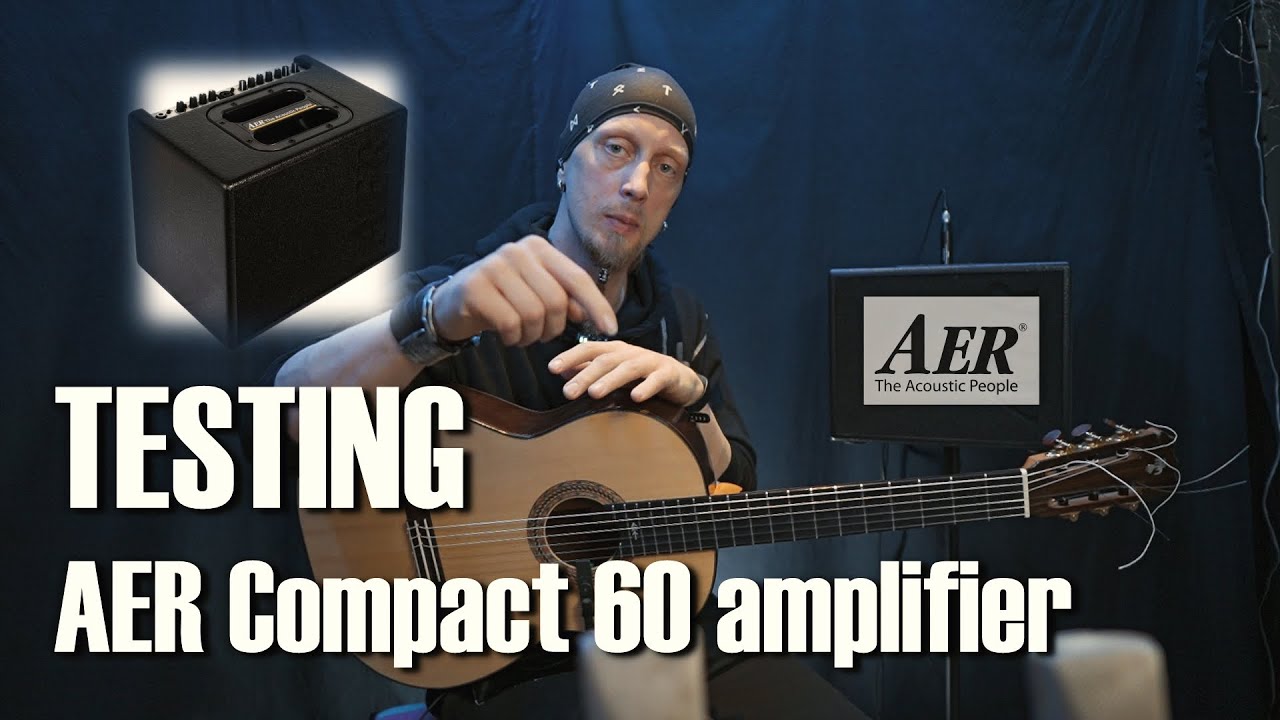
For an amplifier that has been around since the ‘90s, the Compact 60 is as close to an ‘industry standard’ for acoustic amplification as that overused moniker can claim. Of course, AER, the self-proclaimed Acoustic People, hasn’t sat idle, resting on its reputation. Today, I’m looking at the fourth-generation Compact 60.
It remains a small-footprint, 60-watt combo acoustic amplifier, but this latest iteration introduces a pre/post FX switch for the direct signal, along with an aux-in featuring its own level control. Equipped with an 8-inch twin-cone speaker, the Compact 60 weighs a remarkably light 16lbs (7.3kg) and is housed in an ergonomically compact cabinet.
There's onboard reverb, chorus, and delay that can be used across both channels. Speaking of which, Channel 1 features a ¼-inch input, while Channel 2 offers a combination jack for microphones, ideal for singer-songwriters, along with 48V phantom power for condenser mics and 9V power for instrument preamps.
This is just a snapshot of the many features packed into this humble yet sophisticated amplifier. As I pulled it from the included padded gig bag, I was keen to see whether the Compact 60 could live up to its stellar reputation. After all, it boasts Tommy Emmanuel and Eric Johnson as users. Is this an acoustic guitarist’s dream amp? Let’s find out.
Specs

- Price: $1,499 | £1,099 | €1,000
- Type: Combo acoustic amplifier
- Origin: Germany
- Output: 60 Watts RMS
- Speaker: 1x 8” (200 mm) twin cone speaker
- Channels: 2
- Controls: Three-band EQ controls for both channels, Colour switch, ‘mid-cut-treble-boost’-filter, Reverb, Delay, and Chorus with Level control, Effects Pan, Aux line level, 48V phantom power, high/low -10dB attenuator on each channel, DI out pre/post fx switch
- Connectivity: 1x ¼-inch input, combi-XLR/jack input, Aux in, XLR DI out, ¼-inch line out, Headphones out, FX loop, ¼-inch footswitch input, Tuner input
- Footswitch: Available but not included
- Weight: 7.3 kg / 16.09 lbs
- Dimensions: 260 mm x 325 mm x 235 mm
- Contact: AER
Build quality

Build quality rating: ★★★★★
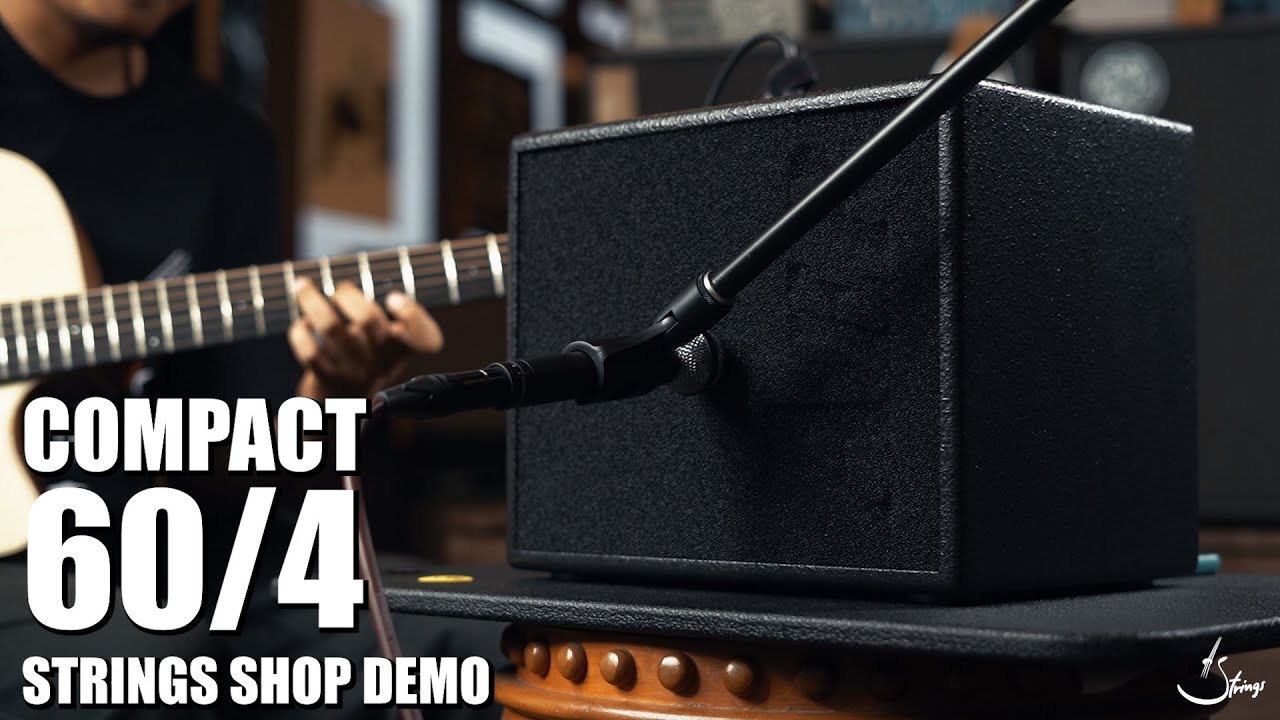
First things first, I'd say the Compact 60 feels top-end the moment it comes out of the case. The cabinet is Finnish birch ply, finished in a textured water-based acrylic rather than the typical vinyl wrap you’ll find on other amps at this price. It lends a rugged feel to the amp, which is more in keeping with a hard-working PA speaker than a small portable guitar amp.
The Compact 60 tips the scales at just 16lbs, remarkable for something that feels this solid in hand.
The top-mounted carry handle is held in place by eight chunky bolts, so there’s no risk of it ripping off, no matter how rough you are with it. The amp chassis itself is rugged metal, the knobs are firm and reassuring under the fingers, and the whole thing has a solidity that belies its compact dimensions. I'd say that if you’re planning to take this on the road, the Compact 60 is one of the more confidence-inspiring options out there.
One thing that will genuinely surprise you is the weight. The Compact 60 tips the scales at just 16lbs, remarkable for something that feels this solid in hand. That’s partly down to the digital power amp section, the neodymium speaker, and, of course, the compact cabinet dimensions.
Thankfully, that lightweight construction doesn’t reflect how solid this amplifier feels. Sure, it’s what you’d expect at this price point, but it's still good to see.
That said, one genuine gripe I have is that there are no corner protectors on the cabinet, which feels like an oversight on an amp aimed squarely at working musicians. Combined with the slightly flimsy carry bag, it's a minor but noticeable inconsistency in an otherwise well-thought-out build.
Usability

Usability rating: ★★★★½
I think an acoustic amp should follow the same ethos as the guitar it is amplifying, and be simple and effective. Acoustic guitars have their own natural voice, and a good acoustic amp's job is to faithfully reproduce that voice. Simplicity in the signal chain means fewer things getting between the guitar and the listener.
Thankfully, the Compact 60 leans fully into that philosophy. It’s a two-channel design, with the first channel offering a straightforward ¼-inch input, while the second handles both instrument and microphone duties via its combo input, complete with phantom power.
The EQ has a useful amount of sweep without feeling too sensitive, meaning small tweaks make a noticeable difference without throwing your tone completely off balance
Each channel mirrors the other, with Gain, Bass, Middle, and Treble controls, making it easy to dial things in quickly without overthinking. The EQ has a useful amount of sweep without feeling too sensitive, meaning small tweaks make a noticeable difference without throwing your tone completely off balance. The control panel is clean and familiar and, crucially, never gets in the way, whether you’re mid-performance or just trying to find a solid baseline tone.
There’s a bit more depth here if you need it. Both channels feature a High/Low switch, which acts as a -10dB attenuator, handy if you’re dealing with hotter pickups that can push things a little too hard. Alongside that is the tone Colour filter, essentially a quick EQ contour that scoops the mids slightly while adding a touch of top-end sparkle. It’s particularly useful for fingerstyle players, as I've found it helps bring out extra detail and articulation, though it can feel a touch scooped if overused in a mix.
Around the back is where the Compact 60 flexes its versatility, and to AER’s credit, the layout makes intuitive sense in use. The sockets are logically grouped – like, the 3.5mm Aux input sits close to its own dedicated level control, so you’re not hunting across the panel when you need to nudge the backing track volume mid-set. The phantom power and FX routing switches are clearly labeled and easy to locate in low light, which matters more than it sounds when you’re setting up on a dim stage.
It is worth noting that the effects loop is global rather than channel-specific, which keeps things simple but means you can’t, say, run your favorite reverb pedal on the guitar without it affecting your mic as well.
The Neutrik XLR DI out, headphone output, tuner input, and footswitch connection round out a rear panel that covers everything from home practice to small-stage performance without ever feeling cluttered.
Sounds

Sounds rating: ★★★★½
In theory, an acoustic amp has a pretty straightforward job: accurately represent your instrument, louder. Unlike an electric amp, where the amp itself is a core part of the tone, an acoustic amp walks a trickier line; it needs to be transparent enough to honor your guitar's natural voice, while still offering enough tone-shaping to flatter it in a live environment. I think the Compact 60/4 does both. If you want it to be purely transparent, you can, but there’s still plenty of tone-shaping onboard.
For testing, I reached for my Yamaha LS6. This guitar has a slightly scooped midrange with a present, articulate top end that can verge on being too bright for some. Being a slightly smaller jumbo body, it still offers plenty of projection and a strong bass response. Going in, I hoped the AER would preserve that top-end clarity without tipping it into shrillness, while keeping the low end tight and controlled.
Since I am very aware of the limitations of lower-end acoustic amps, I wanted to use a passive pickup and rely solely on the amplifier’s ability to project my guitar’s tone. With no onboard preamp, the passive pickup in the LS6 was, in my mind, the hardest test I could put this little AER through. After 30 minutes of playing through channel one, with the EQ section more or less at noon, I chuckled to myself for ever thinking the amplifier couldn’t handle it.
The tone felt open and three-dimensional, with an almost hi-fi character that AER is known for. The low end stayed tight, the mids were smooth, and the high-end remained detailed and alive without ever becoming brittle. Diving into the EQ section while digging into cowboy chords, rolling back the bass further tightened the low end, which was needed to reduce creeping feedback as I had the volume around three-quarters.

The low end stayed tight, the mids were smooth, and the high-end remained detailed and alive without ever becoming brittle
When it comes to volume, the Compact 60 has a ceiling, and it’s worth being honest about where that ceiling sits. Switching between a passive pickup and a Sigma 000M-15E with a Fishman Presys onboard made little meaningful difference to the perceived output; the amp’s character stays consistent regardless of what’s feeding it. In practice, this amp is well-suited to coffee shop gigs and smaller, more intimate venues. It delivers enough headroom to stay clean and present in those settings, but it’s certainly not designed to compete with a full band or a heavy-handed drummer.
Testing it in a rehearsal space alongside an active 12-inch PA speaker made the Compact's volume limitations more obvious. In louder environments, it will struggle to fill the space on its own. That's where the DI out becomes essential, and it's worth knowing that it's post-tone, meaning the signal going to the PA has already been shaped by the Compact's preamp and EQ. This turns the amp into an incredibly high-quality tone-sweetener and personal monitor in one. Thankfully, though, when pushed towards higher volumes, it stayed impressively clean with no obvious breakup or distortion.
As for the built-in effects, most players will immediately reach for reverb, which comes in two options – Long and Short. This allows you to choose between a tighter, more immediate wash or a slightly more spacious bloom, depending on your preference. Now, the onboard chorus was a personal highlight, with a level control that lets you blend it as subtly or prominently as you like.
The delay, similarly, offers level control but no adjustable rate or feedback. These are preset voices rather than fully tweakable effects, which keeps the interface simple but does limit how far you can push them. Crucially, you can only run one effect at a time, which feels like a genuine limitation at this price point. That said, being able to pan the effect between channels is a smart touch, particularly useful when running a microphone through channel two, keeping the reverb off the vocal while the guitar gets the full treatment.
Verdict

AER hasn’t felt the need to overload this amp with unnecessary extras, instead letting the sound do the talking
Having now sunk far more hours into playing the Compact 60 than I could ever have imagined, I can honestly say I am in love. As far as natural, encompassing acoustic amplification goes, this is one of, if not the best, options I have personally used. The simple layout, compact size, and beautiful tone have made me excited to pick up my acoustic guitar again and again.
The features it does have, including DI out, Colour switch, tuner in, and headphone output, are all things I, and other acoustic guitarists, will actually use. AER hasn’t felt the need to overload this amp with unnecessary extras, instead letting the sound do the talking. It has been beautifully built, feels worth every penny, and weighs only 16lbs. For a working singer-songwriter, acoustic jammer, or anyone looking for professional-sounding acoustic amplification, this is the real deal.
That said, it’s not without its limitations. The volume ceiling means it won’t suit every live scenario on its own, and the inability to combine effects feels like a missed opportunity at this level. However, for the acoustic players playing coffee shops or intimate venues without a drummer, the volume from this little amplifier will be more than enough. And if it’s not, just use the DI out. Simple.
Test |
Results |
Score |
|---|---|---|
Build quality |
A compact, expertly built combo with a well-placed carry handle and effective foam grille. It’s durable, with a small footprint, only weighing 16lbs. |
★★★★★ |
Usability |
With nothing there for show, this is a well-thought-out, simple acoustic amp that has everything where you need it. There’s no added faff and it’s incredibly simple to use. Although the inability to combine effects feels like a limitation at this level. |
★★★★½ |
Sounds |
There aren’t many options that sound as natural as the AER Compact 60. It represents your instrument’s tone with aplomb and the included effects add a subtle, yet worthy polish. While it excels in smaller venues, the limited volume means it won’t suit every live scenario. |
★★★★½ |
Overall |
The fourth generation, alongside its forefathers, offers premium acoustic amplification that delivers outstanding tone in a compact footprint. It’s not the loudest, and the effects are slightly limited, but within its intended use, it’s one of the best options on the market, whilst being truly inspiring. |
★★★★½ |
Also try
Hands-on videos
Strings Shop
Joonas Widenius
- Best acoustic guitar amps: let your acoustic tone shine

