





Guitar World Verdict
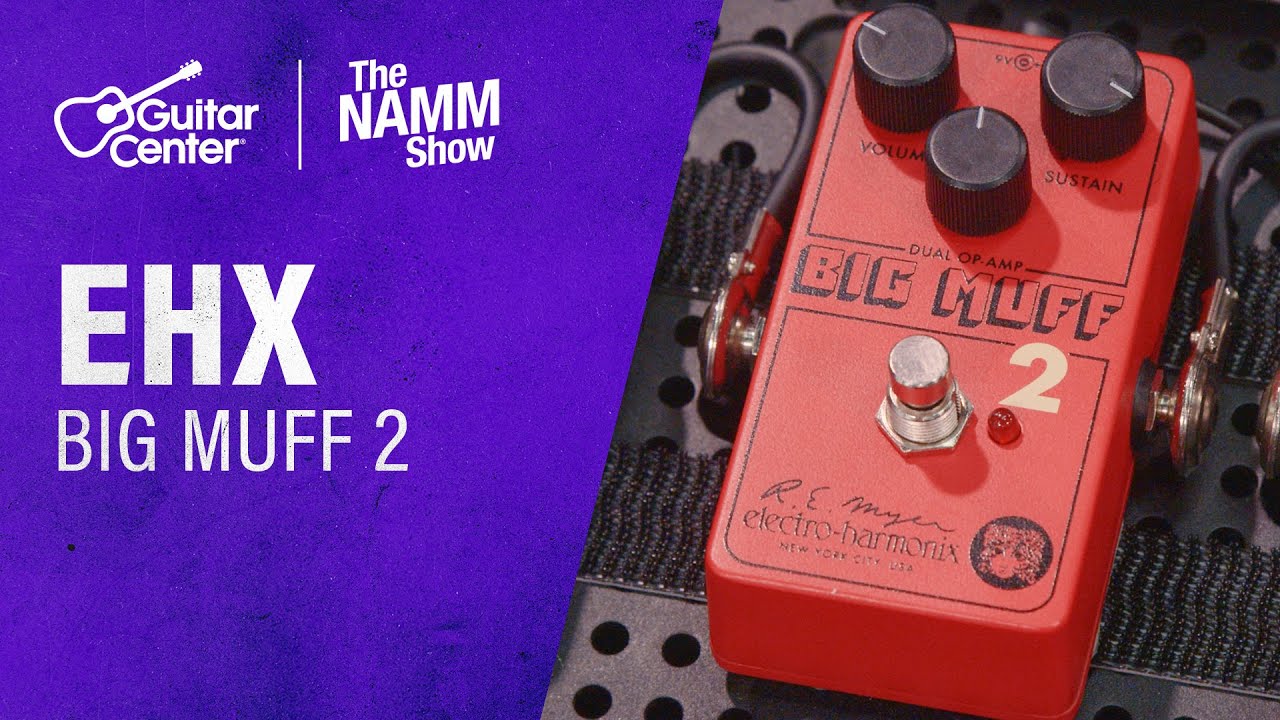
More aggressive, more physical, more raw and in tune with the animal kingdom, the Big Muff Pi 2 does what sequels do, and ups the ante, but it also contains multitudes – it’s a pedal fished from the dustbin of history to set up the next chapter in EHX’s fuzz legacy, and could be the versatile war dog your pedalboard is waiting for.
Pros
- +
A fresh take on the Big Muff sound but still worthy of the name on the box.
- +
Well put together and excellent value.
- +
Momentary and latching silent footswitch.
- +
Takes a battery.
Cons
- -
There's nothing to get mad about at this price.
You can trust Guitar World Our expert reviewers spend hours testing and comparing guitar products so you can choose the best for you. Find out more about how we test.
What is it?
The Big Muff PI 2 is the fuzz pedal that almost never was; a schematic lost for half a century, until Josh Scott, rummaging around the Electro-Harmonix archives, unearthed it.
He was there with EHX collector Daniel Danger and the writer and historian Dan Epstein as they were researching the forthcoming book about iconic NYC stompbox company, Made On Earth for Rising Stars: The Electro-Harmonix Story.
They were there to piece together the history of the company, but when you find an original circuit schematic, hand-drawn by the inventor of the Big Muff, Bob Myer, you have to at least ask the question of EHX supremo Mike Matthews as to whether they should put it to work.
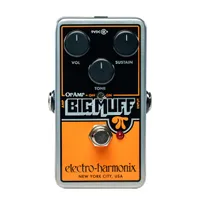
They did. And it wasn’t long before they realized that this would be very different to the Op-Amp Big Muff that the likes of Billy Corgan used to craft the Smashing Pumpkins’ seminal Siamese Dream electric guitar tone. Featuring not one but two op-amps in its design, this would be unlike any other Muff in history. It turns out that two op-amps really take the pedal in a different direction.
“We breadboarded the circuit exactly as Bob drew it, and immediately knew we had something worth making,” says Scott. “We found that Bob’s design is unique when compared to the now-famous late ‘70s Op-Amp Big Muff designed by Michael Abrams. Different clipping arrangement, an extra gain stage and various other elements that made this lost version extremely special.”
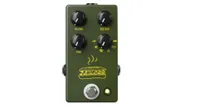
JHS Pedals launched a big-box wedge enclosure version, limited to 5,700 units, priced $249. Electro-Harmonix’s is a more compact, of a piece with its contemporary fuzzes, and it is retails for $122 street.

The question is how different can a Big Muff be and still be recognizably a Big Muff? Do these ingredients really matter? Or is this the Big Muff to convince the unconvinced, the new angle on the ür-fuzz box that turns players on to the woolier side of distorted guitar tone. Scott promises us that this ain’t the Big Muffs you’d find kicking around in David Gilmour’s potting shed.
“It’s super modern,” says Scott. “It feels really heavy. It does this crazy crossover between super aggressive Big Muff, like, for metal players and things, but it’ll also do overdrive well. The tone control is, I would say, more dynamic.”
Specs

- Launch price: $122 | £125 | €119
- Type: Fuzz pedal
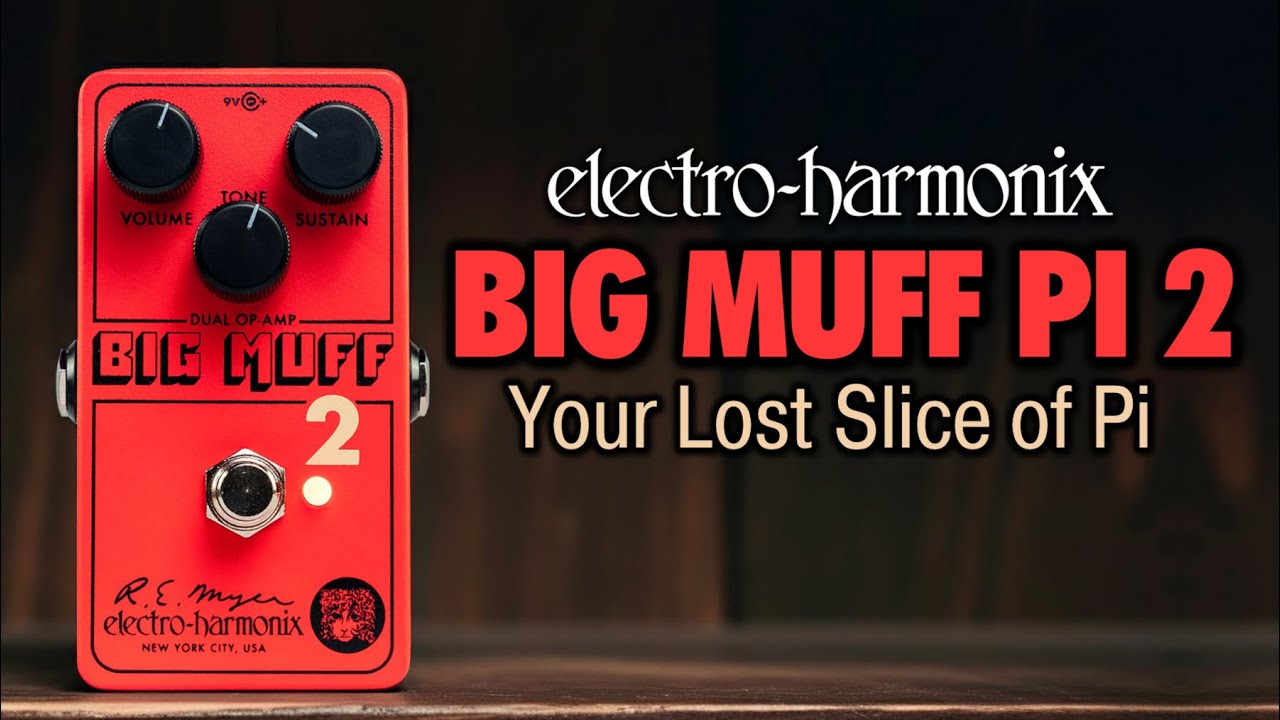
- Controls: Volume, Tone, Sustain
- Features: Soft-touch relay switching, momentary/latching operation, dual op-amp circuit
- Connectivity: Standard 1/4" I/O, center negative power supply input
- Bypass: True bypass
- Power: 9V DC or battery / current draw 15 mA
- Dimensions: 146.05 x 87.63 x 69.85mm
- Weight: 242g
- Contact: Electro-Harmonix
Build quality

Build quality rating: ★★★★★
The traditionalist in us loves the idea of the big-box enclosure, and that fits in with the whole archeological spirit behind the discovery and creation of the Big Muff Pi 2, but playing the guitar is ever the practical concern, and a smaller unit makes for more pedalboard space.
EHX has been doing this a while know and so it has this down to a fine art. The metal enclosure is super-tough, with the back plate removable via four screws.
That makes changing the battery a bit more of a faff but most of us are using a quality pedalboard power supply and so the battery – a beauty featuring the beatific smile of EHX’s Mike Matthews – is really an emergency option, or perhaps to be drained strategically to starve the fuzz and get that choked sound that can be so effective.
There’s nothing silly under the hood. The footswitch is mounted separately from the circuit board, which always preserves the life of the pedal. Everything is super tidy. No notes here.
Usability

Usability rating: ★★★★½
Bob Myer’s schematic is an unorthodox take on his fuzz circuit... but this isn’t him getting all caught up in the revolutionary fevers of redesign. Looking down at it on your pedalboard it will be reassuringly familiar
Bob Myer’s schematic is an unorthodox take on his fuzz circuit the world has grown to love, but this isn’t him getting all caught up in the revolutionary fevers of redesign. Looking down at it on your pedalboard it will be reassuringly familiar, with the usual complement of controls for Volume, Tone and Sustain.
A three-knob fuzz, many might argue, is the Platonic ideal. Simple but tweakable (personally, two dials is more than enough but fuzz can be finicky so, okay, the Tone control might come in handy).
Electro-Harmonix suggests starting with the Volume at 9 o’clock and the Sustain and Tone at Noon. Now that you have read this sentence you can dispense with the manual and get on with it.

As easy as this is, maybe you’ve got to allow for the fact that usability with fuzz pedals can be a function of their sound, and getting them to play nice with your setup, i.e. if you have a wah pedal.
But part of the deal with introducing a fuzz on your ‘board is that you are letting wildlife into the home, something a little untamed. Just go with it.
Sounds

Sounds rating: ★★★★★
One of the things that first caught my eye – or, to be anatomically honest, my ear – when JHS Pedals demoed this circuit with an O.G. Big Muff Triangle was all the extra personality in the midrange.
Where the old-school classic Muff sound has this airy, weightlessness in the midrange, particularly when the Sustain dial is pushed to the limit, the Big Muff Pi 2 is brawnier and more physically imposing. How this would translate on my ‘50s style Telecaster, not to mention the beefy monstrousness of a Mark Morton Les Paul Modern Quilt, was a tantalizing proposition.
Scientifically, EHX’s suggested settings seemed the best place to start, and with my Telecaster’s slightly hotter Twisted Tele single-coils it took some of the spikiness out of the bridge pickup and was behaving like a Muff, where the more polite settings on the Sustain dial can double as or stand in for a vintage-style overdrive; warm, wooly, analog, and musical.
But as it turns out, there’s a lot of gain under that Volume knob. With the Sustain dialed back a bit, you can really push the front end of your amp for that violining quality on single notes without turning chord work into mush.
With the Les Paul’s humbuckers, as you would expect, there’s more width, more weight. That bridge pickup is, in its own way, just as uncompromising as the Tele’s but teases out all kinds of magic from the Big Muff Pi 2. Those weaned on Sleep, Melvins, and all the big riff rock that exists somewhere between Blue Cheer and Goatsnake will find numerous tonal epiphanies on their way to the Holy Mountain, so to speak, harmonics that were hitherto out of reach reveal themselves, the overtones adding a certain magic.

There is a little extra bite. You might want to get a rabies shot with some of the sounds that come out of the speaker
Back on Planet Blackguard, the extra aggressiveness that Josh Scott promised was yielding all kinds of goodness, from slightly spiky warm drive/distortion that bloomed nicely when digging in, think the Stones, and garage-rock psych, to Blackmore-esque crunch when you brought up the sustain a bit more. Dialing the Tone control back fattened it up those single-note melodies on the Tele nicely.
Players can sometimes be turned off by fuzz because of unexpected results. But a fuzz-box like this rewards both patience and an open mind as to what kind of sound you want. There are so many sweet spots – so many surprises – and they just keep coming as you play around with volume, and pickup selection.
It’s still recognizably a Big Muff; it’s in that zone. But the Tone control seems to exert even more influence over proceedings. There is a little extra bite. You might want to get a rabies shot with some of the sounds that come out of the speaker. And yet it’s not just rock animal. Blues licks sound superb at more subtle settings.
Verdict

And this is with two op-amps doing the Lord’s work. What would a Big Muff with three sound like?
One thing we hear a lot in this new golden era of guitar effects pedals is a certain jaded reply whenever a new fuzz comes out. Does the world really need this? Yadda yadda yadda… And given the sheer abundance of Big Muff-style circuits, clones of clones, triangles, Pi, sheep, the lot, that might be understandable.
But to succumb to such jadedness is to forget the primal appeal of the fuzz pedal in the first place – the primal appeal of electric guitar. The Big Muff Pi 2 is a pedal that will remind you of these simple pleasures.
And this is with two op-amps doing the Lord’s work. What would a Big Muff with three sound like? We’ll let the pedal designers answer that question.
But is this worth checking out, for Big Muff superfans and fuzz noviciates alike? One-hundred per cent yes.
GuitarWorld verdict: More aggressive, more physical, more raw and in tune with the animal kingdom, the Big Muff Pi 2 does what sequels do, and ups the ante, but it also contains multitudes – it’s a pedal fished from the dustbin of history to set up the next chapter in EHX’s fuzz legacy, and could be the versatile war dog your pedalboard is waiting for.
Test |
Results |
Score |
|---|---|---|
Build quality |
Tip-top construction with the silent switching momentary/latching feature an added bonus. |
★★★★★ |
Usability |
Just three knobs and the truth, and even some argue you don't need Tone control, the range on this one might convince you otherwise . |
★★★★½ |
Sounds |
Ample fuzz sounds from classic Muff to a more aggro modern voicing. Superlative, inspiring. |
★★★★★ |
Overall |
At this price, it's a steal, and versatile enough to win over fuzz skeptics. |
★★★★★ |
Also try
Hands-on videos
EHX x JHS Pedals
Guitar Center
Guitar Guitar