

It’s not often we get to play with one genuine vintage Les Paul Standard built between 1958 and 1960.
However, when Guitarist partnered up with Gibson Garage London in October for an evening event celebrating the ’Burst, we were surprised – and even slightly terrified – that, with the help of friendly owners, we were able to assemble not one but seven of the things for the evening event attended by a packed room of guitar lovers.
On hand to show off how these landmark instruments sounded was stellar bluesman Aynsley Lister, who – like the true gent he is – had just come back off an exhausting European tour at two in the morning the night before, but still turned up to thrill the audience with his playing. And, to be fair, the tools he had to use weren’t too shabby.
Lined up on stage were two ’58s; an ex-Mick Taylor ’59; the celebrated and stunning beautiful ‘Minnesota’ ’59 ’Burst; the equally well-known ‘Grainger’ – a 1960 ’Burst made to ’59 spec; and a Bigsby-equipped 1960.
Oh, and we also had a ’54 Goldtop on hand for good measure and to compare how the Patent Applied For pickups of the ’Bursts sounded versus the soapbar P-90s they replaced. Finally, we had a very special ‘guest’ guitar to show off, thanks to Bonhams auction house – Gary Moore’s celebrated ‘Stripe’ ’59 ’Burst.
As Gibson was our host for the evening, we selected a very nice Mesa Fillmore 50 combo amp to play the ’Bursts through. Powered by a pair of 6L6s, this amp has a nice clear voice with just enough suppleness and juice to bring guitars to life.
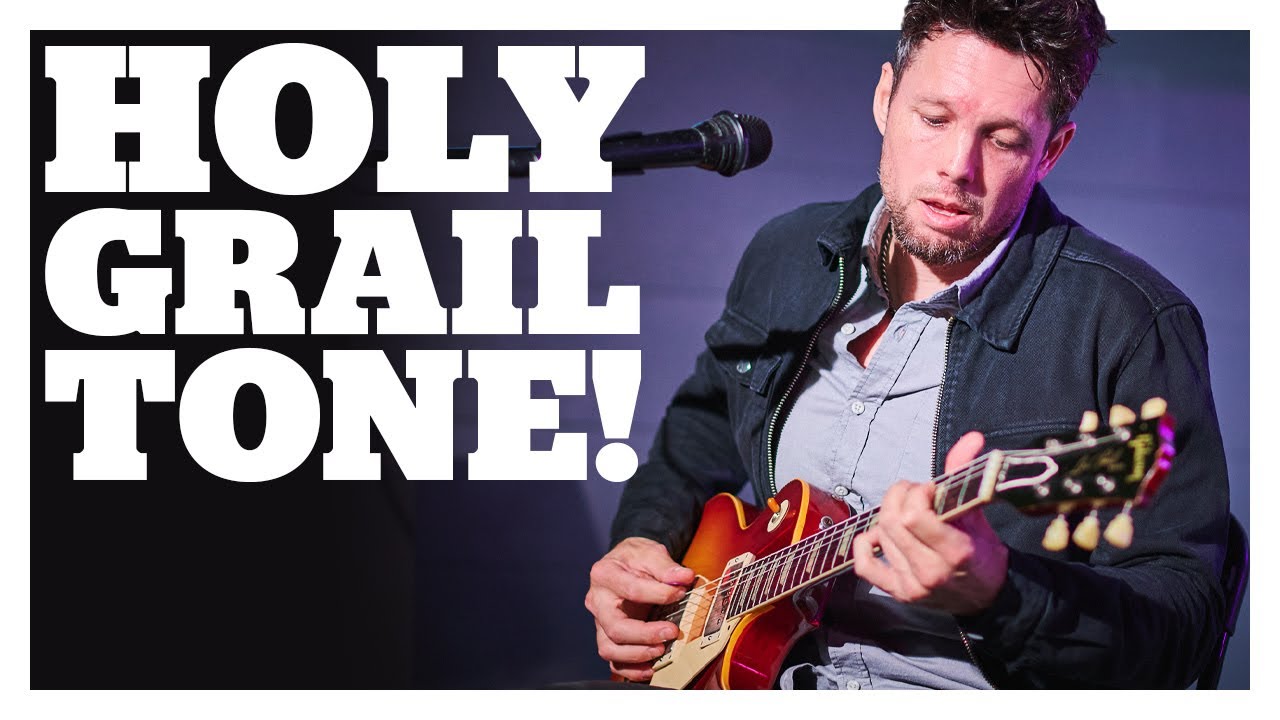
And, in very general terms, it isn’t a million miles from the Marshall Bluesbreaker combo of the ’60s in that it isn’t a high-gain amp but really sings when you push it a bit, either with the amp’s volume control or with just a touch of drive from a dirt pedal, which is how Aynsley chose to use it.
Aynsley kicked off the night with a beautiful ’58 ’Burst that was in remarkably clean condition, with a still-vibrant cherry sunburst that hadn’t faded much at all
Aynsley kicked off the night with a beautiful ’58 ’Burst that was in remarkably clean condition, with a still-vibrant cherry sunburst that hadn’t faded much at all. The cherry colour that is especially vivid in ’58s was created with a dye-based colourant with just a touch of blue added to the red to deepen its hue.
The cherry of the sunburst was sprayed over a base coat of lacquer and yellow pigment-based colourant. We can differentiate pigment from dye-based colourants by the fact that pigments are composed of larger colourant particles than dyes.
Crucially, the pigment-based yellow colourant of the base coat remained (along with the final nitro topcoat, which also yellows with age) much more resistant to fading than the cherry red dye, hence the phenomenon of ‘Unbursts’ – original Les Paul Standards whose whole top is a uniform honey colour with no visible cherry tones left.
Interestingly, when Gibson changed its finish formula to a non-dye-based colourant in 1960 to avoid issues with fading, it also dropped the blue component of the ‘cherry’ sunburst, meaning many of the 1960 ’Bursts had a distinctively different tone to the finish, which some have called ‘Tangerineburst’.
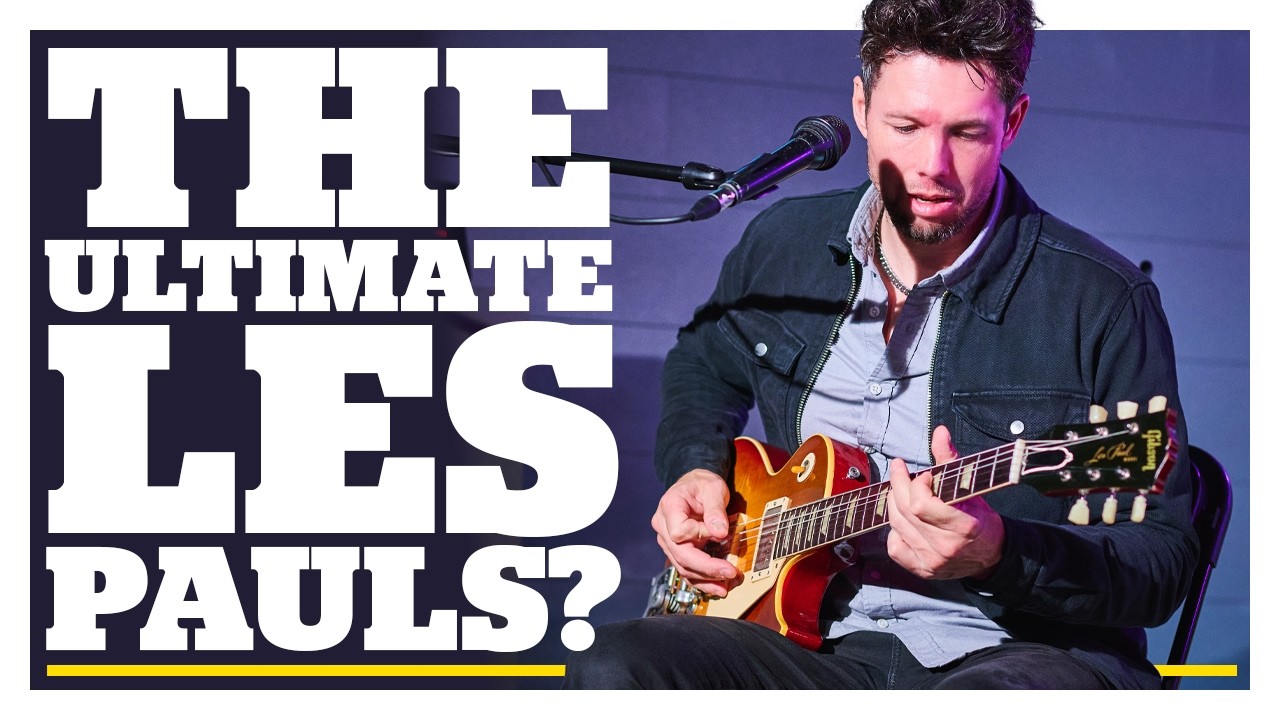
Hearing Aynsley play the two ’58s so well – the second of which belongs to Guitarist contributor Bob Wootton – we marvelled in that fierce howl from the Patent Applied For pickups that miraculously seems to have plenty of bite without any frequencies that hurt the ears. It’s simply one of the most thrilling sounds there is.
Prior to the event, we ran into Stuart Robson of Sunbear Pickups who explained that original pickups were predominantly made with Alnico II and Alnico V magnets, with a smattering of III and IV – with the latter two magnet types being possibly a little more common in 1957 when the Patent Applied For was newly debuted on Goldtops.
He added that, as hand-wound pickups, the output of Patent Applied For units varied – but surviving examples, in his experience, never put out more than 9k and never less than 7k.
Mighty Minnesota

Moving onto the ’59s, starting with the ex-Mick Taylor ’Burst followed by ‘Minnesota’, it was interesting that Aynsley didn’t feel a significant difference in the neck profiles, which have the reputation of being somewhat clubbier on the ’58s than on ’59.
Sound-wise, too, that sweet but savage bite from the Patent Applied For pickups was fairly consistent, with slight differences between those four guitars – for example, the ex-Mick Taylor ’59 stood out as having the most chewy, dirty voice whereas the first ’58 Aynsley played was full of crisp but warm clarity.

One way in which the ’Bursts did vary, as alluded to before, was in the colouration and level of figuring in their tops. Today, most Gibson reissues have a degree of flame or other figuring in the top, and it has become part of the mystique of the ’Burst.
Of the 1,200 or so ’Bursts that are estimated to have been made between 1958 and 1960, less than a third had any visible figuring in the top
But in reality, of the 1,200 or so ’Bursts that are estimated to have been made between 1958 and 1960, less than a third had any visible figuring in the top at all, and only a very small percentage had strong flames or other vivid figuring in the maple cap, making ‘Minnesota’, which has a stunningly figured top, a unicorn among unicorns at our ’Burst event. Nonetheless, by rights, most ’Burst reissues should be plain tops – but that’s not quite how popular taste and market forces work!
The other strongly (if irregularly) figured top ’59 we had to show off on the night was Gary Moore’s famous ‘Stripe’ Les Paul, and while it wasn’t possible to play it, Claire Tole-Moir, head of popular culture and science sales at Bonhams, explained its fascinating backstory and key place in the Final Encore sale of Gary’s guitars that took place on 20 November.
The imperfectly symmetrical top on ‘Stripe’ reminds us that, back in the late ’50s, even fancy maple ’boards weren’t necessarily put together with perfect bookmatching as a priority.

We might also note, in passing, that ‘Stripe’ outlived ‘Greeny’ in Moore’s collection, lending weight to the notion that Moore felt ‘Stripe’ was the better all-round performer and, ultimately, the ‘keeper’ of the two, despite the tremendous sentimental attachment ‘Greeny’ must have held for him.
Finally (well, not quite finally – but we’ll come to that shortly), Aynsley was passed the Bigsby-equipped 1960 Les Paul Standard owned by collector Peter Hall. This time, he did remark on the difference in neck profile, noting that as a player with big hands that slimmer necks weren’t necessarily more comfortable.
Sonically, however, the guitar still had that evocative, jagged song in its voice that united all the ’Bursts we played that night. We know for a fact that not all ’Bursts were great-sounding, but the surviving examples we played at Gibson Garage London certainly lived up to the legend.
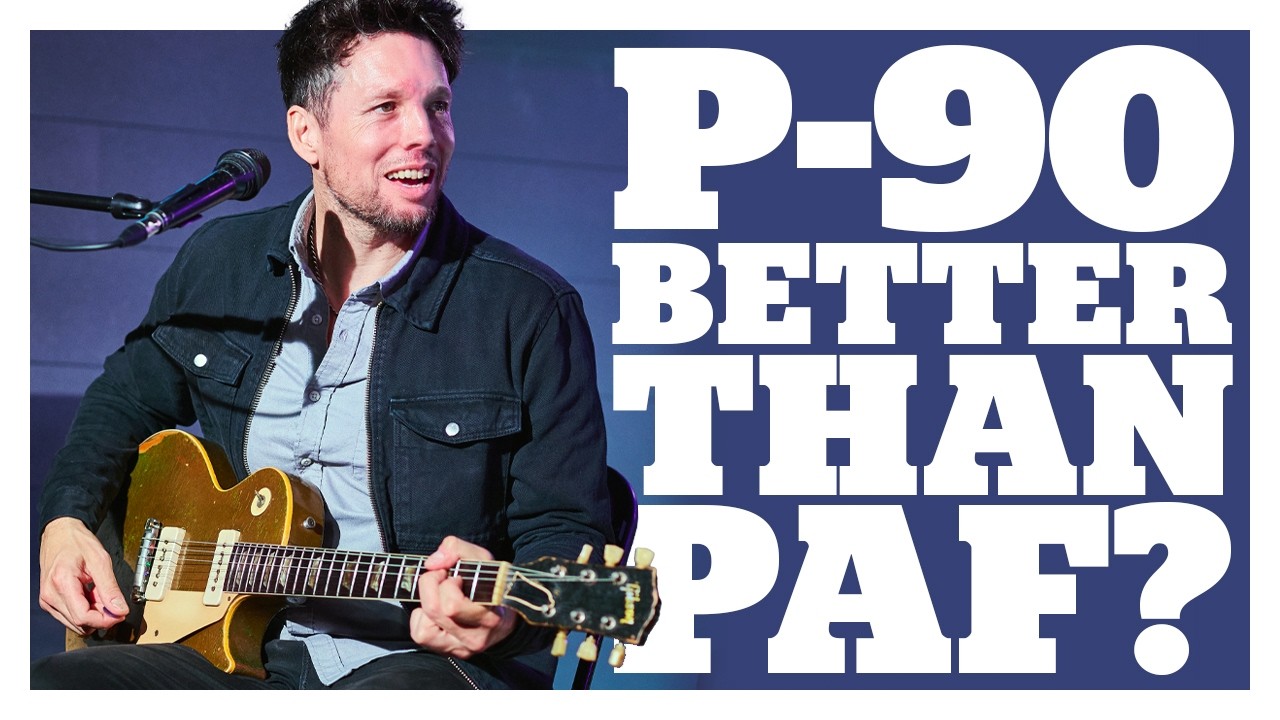
So what was the surprise of the night? Well, as a wildcard, owner Paul Johns also brought along his 1954 Goldtop with soapbar P-90s, whose sound many believe the Patent Applied For pickup was based upon (minus the hum).
That legend wasn’t quite borne out as the ’54s P-90s proved a touch pokier and plummier played side by side with the ’Bursts – but Aynsley pronounced that it was his favourite sound of the night! So much for progress…
All in all, it was a great night and we’d like to thank everyone who came along, plus our gracious host, Gibson Garage London, who provided the perfect setting for our ’Burst Experience; Bonhams for sharing Gary’s Moore’s incredible ’59; and, of course, the very kind ’Burst owners who made it possible to share these sounds at glorious volume on the night: Andrew Raymond, Peter Hall, Simon White, Paul Johns and Bob Wootton.
Let us know if you think we should do another one in future and maybe we will gather the ’Bursts to ride again…
- This article first appeared in Guitarist. Subscribe and save.

