


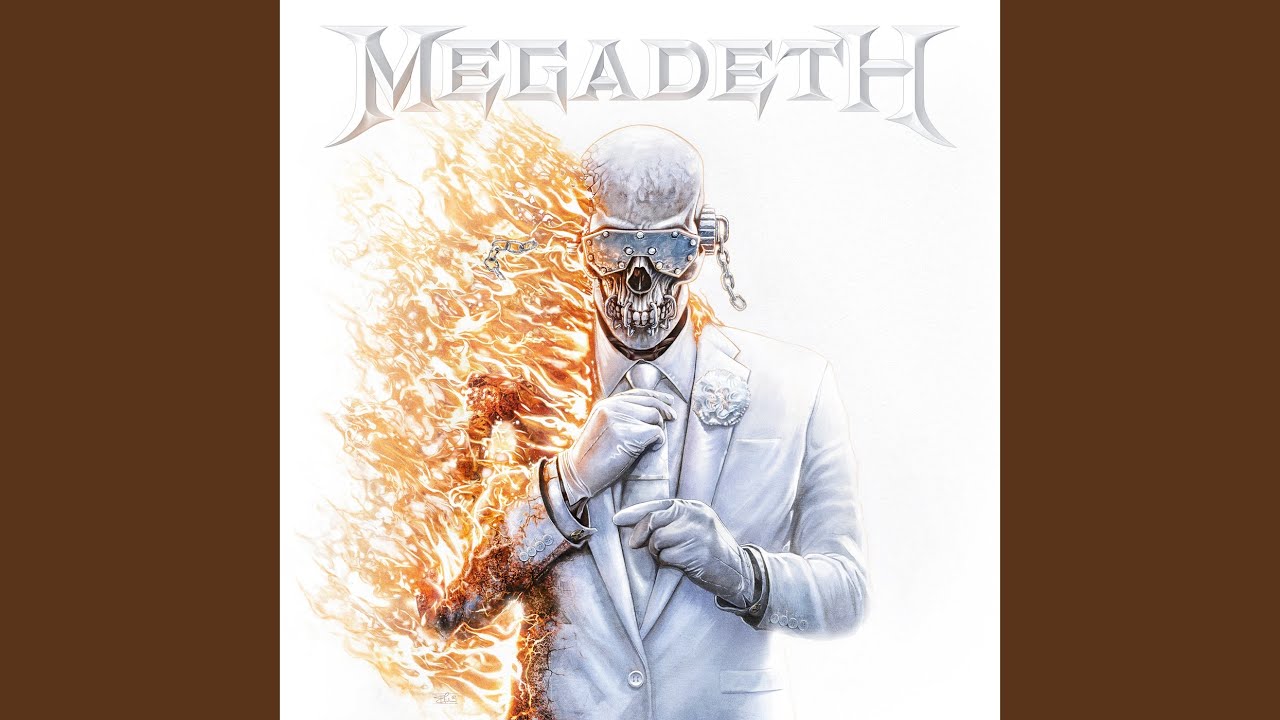
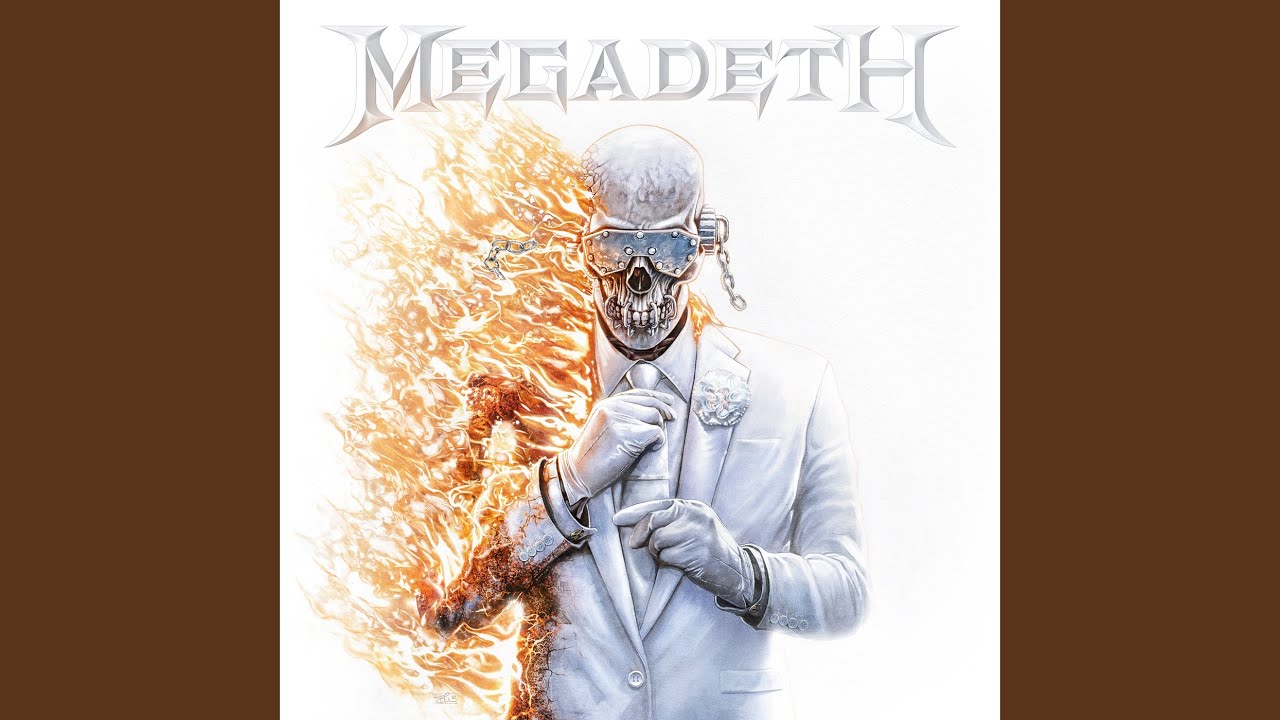
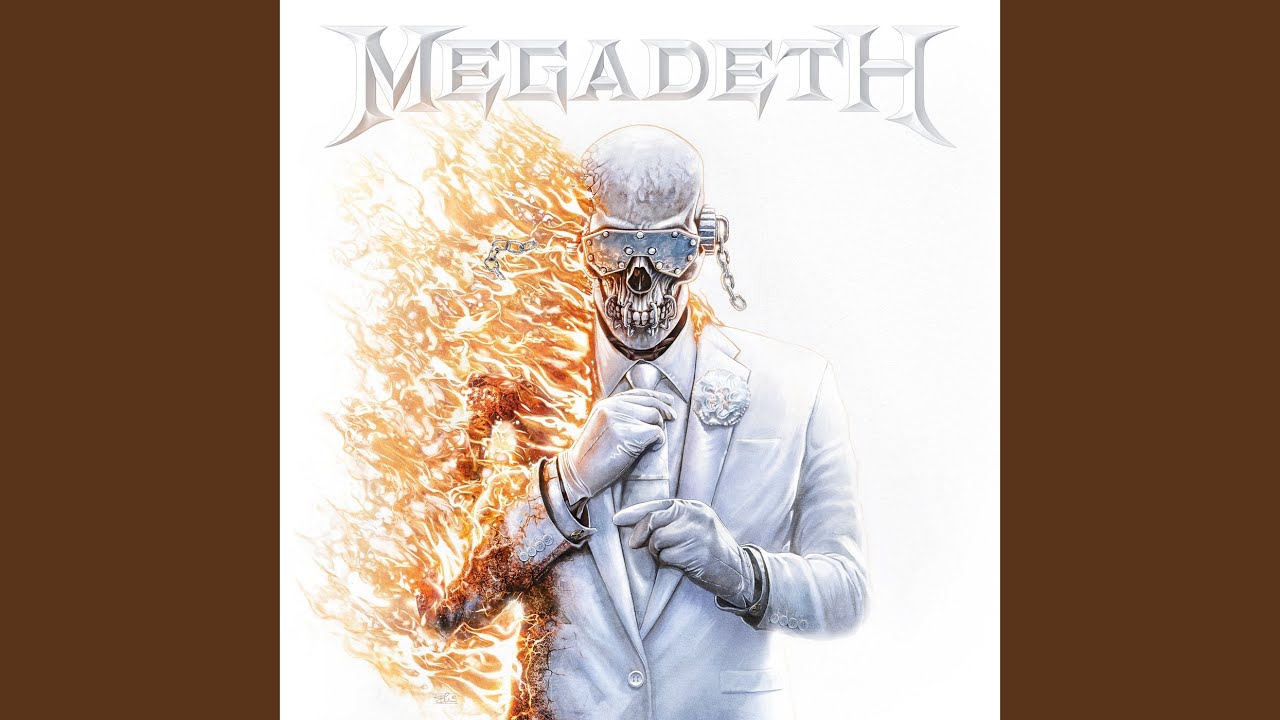
Dave Mustaine’s wild heavy metal journey is ending via a final Megadeth album – January’s self-titled release – and a globetrotting tour.
He tells Guitar World, “We have a lot of territories we need to play before we stop. We’ve got a lot of stops to get to so that we can see everybody. It’s more than just weekend-warrior stuff here in the States. We’re not just here traveling in a Winnebago.” [Laughs]
It’s hard to imagine the metal landscape without Mustaine, a man whose playing is as fiery as his personality. Thankfully, those traits come across throughout Megadeth. Mustaine is going out with a massive bang.
Below, he discusses the new album, track by track. As is the case with any Megadeth offering, the themes run a wide gamut, but it’s the album's final track, The Last Note, that seems the most symbolic.
“It’s like we’re playing to carry on forever,” Mustaine says of the song. “For people who know my music, it’ll carry on. I know it will.”
1. Tipping Point
This song came along in the middle of the recording process; the songs were numbered, and Tipping Point was Number 9, so we had gotten through a good portion of the record by the time we started working on it. As far as performing in the studio, we had some crude racks from Lowe's or Home Depot, and we had all of our amps stacked up there.
We had our Marshalls and a bunch of other amps I've never seen before, all the stompboxes and stuff. This song came together pretty easily. The hardest part was knowing when to stop, because Megadeth songs reveal themselves – if that makes sense.
The first time you listen to it, it sounds like something, and then you listen again, and you hear so many things you didn’t hear before. The easiest way to say it is that it's like peeling an onion, and every time you listen to it, you hear a little something more. Teemu [Mäntysaari] is definitely going to be a star. The guitar work he did on this record was just amazing.
2. I Don’t Care
It’s song Number 2, but it was song Number 4 in the list of songs. That was the order the songs were penned – not as far as their importance. I Don’t Care is really a super-punk track I had been hanging onto in my head for a long time and thinking about, you know, how aggressive it would be to do a really great skating video, or any of those extreme sports. It just kept fueling the song.
When it was time to sing the lyrics, I don't know what I was thinking, but I went up and just spat out these lyrics – and all that stuff came out the second time I sang it.
The first time I sang it, it reminded me a lot of Nirvana and then Fear. I was in one of those little obnoxious Dave Mustaine moods, and I got through the first pass. Then the producer, Chris [Rakestraw], goes, “You need to just go ‘da da da da da’ during that middle part there.” I kind of tilted my head, went in there and just said the most obnoxious things I could say – and there you go! [Laughs]
The fun part about doing the guitar layering was, when we started with the main riff, we added another, which was all down-picking the same chords. Then we had another layer that went on top that was like when you do the first note and then an octave higher – that jazzy kind of chord, where you can slide it, like a George Benson chord. At the very end, there was one more layer that’s a cross between a percussive sound and a little bit of a pinch sound.
3. Hey God?!
When we started this one, it had different lyrics. We went through numerous ideations where the song stayed the same, but the lyrics were really hard to come down on.
A lot of the thought process for the retirement stuff was swirling around in my head around that period. The thoughts would come and go, but that's when I zeroed in on those lyrics
I spent so much time getting this lyric right that I lost it, and I just wrote down what ended up becoming the final lyrics. A lot of the thought process for the retirement stuff was swirling around in my head around that period. The thoughts would come and go, but that's when I zeroed in on those lyrics.
The song – the music – was written; it was the second musical track we were working on, but the lyrics took forever. But when we finally got to that place, about how we’re nearing the end here, that’s when these lyrics came up.
It's funny because there’s a lot of those, I don’t know if “slogans” is the right word, but they’re like wives’ tales and limericks and stuff like that about footprints in the sand, looking back. And there was only one set of footprints. And you say to God, “Where were you?” And God says, “Well, those footprints were mine, when I was carrying you.” I thought, “That’s a really cool concept.”
It’s like the old poem that says something like, “It’s better to live your life like there is a God, and when you get to Heaven, find out there is none, than to live your life like there’s no God and go to Heaven and find out that there is.” I thought, “That’s pretty heavy.”
4. Let There Be Shred
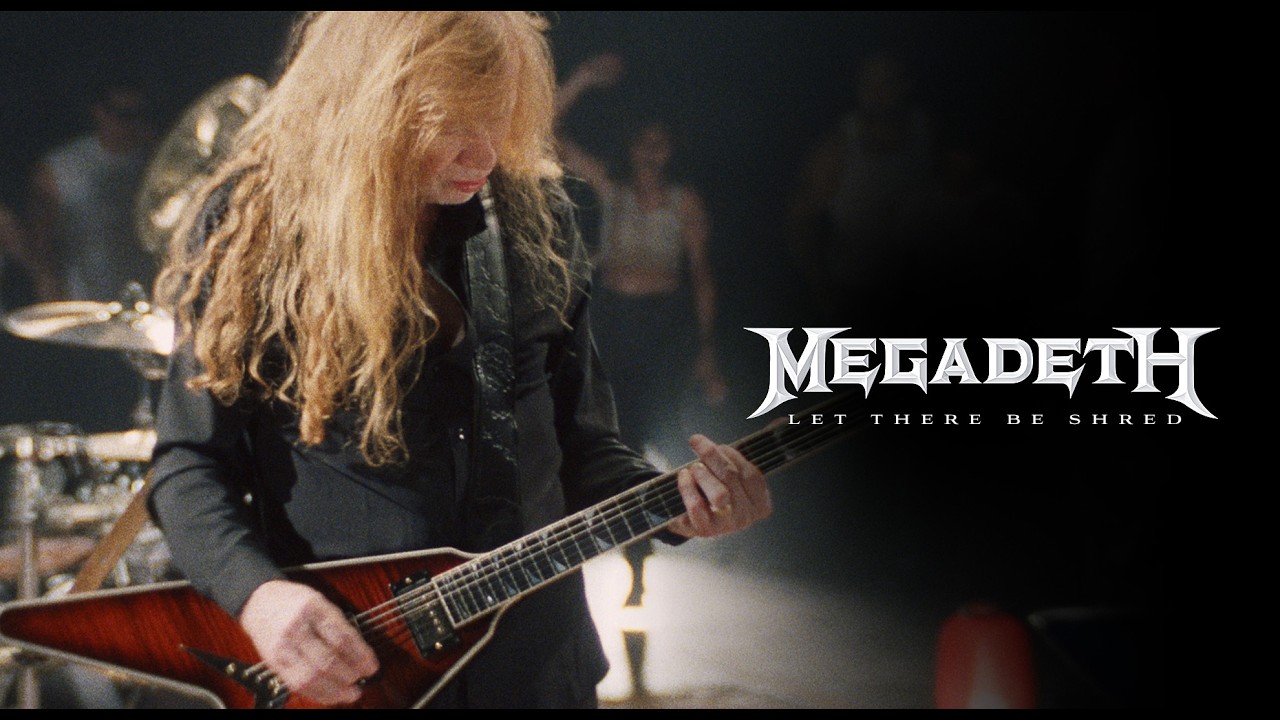
Let There Be Shred has nothing to do with AC/DC’s Let There Be Rock, although I’m a huge AC/DC fan and I love that song. Teemu is such an exceptional talent that he really lit a fire in me for my playing. We were joking around and constantly talking about how we have to make this record absolutely shred and that we needed to put a lot of solos in it. I think we accomplished that.
A pretty unique thing about Let There Be Shred – in terms of the guitar duels Teemu and I were doing – is that he would do all the shred stuff, and I’d do all the hippie stuff. I thought that was really fun
We didn’t write songs like [we used to in former] periods of Megadeth’s lifetime. We had songs that were great songs, but were fit for a time, like the Countdown to Extinction years. Those songs are classic, but they’re not fast by today’s standards. The songs people like are like those on the new record, but, you know, different songs for different times.
A pretty unique thing about Let There Be Shred – in terms of the guitar duels Teemu and I were doing – is that he would do all the shred stuff, and I’d do all the hippie stuff. I thought that was really fun, based on what the lyrics were about, because it was supposed to be a guitar challenge.
I think if we did a video, it'd be really great to get a bunch of super-amazing young guitar players in there just going for it, and then the song ends and it’s me standing out in front of the audition place with my guitar case like, “Wait a minute, I’m, I’m here…” [Laughs] It's kind of like a David Lee Roth video.
5. Puppet Parade
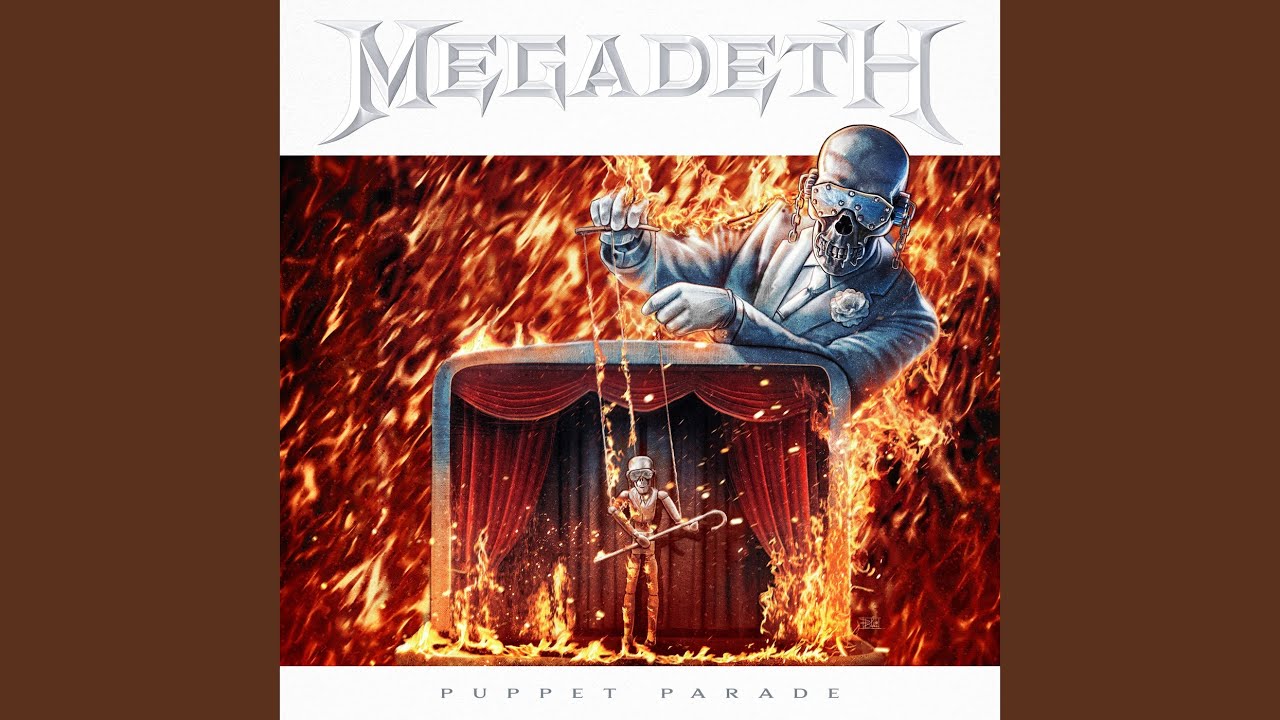
When we wrote this song, we knew the melody was really catchy. As for the guitar parts, the rhythm is close to several songs we have, but it isn't the same. We didn’t want to borrow anything from ourselves, but the simplicity of the riff makes it really catchy. Sometimes you want it to be super-explosive, but the riff doesn't call for that; the riff calls for a simpler performance. Maybe you take out one or two rhythm notes; maybe that's the difference between good and great.
With Puppet Parade, the rhythm in the beginning is really cool and hooky. The chorus is from when I dug into trying to sing again, you know – really sing along with the song. Believe it or not, the chorus was one of the hardest parts on this song. Not the lyrics, but the music. When we got that done, we knew it was going to be a catchy song. And Teemu did a great guitar solo; we both did.
6. Another Bad Day
This was fun to write. I’m inspired by things from my past and from when I was growing up – especially videos and movies. Another Bad Day reminds me of that Madness video for Our House [1982], where everything’s fucked, and you can cross that with that 1993 Michael Douglas movie, Falling Down. There’s a whole meltdown – he’s got a baseball bat, his car breaks down. That’s my visual for this song. [Laughs]
He wakes up and has no idea what’s going on. He’s losing everything, and his normal routine is gone. The song discusses the hardships in life. I’ve had a lot of experiences like that; these things happen to everyone. Singing about it sometimes makes it a little bit easier for people who are struggling with stuff like this.
7. Made to Kill
This was one of those songs where the first half is like the second half, but it’s telling a story. There’s the first half, and then it goes back to the beginning, and I think there’s some really cool riffs in there.
The lyric ideas talk about the state of affairs in our country right now, where people are so agitated that they start organizing. I'm not saying one side’s right or one side’s wrong; I'm saying this is what’s coming next if things don’t change.
8. Obey the Call
This was the second-to-last song we wrote. We had some pretty good soloing and trading off, if I remember right. Teemu had the majority of the solos, and it was kind of a follow-up to [the cover art of 2018’s] Dystopia, that kind of bombed-out city, where everything’s all fucked up. I’ve written about this a lot of times.
The first time I really got into something like this was when I saw the Jean-Claude Van Damme movie Timecop [1994] and we were finishing up Rust in Peace.
We had just finished Poison Was the Cure, and we needed a little bit more for the record, and David Ellefson had written this part, which we ended up using as the beginning of Poison Was the Cure. I watched Timecop, and I had this dream where I had my own vision of what it would look like. The lyrics were me dipping my toe into full-on apocalypse stuff.
9. I Am War
It’s simple, but the lyrics are deep. I’m a big fan of Sun Tzu and The Art of War – it’s something every band leader should read. It’s not generally made for musicians, but the credo throughout the book – the “not taking shit from anybody and knowing how to defeat your enemies and how to be a warrior” part – really inspired me when I first started getting into martial arts.
When I heard businessmen were reading it, I figured, “Shit, I'm gonna read this for sure now.” So I did, and it’s very difficult to understand, but I got through it and read it a second time. It’s like our records, where it reveals itself as time goes on. That’s important when you're trying to learn something; you learn it like you're gonna teach it.
When you learn something and somebody makes it too fucking difficult, you're not gonna learn it. It’s the same with martial arts – and with guitar. I thought this was really cool. The song shows the dichotomy between these two approaches to war. One is the leader going to war and trying to win; the other person tries to win and then goes to war. He is somebody who will plan out his attack, like a reaction to a response.
10. The Last Note
This started out as a very sad song. It was actually called “Jumpers,” because it was about the dilemma on the Golden Gate Bridge – the tragic problem they have there with people ending their lives on the bridge so often that they’ve got a police force just for the bridge. There’s a clip that shows several people jumping off the bridge and what happens when someone jumps.
They hit the ground with such velocity that their bones turn into splinters, which go upward, piercing every organ in their body. As soon as the rescue team gets there, they go to where the person jumped and throw this flare off the side of the bridge. It goes into the water and floats along with the current so that you can see the body trail. It's gnarly stuff when you think about it.
When these two guys, in two separate interviews, said the same thing – one said it brought tears to his eyes and the other said it almost made him weep – I was like, “Mission accomplished”
I wrote a song about it, but when it was time to sing it, I just couldn’t bring myself to do it. There was no way I could get any emotion behind it. I mean, I sang it well, but it just didn’t sound good. There was no way I could make that something somebody could sing, so we changed it to The Last Note.
I was out last month [October] during our European/U.K. tour, and some of the first interviews we did there were with some really rugged guys – strapping guys from Scandinavia. A couple of them said to my face, “When I listened to The Last Note, it brought a tear to my eye.” And I went, “What?” – because this was the first time we’d done any press on this record.
Imagine that I haven’t spoken to anybody since we shut the record down, and this was one of the first times I heard from anybody about the record, and certainly about that song.
When these two guys, in two separate interviews, said the same thing – one said it brought tears to his eyes and the other said it almost made him weep – I was like, “Mission accomplished.”
11. Ride the Lightning (Bonus Track)
The main reason I chose to do this was to close the circle and pay my respects to my partners. I thought this was a really great way to do that. Whenever we select any other band’s music to go on our albums, sometimes there’s a lot of thought behind it and sometimes there’s not.
This was one of the ones that we thought long and hard about, because all I wanted to do was play the song I wrote with the guys in Metallica. I wanted to pay my respects to James Hetfield, who I think is an amazing guitar player, and Lars Ulrich, who was an excellent songwriter. I remember when I was there and we were putting these songs together, Lars didn’t just sit there; he was very instrumental in making these songs.
Of course, when we got into making demos of these songs, it was fun to do the recordings, but we were never really able to do a full-on produced version of Ride the Lightning, and I would have loved to have heard that.
I gotta tell you – listening back to James’ original vocal performance, it was really tremendous. Anyway, there’s no big strategy; I have respect for the guys, and I just wanted to show that. And it’s a hell of a song!
- Megadeth is out now via Frontiers.
- This article first appeared in Guitar World. Subscribe and save.

