


You can look at Dave Mustaine’s career in two ways: as a revenge tour or as a story of perpetual redemption. If Mustaine’s life, which is earmarked by iconic records like 1986’s Peace Sells… But Who’s Buying, 1990’s Rust in Peace and 1992’s Countdown to Extinction, is viewed through the post-Metallica-related revenge lens, then you might conclude that ol’ Dave has done pretty well for himself.
Metallica is thrash metal’s top dog, but Megadeth is one of the other three of that movement’s Big Four along with Anthrax and Slayer. That means something. Mustaine, a fire‑breathing, self-taught, V-wielding player, still endures at age 64 despite addiction issues, personality crises, a nasty arm injury, a cancer diagnosis and an ever-revolving band lineup. To that end, it’s perhaps more astute to focus on the “perpetual redemption” angle, right?
After all, we’re talking about one of rock and metal’s most enigmatic and dynamic characters. And with that comes the push and pull between revenge and redemption – aka the naming of Mustaine’s arc – that may never be finalized. At least, not now.
But maybe soon: Mustaine has said that Megadeth, the band’s 17th studio album, which features yet another new lead guitarist, Teemu Mäntysaari, will be their last. On top of that, the ensuing tour will be Mustaine’s final trot around the globe.
Mustaine cautions that he isn’t going anywhere anytime soon, as Megadeth’s international fanbase dictates that a large-scale tour around said globe will be in order. As for that new album, it sounds decidedly old-school. You know, the kind of sound that made Mustaine a thrash metal legend back in 1986, 1990, 1992 and so on.
And then there’s Mäntysaari, whom Mustaine believes will be a “star.” His playing is something out of the ’80s and early ’90s, aka the era helmed by Marty Friedman, whom Mustaine calls “incredibly talented” and “incredibly mysterious.”
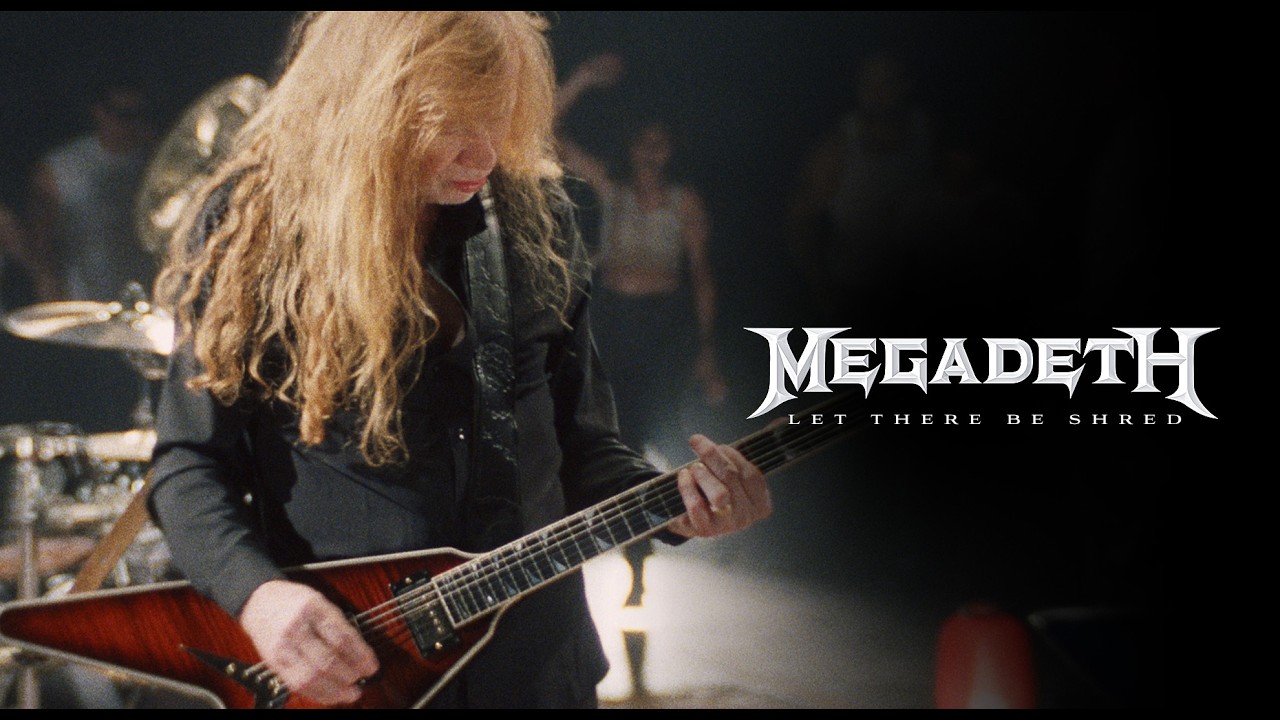
Listening to Megadeth’s final record, you can’t help but be transported back in time to the days when Rust in Peace made waves via Friedman’s playing. But just because Mustaine is kicking it old-school doesn’t mean he plans to cozy up with Friedman – or any other former Megadeth alumni – while on his final jaunt.
“We’ve already done that with Marty,” Mustaine tells Guitar World [Friedman joined Megadeth on stage twice in 2023 – February in Japan and August in Germany]. “And, I mean, let’s look at the other people we’ve played with… there’s a lot of people. [Laughs]
“That would be a huge undertaking. I don’t think I want to do that. I’d rather keep doing what we’re doing and let the fans [experience] Megadeth music and be happy about it. It’s not ‘puppet show Megadeth.’”
’Deth ghosts still haunt Mustaine, however.
“I wish I would have kept in touch with [late drummer] Gar [Samuelson],” he says. “You see that Ace Frehley passed away and how sad that is. Whenever stuff like that happens, I feel fortunate because I’m still kicking. But on the opposite side of the coin, I think, ‘Fuck… that could have been me,’ but by the grace of God, it’s not.”
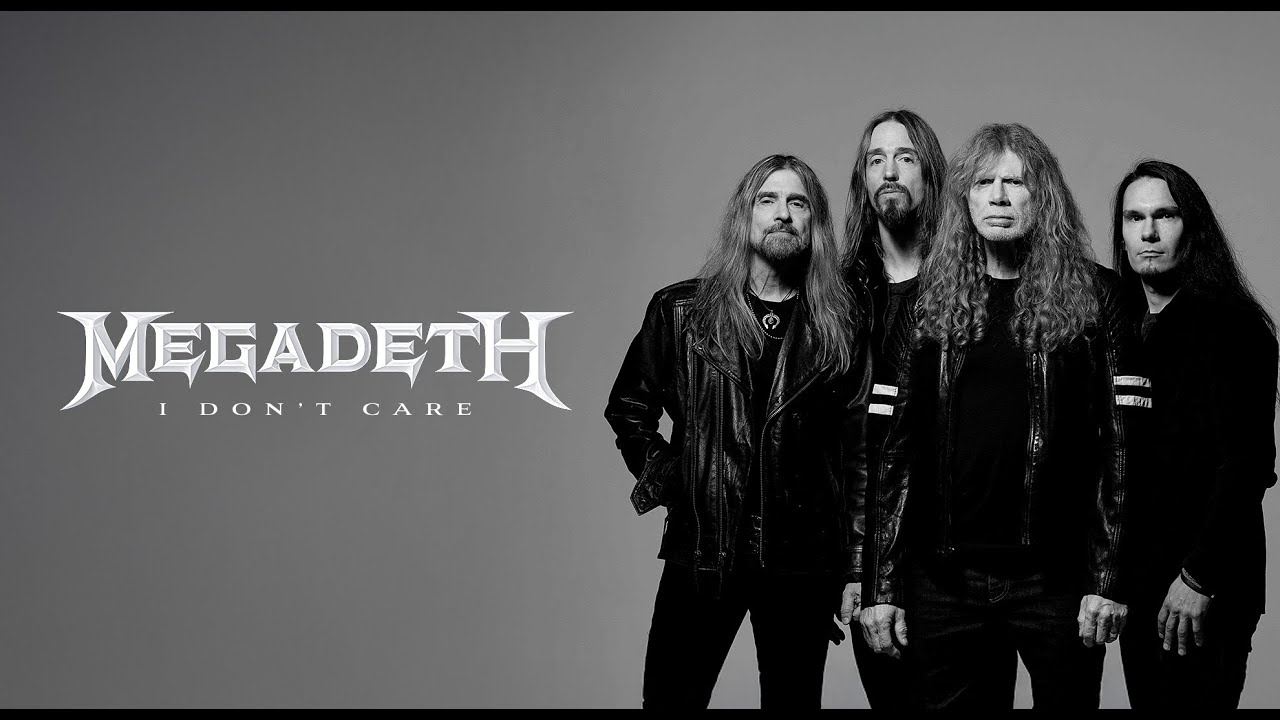
Mustaine’s words on life and death refocus the revenge versus redemption arc he’s been penning since he was booted out of Metallica, picked himself up and formed the band that would feature him as one of metal’s grizzliest warriors, aka a man not to be messed with.
There is always an inherent darkness that looms over the band. It’s a matter of light and shade, hate and anger, life and death and revenge and redemption. Whatever that cocktail is, it’s what makes Dave Mustaine and his band, no matter the members, tick.
With that dichotomy comes a harrowing impact that can sure as hell be felt, but not so easily defined. To this, Mustaine shrugs, saying, “I try to stay humble. I know we did something pretty monumental with creating a music style. You can’t go anywhere and not hear people playing guitar like we did, and some of the drum patterns and chord changes – I hear that all the time in young bands, and it makes me very happy. I’m very proud.”
After leaving Metallica, what was your vision for forming Megadeth?
When I left New York [after Metallica], I got home, dusted myself off, moved to Hollywood and was trying to piece together what was to be called Megadeth. The first thing I did was meet this guy in a building next to me named Robbie McKinney. He stayed in touch with me over the years. He’s a great guitar player, but he wasn’t the right fit.
Then I ended up moving into an apartment, and you know the story about [bassist] David Ellefson living underneath me and me throwing a potted plant into his air conditioner… [Laughs] Anyway, we got into the studio together, started playing, had a drummer who then said to me, “I’m going to go find myself,” and he left.
We auditioned drummers, and we got Gar Samuelson, who was a mind-blowing jazz drummer. No one had ever given thought to doing jazz drumming in metal, but we did, and that’s what set us apart.
![Chris Poland plays a black B.C. Rich onstage [left] and goes head-to-head with Dave Mustaine, who plays a black Jackson King V.](https://cdn.mos.cms.futurecdn.net/deCUHhAKTwUJYhedNJjMwZ-1200-80.jpg.webp)
How did you land on Chris Poland as your initial partner in guitar crime?
We were trying to get our guitar situation replaced because we temporarily had Kerry King [of Slayer] sitting in with us. So Gar said, “Hey, I know somebody,” and we ended up auditioning Chris Poland. His playing was so bizarre and unorthodox that I thought, “If he could do this, this could be the missing ingredient we need. This could really set us apart from everybody else by not having the same wang-bar, doodly kind of stuff on the solos.”
So we hung out for a little while, and that’s basically when we made the decision because, besides his incredible playing ability and a lot of the things we did in our private lives that we all did together, it wasn’t hard to make friends and blend, if you know what I mean.
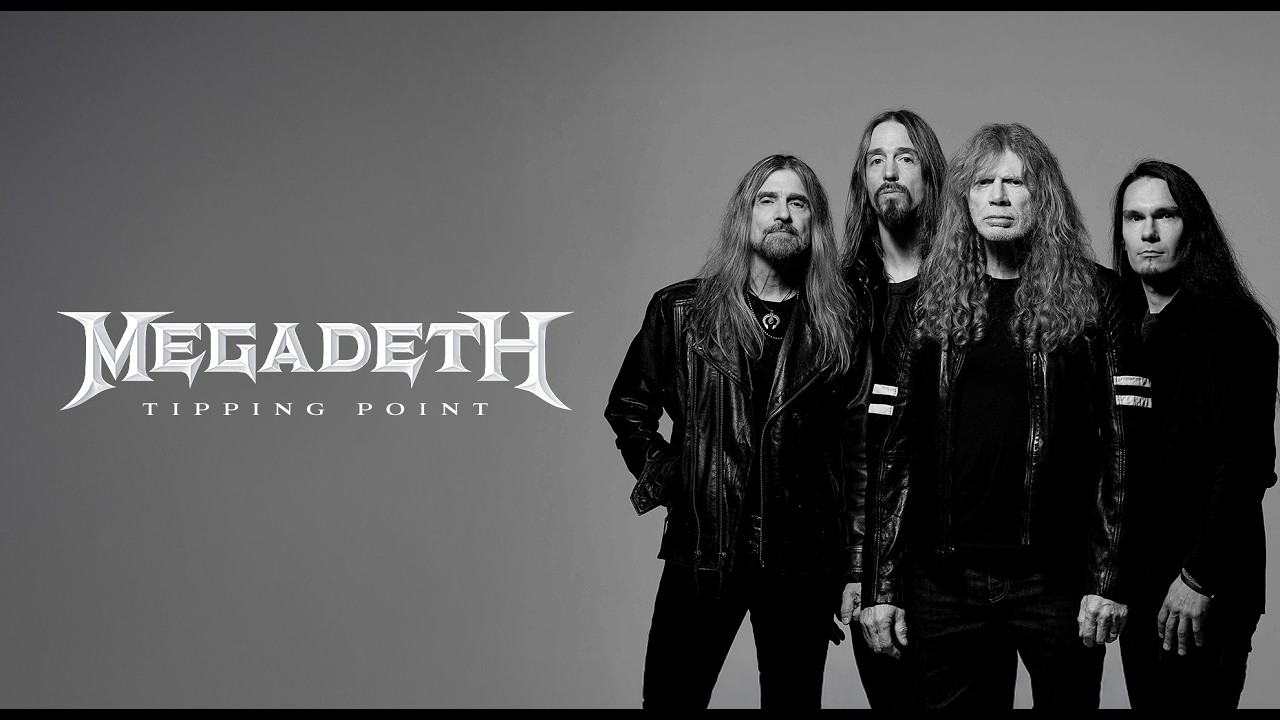
To your point, Chris was fabulous on Megadeth’s first two records, Killing Is My Business… and Business Is Good! and Peace Sells… But Who’s Buying? What led to Jeff Young replacing him for So Far, So Good… So What!?
Jeff Young is a great guitar player. It’s unfortunate that the world knows that Jeff is a great guitar player, but they don’t know how really bright he is. I saw something in Jeff when we hired him; it was kind of a strange occurrence. We had tried to find a guitar player, and I went with David Ellefson to the country club in Reseda, where we watched this band called Malice.
Malice had this big, tall, good-looking guitar player [Jay Reynolds] that had a Gibson Flying V and was heavily influenced, to me, by Michael Schenker. We talked to him after his show, and then we met him, and I said I wanted him to be in Megadeth. He was excited about joining the band; then we were in the studio recording So Far, So Good… So What? and I was like, “Okay, it’s time to do your solos, man.”
He goes, “Okay, I’m gonna call up my guitar teacher, have him do [the] solos and then have him teach me.” I thought, “Get out – you’re pulling my leg.” But no, that was true. That’s what he wanted to do. I went along with it, and Jeff showed up, and like I said, Jeff was a really superb guitar player. He really had his own unique style, like Chris did, and we started working on the record.
![Megadeth pose backstage in 1988: [L-R] Jeff Young, Dave Mustaine, David Ellefson, and Chuck Behler](https://cdn.mos.cms.futurecdn.net/ctDYeAgoDC9NkFAXfCWD87-1200-80.jpg.webp)
What made Jeff stand out?
If I remember correctly, he was really influenced by the gunslingers that were coming out of Mike Varney’s stable. One guy I know – I think his name might have been Tony MacAlpine – was just a mind-blowing talent.
Another was Vinnie Moore. It was apparent that Jeff was a shredder. I remember standing out on Melrose Avenue, and I said to Jeff, “Do you wanna join the band?” He said, “Yes,” and I thought, “Thank God. This is too funky right now.”
I didn’t wanna go back to looking for another guitar player because we’d spent so much time looking for Jay, and then that whole thing happened, where he said, “I’m gonna have my teacher come down.” That really threw me for a loop.
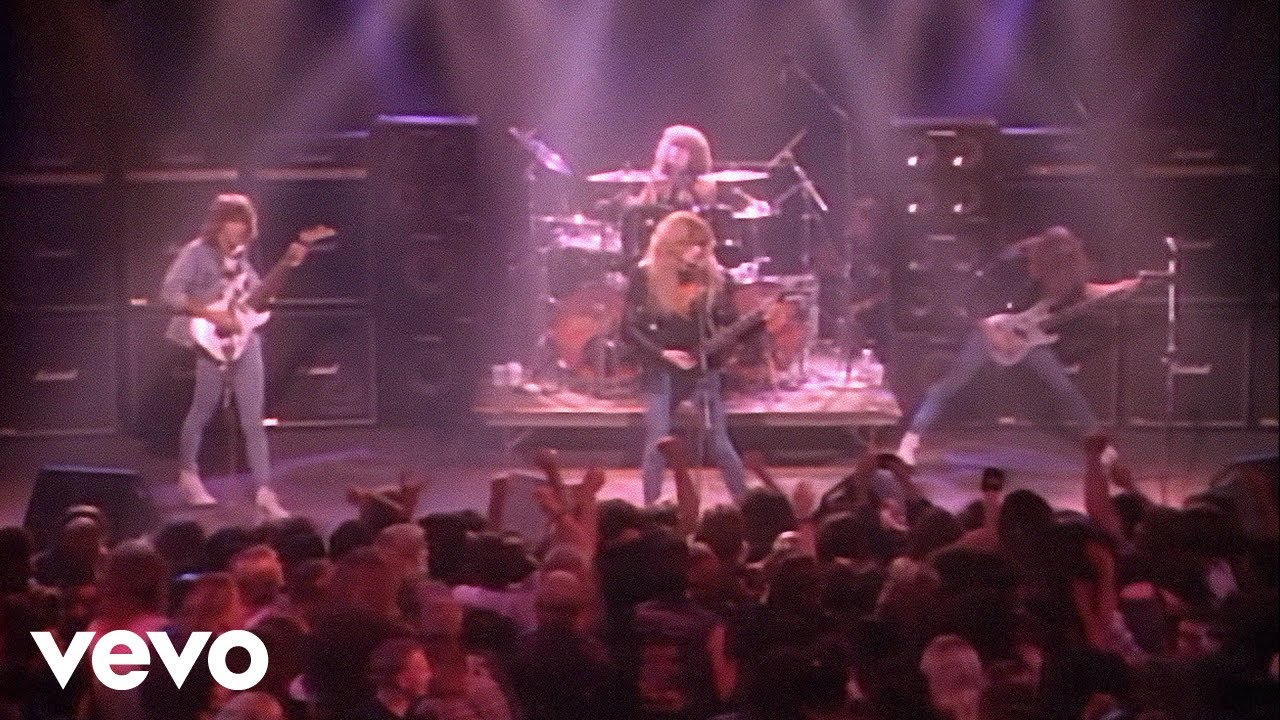
Sadly, Jeff didn’t last too long, either.
It was difficult. I mean, you’ve got Chris Poland and you’ve got Jeff Young playing in your band, so how do you find somebody that’s gonna compare with those guys?
After we parted ways with Jeff, we started looking for new guitar players again. It was difficult. I mean, you’ve got Chris Poland and you’ve got Jeff Young playing in your band, so how do you find somebody that’s gonna compare with those guys? It’s gonna be really hard, right? And it was really hard.
We had a guy come in from San Francisco, and he set up his amp, put on his guitar and goes, “Show me the songs.” I looked at Ellefson, and I just went, “Oh, my God…” And then we had one guy who I’d never seen in my life, not once, and he comes in, sets up his stuff and he’s got this bright green and fuchsia-colored Ibanez JEM with the handle on it – one of those Steve Vai models.
We had this [unspoken agreement] where when an audition was over, I’d reach behind me and turn off my wireless setup. This guy comes in, starts setting up his guitar, stops for a second and goes, “Yeah, man, I wrote [Megadeth’s] Wake Up Dead…” I looked at Ellefson, and I reached back and clicked off my unit at exactly the same time David did. We just said, “Interview’s over…” [Laughs]
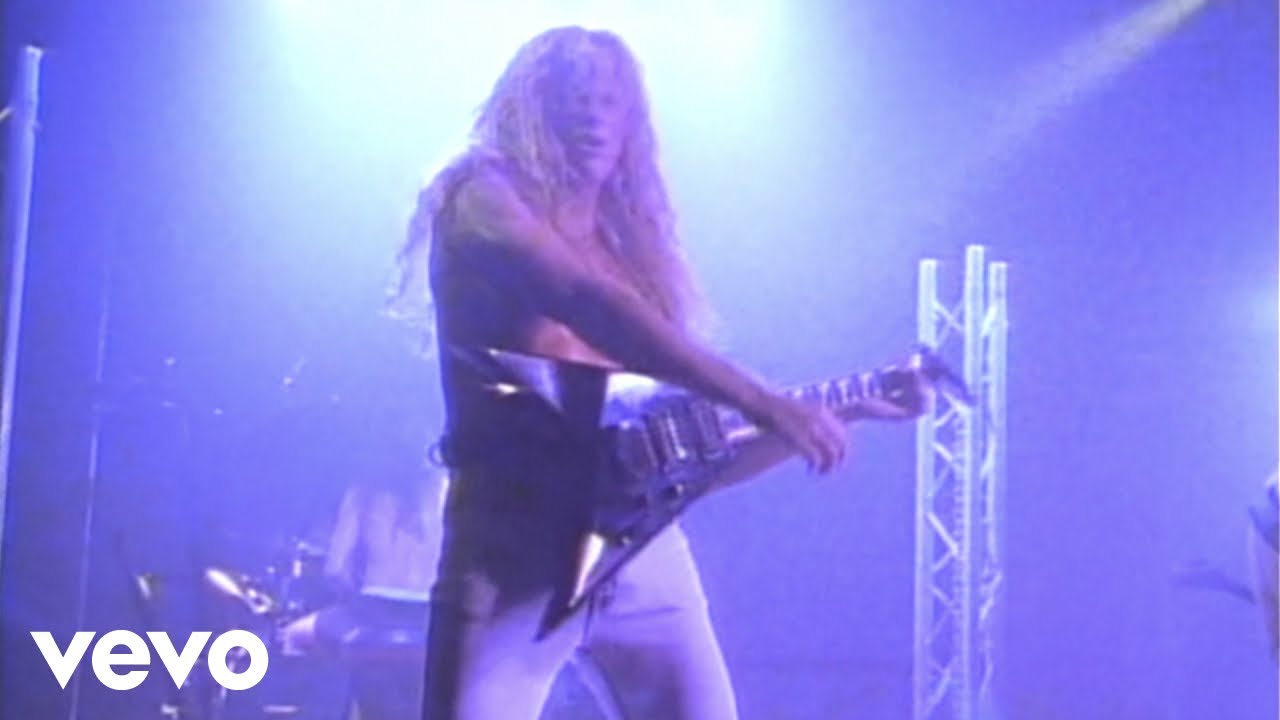
How did you find Marty Friedman?
Marty’s CD, Dragon’s Kiss [1988], had been sitting on the counter in the management's office, and I remember walking past it. The cover was this black picture with bright orange lettering on it, and it was pretty eye-catching. But I just couldn’t do it because of his hair. [Laughs]
His hair?
He had two different colors in his hair. His hair was black from the roots down to about his ear line, and then it was red all the way down to his armpits. I thought, “I can’t do this,” but against my will, I said, “Okay, let’s do this…”
So, he came in, and he walked in with a Carvin, which wasn’t a company renowned for its guitars. He had this ADA rackmount unit, but I don’t know what it was for or how he thought it was going to help him. [Laughs] By then, I had already had minimal success and had a lot of amps, so I said to my guys, “Do me a favor, please set up a stack for Marty over there.”
And when it came time to do the solo, Marty just popped in. We’ve been through guitar player after guitar player, and we get to the solo part in Wake Up Dead, and he nails it. I just thought, “Oh, my God…” and I reached behind me, turned off my wireless, went out and called my manager and said, “I think we’ve got him.”
It was the right choice, as Rust in Peace, Countdown to Extinction and Youthanasia were huge records in the Nineties when grunge was all the rage and metal was waning.
It had a lot to do with around 1992 when Nirvana had Nevermind. They were so successful that normal heavy metal closed up a bit and was done. Metal wasn’t getting played on the radio anymore, but Nirvana was, along with all these bands from Seattle, like Pearl Jam, Mother Love Bone, Soundgarden and all those other bands. Those bands became the flavor of the day, and hard rock and heavy metal had to go underground, which is where most bands dissolved, sadly.
But Megadeth didn’t. Did that make it all the more tough when you lost Marty after recording Risk?
That was a really weird period. I don’t even know if Marty knows why we were brought together and why we were taken apart, but I had a fun time with Marty. But Marty is an enigma, and a very unique human being.
I think you can ask any of the people who have played with him… he’s incredibly talented, but very mysterious. He loves Oriental music, and we were able to make that work with Megadeth, so it’s sad that we stopped working together.
You two seemed to have a unique musical chemistry. Plus, he brought stability to the lead-guitar spot, a notoriously volatile spot for Megadeth. It must have been painful to have him leave.
I had a couple of songs that I needed to write to get the feelings out of me from Marty leaving. There were a couple of songs I wrote that were cathartic to be able to talk about what happened.
Which songs were those?
1000 Times Goodbye [from 2001’s The World Needs a Hero] wasn’t written to or about Marty, but about the feelings I was going through. It was inspired by that because I was very confused. I hadn’t really had somebody that I cared about that much walk out.
It was the first time I’d ever had that happen, and I didn’t know how to deal with someone I really respect… I don’t want it to come off weird, but I really did enjoy Marty’s goofy one-liners and the stuff we did together.
Marty's leaving, combined with an arm injury that nearly ended your playing career, led you to fold Megadeth in 2002, but you came back in 2004 with Chris Poland back on lead guitar on The System Has Failed.
Let me explain about Chris Poland coming back; he wasn’t invited back to play with me on a permanent basis. In the same way as the Metallica thing, I thought I was done.
I thought my arm was done. I was going to do one more record, and then I was going to hang it up. So I asked him if he would come and play the solos, and that was it. Nothing more. And he did well; it was neat to see him play again.
Aside from Chris, you ran through Al Pitrelli, Glen Drover and Chris Broderick. That level of volatility from the lead guitar spot must have been challenging.
Oh, yeah, it was tough. I had to have a lot of mentors. I heavily backed into martial arts and had several spiritual mentors that I worked really closely with for a while because I was sad. I felt like I’d lost my mojo. Do you know what I mean?
![[L-R] Dave Mustaine and Marty Friedman](https://cdn.mos.cms.futurecdn.net/PeZQZNxT4fEEYPbu7Qn2XK-1200-80.jpg.webp)
It can be tough when you’re putting everything you have into something, and there are perpetual roadblocks.
Yeah, absolutely. But I really enjoyed playing with Glen. He and his brother [drummer Shawn Drover] came in after a really ugly period where we tried to get the Rust in Peace lineup back together, which wasn’t meant to be. Working with Glen and Shawn was enjoyable because a lot of the hardcore Swedish, Danish and English heavy metal that I loved, they knew.
We would play it a lot, and that was great. Shawn is a really amazing drummer, and his brother is a first-class guitarist. And here’s a thing people don’t know: the two of them can switch instruments without missing a note. They both play guitar and drums, and they’re both exceptional at it.
It seems as if Kiko Loureiro’s arrival in the band before Dystopia stabilized Megadeth. You had a lot of success with that record, and its follow-up, The Sick, the Dying… and the Dead! Was it painful to have him leave, sort of like it was with Marty?
I hear from him every once in a while, or I’ll see something that somebody sends me, and I smile. Kiko was a good guy
No. By the time Kiko had come, I had pretty much galvanized myself toward people. And by that time, Kiko just started feeling like he was being away from home too much.
I did tell him we were gonna be doing a lot of touring when we first met, and unfortunately, I’m the leader of a band that requires more time, you know? But I hear from him every once in a while, or I’ll see something that somebody sends me, and I smile. Kiko was a good guy.
With Teemu Mäntysaari in the fold, Megadeth still seems to have a lot left in the tank. Is it hard knowing you’re releasing the band’s final record and embarking on its final tour?
We do have a lot left in the tank. And it might seem counterintuitive, but I also think that if people look at what I said, you know, this being our last studio album, and the part about touring, we’re an international band. We’ve got, by the grace of God, fans around the globe, so it’s going to take time to see everybody and say goodbye to everybody.

With this being Megadeth’s final tour, once you hit the road, will you be exclusively using your new signature gear, or will you bring out any old gear to make the occasion?
I don’t have any old gear for old time’s sake. [Laughs] I’ve got one Jackson, but my [new] Gibsons are the guitars I want to be playing. And this isn’t some product-placement thing; those guitars are exactly what I want and what I’ve always wanted. We made some slight adjustments to the guitars.
It’s kind of like a modified F1 [race car] where, over time, there are a couple of things you can do and bring along with you from what you’ve had in the past. I think that’s where we’re at right now with this, the new custom guitars. They’re like hot rods. The only thing we’re contemplating now is making the legs have points.
How do you hope to be remembered as a guitar player?
As someone who made a difference.
- Megadeth is out now via Frontiers.
- This article first appeared in Guitar World. Subscribe and save.

