



This isn’t our first encounter with an incoherent rock star – music journalism being, as Frank Zappa once sneered, “people who can’t write, interviewing people who can’t speak, for people who can’t read.” But as he appears on the webcam, it becomes clear that a video call with Imarhan’s leader Iyad Moussa Ben Abderahmane – Sadam for short – will present a particular kind of communication breakdown.
Born in Southern Algeria, and hailing from the Tuareg ethnic group whose nomadic ancestors have roamed the Sahara for centuries, the only way to converse with Sadam is to ask a question, hear it translated by the band’s Paris-based publicist, stare into space while he replies in French, then wait for the simplified version.
It’s a frustrating way to do this, dampening rapport and killing the natural back-and-forth. But that’s the deal for Western media interacting with the Tuareg desert-blues scene, whose marquee artists like Tinariwen and Mdou Moctar have largely let their music do the talking.
“I don’t mind the ‘desert-blues’ label, but we don’t use it ourselves,” Sadam says. “We call our music ‘assouf,’ which means ‘nostalgia.’ It can be compared with the blues because it’s music that talks about suffering.”
Formed in 2006 – with Sadam flanked by fellow guitarists Hicham Bouhasse and Abdelkader Ourzig – Imarhan have long staked their claim as future stars of this burgeoning movement. It wasn’t easy gaining a foothold beyond the local circuit, recalls the frontman.
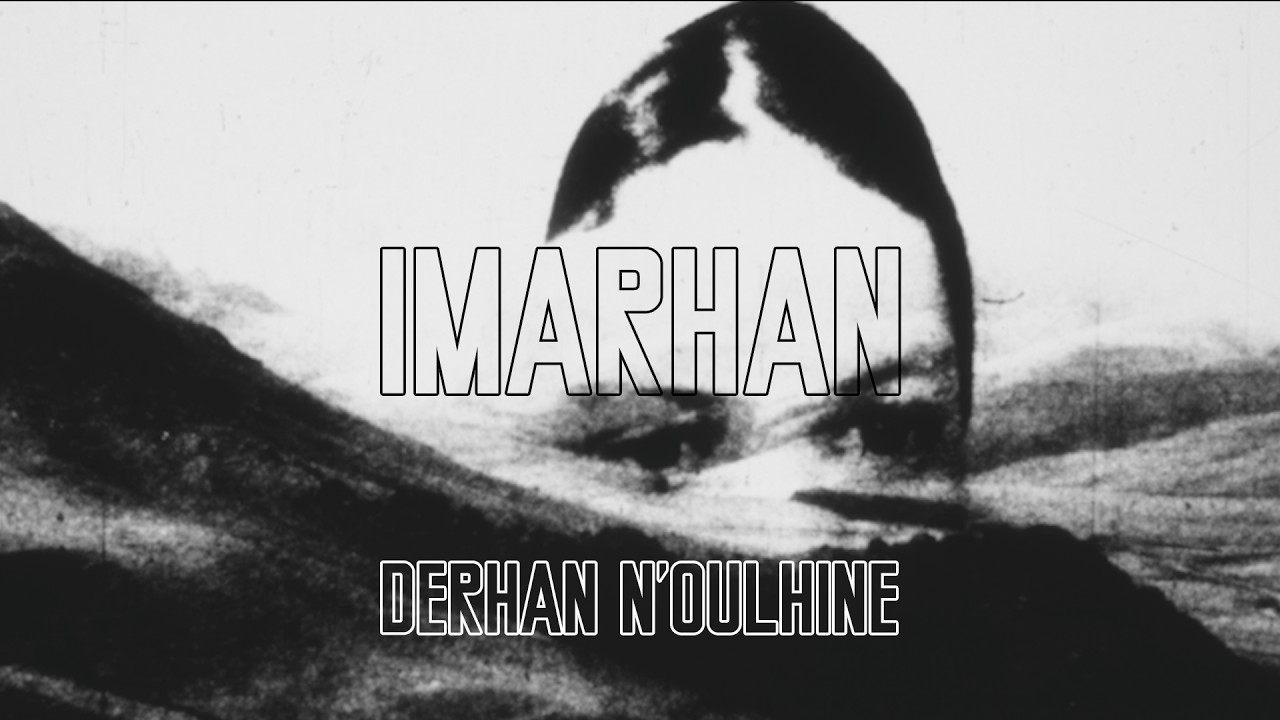
But if the band’s three critically acclaimed albums – 2016’s Imarhan, 2018’s Temet and 2022’s Aboogi – bounced off your radar, you might conceivably have heard their hook-up with Blur singer Damon Albarn on last year’s Africa Express Presents Bahidorá compilation, the makeshift supergroup offering a hushed fingerstyle-and-piano take on latest single Derhan N’Oulhine.
If not, the best entry point to the catalogue is Imarhan’s fourth album, Essam, released this month and tipped to throw the band headlong into the global mainstream. It’s a stunning piece of work, at once widescreen and intimate, its cyclical songs broadly based in the time-honored assouf style, but spiced with hypnotic chants, tapestries of woven acoustic guitar, textural electronica and visceral blasts of fuzzbox blues.
Evocative and transportative, while the music plays, you’re right there amongst the burnished dunes at sundown. That’s no accident. While Imarhan find themselves at a career crossroads where they could theoretically decamp to the gleaming boutique studios of New York, Los Angeles and London, the lineup chose again to record Essam on home turf, at their own Aboogi studio in Tamanrasset.
Regional musicians – particularly women, still disadvantaged in wider Algerian society – were invited to contribute backing vocals, or take up traditional instruments like the imzad (a one-string fiddle) and tinde (a goatskin drum).
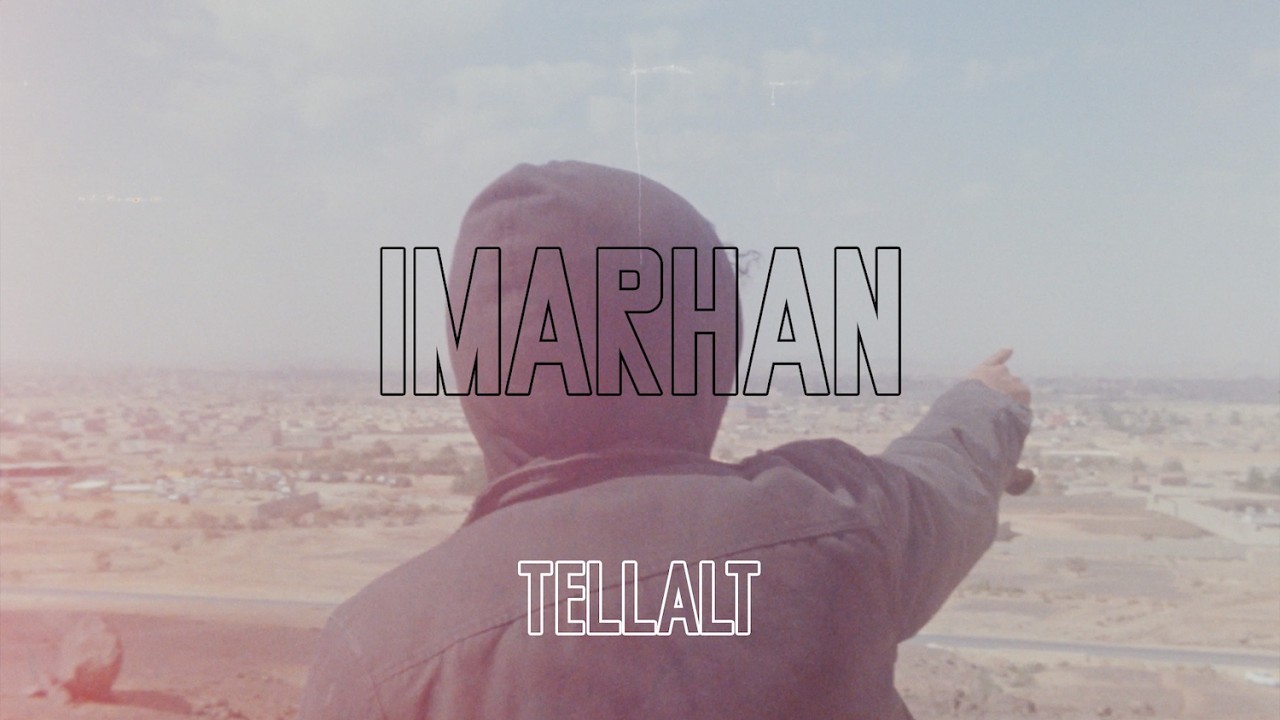
A deep sense of local life and ancestral heritage courses through these songs, which quote from ancient poetry on Assagasswar and address the region’s burning issues on the stormy Téllalt. “I don’t know if I’m a political artist,” considers Sadam of his lyrics.
“What I focus on is daily life, the feelings I have, what touches me around me, from the refugees arriving in Tamanrasset to the suffering of the Tuareg people in Mali.”
Even the weather played its part. “Sometimes, we were recording a song when the power shut down because of the wind. And since we do everything live, we had to start over – we couldn’t just copy and paste. Every time we play a song, it’s going to be a different version.”
Fans will recognize Essam as a subtly different album. There’s a reason they chose that title. “The word means ‘lightning,’ and it’s the idea that we brought some electronic elements into our music. It’s like electricity coming into our world of assouf.

“We were a bit reluctant beforehand. It was a big move for us, and very risky. But it actually brought our music somewhere else. It put our songs on another path. Every Imarhan album has its own colors and ideas. To me, Essam is a new step in Tuareg music.”
It’s true: you’ll hear spacey synth soundscapes and processed beats on moments like Adounia Tochal and Azaman Amoutay. But streamed as a whole, Essam is – thankfully – more evolution than reinvention, the band still favoring unvarnished nose-to-nose recording, and the guitar continuing to fill the main melodic role as it drives these new songs towards the horizon.
Stevie Ray Vaughan was my favorite – I liked him even better than Jimi Hendrix
Try the mellow wah lines of Okcheur, the dueling harmony leads of Tin Arayth, or the deftly plucked patterns of opener Ahitmanin (imagine The Doors’ The End played in a sandstorm).
Sadam nods: while Essam is a left turn, it’s no betrayal of his lifelong love for the instrument. He recalls the youthful cassette-trading that opened his eyes to the guitar-led assouf pioneers, and even namechecks the handful of Western players who made it across the cultural divide: “Stevie Ray Vaughan was my favorite – I liked him even better than Jimi Hendrix.”
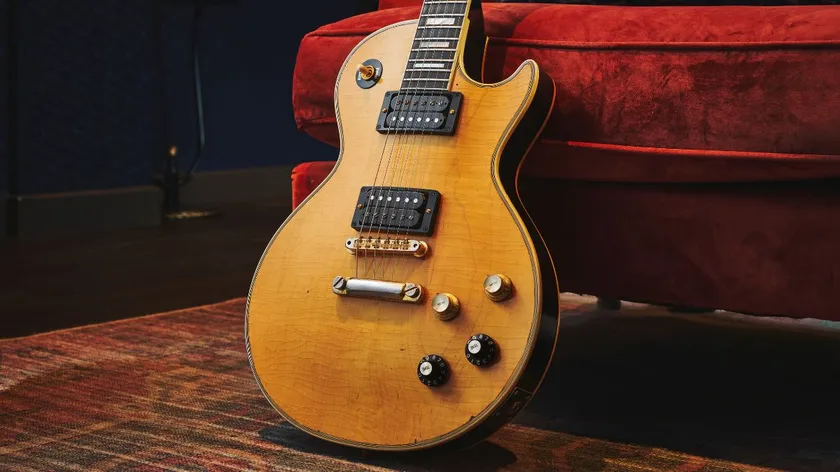
Now, years later, he didn’t lay down his tools for these latest sessions, citing an Acoustasonic Jazzmaster, a Gibson L-00, a “crappy” Taylor acoustic and a Squier Stratocaster, typically run through a Peavey Solo.
“That’s the amp we always use; it’s very popular in the Tuareg community,” he explains. “We used a lot of different guitars on this album – acoustic and electric – but the playing is mostly softer than before, and we didn’t want to put on a lot of distortion. But guitar is always there.”
Likewise, Imarhan’s underlying mission statement hasn’t changed, their songs still providing a balm to hardship and testifying to the transcendent power of music to lift listeners above their circumstances. “I’m waiting for people’s feedback, looking forward to their reactions,” Sadam says. “But if it makes people dance, that’s a great thing!”
- Essam is out now via City Slang.

