




Guitar World Verdict
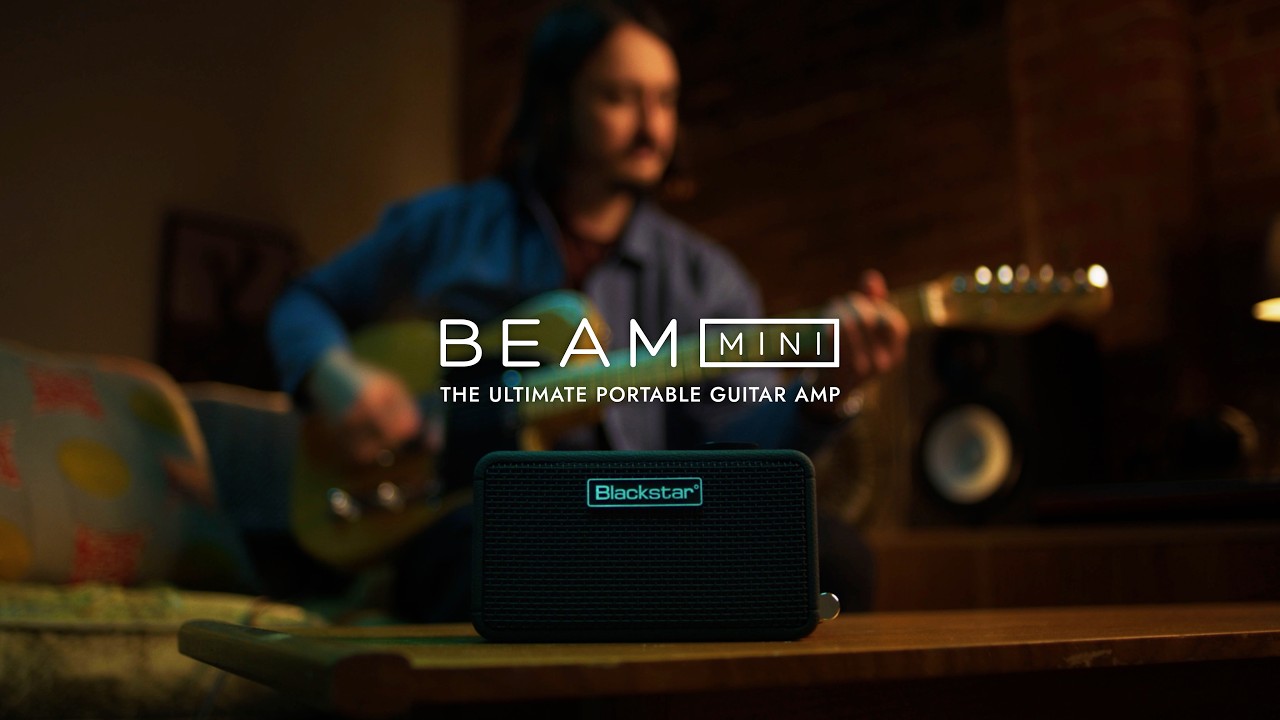
With huge sounds coming out of something so small, mini guitar amplification just got serious, and the competition has some catching up to do. The Blackstar Beam Mini is an easy choice for anyone in the market for a mini practice amp.
Pros
- +
Seriously good amp modeling.
- +
'In The Room' CabRig technology
- +
Loud!
- +
Easy-to-use app.
- +
Excellent as a Bluetooth speaker.
- +
Impressive bass response.
- +
Access to thousands of NAM captures.
Cons
- -
Needs the app for real tweaking.
- -
Textured finish can pick up specs of dirt fairly easily.
- -
Some of the effects could be better.
- -
Side-mounted input is awkward on a busy desk.
You can trust Guitar World Our expert reviewers spend hours testing and comparing guitar products so you can choose the best for you. Find out more about how we test.
What is it?
There is no substitute for practice, so a convenient home practice tool is vital for honing those chops. But the reality is most of us do our playing in the home, and something compact, flexible and portable will encourage to play even more. Enter the mini practice amp. These compact, neighbour-friendly solutions offer a convenient way to put in the hours whilst taking up minimal space in the home, but have in the past been compromised when it comes to tone. Thankfully, this has changed in the last few years with products like the Positive Grid Spark Go and Laney Prism Mini pushing the boundaries of what mini amps can do.
Looking to push those boundaries even further is Blackstar with its brand new Beam Mini amplifier. The British company blazed a trail years ago with its Fly 3 mini amps, but is now returning with a significant upgrade to the format. But following on from the well-reviewed Beam Solo headphone amp with a similar ‘Light Beam’ interface, this compact practice amplifier will feel familiar to some.
With two full-range two-inch custom drivers alongside two passive bass radiators, squeezed inside a tiny acoustically tuned cabinet, Blackstar is promising big things with the Beam Mini in operation as both a guitar amplifier and a Bluetooth speaker.
As far as guitar tone goes, Blackstar is on a roll with products like the ID:X Floor and ID:X combo amps, sporting amp modeling and ‘Cab Rig’ IR-based cabinet, along mic simulation that impressively outperforms the price tags. With that form, the Beam Mini is an exciting prospect.

The open-minded folks at Blackstar have not just limited the tones to their own technology, however, as in what is some pretty big news, the Beam Mini can run Tone 3000’s NAM captures.
Neural Amp Modeler is an open-source project that allows players to capture their amplifier and then upload that capture for anyone to use via free community platform Tone 3000. It has been gaining popularity over the last few years but Blackstar is the first company to actually build it into an amp, giving players access to literally hundreds of thousands of tones.
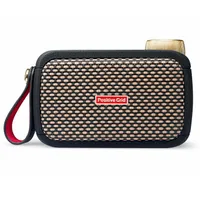
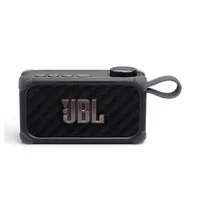
All of this is very promising, but products like the JBL Bandbox, the aforementioned Laney Prism Mini, and Positive Grid Spark Go make this a competitive market. Let’s see if Blackstar can take it to them.
Specs

- Launch price: $229 | £169 | €169
- Type: Mini practice amp
- Origin: China
- Output: 2 x 12W RMS
- Speaker: 2 x 2" full range
- Channels: 5 on board presets
- Controls: Patch, Gain, EQ, FX, Volume, app for in depth editing
- Connectivity: 1/4" input, USB-C, Bluetooth
- Weight: 733g/1.6lbs
- Dimensions: 5.9"x3.5"x2.9"/150x90x75mm
- Contact: Blackstar
Build quality

Build quality rating: ★★★★½
At 733g/1.6lbs, the Beam Mini is a little heavier than you might expect. Not problematically so, as I find this heft to be somewhat reassuring. The sides feel reasonably thick and are wrapped in a soft-touch, textured rubber, which not only makes it look premium but also gives the impression of a well-built piece of gear that will survive some rough and tumble in a rucksack.
The downside is that this rubberized, textured finish is prone to little specs getting stuck to it, so you might want to keep it in a case when you're on the move.
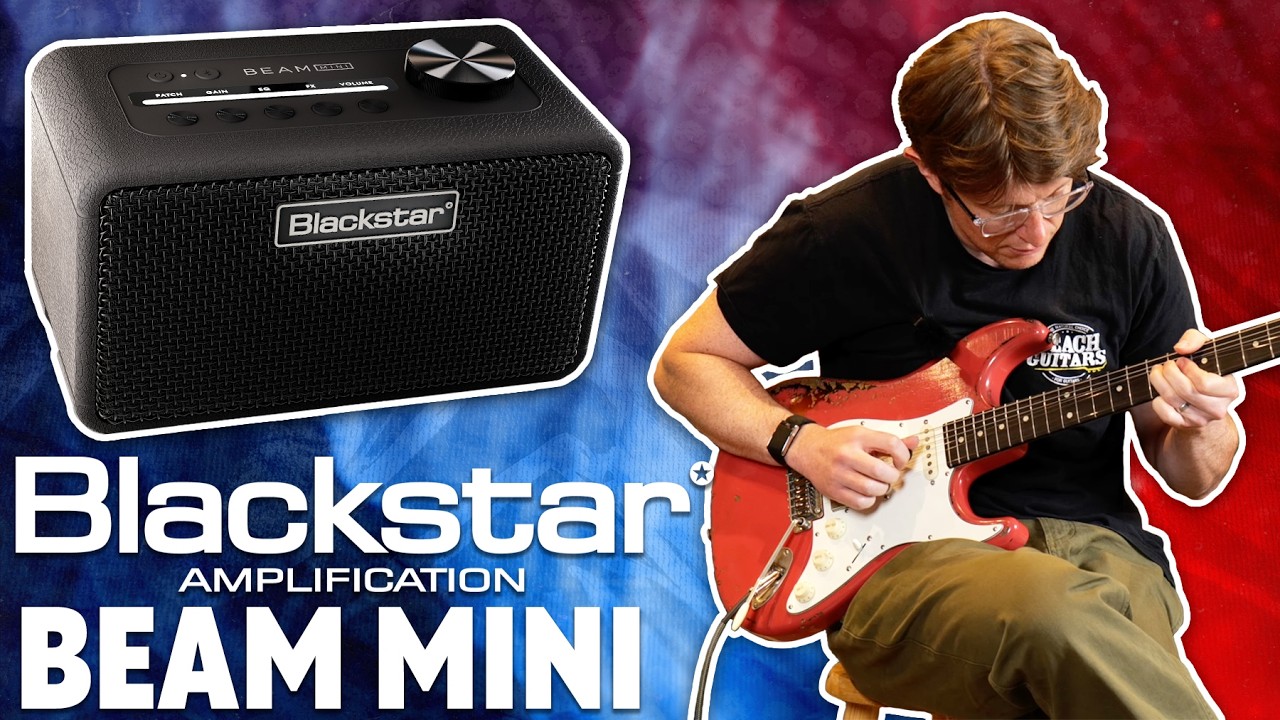
The top panel consists of a rotary control that satisfyingly clicks as it is turned and is textured to offer grip, adding to the premium feel. There are seven buttons too - Patch, Gain, EQ, FX, Volume, Power, and Bluetooth. They all have that soft, rubberized finish that is satisfying to use and a resistance that indicates quality.

Those buttons all surround the Light Beam interface, which is bright and easily readable. I’ll get more into how it is to use it later, but for now, it gives a healthy impression of modernity to the little Beam Mini.
I/O wise, we have a ¼” instrument input, USB-C connectivity, and a ⅛” headphone output. Nothing fancy there, but the ¼” instrument input is oddly placed at the bottom of the right side panel. This creates some considerations in use, which we’ll come back to, but the upside is that it feels a little neater to have cables at the side rather than hanging out the top.
Finally, the front panel is reminiscent of traditional amplifier design with a mesh and that Blackstar logo. Rounding off what is an aesthetically pleasing piece of gear.
Usability and features

Usability and features rating: ★★★★½
Getting started with the Beam Mini is simple. Plug in your guitar, turn it on, and go. It’s neater, but a little awkward to have that ¼” jack on the side panel, as if you are on a busy desk or table, it puts the cable directly in the way of your desk clutter. Or at least it does on my admittedly untidy desk.
Mind you, this could be argued to be the lesser of two evils when compared to other small amps that can topple with the weight of a top-mounted cable. However, the Beam Mini is heavy enough that I don't think this would have been an issue.
You are going to want to use the Beam mobile app to get the most out of the amp, but starting with what is available on just the hardware, the amplifier is delightfully easy to use.
There are five adjustable parameters from the top panel, which are accessed by the aforementioned Patch, Gain, EQ, FX, and Volume buttons, a large rotary control to adjust the parameters, and a single LED strip that forms the ‘Light Beam’ interface to let you know what stage each setting is at.

The Light Beam utilises animations that differ depending on the parameter that is being adjusted, in what is a surprisingly intuitive and elegant way of letting the user know what the amp is doing.
If you want to tweak a little deeper or swap out any amp or effect in the chain, you will need the app
For example, push the Patch button, and the LED turns into a narrower band that steps through five locations on the strip to let you know which patch it is on. Press the Volume button, and it turns into a bar that gradually fills as the Volume is increased. Pretty ingenious.
The drawback is that only one parameter of the EQ and FX is available for adjusting this way. Just the Mix on reverb, for example, or the Treble control on the amplifier's EQ.
This parameter cannot be swapped, and although I would prefer the option to define which parameter this is in the app, the set ones still allow plenty of scope to get tones for a quick session. If you want to tweak a little deeper or swap out any amp or effect in the chain, you will need the app.

Admittedly, I find myself a little app-fatigued these days. Everything seems to have one. However, this is mitigated by the ease and stability with which the Bluetooth connection is made here - just press the button and select the Beam from your devices list - and the stylish, highly visual nature of the app.
I am immediately greeted with artistic representations of the gear rather than text-heavy menus, an easily understandable depiction of the signal chain that is split into sections and therefore stops too much information from being displayed at once, and controls that can be moved and pressed in the same way as they would be on physical gear.
It’s an interface that will feel familiar to anyone who has used guitar pedals and amplifiers before, and takes no time at all to get the head around.

What is perhaps less familiar to some of us is the Tone 3000 library of NAM captures. As I mentioned earlier, NAM stands for Neural Amp Modeling (no, not that Neural) and is Tone 3000’s open-source capture software. We’ll get to how it sounds later, the point for now is that browsing through the captures is seamlessly integrated into the amplifier menu within the Beam app, and only requires a quick sign-up to get it working. Easy.
Across the top of the app are the tools for recording to your device via the app over USB, saving new tones to either your device or one of the patches in the amp, and uploading your sounds for sharing in the cloud.
The last tab on the right is interesting, as it basically operates as a built-in YouTube player, with suggestions from Blackstar for backing tracks to jam along to, lessons, and Drum loops. I’m often utilizing YouTube for this anyway, so it’s handy to be able to use it in the same app as the amplifier.
Sounds

Sounds rating: ★★★★½
First, let's talk volume. The Blackstar Beam Mini is so much louder than a speaker of its size has any right to be. As a solo home practice amp, it has more than you could ever need, and as a Bluetooth speaker, it could easily fill any busy room in an average house.
As a speaker, it is nothing short of impressive
For the latter use, I’m streaming music from my phone, and tonally, the most impressive thing is the level of bass response. Those passive bass radiators are certainly doing their job, and I actually find myself looking for a way to turn the low end down.
The mids and highs are well represented, without being shrill. As a speaker, it is nothing short of impressive, which can only mean good things for the guitar tone.
Recent experience with some of Blackstar's modeling range - namely the ID:X Floor - has taught me not to underestimate Blackstar here. Hoping to be equally as impressed with the tones in the Beam Mini, on offer within it are models of Blackstar's own St James (OD, Crunch and Clean), Artisan 30, HT Club 50 MKII, and Series One MKII amplifiers, as well as six Blackstar Ampton models that imitate everything from a clean Fender Twin (Ampton Twin) to all-out, Peavey 5150 (Ampton 6l6) distortion.
Adding to that, we also have Classic, Modern, and Flat bass preamps to play with, as well as an acoustic preamp.
In short, the tones are addictively inspiring. I’m immediately drawn to the ‘Clean’ and ‘OD’ models of the St James amp. The clean offers plenty of those gorgeous overtones with a good helping of low end, in what is a lively-feeling model. The OD goes the other way with a relatively heavy distortion in the eighties classic rock realm, which manages to maintain note clarity and a tight low end.
For all-out metal, look no further than the Series One model. It features a similar tight low end, but one that feels a little thicker for those chuggy riffs, and has all the gain you could ever need.

I’m not as big a fan of the Crunch version of the St James model, as it feels a little brittle in the high end, but here the HT Club 50 has me covered, with a nice, thick overdrive, perfect for that classic rock rhythm thing.
Impressive too are the Ampton models. An easy highlight is the Amton 800, which is unmistakably Marshall in its present high-end. The only one I feel falls a little short is the Ampton Twin, which doesn’t have the same life that I would expect from a Twin model, although it does sport that lovely mid scoop.
What sticks out most is the way that the amps clean up on the volume control
All of these models have the full suite of controls and switches that you would expect from the amplifier they are modeled after. This, on the Blackstar models, includes Blackstar’s ISF control, which moves between an ‘American’ and ‘British’ style sounds, making for a versatile collection of amps.
What sticks out most, however, is the way that the amps clean up on the volume control. This is where a lot of cheaper modeling gear will fall short, but here, models such as the St James EL34 can yield a chimey clean from a relatively driven sound, with the player in complete control of the amount of grit, using nothing but that volume control.

The amp models are only half the story, however, as the other, often underappreciated half, is in the cab sim. In this area, Blackstar is, again, doing things a little differently with its IR-based CabRig technology.
We have six Blackstar cabs to choose from. Open and closed back versions of a 1x12’ and 2x12’, plus a modern and vintage versions of a 4x12. For me, the biggest highlight and the aforementioned difference is Blackstar’s new “In The Room’ technology. With this, rather than modeling a microphone, Blackstar has aimed to “recreate the natural way your ears perceive the tone and feel of an amp in a physical environment.”
There is the option of adding a dynamic, condenser, or ribbon mic, but all of these sound somewhat brittle compared to the In The Room mode
And it works. The tone has that low mid presence that I would often associate with being the difference between standing in front of a cab rather than hearing it through a microphone, and happily lacks the shrill high end that I often find myself dialling out of digital modelers. It’s an incredibly enjoyable experience.
There is the option of adding a dynamic, condenser, or ribbon mic, but all of these sound somewhat brittle compared to the In The Room mode, and more reminiscent of the digital thing often negatively associated with modeled guitar tones. In short, stick with the In The Room mode.

More than this, the tech also includes a Room control that allows for bringing in, you guessed it, some room sound, resulting in a subtle ambience that adds some rewarding space to the tone.
When it comes to effects, there is a suite of 28 that cover all the drive, utility, ambient, and wobbly needs you may have. There are three Pre-FX slots consisting of Gate, Filter/Comp and Drive/Fuzz, and three Post-FX slots that are Modulation, Delay, and Reverb.
They are chained in that order and cannot be moved, so perhaps lacking a little flexibility compared to the largely moveable signal chain of something like the Laney Prism Mini.
Most are great fun, like the Envelope Filter, which is very reactive to my picking and tweakable with a simple set of three controls. The Pie Fuzz does an excellent job of that thick Big Muff sound, and the Hall Reverb adds a subtle ambience whilst not getting in the way of the dry signal.

However, some, while still great, aren’t quite up to the high standard of the rest. For example, the TS Drive (Tube Screamer) and K Drive (Klon) are a little thin on their own, but good for boosting an already overdriven amp, and it’s tricky to get enough springy drip out of the spring reverb for that surf sound.
Lastly, we have the Tone 3000 NAM amp captures to consider. Like all capture tech, it is dependent on the person doing the capturing, as the amp needs to be set nicely, mic’d well, and captured properly in order to get good results. What is potentially game-changing here is that the software is completely free, with thousands of captures available. So its integration into the Beam Mini is a big deal.
This could be an exciting year for Tone 3000
Browsing through some tones, the results are mixed. In general, I find the sounds to have a little more of that digital high end when compared to Blackstar's own modeling, but I am having fun on an excellent capture of a Roland Jazz Chorus with some lucious cleans, and a JCM800, boosted by a Klon into a 4x12 that kicks out that huge, Marshall overdrive.
Equally, there are some that aren’t as impressive, for example, a 1977 Fender Super Reverb capture that has a strange, underlying distortion and feels a little lifeless.
So, as expected, you will be doing a bit of browsing to get the best out of the Tone 3000 stuff. However, this is an emerging bit of software integrated in an amp here that is quickly gaining traction in its own right, and again, is completely free to download and create captures with.
Its inclusion in the Blackstar Beam Mini is welcome, and it feels like this could be an exciting year for Tone 3000. It is worth noting, however, that we can't yet add any of the Beam Mini's drives in front of the NAM captures, but perhaps a future update from Blackstar could address this.
Verdict

To put it bluntly, the Blackstar Beam Mini feels like a significant step forward in mini guitar amplification. It has an impressive low-end for an amp of this size, an app that is the magic combination of in-depth and easy to use, an ingenious interface on the top panel, and a volume that is astounding coming from something so small.
But it’s the quality of the amp modeling combined with the impressive speakers in this tiny thing that makes the Beam Mini a leader in its class. The sounds are genuinely enjoyable, not just in the context of a small amp, but as guitar sounds in their own right.
At around $229, it's more expensive than the likes of the Positive Grid Spark Go, but the serious tones on offer justify the price. The only real downside is that you will need to use the app to get the most out of it.
Of all the mini practice amps I’ve tried, this is easily my favorite
Worth mentioning too is what the future holds for this amp, as upcoming is the integration of a live version of Moises, able to separate stems from an audio source streamed over Bluetooth. We got a sneak peek at this, and it is exciting. Keep an eye out, as we will be updating this review when it surfaces later this year.
As it stands, of all the mini practice amps I’ve tried, this is easily my favorite. It is a competitive market, but Blackstar has smashed the competition.
Guitar World verdict: With huge sounds coming out of something so small, mini guitar amplification just got serious, and the competition has some catching up to do. The Blackstar Beam Mini is an easy choice for anyone in the market for a new practice amp.
Test |
Results |
Score |
|---|---|---|
Build quality |
Some reassuring heft, although the textured finish tends to pick up some dirt. |
★★★★½ |
Usability and features |
Intuitive light beam interface and easy-to-use app, although the app is needed for anything more than simple tweaking. |
★★★★½ |
Sounds |
Stellar amp tones, but some of the effects don't quite reach the same high bar. |
★★★★½ |
Overall |
Easily the best mini guitar amp on the market right now – and it seems there's more features to come too. |
★★★★½ |
Also try
Hands-on videos
Thomann
Peach Guitars
Blackstar