


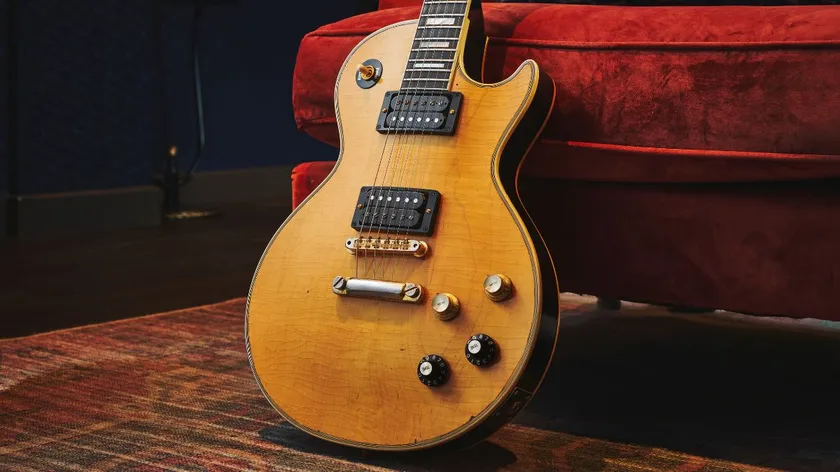


While David Lynch is best associated with filmmaking, the late Twin Peaks director was also an accomplished guitarist in his own right.
And, much like some of his movies, his guitar playing was unconventional, to say the least. This naturally extended to his guitar of choice, the 1997 Parker Fly electric guitar, which went up for auction earlier this year.
But it's not just any old guitar. It features some pretty specific specs: a signature Parker tremolo bridge, two DiMarzio humbucker pickups and a built-in piezo system with a volume control, blend, master tone, and a three-way toggle selector switch for the magnetic pickups, plus a three-way switch for the piezo system.
But that's not all. Lynch also added a Roland GK-2A synthesizer pickup, which, when paired with the Roland VG-8, was used to change chords as he strummed the strings near the nut using his right hand.
When it sold at auction the guitar ended up in the hands of a self-confessed Lynch superfan – William Dickerson, author of The Tao of Twin Peaks.

“I recently lost my mind and bought David Lynch's guitar,” Dickerson says in a mini-documentary demoing the Parker Fly. “Lynch was a master of many art forms, and music was something that thrilled him to the soul, and I think part of it had to do with it being a direct conduit to his emotions.
“He was able to express himself without having to wait for a film being made or finish writing a script, or even finish painting a painting. He was just able to feel something and explore it in real time. And for me, that's incredibly inspirational.”
While inspecting the guitar, Pelham Guitars' Neil Stephens notes, “It hardly has any headstock at all, and it has no string tree. Even though the headstock is not angled, it's got no string trees – just very short posts with the locking tuners.
“This is straight from David Lynch's studio, and still has his finger cheese and all the residue all over the fretboard. And these old strings... you can feel underneath them, they're very tarnished, and they're dying.”
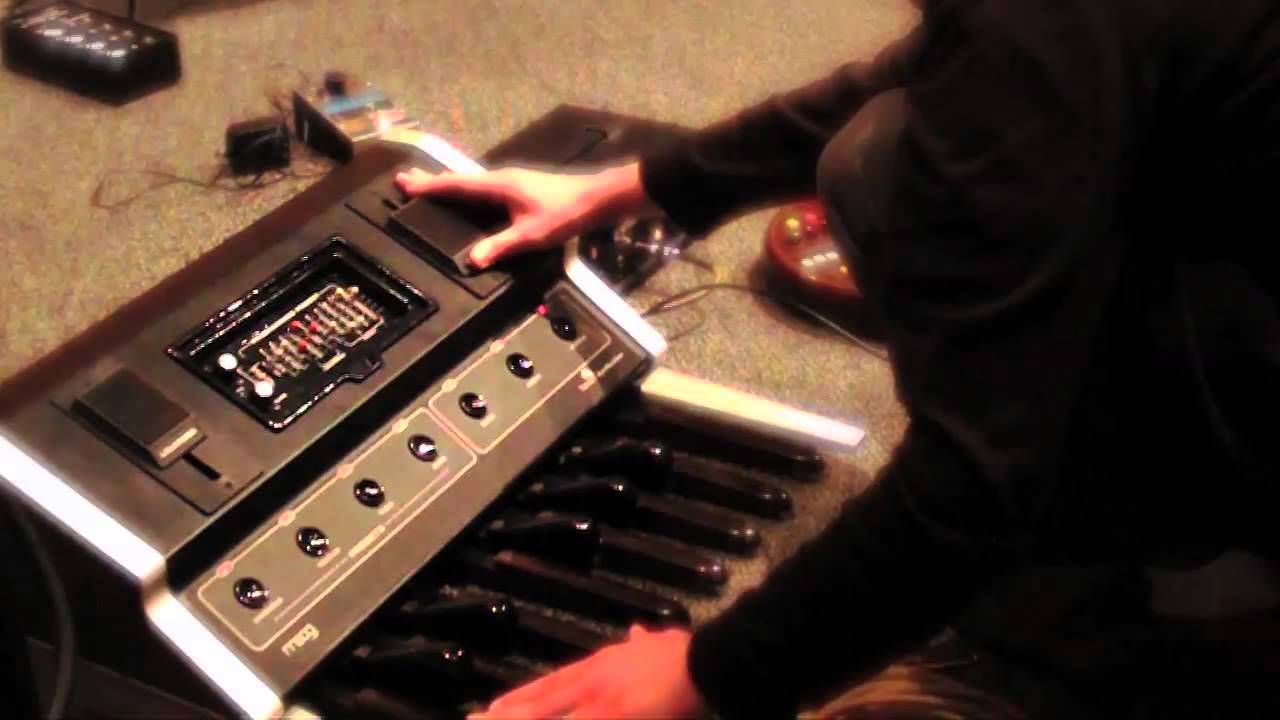
Naturally, the guitar also came with the VG-8, which its new owner describes as “essentially a mystery box that came with it”.

“This is the tone that's on all his records that he played on,” he continues. “There are different banks of keys, so there’s the A key or the minor key, and then other chords programmed there. I think these were probably divided by songs.
“In listening to some of his songs, like Pinky’s Dream, when I was playing [it], I was like, ‘Oh, those are all the chords from that one song, right?’ Which makes sense, because otherwise you have to just go through all these banks.”
And while it may not be fully possible to explore the full capacity of the Parker Fly without Lynch, as one of Dickerson’s friends, Dewanatron inventor Leon Dewan, perfectly encapsulates the experience: “We're exploring the mystery, from the mystery man himself through a mystery box – with a mysterious guitar that matches the box.”
In related news, Ken Parker – the man who revolutionized guitar design by creating the Parker Fly guitar – died in October, aged 73.

