




Guitar World Verdict
This brown-panel classic is the perfect vessel to navigate lesser-plundered sonic waters between the tweed crunch and the black-panel twang, to a place where volume meets saturation with boatloads of gooey, vintage vibe. All aboard the good ship Super. Bon voyage!
Pros
- +
That magic Fender clean tone.
- +
Wonderful break-up at higher levels.
- +
Beautiful valve-biased Harmonic Tremolo.
- +
Great weight-to-power ratio for gigs.
Cons
- -
If you want its all-valve saturation, be prepared for some serious volume (which may be a pro point for some!)
You can trust Guitar World Our expert reviewers spend hours testing and comparing guitar products so you can choose the best for you. Find out more about how we test.
What is it?
Leo Fender, despite being rather busy defining the future of the electric guitar, undoubtedly became one of the amp world’s most prolific builders, bestowing an incredible lineage of designs upon the guitar world.
The historic brand launched in 1946 with a series of uncovered combos nostalgically referred to as the ‘Woodies’.
Not a guitarist per se, Leo relied on a small cabal of trusted professionals, including Fred Tavares and Carl Perkins, to offer feedback on the player’s experience with his instruments and, ever the innovative businessman, Leo would keenly listen to suggestions regarding the tone and features these players felt would be desirable. An example of this relationship debuted in the brown-panel’s player-friendly front-facing controls.
In those pioneering days of audio engineering, conjuring up sufficient clean headroom was often the hardest trick to pull off. However, thanks to Leo’s ambitious tenacity, the sparkling ‘Fender Clean Tone’ would prove to be the brand’s enduring legacy. Over the decades the product line would see era-defining cosmetic refreshes – indicators to the circuit evolutions under the hood.
Sonically, the Woodies and tweed elders with their lo-fi, low-headroom classicisms lay at one extreme, and the black-panel – leading to silver-panel – clean machines at the other. In between the grunge and the sparkle there’s a small collection of hidden gems referred to by their brown control-panels, and it’s to these we turn our attention.
Brown by name and nature, this short-lived incarnation, spanning from around 1960 to ’63, was imbued with a warm, woody character. There was more clean headroom than previously available, progressing into a deliciously sweet overdrive, something the later incarnations were designed to eliminate.

You will almost certainly have heard the brown-panel sound on records by artists as disparate as The Beach Boys, Dick Dale, The Stray Cats, and ZZ Top.
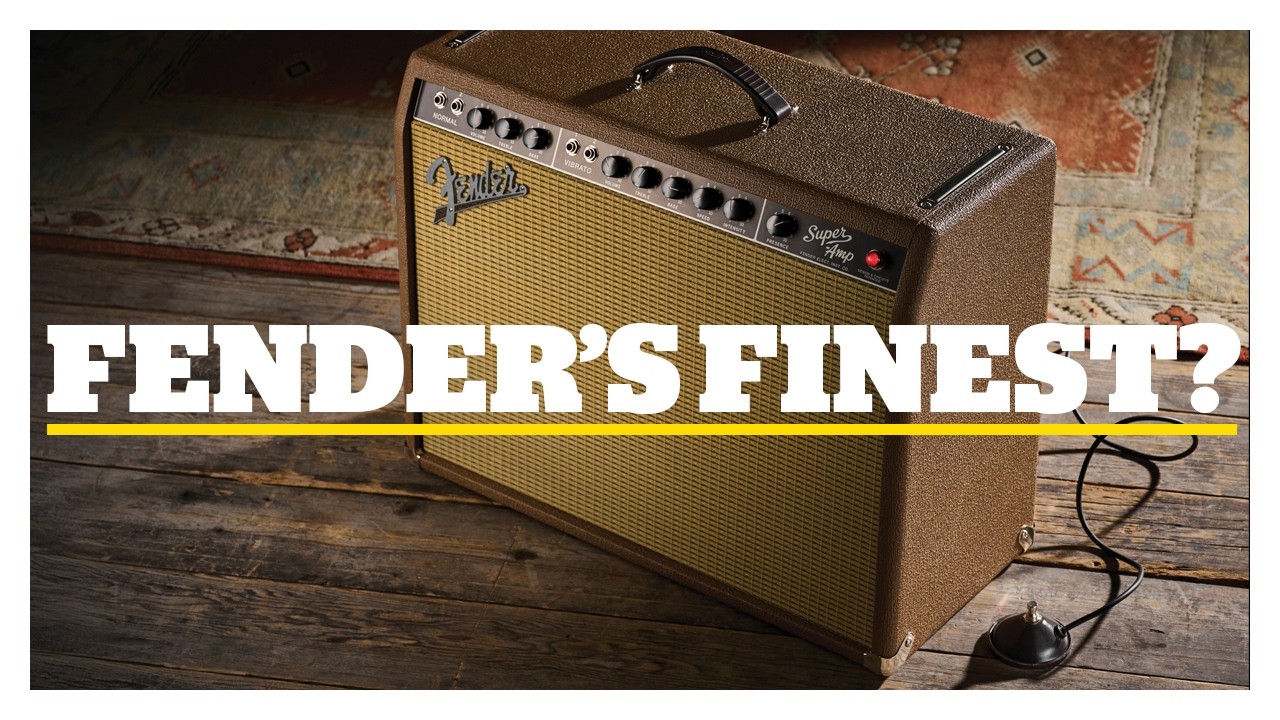
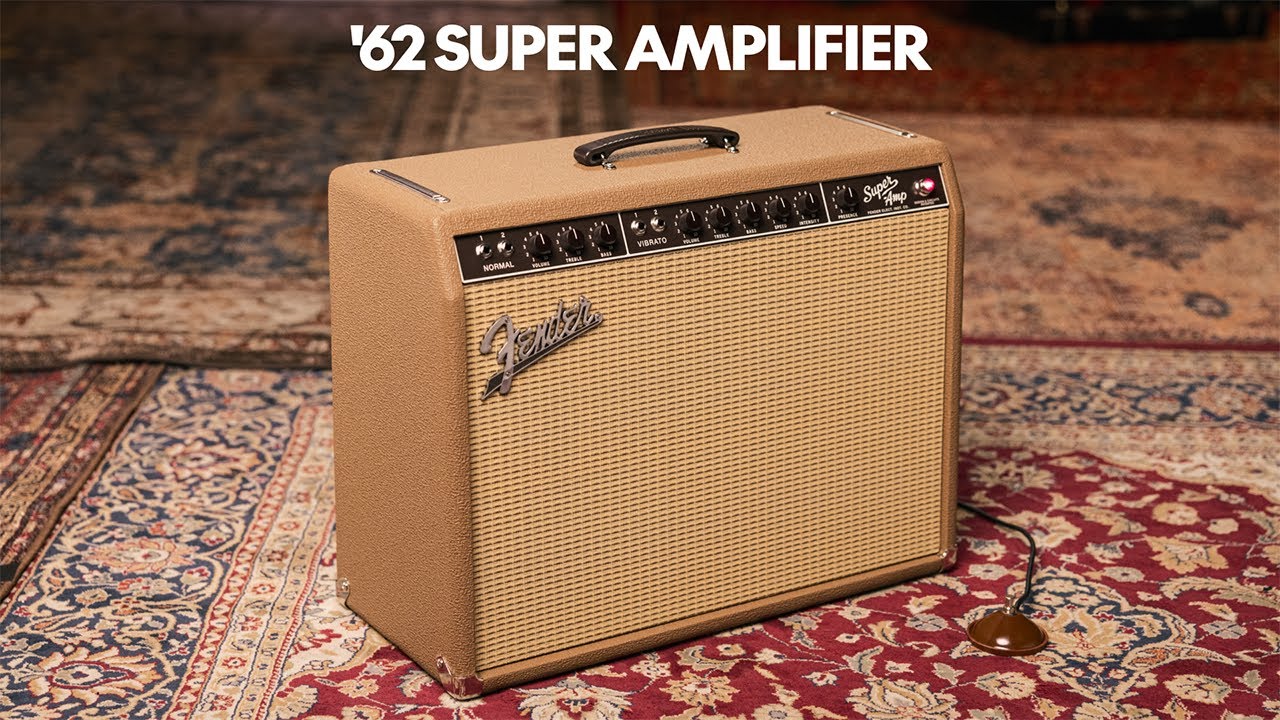
Rumored to be Leo’s favorite Fender amp, the Super featured a pair of 6L6s to produce 40 watts from two 10-inch speakers, complete with the groovy Harmonic Tremolo effect.
At the end of 2025 Fender added this reproduction of the 1962-era Super to the higher end of the brand’s American Vintage line-up, comprising reproductions of classic models hand-assembled at the California factory.
For players looking for a wider sound dispersal from their combo, while not at the expense of back issues, on paper the Super provides just the solution.
Specs

- PRICE: $2,499/£2,439
- ORIGIN: USA
- TYPE: All-valve twin-channel combo
- VALVES: 2x 6L6 output valves, 6x 12AX7 preamp valves, 1x 5AR4 rectifier valve
- OUTPUT: 40W
- DIMENSIONS: 610 (w) x 267 (d) x 457mm (h)
- WEIGHT (kg/lb): 21.7/48
- CABINET: Pine
- LOUDSPEAKER: 2x custom-designed Celestion 10”
- CHANNELS: 2
- CONTROLS: Channel 1 (Normal): Volume, Treble Bass; Channel 2 (Vibrato): Volume, Treble, Bass, Speed, Intensity, Presence
- FOOTSWITCH: 1-button included
- ADDITIONAL FEATURES: Harmonic Tremolo, cover
- OPTIONS: None
- RANGE OPTIONS: The American Vintage series features numerous classic combos from the 50s and 60s: ’57 Custom Champ (£1,409), ’57 Custom Deluxe (£2,359), ’65 Super Reverb (£2,719), and ’65 Twin Reverb (£2,109)
- CONTACT: Fender
Usability and sounds

Our Strat seems the natural choice for first dibs. Plugging into the first (high-sensitivity) input of Channel 2 reveals every bit of the classic twang in all the usual pickup selections.
There’s a deceptively broad frequency range produced by these custom-design 10-inch Celestions that’s also partly attributable to the solid pine cabinet.
As we increase the volume we begin to appreciate the classic subtle sag in response to harder playing, a virtue of the period-correct valve rectification. One can only imagine the reception this amp must have had on a music world familiar only with its low-headroom tweed forebears.

Turning our attention to a Telecaster, we find the sweeter-sounding character of this amp is a great match. And we get a gloriously gnarly rock ’n’ roll sound at around 7 on the volume. It’s tight and tough-sounding but with just enough sag to feel responsive and playful to the touch.
Feed this amp a characterful guitar, a DeArmond-equipped Gretsch in our case, and bask in the nuance it reveals. With bucketloads of woody, vintage twang on tap, we engage the Harmonic Tremolo, inspiring spirited renditions of the intro from Born On The Bayou.
If you weren’t already aware, Leo mistakenly reversed the terms ‘tremolo’ and ‘vibrato’, and rather than bow to orthodoxy, Fender didn’t relabel the effect.

In this circuit, what is labelled the Vibrato channel actually employs the Harmonic Tremolo – created by modulating the bias of the power valves – adding wide and dimensional phase shifting to the expected volume pulsations. In real terms, that adds up to a richer pulsation with a synchronised phaser effect subtly mixed in.
The negative feedback signal and fixed bias techniques used to clean up this brown-panel line achieved much in terms of increased headroom, but tech in the early 60s wasn’t quite ready to fully render Leo’s aims. And so as we increase the volume above halfway, things begin to get progressively more saturated.
Things will get loud, however, when we reach for those creamy overdrive sounds heard on the ZZ Top album, Tres Hombres, for instance.
Past 7 on the volume, the amp becomes fully saturated in a very vintage manner, which we can only really describe as ‘farting out’… While it’s certainly a distinctive sound, we enjoyed staying in the shallower end of this pool
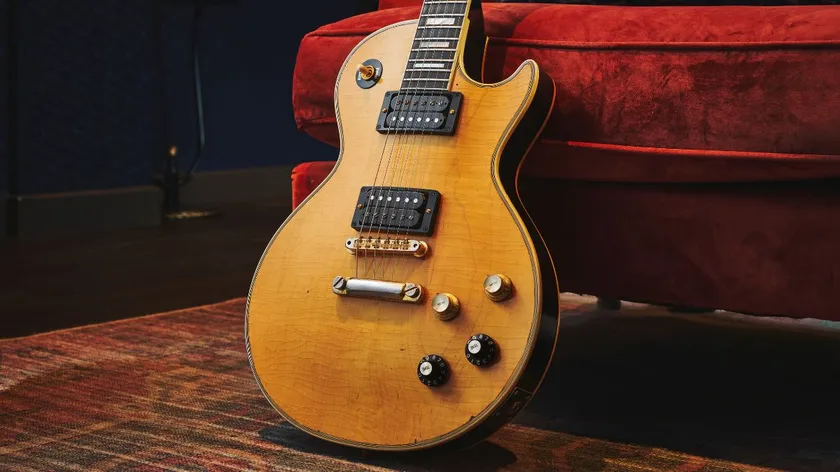
With our classic Patent Applied For-equipped Les Paul, we enter that realm with the volume around midway. Levels above that increasingly soften the transients and compress the dynamics.
Past 7 on the volume, the amp becomes fully saturated in a very vintage manner, which we can only really describe as ‘farting out’… While it’s certainly a distinctive sound, we enjoyed staying in the shallower end of this pool.
Finding the sweet spot between the feel, the tone and the volume is key to getting the most from this amp.
It would certainly prove ideal for studio work, where it can be dialed in to perfection. But despite the warm, thick tones on tap, this is still a Fender, with all the fast and clean treble you could desire, while the Celestion speakers magnify the result with responsiveness and sensitivity.
Verdict
Verdict: ★★★★½

This vibey, brown box-of-tone paints period-correct colors, from finely detailed cleans to washes of warm and sweet overdrive. With only a single volume control per channel, be prepared that, due to the lack of any master volume assistance, you only achieve lift-off at near-gigging volume levels. They would likely be very fun gigs, though, helped in part by the comparative light weight of this combo.
As effects go, Harmonic Tremolo is an inimitable time capsule of sound, and all of that 60s swirl is fully realized here. ‘All-valve’, ‘US hand-assembled construction’, and ‘solid wood cabinetry’ are three high-value ticket items that are reflected quite fairly here in this amp’s not inconsiderable cost.
Guitar World verdict: This brown-panel classic is the perfect vessel to navigate lesser-plundered sonic waters between the tweed crunch and the black-panel twang, to a place where volume meets saturation with boatloads of gooey, vintage vibe. All aboard the good ship Super. Bon voyage!
Hands-on videos
Guitarist
Fender
- Best combo amps: the best all-in-one amps for every budget
- This article first appeared in Guitarist. Subscribe and save.

