




If you want a lasting career as a guitar tech, you’ll have to know all the ins and outs of the rigs you’ll be working on. If you want to work for the biggest bands in the world, like The Rolling Stones, well, you pretty much have to be the best in the business.
Ryan Bullington started out as a guitar player and eventually got a job working for a sound and lighting company, through which he secured his first-ever role as a guitar tech in 1997. He worked his way up the ladder and eventually found himself taking care of Ronnie Wood’s guitars and amps.
“The band that we were providing sound and lighting for heard me play and asked if I wanted to be their tech,” he tells Guitar World, on a break from his duties looking after Brian Ray’s rig on the road with Paul McCartney.
“I said, ‘What’s that?’ and they told me I’d have to tune guitars for them. I said, ‘You want to pay me to tune your guitars?’ I didn’t know that was a thing.”
It was a life-changing moment that led to months on tour buses and hundreds of shows a year. He went from “making terrible money to good money” by building a solid reputation and moving from artist to artist. It’s a small industry, he explains, where everybody seems to know everybody.
Asked how he got The Rolling Stones gig, he says it came down to a network of likeminded friends.
“Four people put in a good word for me, including an amp repair guy in New York and a buddy who works for AC/DC. I got a call at home in Nashville at 4pm; they asked if I could be in LA the next morning. By 10am I was walking into rehearsal. It happened so fast. Now I do all the stringed instruments for Mick and Ronnie.”
What’s it like working for one of the most important rock bands of all time?
The most unique thing about the Stones gig is that all the guitars on the road are the same ones used on the albums.
We bring out a ton of guitars they used on those legendary songs. It’s great – I pick one up, strum a G chord and it sounds like Wild Horses, and that’s because it’s the actual guitar they used for Wild Horses.
What kind of pedals would we find on Ronnie’s ’board?
It’s the least I’ve ever seen on stage! There’s a Klon Centaur that’s always on, with the exception of two songs where we use an OCD for more gain. There’s a TC Electronic delay that’s used for a couple of new songs. Honestly though, it’s just a dry Fender Vibro King with that Klon Centaur. That’s it.

Well, they’ve always had a direct approach to tone without much extra color or modulation.
What I’ve learned is that, because it’s all stadiums, you get all the verb and delay you could ever ask for from the room. You don’t need a pedal. It’s wet enough. They’re playing old bluesy rock, but with quality guitars. All of them like low action and a straight neck. They want the guitar to have minimal fight.
What are the most useful tools in your trade?
The Orange Valve Tester is really useful. We’ve been using that a lot recently for all the spare amps which don’t quite get the love they deserve. With Brian Ray in the McCartney band, we have three spare Vox AC30s. It’s been great for getting everything to the same level of gain.
“We’re trying to make these amps sound the best they can, and the Valve Tester helps. I’m looking to get the same ratings across all the output tubes. I did the same with Ronnie’s Vibro Kings, getting them dialed in better. We wanted to soften up the front end and bring the gain down a bit.
How often should someone who plays two hours a day think about changing their tubes?
In my world the amps are on for six hours a day. I usually go about three months before I change them, unless we’re talking about EL84s, which run a lot hotter and need to be changed more often. But if you’re playing your amp for a couple of hours a day, it’s probably good to change your output tubes once a year.

With preamp tubes, you never change them unless there’s a problem: it might be a microphonic tube or you just might not be happy with the tone. There’s a lot you can do by swapping tubes instead of turning knobs.
What else makes your job a lot easier?
I used to joke that somebody needs to invent a string stretcher because my hands would hurt so bad. Eventually somebody made one and it became one of my favorite things – my hands no longer hurt!
My measuring tools are also important. Some people do it by eye, but I’ve worked for musicians who like things exact. Peter Frampton, for example, is very meticulous. You need to give him numbers, you can’t say ‘It’s close or about this.’ He speaks in a very clear language. Working for people like that has upped my game. Measuring takes all the guesswork and opinions out of it. You’re working with facts.
What are the most challenging onstage scenarios you’ve found yourself in?
There have been several times where the rig has gone down in the middle of a song in front of 60,000 people. You can’t panic, even if everyone else is – people might be looking at you or screaming at you. You’ve got to get in the zone while blocking everyone else out. It’s about thinking clearly.

This job can be nerve-racking, especially if you know there’s a dodgy piece of gear limping along. You’ll want to know all your weak points in the signal path – they’re the first places to start looking. Sometimes I lie in bed thinking about the signal path – if something failed, how would I fix it?
My goal is to know about the problem before the player tells me there’s one. To do that, I listen to everything on a note-by-note basis, comparing it to the last show. Context is how you know something’s off.
Have you ever had any strange setup requests?
Keith Urban once told me his amp sounded too blue. I remember thinking, “There’s no blue knob here, bro!” But usually it’s straightforward. Guitar players and guitar techs all love hearing great tones. I guess the difference is that pro players earn enough money to use gear we all wish we could own!
One of the best parts of your job must be playing rare guitars steeped in history. Which have been your favorites?
There’s a black Zemaitis that Ronnie used with The Faces – it’s the Stay With Me guitar. We have it on the road with the Stones for tracks like Monkey Man. Us backline techs will jam for an hour to let the sound crew get their stuff together, and that’s the guitar I choose. It’s in open E tuning – it always has been – so I play slide while walking the runways, checking all the monitors.

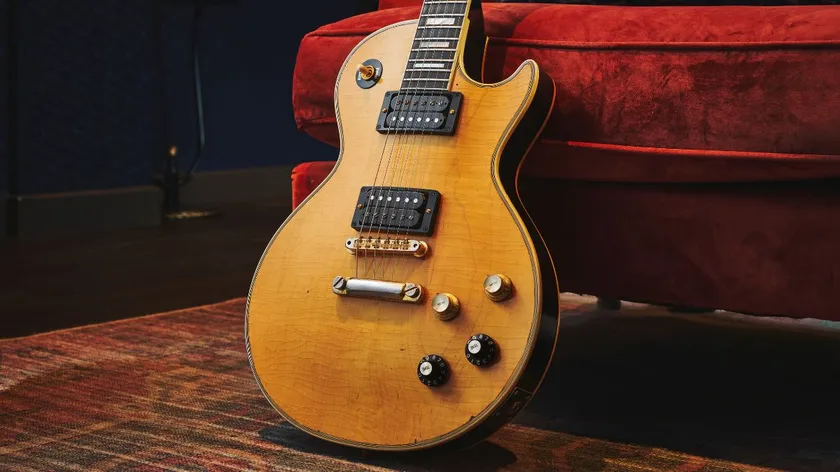
I also love Ronnie’s 1956 Les Paul Special in TV Yellow. It was given to him by Jesse Ed Davis when he was playing bass for that short while. I don’t know what Jesse used it on, but when we made the last record we had over 100 amazing guitars – all of Keith’s, Ronnie’s and Mick’s – and it’s the one I fell in love with.
To experience this stuff for yourself is something else. We often hear the phrase, “There are songs in that guitar,” and that’s true of the Les Paul Special. Songs just come out of it.
And if there’s one amp to rule them all, which would it be?
I think the greatest circuit of all-time is the tweed Twin/Bassman, which is basically the Marshall circuit. My favourite amp is Keith Urban’s Dumble Overdrive Reverb. I think it’s serial number 59, built in 1978. That amp is special.
It used to be John Mayer’s; I think it’s the one he used on Gravity, and Keith got it after. It was originally made for Jackson Browne. I was blown away when I first heard it. It makes you play more fluid and liquidy.
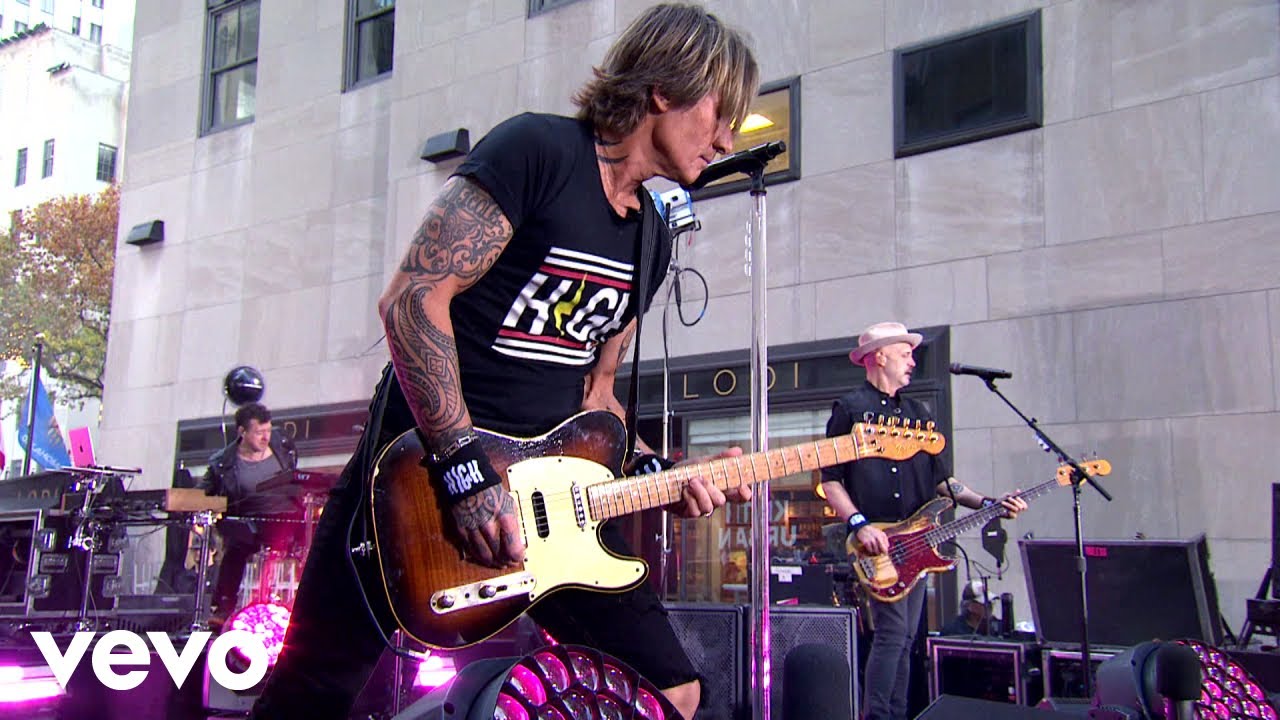
I’ve heard Keith play through every amp known to man and he sounded different on that one. I love the Dumble circuit. Not everybody is a fan, but I am because I know what it’s capable of.
You’ve seen a lot of pedals over the years. Any favorites?
It’s hard to say – there are so many out there. You can get the job done with just about any pedal. I did a Peter Frampton tour in 2013 called the Guitar Circus because every city had a big-name player come sit in with us. I think there were 26 guests in total, and over half of them had a Klon Centaur on the pedalboard. So, shoutout to the Klon, I guess!
I met a guy while we were doing the Stones record and he had this pedal out called the Love Bomb. It’s even bigger than a Big Muff, but it sounds awesome. It has a little tube inside. I have one with me right now. It’s a fantastic pedal, man!

