


Robert ‘Bubby’ Lewis remembers his first Winter NAMM Show like it was yesterday. It was 2003, he was 17 going on 18, and he had been playing bass for a couple years. He was there with his older sister, the drummer Benita Lewis.
“I was at the Ken Smith booth playing with Etienne Mappé, and I had my eyes closed,” Lewis told Bass Player back in July 2017. “I didn't know anybody – I'm from Flint, Michigan, so I just knew names. I didn't know what people looked like. I opened my eyes, and I saw this big security-guard-looking dude staring at me.
When I put the bass down, he grabbed me by the shoulder and said, ‘Come with me.’ I’m trying to text my sister, like, ‘Help!’
“So he walks me down to the Mike Tobias booth and makes me sit down and play. When I finish, Mike says that if I ever wanted a bass guitar, he'd be happy to build me one. The security guard tells me I sound great. I thank him, and then he says, ‘I'm Andrew Gouche.’
“I was like, ‘Wait... freakin’ Andrew Gouché?’”
Thanks to Gouché, Lewis landed the bass chair with Snoop Dogg in 2007. Shortly after he moved to LA. for good.
Now a familiar MTD-booth presence at the annual NAMM Show, Lewis spends most of his time on the road and in the studio, having also worked with the likes of Jhené Aiko, Dr. Dre, Lupe Fiasco, The Game, Warren G, and Kurupt.
Lewis may have built his reputation as a gospel/hip-hop/R&B bassist, but he’s also constantly refining his knowledge of soloing over complex changes, and every facet of being a working bassist in the 21st century.
“Every time I plug in my bass, I start soloing. With no music behind it, it sounds like a bunch of rubbish. But I hear chords in my mind and I try to solo over them. I explain that to people, and they're like, ‘You don't practice songs?’ Nah. Sometimes I just sit down and start playing whatever I'm hearing.”
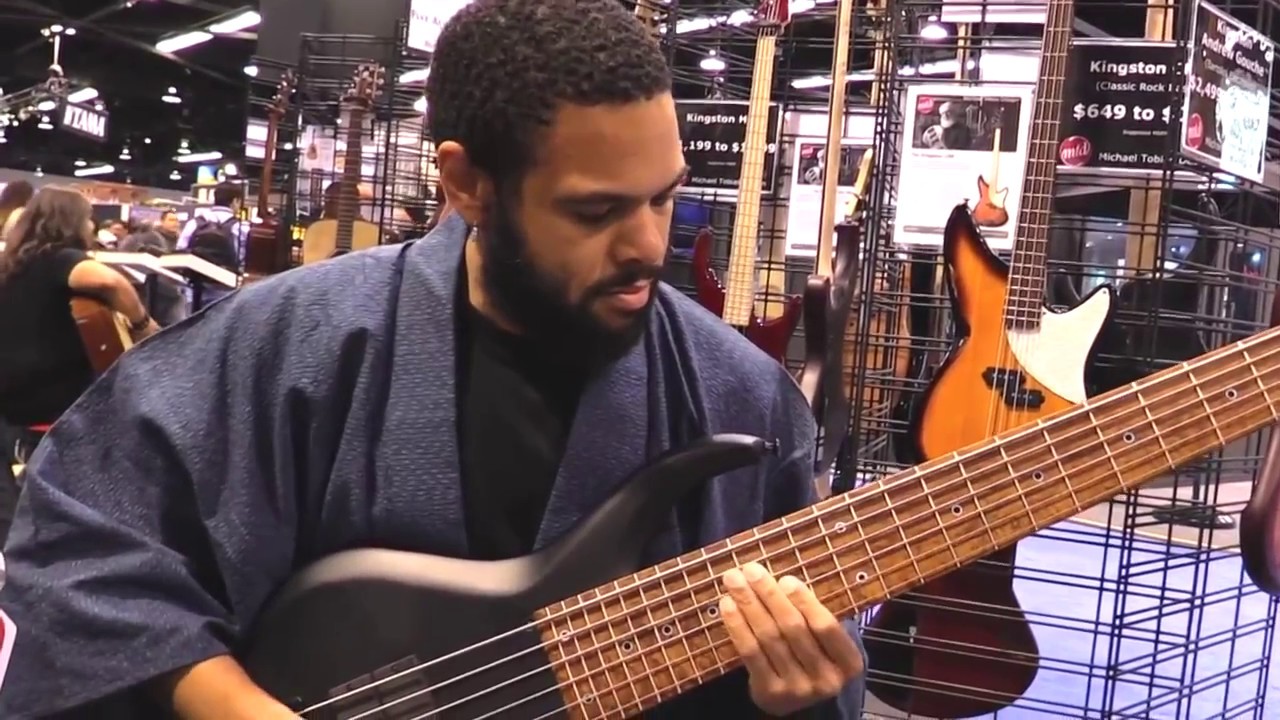
You don't warm up over chord progressions?
No. If it sounds like random notes, well, that’s because it is random notes.
I've seen the crazy fingerboard stretches you do.
Somebody wrote me and asked me why I do all those stretches if they can't ever be used, and I was like, ‘Speak for yourself!’ Maybe you can't use them, but I do, and so do lots of my friends, like Hadrien Feraud and Federico Malaman.
Do you prioritize playing what you hear instead of muscle memory?
Muscle memory is one thing, but knowing what you want to play, and executing it, is another. Some guys play scales or modes when they start soloing; everyone has their own method, and there's no right or wrong way.
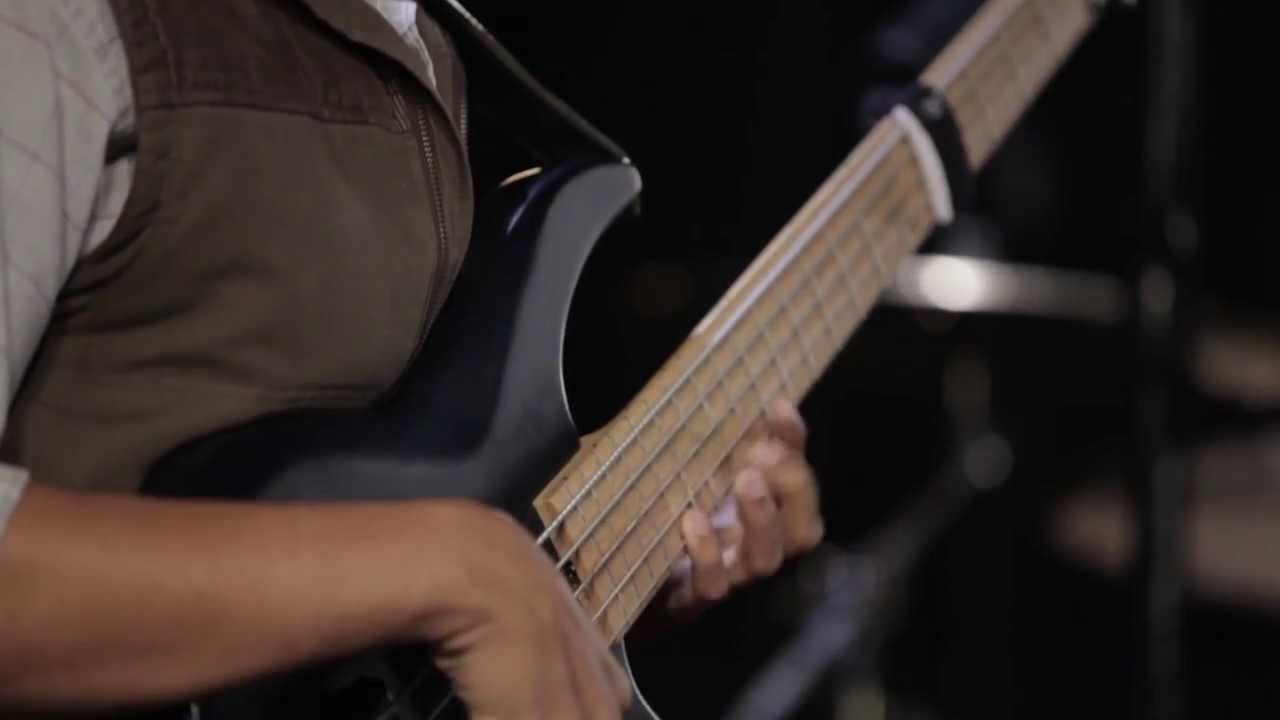
Personally, I get a rush from trying to create melodies as chords go by. It's much easier to think, ’We’re in E minor, so let me slide up on the G string to the 12th fret and play some E minor pentatonic licks.’ But I like the challenge of coming up with a melody on the fly.
What inspired that connection between your ear and your fingers?
When we were growing up in Flint, I used to be in awe of my boy Eddie Brown. He would be looking at the celling and playing all this stuff on organ. I couldn't figure out what scales he was using, but it wasn't a matter of scales – he was hearing stuff and just playing it.
And Allan Holdsworth, may he rest in peace, he saw dots on his guitar neck that represented all the notes he could play over a particular chord.
Frank Gambale, my other hero, said the same thing. If you know where the notes are, you can play whatever you want.
What’s the best way to feed your mind new ideas?
If you listen to the same stuff, you’ll hear the same stuff. I grew up in church, and I was listening to a lot of gospel, funk, R&B and hip-hop, but when I started checking out rock and country, it changed how I heard things. Listening to Indian music really affected me.
How did you get into Indian music?
When I discovered there was so much outside of Western music theory, I began listening to a bunch of raga, qawwali, and sufi music, and after that, I went on this tangent, studying classical Indian music and classical Arabic music.
How did it influence your playing?
It changed the way I hear stuff. Somebody will ask me to play on a jazz tune, and yeah, I could give it a Charlie Parker approach, but instead I might hear what Bade Ghulam Ali Khan would do. That's how it happened it for me.
How important is it to stay open to different types of music?
If you want to progress and expand, you have to have an open mind. A lot of my homies diss punk rock and metal, but try playing those classic Robert Trujillo basslines while jumping around onstage with Suicidal Tendencies. Thundercat had Mike Muir call me for a couple of gigs in Japan, and it was a workout!
