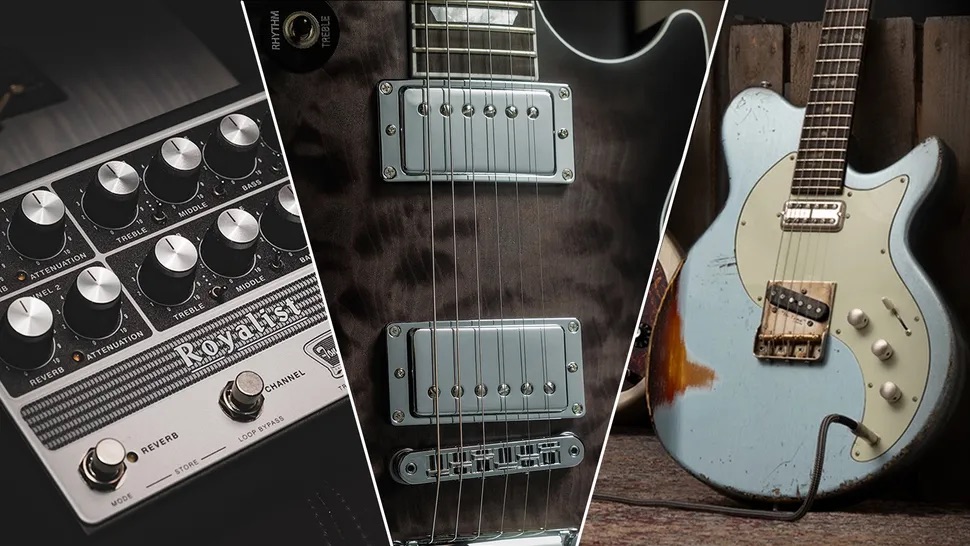


Giovanni Loria is something of a legend in the boutique-gear world. You might not find his products in your strip-mall music store, and many might say that’s part of the appeal. His operation is as bespoke as it gets: the Woodstock, New York-based builder works on just one single product at a time.
His hand-made and hand-wired amps have been used by artists as revered as Guns N’ Roses, Muse, Aerosmith, the Black Crowes and At the Drive-In – the kind that need no help in the tonal department and still choose to plug into a Black Volt on stage and/or in the studio.
His vintage-inspired designs are also highly sustainable, with Loria sourcing reclaimed American hardwoods up to 100 years old for his heads and cabinets, as well as old Navajo blankets and rugs for aesthetically charming grill cloths.
It doesn’t stop at amps, either. Black Volt produces pedals and guitars – the latter of which sharing the same ethical approach to materials, as well as the reassuring romance of nostalgia, focusing mainly on Tele- and Firebird-style shapes.
As he explains on his brand’s website, the Black Volt philosophy is the very antithesis to “mass production” and instead nurtures “a conversation between builder and player.”
What were you doing before you got into building amps?
I was born in Fullerton, California, in the shadow of the Fender factory. I moved to Hollywood when I was about 20, playing in bands while making jewelry and painting.
I also wanted to become a brain surgeon, so I ended up studying biology with a focus on how electrical charges could go through a patient’s nervous system to help them remember things

I was trying to get into people’s brains using electricity – and now I’m working on electrical circuits that affect our bodies in a different way. In between that, I was playing with Black Eyed Peas, Jack Johnson and Everlast.
When did you begin your journey as an amp designer?
I started taking amps apart and manipulating circuits, even though I didn’t have enough experience to understand. Friends started asking me to restore and modify their gear. A vintage shop in Los Angeles asked me to be their tech, so I started collecting five amps a week to repair at home.

I wasn’t qualified to do that and sought out old-school mentors to get help, like Aspen Pittman, who wrote The Tube Amp Book and invented Groove Tubes, which eventually got bought by Fender.
Launching Black Volt in 2014 was a very organic move. I’ve always been a hands-on person. My family had a huge woodshop in southern Italy. I guess building is in my blood.

Tone always comes first, of course, but another big draw is your commitment to ethical sourcing.
I think the sustainable concept gets lost on most people. I’ve always loved the idea of recycling
I think the sustainable concept gets lost on most people. I’ve always loved the idea of recycling. I’ve seen a lot of deforestation, especially on the West Coast.
It’s devastating; there’s nothing but tree stumps and trucks, like a nuclear bomb went off. Instead of new wood, I prefer to use the materials already around us. Something like recycled furniture can be such a blessing.
I recently found a wood supplier who had old tabletops made out of South American mahogany from the ’60s. A furniture manufacturer went out of business and left it all in storage. It was such amazing wood – it sounded great and was already 60 years old.


The Crazy Horse Custom is your flagship amp. What inspired its sound?
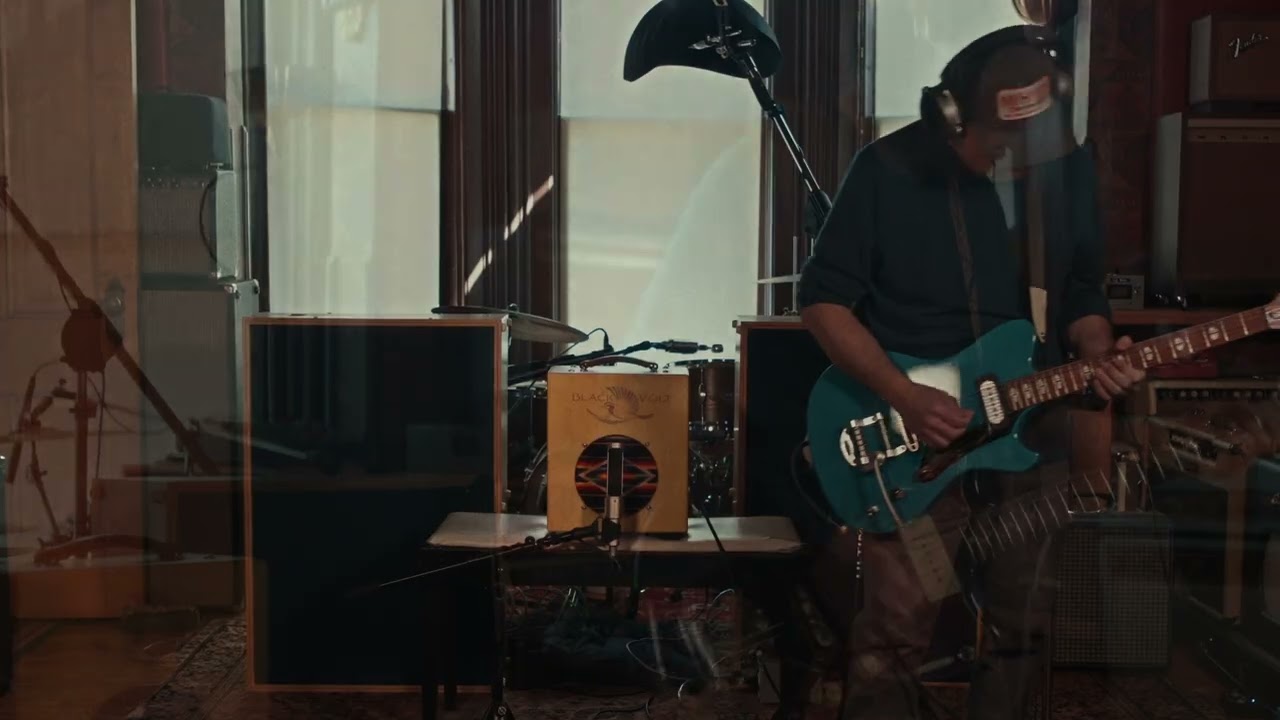
It’s a 5E3 circuit that I modified. I wanted to use solid pine, which is what Leo Fender did with his early Telecasters, known as Pinecasters. A lot of the houses around Southern California had old pine on the roof rafters and panels, stuff that had been cooking in the sun for decades. The cabinets would resonate in a specific way – the closest I could get to classic tweeds.
In terms of inspiration, I’ve always loved chimey Fender cleans. You can overdrive them with pedals, but I’m a purist. I went back to the source and dug into Marshall, hoping to introduce more grit. That’s what the rockers used, from Jimmy Page to Jimi Hendrix. It had to be a pure and honest way of bringing Fender and Marshall tones together.

Clearly you’re doing something right. Some huge names are using Black Volt.
A lot of it came from word of mouth. Sometimes it’s just a random phone call. That’s how it happened with Rich Robinson; I had no idea he would be calling.
He sent his tech to the shop to borrow things. He then started sending me videos of him playing a 1964 Firebird through my Crazy Horse, making it sound glorious.
With Slash, I met him after working on his 100-watt Silver Jubilees. One time I got invited to his house to bring some guitars, pedals and amps, which was terrifying. When I did, he plugged into all of my stuff. He was so humble and cool, so real and inquisitive.

How’d you end up getting your amps in the hands of U.K. artists like Muse and Biffy Clyro?
Black Volt is all about that extra 10 percent most people never reach
They came through producer Rich Costey. He asked to borrow one of my amps for a Muse record in 2015 and then told me it sounded like no other amp. He also used it with At the Drive-In, who made a whole record with a Black Volt and a Vox AC15. And then the same thing happened with Biffy Clyro, which led to Simon Neil ordering the Brooklyn Special, which is the 60-watt head and cab.
Black Volt is all about that extra 10 percent most people never reach. I go into the fine details – the layout, the lead dress, the types of components like solder. Specific types of specific metals. I’m good friends with the guys who inherited the Dumble brand.
I’ve known Drew Berlin for over 10 years, and he’s brought me amps belonging to Eric Clapton and Carlos Santana to work on. He once told me that Alexander Dumble was a big fan of my designs because they’re unique and original instead of copies of his stuff.
You make an overdrive, a fuzz and a treble booster. Was it easy to transfer the knowledge from amps to pedals?
The FDR FET overdrive is the most unique; it’s the one everyone gets. Rich Robinson has four and uses them all the time
Pedals were an easy transition because I build my pedals like amps. It’s the same kind of circuits and components. The FDR FET overdrive is the most unique; it’s the one everyone gets. Rich Robinson has four and uses them all the time.
The fuzz is great and has a transistor circuit so gearheads can swap them out by hand. You can choose to go for a Mullard OC75 or a silicon thing or whatever. And the Silver Bullet is a Rangemaster-style boost.
Designing and building guitars must’ve been a very challenging move.
I wasn’t known as a luthier, so yeah, it was completely different. During the pandemic, I partnered with Carlos Lopez, who was a Fender Custom Shop master builder for 15 years and now owns Castedosa Guitars.
I told him I had all these old woods for guitars but didn’t have enough experience. We built a bunch of T-styles in his home shop. I’m all about the golden age – the ’50s and ’60s stuff everybody wants. Having Carlos instruct me was a dream.
I was fortunate; there was no other way I’d be making Custom Shop-level guitars in just a few years. The next thing for me is to do a Catskills collection, using woods sourced around me. The plan is to avoid launching new products regularly and stick to the things that work.
- This article first appeared in Guitar World. Subscribe and save.

