



Is there a more unassuming rock star than Leo Lyons? In an industry often filled with braggarts and blowhards, the soft-spoken 82-year-old bassist lets his lifetime achievements do the talking. And what achievements they are.
Having partnered guitarist Alvin Lee – aka ‘Captain Speed Fingers’, for self-evident reasons – at the dawn of the 1960s, Lyons shipped British blues across the water with Ten Years After, before igniting Woodstock with the warp-speed rendition of I’m Going Home that stands among the festival’s most electrifying moments.
Reputationally, Lyons was set for life that day in August 1969. But in truth, Woodstock is just one chapter in the folklore of a man whose serendipity has often seen him dubbed ‘the rock ’n’ roll Forrest Gump’.
Today, the bassist fills our dictaphone with his war stories, leading us from Hamburg’s Star-Club to the studio control rooms where he produced history’s biggest bands. But it all starts with a kid spinning vinyl records in the Nottinghamshire market town of Mansfield.
When did you sense you might become a musician?
[Laughs] At nine years old? In a band, it’s 98 per cent rejection. But you have to keep going. And as long as you’re prepared to give up everything – girlfriend, car, place to sleep, shortage of food, et cetera – then that dream sustains you. It got to the stage where everybody else in the band left and it got down to just Alvin and I.
There were a few moments where I veered a bit. I started playing sessions. And everyone thought I was mad to stick with the band because you could do two or three sessions in London – or go all the way up to South Wales with the band to play on the end of the pier for much less money. But I stuck with it. And nine years later, we started to make a living, rather than an existence.
How did the bass guitar become your instrument?
My aunt and uncle had a wind-up gramophone, so I listened to Jimmie Rodgers – the singing cowboy, not the blues player – and Huddie Ledbetter, and I thought, ‘I want to play guitar’
My aunt and uncle had a wind-up gramophone, so I listened to Jimmie Rodgers – the singing cowboy, not the blues player – and Huddie Ledbetter, and I thought, ‘I want to play guitar.’ So I got a guitar and went for lessons, but then my teacher introduced me to a few of his pupils who had a band.
We had four guitar players – and a guy playing drums with sticks on a table – and we needed someone to play the bass notes. I just loved it. Very soon, I’d sold everything else I had and bought a Höfner bass on hire purchase.
You started out as The Jaybirds – and had a 1962 residency at Hamburg’s Star-Club.
We were what you might call the ‘first wave’ of British bands: the weekend we arrived was the last gig The Beatles did at the Star-Club. We had to play an hour on, an hour off, seven hours a night. So you extended the songs. And that’s how we started jamming. Without that, I don’t think we would have developed at all.
You and Alvin played so aggressively off each other.
Yeah, it was like a duel. I remember producing a record for Leslie West once. He wanted me to play bass on it as well. Leslie was ill – he was having his leg amputated at the time – so I tracked the songs without him. He came in and listened to them, and said, ‘Yeah, they’re fine, but I thought you’d play over-the-top like you did with Ten Years After.’ Because that’s really how Alvin and I played: over the top. But that was the element that made it successful.

What prompted the name change to Ten Years After upon your return to the UK?
We got a manager who said, ‘The Jaybirds is a bit dated now. Go home for the weekend then come back with a new name.’ Well, I was reading the Radio Times and there was an advertisement for a book called Suez Ten Years After, about the Suez Canal. We’ve said all sorts of stupid things in interviews – that it was a tribute to Elvis – but that’s how the name really came about.
How did the band’s hard-blues sound evolve?
When Alvin and I first got together, we were playing covers. But by the time we got to Hamburg in ’62, we were heavily into Duke Ellington-type jazz and a little bit of country, like Chet Atkins. We both liked Elvis – he liked Scotty Moore and I liked Bill Black.
We were also into Muddy Waters, Howlin’ Wolf, Lead Belly and Brownie McGhee. So when the blues scene started happening, we began throwing in a few blues songs. We’d do one set of the pop stuff, then our own stuff.

That must have ruffled a few feathers at the time?
I remember one ballroom manager saying, ‘I’ll pay you, lads, but you can’t do a second set – the audience will kill you.’ Because it was two guys at the front and the other 500 sat down saying, ‘Play something we can dance to.’
I remember, as I walked offstage, another manager said to me, ‘Horrible! It’s bands like you that are going to kill the ballroom business!’ There was another show up in Manchester, and Jimmy Savile was the manager, and he said, ‘Don’t get me wrong, lads, I like it – but you’ll never get anywhere playing music like that.’
It must have been a tough time…
I managed the band from 1962 up to 1966 – because no manager wants to take on a band that’s not making any money, where [all the promoters] are saying, ‘They’re crap, they won’t get anywhere, and if you send us a band like that again, you’re going to lose the booking.’
But I was stubborn. So was Alvin. And as long as you believe you’ve got something, you don’t mind sleeping on the floor. A lot of kids in bands now say, ‘I want to do this, but I don’t want to do that.’ Forget it. You can’t be that picky. I did tours of Europe sleeping in a tent to save money. I asked this family if I could pitch my tent in their garden. And that helped me get my first P-Bass.

When did you feel the tide start to turn?
It wasn’t arrogance, but I still believed, ‘You’re wrong, we’re going to do something.’ And we gradually transitioned. We couldn’t play at ballrooms, but we started to get a little bit of a name in the blues clubs up and down the UK. Then we went over to Scandinavia and Europe, and what turned the corner for us was all the people who saw us in Denmark, Sweden, France, Germany – everywhere – coming to London in ’66.
We’d managed to get a residency at The Marquee, but the press wasn’t interested, no record label was interested. But all those people were lined up all down Wardour Street and round the corner. Then somebody had to notice, and we got a record deal.”
When you returned to the UK after the Hamburg period, you traded your Precision for the ’62 Jazz you play to this day. What was the appeal?
At first, I think I was just attracted by the chrome hardware. It looked like a ’50s car, really cool. And the neck was slimmer. The Jazz had a little bit more tone variation, too. And that’s what I’ve stuck with. Although, when I played on a record last week, I used a P-Bass. Those two, you can’t beat them. Even though I’ve got another 26 basses!

What else was in Ten Years After’s rig?
When we started, Alvin and I had AC15s and our rhythm guitarist had an AC10. Which obviously wasn’t enough as we started playing larger places. So we went on to stereo amps and I started building my own 18-inch speaker cabinets. There was a book about loudspeaker design, and I went through the whole damn lot!
A friend of mine got hold of Jet Harris’s AC30 Super Twin, and when he emigrated to Canada, I bought it off him.
We played the Fillmore West then the Fillmore East. Went up to Phoenix, played with the Grateful Dead. Then Huntington Beach, Los Angeles, the Whisky a Go Go. I was blown away by California
Then we met up with Charlie Watkins, a lovely man, and he said, ‘Whatever gear you want, you can have it.’ Next, we went to America and, of course, there’s no backup there. So we bought Marshalls. I had two 100-watt heads and four 4x12 cabs, and Alvin had the same, although he only used one head.
How did your first US tour of ’68 come about?
When our first record was released, [promoter] Bill Graham sent a telegram saying, ‘If you’re coming over, I’d like to book you in at my venues in San Francisco and New York.’ On the strength of that, we went over.
We played the Fillmore West then the Fillmore East. Went up to Phoenix, played with the Grateful Dead. Then Huntington Beach, Los Angeles, the Whisky a Go Go. I was blown away by California. The weather. The movie stars – I was a big fan of Westerns. And I must admit: all the girls. We didn’t make money from that tour, but the big score was New York and I’d say we captured that city – or made in-roads there – straight away.
So it was a dream come true. When I came back to the UK, I was living in Notting Hill Gate, which wasn’t very fashionable then, in a basement flat. And I was almost in tears. But I think it was only a month or so later that we went back again.
The band’s tearaway performance of I’m Going Home at Woodstock was a genuinely iconic moment. Did you have any sense at the time that the festival would be an era-defining event?
No, we were playing festivals all over the place. On that particular tour, we’d already done the Newport Jazz Festival and played with Nina Simone and Dizzy Gillespie. I didn’t watch TV much, so Woodstock just looked like another gig, and a bit of a pain-in-the-arse gig, too, because when we got to New York, our American manager told us what a disaster the roads were. It was dangerous.
The stage was covered in cables with water in between them. The humidity was so high that you couldn’t stay in tune. It wouldn’t happen now. But it was incredible. And it sustained our career when that performance got into the movie. That will go on my gravestone: ‘Here lies the man who played Woodstock.’
What’s happened in your world more recently?
After Alvin quit Ten Years After, I lived in Nashville for 16 years as a writer, did a bit of engineering, not so much playing. I produced Leslie West and Savoy Brown, things like that.
People write to me, pretty much every day, asking, ‘When are you coming back?’ So we may do something next year.
Then [in the post-millennium], we put Ten Years After back together with Ric [Lee, drums], Chick [Churchill, keys] and Joe Gooch, who is a great guitar player. But how can I say it? Where they wanted to go, and where I wanted to go, were totally different. It’s not an unfamiliar story.
So Joe and I went on the road as a band called Hundred Seventy Split. We’ve put out five or six records. But last year, my drummer [Damon Sawyer] died. He had a brain tumour – it was very quick. So I’m just taking some time out, cancelled this year’s work. People write to me, pretty much every day, asking, ‘When are you coming back?’ So we may do something next year.
Are you surprised you’re still an active musician after all these years?
When I was 27, I thought I was going to retire from the road. But it’s a drug, you know? You keep going back. And the older you get, the more stupid you think you are [to still be doing it]. Because it’s not easy. I’ve done it at the top, and I’ve done it in a van. 50 years on the road and back in the van – it takes some stamina!
The whole music business has changed so much, but occasionally something [real] still breaks through, like Joe Bonamassa or Amy Winehouse. So I’m sure it will swing back around.
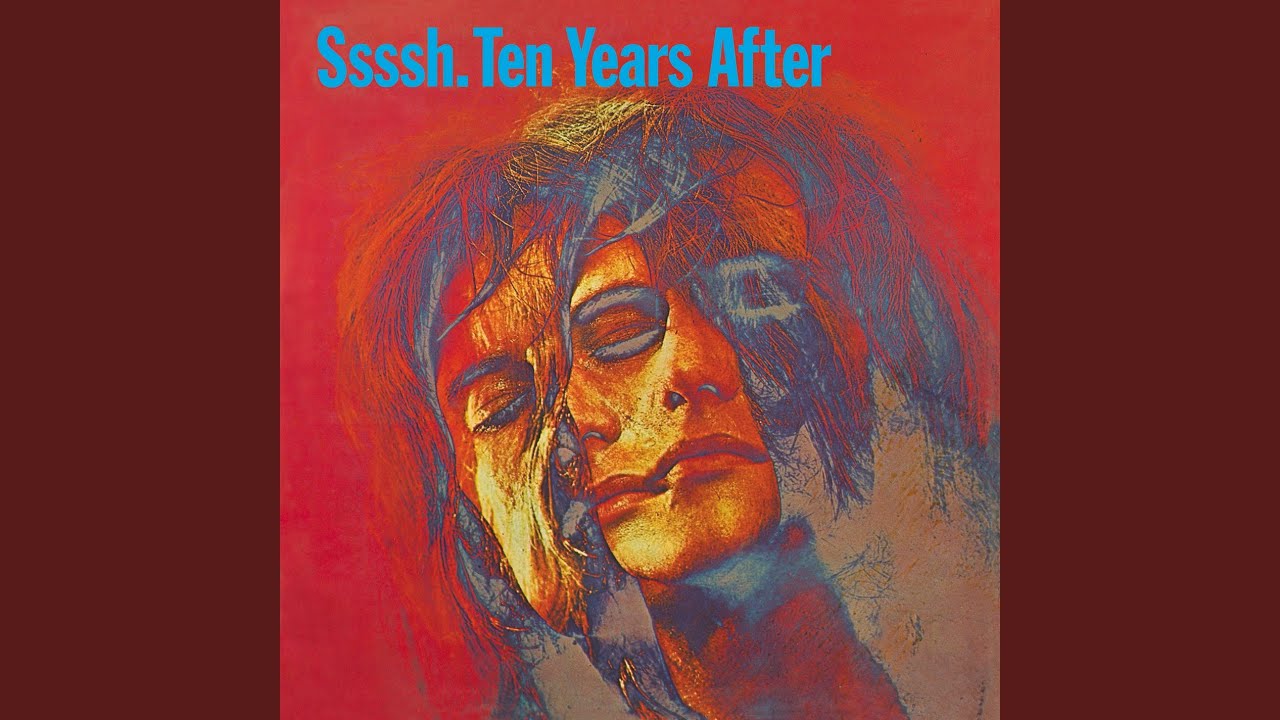
- Ssssh (3CD Deluxe Edition) is out now via Chrysalis.
- This article first appeared in Guitarist. Subscribe and save.

