


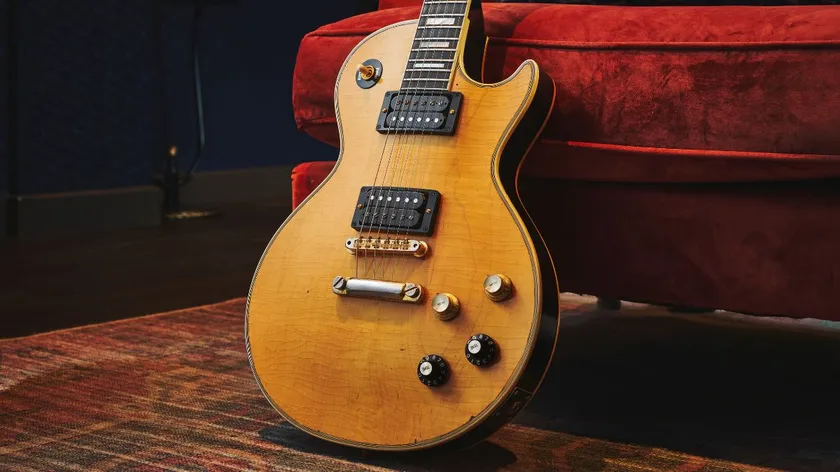


After quitting Kiss in 1982 due to his heavy drinking, drug use and stifled creativity, Ace Frehley was seen as a liability in the music industry. He thought leaving the band would be fruitful, but things hadn’t gone to plan. Despite his influential guitar style, swagger, showmanship and songwriting ability, no record company would touch him.
By 1984, Frehley had begun to sober up. He connected with bassist John Regan, guitarist Richie Scarlet and drummer Anton Fig (who had played drums on Frehley’s ’78 solo record and Kiss’s Dynasty and Unmasked) and formed what would become Frehley’s Comet.
Frehley also had tunes. Regan and Scarlet helped him refine songs like Breakout, which dated back to Frehley’s Kiss days and had been co-written by Kiss drummer Eric Carr.
But that wasn’t all, as Frehley was also working with songwriter Chip Taylor on another soon-to-be classic, Rock Soldiers, based on Frehley’s newly adopted “say no to drugs and alcohol” lifestyle – and a certain car chase through Connecticut involving a DeLorean.
But Frehley needed a record deal, and no-one came calling – except Johnny Zazula’s Megaforce Records. Even so, Megaforce only wanted Ace because a young Eddie Trunk, Megaforce’s vice-president at the time, vouched for him, resulting in a six-album deal and the initial sessions for 1987’s Frehley’s Comet.
With Eddie Kramer in the control room and a reshuffled band consisting of Regan (bass), Fig (drums) and Tod Howarth (guitars), who replaced Scarlet after his drug-related firing, Ace hit Right Track Recording Studios in New York City and reeled off one of the finest studio albums of his career.
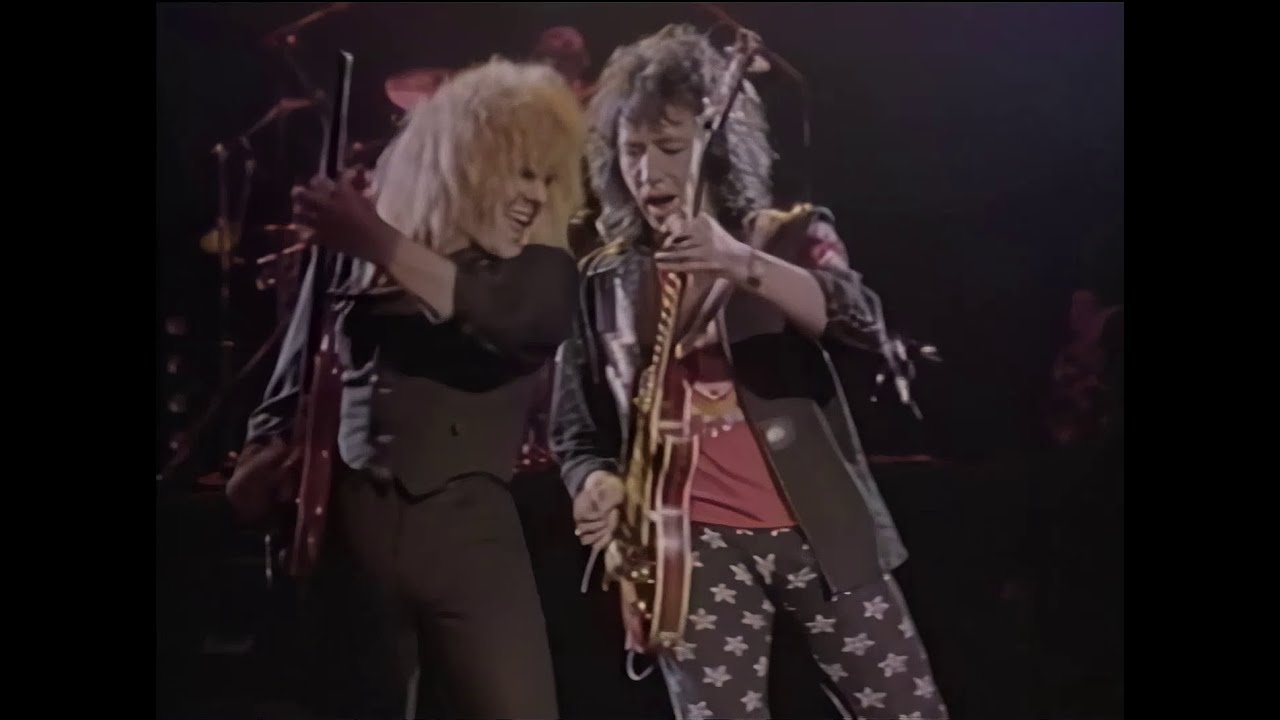
On the strength of songs like Rock Soldiers, Breakout and Calling to You, Frehley’s Comet proved that Ace was a viable commercial entity amid the ’80s hard rock and glam-metal scene. Now his influence wasn’t only in the past but on full display across stages and on MTV, the latter of which was new to Ace, too.
Frehley’s Comet nearly went gold upon its release – and many, including Trunk, have called for a re-evaluation, meaning it’s widely believed that if it didn’t go gold in the ’80s, it sure as hell has gone gold by now. But no matter, as Rock Soldiers echoed, Ace was back – and just in time, as his album was in direct competition with Kiss’s 1987 album, Crazy Nights.
It might have taken me several years after I left Kiss to put that record together, but I was – and I am – happy with the way it turned out
Frehley’s record didn’t outperform Kiss’s, but it did leave Gene Simmons and Paul Stanley wanting what they once had while knowing full well they wouldn’t get it… yet. As for Frehley, he was just happy to be back in action.
“That album was the first after I left Kiss,” he said. “It took me a while to get my act together, because I was getting off drugs. But in the end, it was a good record. It might have taken me several years after I left Kiss to put that record together, but I was – and I am – happy with the way it turned out.”
Why did you choose John Regan and Richie Scarlet for the initial version of Frehley’s Comet, and why did you replace Richie with Tod Howarth when it came time to record?
I met John at Northwick Studios. I was impressed with his bass playing, and I asked him to be in the band, which really worked out. And with Richie Scarlet being in the band, I was in the process of getting sober, and Richie wasn’t sober. I talked to John about it, and he said, “Let’s get somebody that doesn’t get loaded.” So I fired Richie and hired Tod. Richie was a showman and a little wilder than Tod, who was a little more reserved. But Tod is a talented guy.
Eddie Trunk has a big hand in Frehley’s Comet being signed to Megaforce Records. Did you have trouble getting a deal before then?
Not really. Once Johnny Zazula, who passed away a few years ago, heard the demos of our stuff, and Eddie said he knew me well, I got signed. Eddie was vice president of Megaforce, so they gave me a shot, and the record was a success.

You co-wrote Breakout with Eric Carr while Kiss was recording Music from The Elder, but you recorded it for Frehley’s Comet. What’s the story there?
I actually went to Eric’s apartment, and he was fooling around with that riff, and I just took it to the next level. I kind of rewrote the song and added some guitar parts. I think I wrote most of the lyrics, though Eric might have written half of them. I don’t remember the exact breakdown with the lyrics, but I know Eric came up with the riff, and I worked on it from there, and we finally recorded it for Frehley’s Comet.
How about Rock Soldiers, which has become a signature song for you?
[Singer/songwriter] Chip Taylor came to my house, and we wrote that together. Rock Soldiers was originally called “Just Say No.” I was going to AA, and I wanted to do a song about sobriety, and Chip said, “Why don’t we do a song called ‘Just Say No?’”
I think that was a slogan people used at the time to say no to drugs. So we started the song with that, and then, when we were recording it, Chip walked into the room and goes, “I’ve got a brainstorm. Let’s try singing “Rock soldiers come, rock soldiers go.” So we switched it from “Just Say No” to “Rock Soldiers Go,” and that’s how that song was born. Chip was an interesting guy. When I first started working with him, I had no idea he also wrote Wild Thing, which was recorded by the Troggs.
Eddie Kramer, who produced your 1978 solo record, produced Frehley’s Comet. What was it like working with him again?
I hadn’t changed my guitar sound. It was always the same. Eddie helped tweak my guitar tone. He showed me a lot of micing techniques I wasn’t familiar with, like blending two different mics together. Eddie liked to use a Shure SM57 and a ribbon mic and blend the two together.
Those mics have different qualities; every microphone has its own sound. But the SM57 is universally used on guitar amps, and they’re inexpensive, too. By the same token, every speaker sounds different. Depending on the angle at which you place the mic, that can be very important.
People don’t realize that. People just think, “If the mic is in front of the speaker, it always sounds the same.” But depending upon the angle of the mic, you get a little bit of a different tone. So if you experiment with that stuff, which Eddie did, you get different tones. He taught me how to put a mic far away and blend it with a mic that’s close to the speaker so that you get ambience. I did that a lot.
One of the most singular solos on Frehley’s Comet is on Tod’s song, Calling to You. Do you remember how you approached that?
I didn’t really think about it. I did my best guitar work there without thinking. I just emptied my head! As long as I knew what key I was playing in, I’d do three or four takes, sometimes even half a dozen, and we just picked the best one. A lot of times, we even used Fender guitars. I’d blend the Fender and Les Paul on a rhythm, and then I’d double the solo with a Tele or Strat, so I probably did that for a thicker sound.
The promotional pictures of you from that era show you endorsing Laney amps. Do you use Laneys in the studio, or did you stick with Marshall amps?
I may have used a Laney, but I know I also recorded with Marshalls at that time. I also recorded with a Fender tweed. Sometimes I’d do a track with the Marshall, and then I’d do a track with a smaller amp. But there was a Laney around, and I know I tried the Laney, but Marshalls are just more consistent with their sound.
You were also pictured holding a Les Paul with what looked like a Floyd Rose on it. Did you use that on Frehley’s Comet?
I focused on developing many different styles of tremolo with my left hand. I could do fast, slow, up and down. I could even tremolo with my pinky!
It actually wasn’t a Floyd Rose; it was a torsion whammy bar, and it was a big hunk of metal. [Laughs] I remember using it when I did Rock Soldiers. But when I used the whammy bar, it became too easy to depend on it to get tremolo.
With the bar, you do it with your right hand, and my tremolo with my left hand suffered. So I just ripped that thing off the guitar. I focused on developing many different styles of tremolo with my left hand. I could do fast, slow, up and down. I could even tremolo with my pinky! [Laughs] I didn’t even realize I was doing it at first, but I started barring with my pinky, since I have a long pinky.
Frehley’s Comet was your first album after quitting Kiss and, at the time, your first solo album in almost 10 years. What did its success mean to you?
“I always enjoyed working with Eddie, so that was great. He always thought outside the box. He was willing to try different techniques, amps and configurations of mics and amps. I found a different harmonic range and blended some things together – and that was great.”

