


Elizabeth “Connie” Converse may not be a household name, but the singer-songwriter who wrote the large majority of her songs in 1950s New York – the bedrock of the singer-songwriter movement later spearheaded by the likes of Bob Dylan and Joan Baez – was years ahead of her time.
Using a Crestwood 404 reel-to-reel tape recorder and a humble Regal acoustic guitar, Converse transformed into a guitar-based storyteller after moving to Greenwich Village, a world away from her small-town New Hampshire roots.
According to her brother, Phil, it was “an act of pure rebellion.”
“I think they [her parents] assumed she was running away from them,” Phil told The AWL in 2010. “And my guess is that maybe they were right."
Her strong DIY ethic spanned everything from recording herself on reel-to-reel to creating her own private Song-of-the-Month Club, of which her brother and his new wife, Jean, were members.
The club kicked off in 1950 with a recording of her first original song, Down This Road, and wound down in 1955 with Empty Pocket Waltz. All in all, she mailed roughly three dozen guitar-based songs, all recorded at her Greenwich Village apartment.
You could describe it as a precursor to the niche, direct-to-fan marketing of the internet age, or even the DIY punk/indie label movement of the 1970s – regardless, by luck or design, Converse was thinking decades ahead of her peers.
Over the years, Converse developed her own unique finger picking style – blending harmony and complex chord voicings that traversed genres, including blues, country, folk, hillbilly, parlor songs, and early jazz. Meanwhile, her lyrics reflected her complex inner life and narratives that were as equally opaque as they were brutally intimate.
In 1954, Converse’s burgeoning career took a public turn when she performed at a semi-regular music salon hosted by illustrator, animator, and film director Gene Deitch. While initially coming across as standoffish, Converse quickly proved herself and enthralled her audience.
“[She was a] plain Jane, wearing glasses, and not at all looking like she would fit in with our crowd,” wrote Deitch, as reported by The Times. “When she started to sing, she transformed us.”
Soon Converse was invited to perform on CBS’ Morning Show, hosted by the then-up-and-coming Walter Cronkite.
Unfortunately, no archival footage of the televised performance survives, save for a couple of stills. But even more unfortunate was the fact that the performance did little to launch her music career.
Two years later, as if to mark this period, Converse recorded an album of all her guitar songs and sent it to her brother Phil.
Musicks (Volumes I and II) served as a declaration of what she had crafted up until that point, and an indication of where her music was heading next: piano songs that revolved around the theme of unrequited love and culminating in her final form and output – an art song cycle inspired by the Cassandra myth.
Frustrated by the lack of support from audiences and the music industry, coupled with the news that she needed a hysterectomy, Converse left New York in 1961 and headed to Ann Arbor, Michigan, seeking a fresh start.
While she continued to work on her music – albeit at a slower pace – Converse took up other roles, including political activism, a stint as an editor of the Journal for Conflict Resolution, and a series of academic jobs.
Her life took a tragic turn when, thirteen years later and a week after her fiftieth birthday, she mailed a series of letters and cryptic notes to her loved ones, speaking about her need for a fresh start somewhere else, and saying that she struggled “to find a place to plug in.” She quietly drove away, never to be seen or heard from again.
What really happened to her remains a mystery. According to the definitive biography, To Anyone Who Ever Asks: The Life, Music and Mystery of Connie Converse, written by Howard Fishman, “some believed she drove her car off a cliff in Canada, while others had claimed she started a new life in Brazil” [as paraphrased by the BBC].
In the BBC piece, British musician Martin Carr commends her guitar work, noting: “Her playing reminds me of the way Paul Simon plays; orchestral arrangements for six strings. She was a true individual, an artist of no time.”
Truthfully, it took until the turn of the millennium before Converse’s avant-garde sensibilities found the audience that she had longed for.
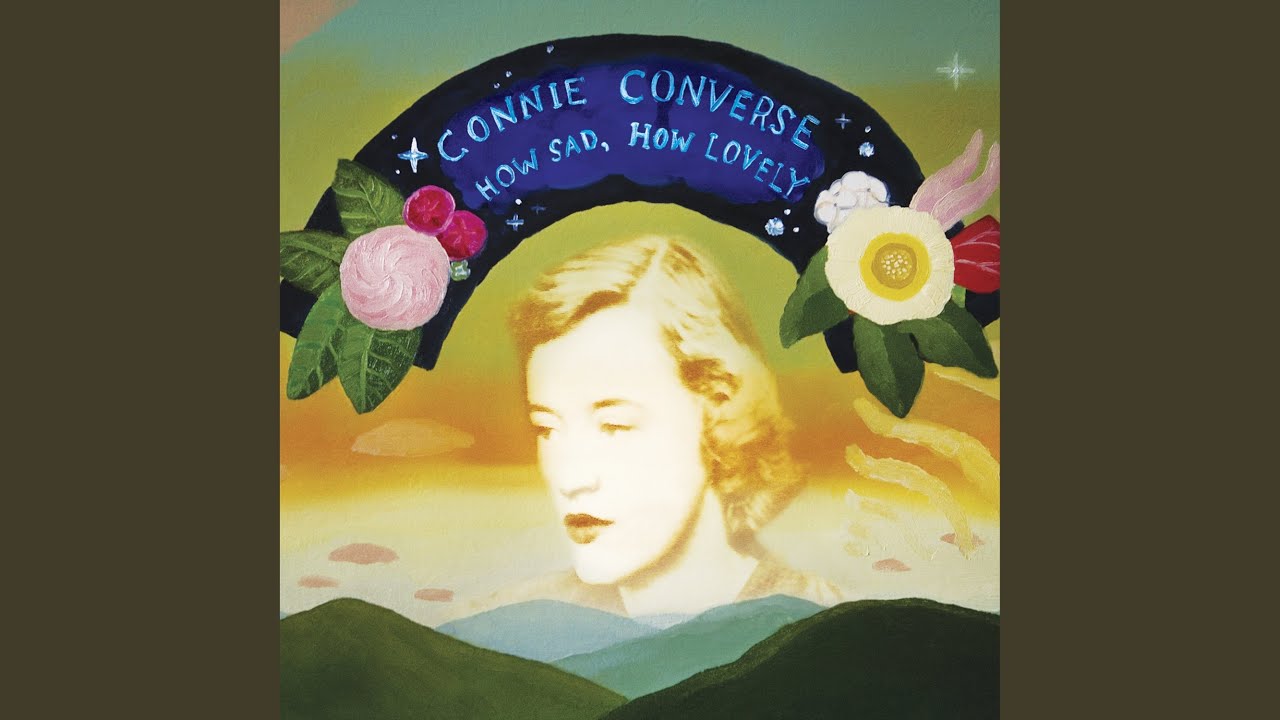
In 2004, Gene Deitch debuted some of her songs on WYNC radio, leading to a surge of interest, so much so that the singer-songwriter somehow became a favorite among the likes of Karen O and Bill Callahan. More recently, Ratboys were inspired to pen the track A Vision. 2009 also saw the release of her official debut album, How Sad, How Lovely, via Lau Derette Recordings.
This March, Jack White’s Third Man Records reissued the album on vinyl. On making the announcement, White crowned her “one of the first singer-songwriters”. Indeed, 51 years after her disappearance, it seems Converse’s reputation is only growing stronger.
How Sad, How Lovely is out now on Third Man Records.
Speaking of other pioneers, Fanny’s June and Jean Millington recently spoke to Guitar World about their experience being in one of the world’s first “all-female” rock bands.

