


Like their counterparts in the grunge movement, every goth band denies being a goth band. In the case of the Sisters of Mercy, the masters of doom who first came up with the somber, post-punk template that has fuelled a thousand goth bands since the ’80s, that denial is complete – at least if you ask their leader, Andrew Eldritch.
When GW sits down with the British band’s former guitarists Wayne Hussey and Gary Marx, however, they’re a bit more relaxed about the goth tag: for them, the sole album that they made with Eldritch is simply a guitar-loaded classic.
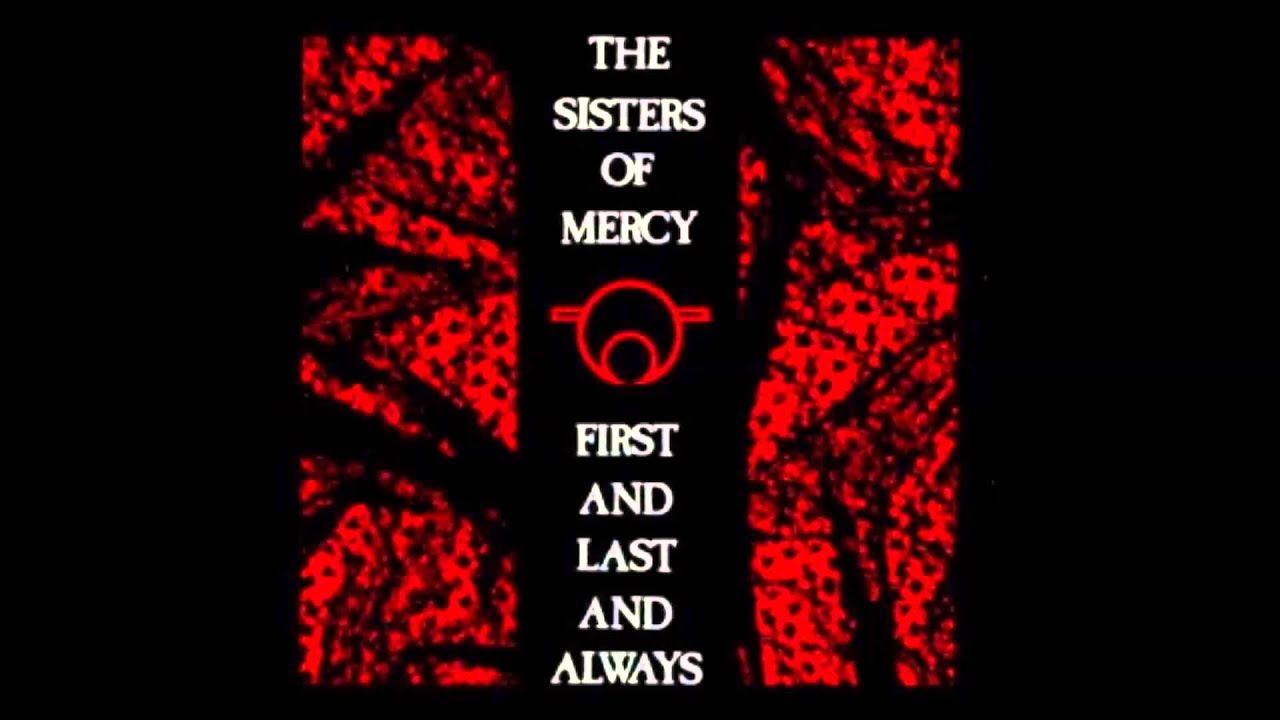
Recorded in 1984 in the English cities of Manchester and Reading by Hussey and Marx plus vocalist Eldritch, bassist Craig Adams and a drum machine nicknamed Doktor Avalanche, First and Last and Always was plagued with logistical difficulties.
Eldritch suffered from ill-health during the sessions and was even hospitalized at one point; he was unable to come up with lyrics until long after the backing tracks were recorded; and his habit of working at night while the others recorded by day led to conflict, too. Certain band members’ enthusiastic consumption of amphetamines didn’t help matters, either.
Still, the album was eventually released by the Warner subsidiary WEA on March 11, 1985, reaching Number 14 in the U.K. and doing moderately well in Europe. The singles Walk Away, No Time to Cry and a U.S. radio release of Black Planet all did decent business, too.
The none-more-atmospheric anthem Marian (Version) and the title cut are still essential listens for fans of mid-’80s rock, but the album remains of cult rather than widespread appeal due to its introspective, relatively lo-fi vibe.
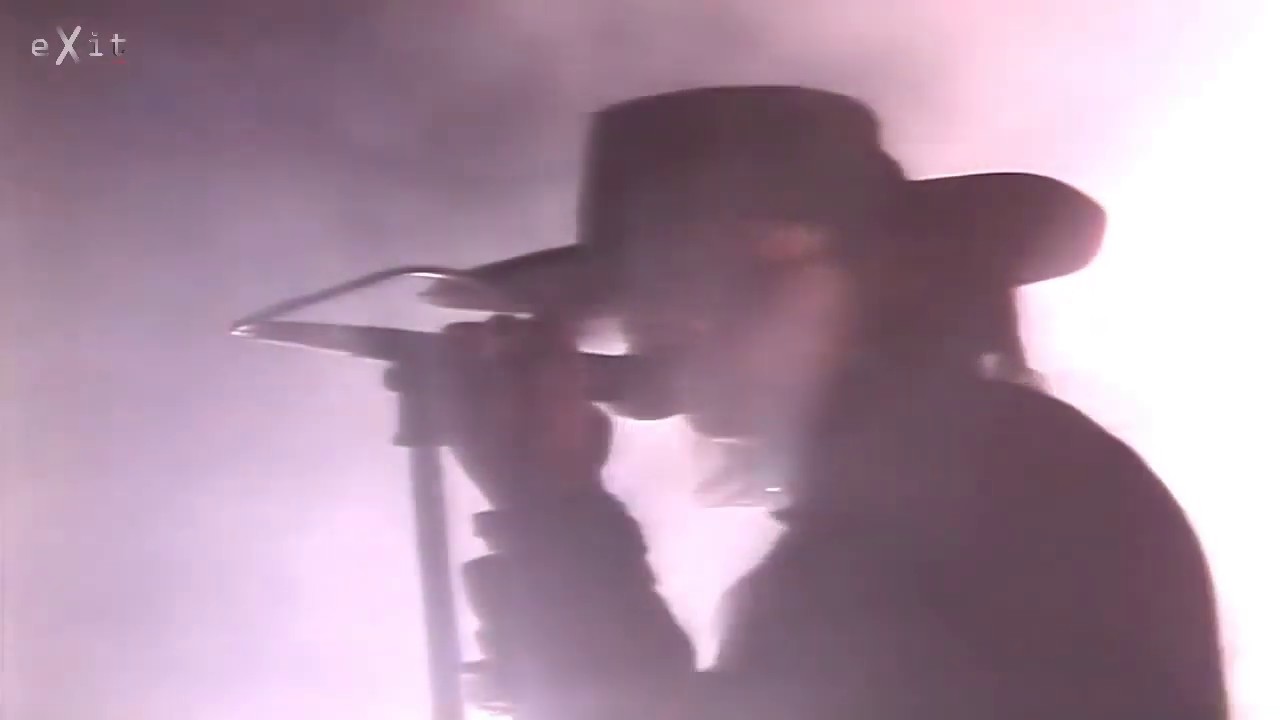
This lineup of the Sisters of Mercy split in 1985, with Hussey and Adams going on to form the Mission and Marx to establish Ghost Dance, leaving Eldritch to lead a version of the Sisters to this day: his relationship with his band’s alumni is mostly cordial, if distant.
The albums the Sisters have subsequently recorded – Floodland (1987) and Vision Thing (1990) – sounded markedly more polished than their brilliant but raw debut. First and Last and Always is still many goth purists’ favorite LP for that reason.
Pretty much everything I played, I played clean, straight into the desk, and whatever was done to the tones afterwards was just left to the producer, Dave Allen
Gary Marx
What gear did you use on the album?
Wayne Hussey: All I used at the time was a Roland JC-60 Jazz Chorus, an Aria 12-string, a Fender Telecaster and a Fender acoustic. That was it. I had some Boss pedals – a phaser, a compressor and a distortion – plus an old Electro-Harmonix Memory Man Deluxe.
Gary Marx: A lot of my guitars were battered after being played live, and they didn’t have the best intonation, so I hired a Fender Telecaster. Pretty much everything I played, I played clean, straight into the desk, and whatever was done to the tones afterwards was just left to the producer, Dave Allen.
Hussey: I also used an autoharp on a few tracks, doubling the guitar riffs to give them an extra, bell-like shimmer. When we went to one of the studios to do some mixing, they had a Leslie speaker there, so I thought, “I’m going to try this.” I played through it on Amphetamine Logic – all those big, choppy chords went through a Leslie.
How did you split up the guitar parts?
Hussey: Whoever came up with the basic tune of a song would base it around a guitar riff or bass line. You would do a little four-track demo and take it to everybody else, and they would learn the parts, and if they had any ideas, they would add them.
Marx: The way the album turned out was that Wayne wrote all of the first side and I wrote the other, more or less.
Hussey: Gary wrote half of the album and I wrote half of the album. It was unusual for Eldritch to allow that, because he’d previously written pretty much everything in the Sisters.
![Sisters of Mercy - Possession (Official Music Video) [HD] - YouTube](https://img.youtube.com/vi/3o6DkXXgO2s/maxresdefault.jpg)
The Aria 12-string gave the album a very specific character. Was anyone else playing 12-strings in rock at the time?
Hussey: Very few. I was aware of the Byrds, of course, and maybe Will Sergeant of Echo & the Bunnymen had a 12-string. It brought a bigger jangle and shininess. You approach playing guitar differently with a 12-string. I’m not a chugger; I like arpeggios. If I can’t think of anything good to play, then I’ll leave space. That’s something a lot of guitarists can’t do, I think.
Why did you choose an Aria?
Hussey: I couldn’t afford a Rickenbacker or a Fender. I’ve got a nice 1966 Fender 12-string now, but I played the Aria back then because it was decent and cheap. It looked pretty horrible, so I stuck duct tape all over it, with slogans on it. One thing I will say about that guitar is that the amount of different tones you can get with it is amazing, because it’s got three toggle switches.
I have a beautiful signature Schecter 12-string [Corsair-12], which Michael Ciravolo, Schecter’s president, suggested when the Mission were getting back together in 2011 for 25th-anniversary shows. I’d been using a Gretsch White Falcon on stage before that, so when I retired it, Michael and I came up with the idea of my signature 12-string with lipstick pickups and coil taps.
![Sisters of Mercy - No Time To Cry (Official Music Video) [HD] - YouTube](https://img.youtube.com/vi/Q8jBphBUo4I/maxresdefault.jpg)
We’re told that First and Last and Always was slow and difficult to record.
Marx: Yes, but not at first; getting the music down was good fun. There was a real feeling of creativity, and most of the tunes were already written, although Wayne did write a couple in the studio.
Hussey: I can’t speak for Eldritch, but it’s well known that he was having some problems at the time.
Marx: What became difficult very quickly was that there wasn’t a vocal to give us the full shape of the songs, so we were tinkering a little bit with the backing tracks, putting things in which we wouldn’t have done if a vocal had been there.
Still, the guitar parts complement each other really well.
Marx: It’s because Wayne was so savvy, and I wasn’t! Each of his songs was built around his idea of which effects he was going to use. Maybe he was going to put his 12-string on it, or add acoustic on the chorus, and all these kinds of things – whereas I just threw bits that I liked on top of each track. If I’d been left to my own devices, the whole album would have been a wall of fuzz guitars.
Hussey: I think Gary would agree, and probably Dave Allen, too, that I was the Sisters’ best musician, simply because I’d had a lot more experience than the rest of them, so I brought more color to the music. Their songs were kind of monochrome before I joined – and some of the Sisters’ early records sound really great for that reason – but I know Eldritch wanted to be broader in appeal.
Marx: I was still quite green as a guitar player, so I didn’t always like the studio because it exposed your playing. In the early days when we just got in a room together and played live, we kicked up a real wall of noise because there was a lot more distortion involved. I was a little bit hidden, and I enjoyed that.
Once we were tracking, though, you could put the fader up and could hear exactly what you were playing. I didn’t really like that, and I was a little bit intimidated by the process.
The only real chorus on the record is in the title track. Did you write that in a commercial frame of mind, Gary?
Marx: No, the word “commercial” was never in my mind when we were making music. It’s just that some parts would suggest themselves as being more catchy than others. First and Last and Always was an example of that; it always had that catchy kind of anthemic thing about it.
You both quit the Sisters in 1985. Why?
Marx: I’ll be frank, we had a lot of problems going in; my relationship with Eldritch was already pretty strained. I still wanted this album to be great, though, even if it might prove to be the end for me.
Hussey: It was a constant intellectual tussle, and in the end I couldn’t be bothered. What we were getting out of it wasn’t worth it, and I don’t mean that in terms of monetary recompense; I mean in terms of artistic fulfillment. I wrote a bunch of tunes for the second Sisters album, but nearly all of them ended up on the first Mission album, because Eldritch didn’t want to use any of them.
It’s not that he didn’t like them. I think it was a reaction to him not doing anything apart from writing lyrics on First and Last and Always, and I think with the second album, he wanted to do it all himself, like he’d done before I joined.
Was the split amicable?
Hussey: It was at first. He asked me if I would play on the next record and I said, “Yeah, of course.” But it all went a bit sour and a bit nasty. Eldritch likes a battle; he thrives on confrontation. Mind you, I went to see the Sisters around 1991, and at the aftershow he told me I was the best guitarist he’d ever worked with, which was nice of him. I’ve seen him a few times after that, but not in the last 20 years or so.
Marx: I expect Eldritch is a better man nowadays than he was back then, and that he would admit he was a bit out of control in 1985.
How does the album sound to you today?
Marx: I would love it if someone remixed the damn thing, rather than messing about with a remaster. I don’t think the mix is great, because it fell in between what Eldritch might have wanted and what Dave was trying to get, and neither of them were satisfied.
Hussey: The album is good for its time. I don’t think there’s a weak song on it. It definitely captures something, even though it was quite stressful to make.
Which of the songs stand out to you?
Hussey: With Marian (Version), there was some alchemy at work there, for sure. I listen to it now and those guitar sounds chime beautifully – they were very special. I don’t know how, because that song was completely off the cuff
With Marian (Version), there was some alchemy at work there, for sure. I listen to it now and those guitar sounds chime beautifully
Wayne Hussey
Tell us how Billy Corgan reintroduced you to the album.
Hussey: Billy is a big fan of the Sisters and also a big fan of my guitar playing, I think, as much as anything else. He got in touch and asked if I’d played First and Last and Always recently. I said I hadn’t played it in years, and he said, “You need to play it again.” I put the CD on in the car and I was pleasantly surprised. After this much time, I’d forgotten all the trouble and strife that surrounded it.
You also played the songs with Billy, didn’t you?
Hussey: Yes, when he invited me and Craig up to his house in Chicago for a week. The day we arrived was the day David Bowie died [January 10, 2016]. Billy wanted to play those early songs, and he had all the gear.
I asked for a Roland JC-60 and a Roland GP8 multi-effects, and Craig got an Ampeg, and there was even the right drum machine. We started playing and said, “Yeah, that’s it – that’s the sound of First and Last and Always!”
- This article first appeared in Guitar World. Subscribe and save.

