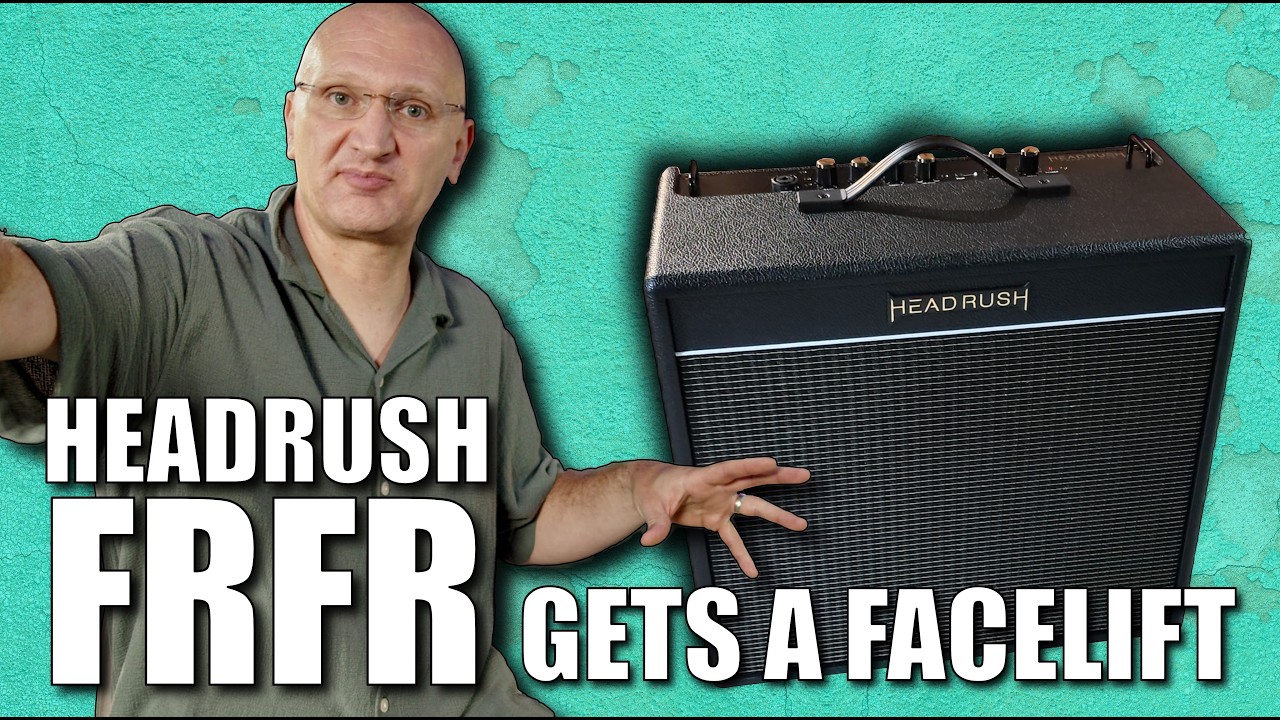
Guitar World Verdict
It’s easy to use, more than loud enough for monitoring yourself on all but the biggest stages, and sounds great with a little adjustment. The Bluetooth connectivity is handy for some at-home jamming, and while it’s not got a ton of other bells and whistles, what it does do, it does well.
Reasons to buy
- +
Loud enough for most stages.
- +
Classy, amp-like aesthetic.
- +
Great sound after some tweaking.
- +
Easy to use.
Reasons to avoid
- -
Heavy compared to its competitors.
- -
Some slight issues with the rubber insert on one leg and the piping above the clot
You can trust Guitar World Our expert reviewers spend hours testing and comparing guitar products so you can choose the best for you. Find out more about how we test.
What is it?
If you are someone who utilises amp and effects modeling gear, you have probably heard the term ‘FRFR speaker’ at some point. These are powered speaker cabs that aim to amplify a modeler as transparently as possible, therefore preserving the tone you have likely spent hours lovingly tweaking. To achieve this, these cabinets are designed to be full-range - producing sound across the full spectrum of human hearing- and flat response - refraining from coloring your tone in any way. Hence the FRFR moniker.
From that description, you would be forgiven for assuming that all FRFR cabinets sound the same. If they don’t color your tone at all, then surely the only differences between one FRFR cab and the next would be size, shape, and volume, right? Well, the truth is, it is impossible to create a speaker cabinet that is fully transparent.

Speaker choice, size, cabinet material, construction, and so on, all conspire to make each FRFR cab sound slightly different. So, it is worth trying out a few, including the one I currently have in for review - the HeadRush FRFR-12 CAB.
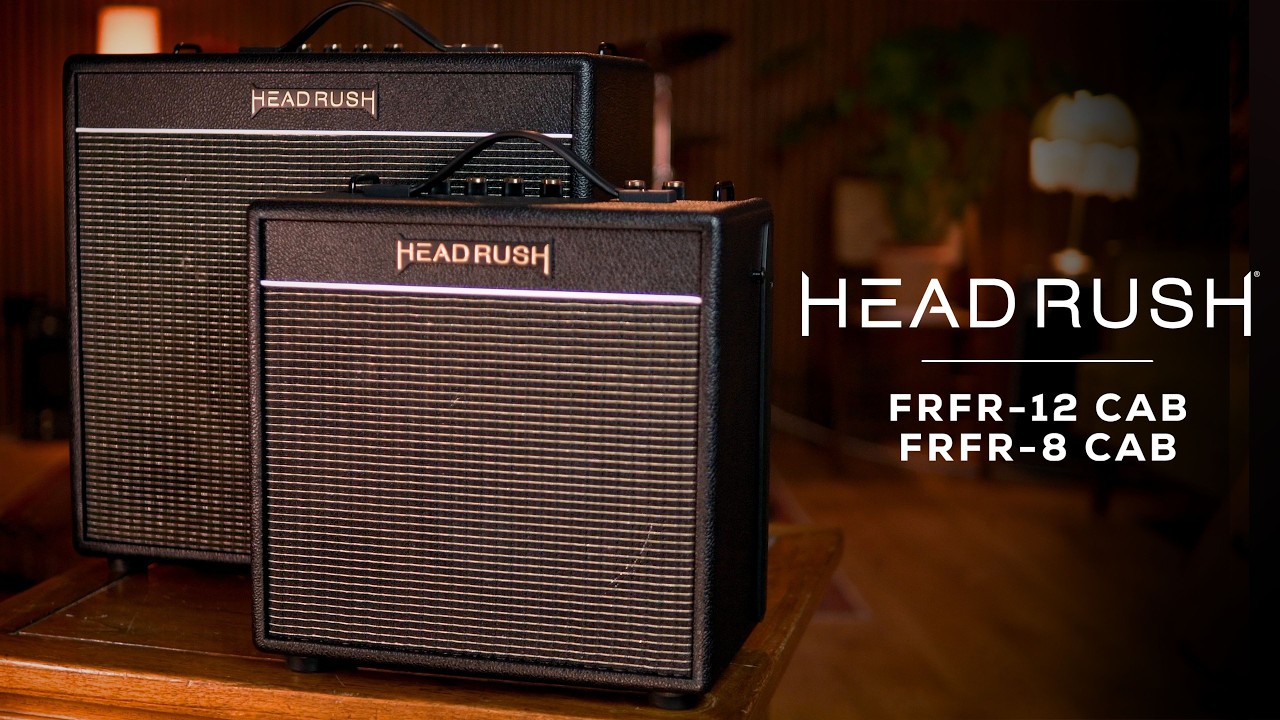
HeadRush – also known for its Pedalboard and Prime modelers - is an interesting case in this field, as back in 2018, it was one of the earliest companies to release a guitar-focused FRFR monitor with its FRFR-112. While that original release is essentially a slightly reimagined wedge monitor, the new FRFR-12 CAB is styled like a guitar cab, with a three-band EQ, high-cut, an XLR line out, tilting legs, and Bluetooth connectivity.
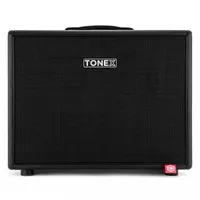
These features are what differentiate products like this from ‘normal’ wedges/P.A speakers, and as digital modeling is now commonplace, we have a number of guitar-focused FRFR cabs to choose from - the IK Multimedia Tonex Cab, Laney LFR10, Line 6 Powercab and Fender FR12, to name just a few examples.
So, if the HeadRush FRFR-12 CAB is going to stand out in what has quickly become a crowded market, there is no room for error.
Specs

- Launch price: $499 | £359 | €429
- Type: FRFR cabinet
- Origin: China
- Output: 325 watts RMS (750 watts peak)
- Speaker: 12” woofer, 1” compression driver
- Controls: 3-band EQ, high cut, Main volume, Bluetooth volume
- Connectivity: 1 combi jack/XLR input, XLR line out, Bluetooth connectivity
- Weight: 39.2Lbs/17.8kgs
- Dimensions: 485 x 245 x 467mm/19.1” x 9.6” x 18.4”
- Contact: HeadRush
Build quality

Build quality rating: ★★★★½
The pleasing thing, and the biggest upgrade to HeadRush’s previous FRFR offerings, is that the FRFR-12 CAB looks like a guitar amp.
It’s a closed-back, wooden construction with a tolex wrap that gives the whole unit a premium feel. The controls are set on a brushed aluminum panel and offer some resistance as they are turned, giving me confidence that they are built to last.
The brown-tweed grille is undeniably classy too, and lined with a little white piping at the top. That piping is very slightly raised on the left-hand side, but not problematically so.

Up top, the unit is adorned with a carry handle which, although it feels robust enough, is a little too plasticky to continue the more premium feel of the rest of the cab.
Something I have previously highlighted in other FRFR cabinets are tilting legs that scrape against the side panels. Here, HeadRush has added some soft rubber to the inside of the legs to protect the covering. A nice touch.
On the review model, however, the rubber of the left leg comes away a little easily at the end. It can be stuck back on with a firm press, but it seems the adhesive is not holding the rubber to the leg as steadily as it should. Something that could easily be a little bit of bad luck with this particular example.
Another point against the HeadRush FRFR-12 CAB is its weight. At 39.2lbs, it is considerably heavier than most other FRFR cabs. Take the Tonex Cab at around 28lbs, for example. In fact, it is not far from the weight of my Fender Hot Rod Deluxe tube combo, coming in at 43lbs. If you are into modeling to escape the backbreaking work of lugging around tube amps, you’ll want to avoid this.
Usability and features

Usability and features rating: ★★★★½
Getting set up with my Line 6 Helix and making some noise, it’s very quickly apparent that things don’t get much easier than this. Turn the cab on, use either an XLR or ¼” jack to connect your modeler to the combi input, turn up the main volume, and tweak the EQ if you need to. Done.
The legs allow you to tilt the cab back, which is a godsend for live monitoring as it directs the sound towards your ears. After all, if you are using the cab as a monitor, there is no point in directing all that volume to the back of your knees (side note, I am a big advocate for amp stands for the same reason.)
For tweaking the sound that you have sensibly pointed at the things you actually listen with, there is that aforementioned three-band EQ that both boosts and cuts, as well as a High-Cut control.
Everything is clearly labelled here and works as expected. However, as the aim of the speaker is to accurately replicate a modeled tone, I would prefer to see a notch in the middle of the three-band EQ controls to make it easier to set the cabinet completely flat before adjusting for the room you are in.
In terms of other features, there is not too much to write about, which makes sense, given the $499/£359 price. FRFR’s with bells and whistles such as the Tonex Cab and Line 6 Powercab 112 (not the Line 6 Powercab CL, that is a slightly different bit of tech) are both above $650.
What it does have is Bluetooth connectivity that works seamlessly. I was able to connect my Google Pixel 9 to the cab the first time, with no issues. There is also a separate Bluetooth volume control, which is extra handy for jamming along to backing tracks at home.
Sounds

Sounds rating: ★★★★½
As I touched upon earlier, every speaker cabinet will impart some slight tonal characteristics onto a sound, so it is a little tricky to tell which is the closest to the holy grail that is true transparency. However, having played just about every one available, there are a few things about the HeadRush FRFR-12 CAB that stand out. For info, I’m using my Line 6 Helix Floor with presets I have played at hundreds of gigs, along with a Fender Telecaster, Fender Stratocaster, and Gibson Les Paul.
Starting with the low end, there is enough to make clean tones sound full whilst staying super tight; however, I would like just a little extra oomph here. Turning up the Bass control to try and coax some more out of it, things get a little boxy, as you might expect on a 12” speaker. On the plus side, it retains that tightness throughout, keeping gain sounds flub-free.
The midrange is where I feel the HeadRush is doing a great job, with a smooth and clear response. Using a mid-forward Dumble-based preset, the mids are replicated in exactly the way I would expect for this sound, showing that the FRFR-12 CAB, is excelling at transparently replicating these frequencies.

Playing around with the Mid control, there is enough sweep to tweak for a room, without allowing you the facility to butcher your painstakingly constructed tone.
Where the HeadRush FRFR-12 CAB falls a little short is in the high end - at least initially. Things are a touch spiky here, but, thankfully, the High Cut control does exactly what is needed to dial that out. So in the end, it is a non-issue - just be prepared to do a little tweaking.
With that in mind, I didn’t feel the need to play around with the Treble control, but, similar to the Mid, if you find yourself in a venue that requires some adjustment, there is enough sweep to do that without going too far either way.
When it comes to volume and power, the HeadRush does not have as much on tap as something like the Tonex Cab, but there is enough to keep you happy on all but the biggest stages.
Verdict

A question often raised with these types of units is, well, why? Surely, if you are going to the bother of bringing a speaker cabinet to monitor the modeler that was meant to replace your amplifier, you may as well have just used an amplifier?
This is a fair question, and one that can be leveled at the HeadRush FRFR-12 CAB more than its competitors given its heavier weight. As a user of both modelers and real amps on stage, the answer to that question is that the benefits of modeling go beyond space-saving portability.
For example, a function band player covering a wide range of sounds is well served by a modeler with hundreds of amps and effects on tap; the stoic reliability of digital components can inspire confidence for those gigging week-in, week-out; and knowing you are going to get exactly the same sound at every gig means minimal setup and tweaking from venue to venue.
There is some tweaking involved to get the high end in a good place
Not that there isn’t a place for good old volume and tubes, of course, but the point is that when circumstances align to make modeling the best choice for the job, it’s not always because we want to bring less gear. Therefore, a good FRFR speaker can be handy.
The HeadRush FRFR-12 CAB is certainly that. Yes, it could do with a little more impact in the low end, and there is some tweaking involved to get the high end in a good place, but the sort of missing low end is a minor issue that will be unnoticed next to the bass guitar and kick drum in a live mix, and the high-cut control offers plenty of facility for that tweaking.
Guitar World verdict: It’s easy to use, more than loud enough for monitoring yourself on all but the biggest stages, and sounds great with a little adjustment. The Bluetooth connectivity is handy for some at-home jamming, and while it’s not got a ton of other bells and whistles, what it does do, it does well.
Test |
Results |
Score |
|---|---|---|
Build quality |
A few imperfections, but nothing that will effect the longevity of the product. |
★★★★½ |
Usability and features |
Very few fancy features, but, incredibly easy to use. |
★★★★½ |
Sounds |
It could do with a little more low end power, but a great sound nonetheless. |
★★★★½ |
Overall |
A great FRFR option that simply does everything most will need it to do. |
★★★★½ |
Also try
Hands-on videos
Headrush
EytschPi42