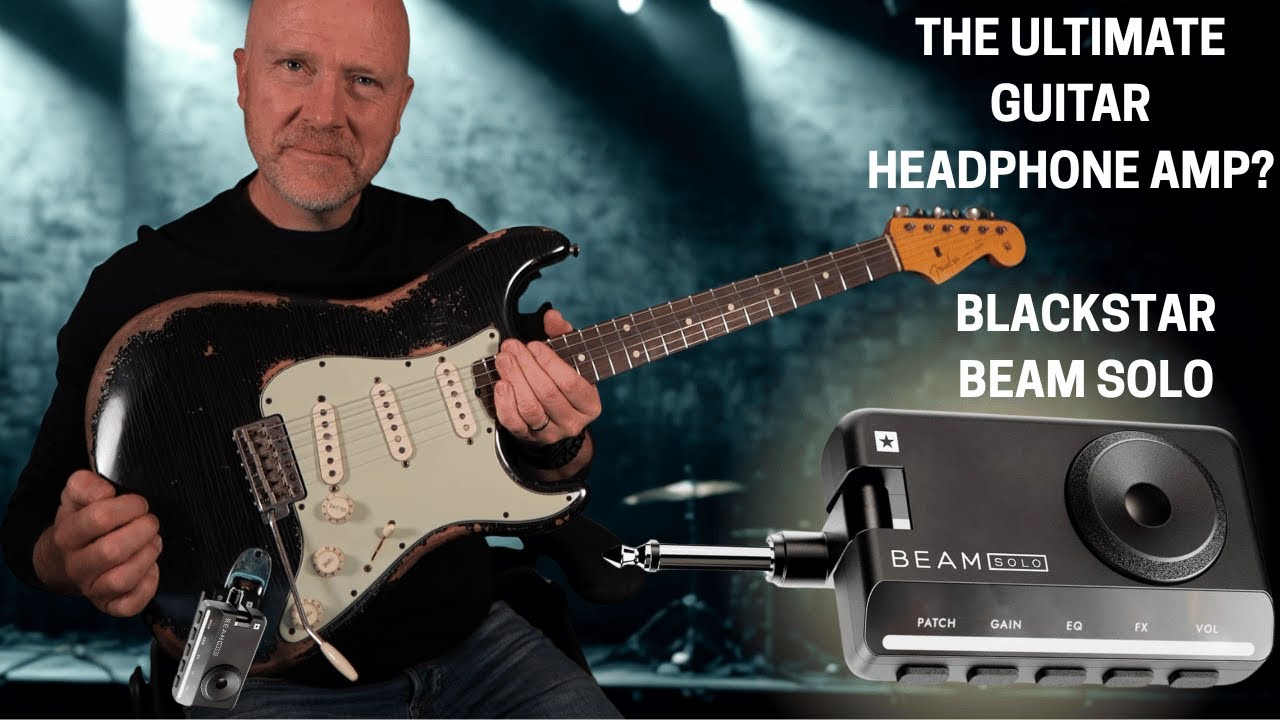





Guitar World Verdict
While others did it first, the Blackstar Beam Solo can certainly hang with the big boys thanks to its fantastic quality of amps and effects modeling. It delivers an inspiring sound that’s sure to have you reaching for it time and time again, but is slightly let down by a less-than-stellar build quality versus the competition.
Pros
- +
Some of the best quality sounds of any guitar headphone amp.
- +
Huge selection of amp and effects tones.
- +
Very intuitive ‘light beam’ display makes it easy to use.
- +
Slickly presented companion app with some great features.
Cons
- -
Not the most robustly built, especially the jog wheel.
You can trust Guitar World Our expert reviewers spend hours testing and comparing guitar products so you can choose the best for you. Find out more about how we test.
What is it?
It’s pretty safe to say that as guitarists, we’re absolutely spoiled for choice nowadays when it comes to headphone amps for guitar. What started as a niche genre has resulted in nearly every major manufacturer offering one of their own, and the latest entrant into the fray comes in the form of the Blackstar Beam Solo.
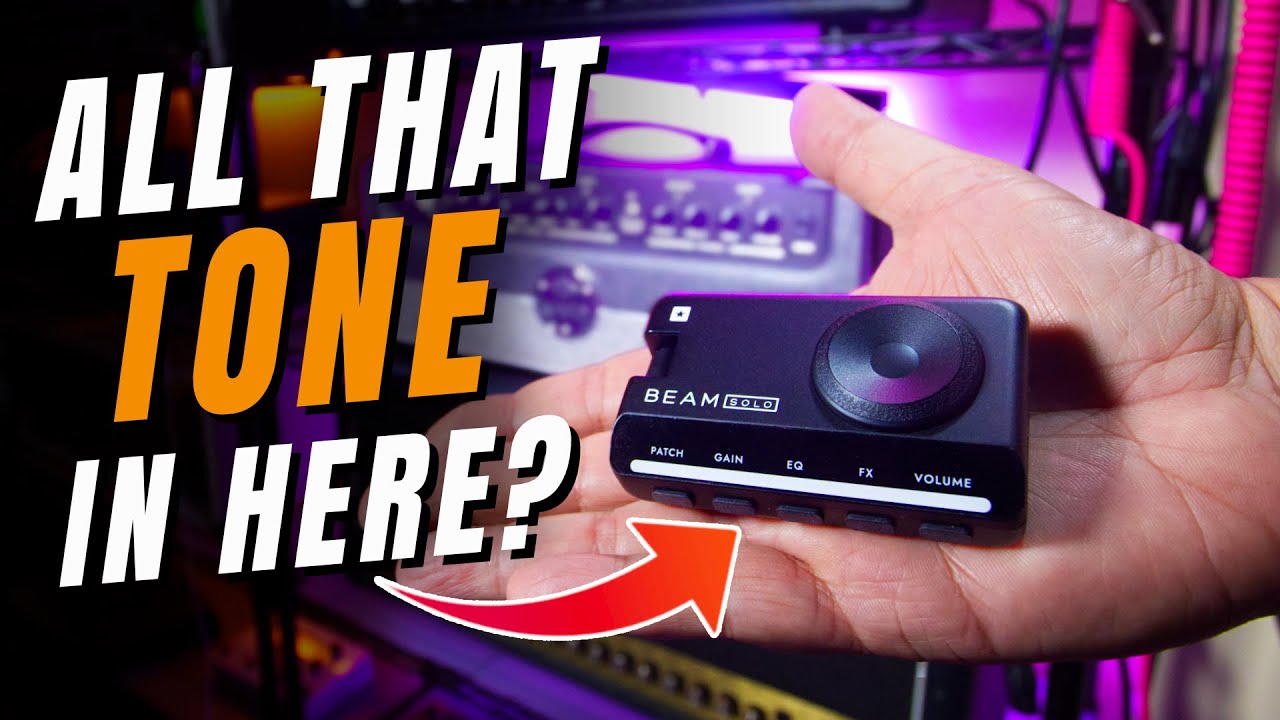
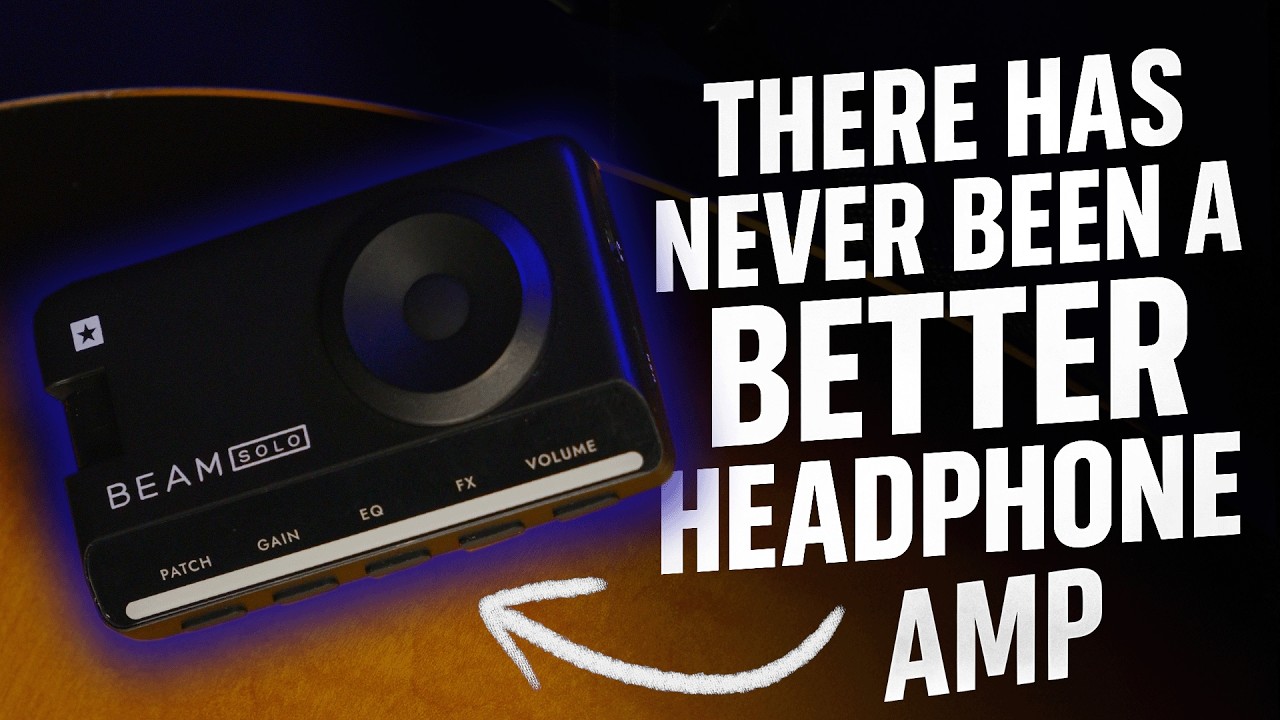
Like most guitar headphone amps, the Beam Solo is compact and black, with a large dial for controlling parameters and buttons along the side to change certain functions. It has a companion app that gives you more in-depth control via your smartphone, Bluetooth connectivity to let you jam along to your favorite tracks, and an online community to share your best tones, and try out other people's.

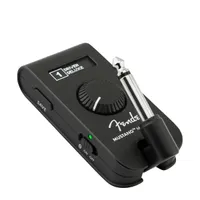
So far, so standard. Unlike the obvious rivals in the Fender Mustang Micro Plus and the Boss Katana Go, there’s no screen on the Beam Solo. Instead, a dynamic ‘light beam’ display gives you visual cues as to what you’re adjusting on the unit itself.
Another thing it does differently is the addition of a headset mic input via the headphone jack, with a built-in preamp and reverb to let you record vocals alongside your guitar. How many musicians are actually using headset mics these days I'm not sure, but it's an interesting proposition for singer-songwriters.
With such stiff competition, there’s no doubt in my mind that it’s going to be a difficult task for the Beam to outpace the more established brands in the space, so let's see what it's made of...
Specs

- Launch price: $129.99 | £119 | €139
- Type: Headphone amplifier
- Origin: China
- Channels: 5 presets
- Controls: Patch, gain, EQ, FX, volume, rotary control
- Connectivity: 1 x 1/4" (instrument), 1 x 1/8", 1 x USB-C
- Weight: 0.45kg (0.99lbs)
- Dimensions: 67 x 37.2 x 20.5mm
- Contact: Blackstar
Build quality

Build quality rating: ★★★½
Having tested both the Mustang Micro Plus and the Boss Katana Go, the Beam Solo feels a little cheap and plasticky in comparison. It’s a bit bulkier than the aforementioned units but despite this, feels more lightweight in my hands.
The overall feel of the chassis is fairly solid despite the light weight, and like the Mustang Micro and Katana Go there are rubber feet on the back side which help it grip when on a desktop or sitting flush against the guitar body. The lack of heft does mean there’s basically no impact at all when you plug it into a guitar, and I certainly can’t feel a difference in weight when plugging it in.
Like the Mustang Micro Plus, the Beam has a large rotary knob on the front face, which looks a lot like a speaker cone. It does feel quite flimsy under my thumb though, and whenever I press down on it with a bit of force, it affects the travel of the knob, getting caught at certain points. The lack of robustness here does make me wonder how long it’ll last under heavy-handed use.

The five buttons on the side feel pretty solid, but not quite as tactile as the ones I’ve tried on other units. They click nicely and don’t need too much force to get them in, making it easy enough to manipulate them when plugged into my guitar. On the opposite side, the 'on/off' switch feels similarly decent quality, and there’s a dedicated button for connecting to your phone via Bluetooth.
The input jack is on a swivel that gives you 270 degrees of rotation, which should mean no issues fitting it into the vast majority of guitar types. I tried it on a Strat, Tele, Jazzmaster, and a semi-hollow guitar without issue, so unless you have a particularly niche output jack, you shouldn’t have any problems here.
Usability

Usability rating: ★★★★½
Plugging the Beam Solo into a Jazzmaster copy I’m also reviewing, I set about playing with the buttons on the side of the unit. Below the button names there is a long strip of light that illuminates the text depending on which button you've engaged.
This 'light beam' system reacts differently depending on which button you’ve engaged, with the volume setting giving you a light that gradually fills from left to right to indicate the volume level. The gain works similarly to the volume, while the patch setting lights up increments of the bar to indicate which of the five hardware presets is engaged.
When using the FX button you can set a tap tempo by pushing the button to your desired rhythm, and when used in conjunction with the large encoder set the mix level for the effect on that particular patch.

I really like that the LED also acts as a basic tuner when you hold down the volume button, as it’s one of my pet hates having to access an app on my phone to tune my guitar
It’s really intuitive and clearly laid out, and I don’t need the manual to work out what’s what. I really like that the LED also acts as a basic tuner when you hold down the volume button, as it’s one of my pet hates having to access an app on my phone to tune my guitar. It doesn’t tell you the note so you’ll need your string to be in the ballpark, but I found it responded well for quick tune-ups when needed.
Installing the Beam app on my Pixel 9 via the Play Store, the connection process is incredibly simple, and amongst the easiest out of any Bluetooth-equipped guitar device I’ve tried. However, I have a problem in that it won’t stay connected to the device and times out after a few minutes. After some back and forth with Blackstar, I’m advised it’s because I have had a pre-release version of the hardware previously, so it shouldn’t be an issue for anyone buying a new unit.

The app itself is very slickly presented, with the amp models represented with some nice high-resolution graphics. The app allows you to save five presets to the hardware, much like you get with the Positive Grid smart amps. There’s a record function that requires you to connect to the unit via USB-C, a community section to download user-generated presets, and your typical menu options.
The bottom portion of the app contains your signal chain, with sections for pre-fx, amp, post-fx, cabrig, and music streaming. You can interact with the actual controls displayed on screen by sliding your finger or tapping to engage footswitches, which gives a nice tactile feel when tweaking settings. It’s super smooth too, and I never find any issues with lag or very fine control.
Under the music streaming option there's a bunch of backing tracks to jam along to, Blackstar Lessons, and drum loops that make great practice tools. It only covers rock and blues at the moment, but I sincerely hope that Blackstar continues to expand this section as I have great fun jamming along with the 'Spacey Dystopian Ballad'.
Sounds

Sounds rating: ★★★★★
Getting stuck into the sounds with my studio headphones I begin with the five presets that come loaded onto the hardware as standard. You get clean, edge of breakup, crunch, high gain, and a lead tone to start with, so all the typical sounds are accounted for. There are eleven guitar amps, one acoustic pre, three bass amps, and thirty-six effects in total, with a mixture of Blackstar’s own products and some classic amps and stompboxes.
A lot of modelers struggle with these types of sounds, but here it's very convincing
The sounds are phenomenal too. Armed with my trusty Telecaster I start with the Super Clean setting, which uses the St James 6L6 clean channel. As you’d expect it’s reminiscent of the classic American amps from the 60s, giving you pristine clean tones perfect for arpeggiated chords and hypnotic drones with open strings.
Next up is the Artisan 30 model, which gives me some delightful edge of breakup tones. It clean up nicely with the volume knob, and you can pick harder to get gain like you would with a real amp. A lot of modelers struggle with these types of sounds, but here it's very convincing.
The HT Club 50 is the model for the super crunch preset, which even with the single coils is a little too gain-y for my definition of crunch. Removing the Yellow Drive from the front does the job though, and I’m straight into Marshall-inspired tones perfect for double stops and power chords.
The High Gain Stack delivers the heavy stuff, and does a really impressive job again. There’s none of the fizz that affects a lot of high-gain models on other units I’ve tried, and plenty of low-end chunk when I switch to my baritone guitar for some proper downtuned riffing.
There are plenty of different non-Blackstar amp types too, with most of the typical bases covered from Fender-inspired cleans, Vox chime, Marshall crunch, right through to the high-gain tones of the 5150. Each delivers those unique tonal qualities of their respective amps, which means plenty of choice no matter what type of tone you’re going for.
The effects are similarly great quality too, especially the reverbs. There are only three algorithms but they cover plenty of ground with hall, plate, and spring modes. You can additionally add a room sound to the overall tone via the Cabrig section, which lets you select the size of the room, how much of it you hear, and the width of the space.
Verdict

There are a lot of guitar headphone amps out there at the moment, with nearly every major manufacturer offering one. That means it’s difficult to stand out, especially as this jam-packed product type has some incredibly high-quality competition. The Blackstar Beam Solo does a lot well though, and certainly holds its own against the more established brands out there.
It does the most important job, the sound, incredibly well
The big negative for me is the build quality of the unit. It just feels a bit cheap, especially that jog wheel, which I can’t see standing up to much abuse over time. Compared to the Fender and Boss units I’ve also tested, the Beam Solo lags behind a little bit here. On the other hand, it does the most important job, the sound, incredibly well. It’s one of the best-sounding headphone amps for guitar I’ve had my hands on, and that’s big praise considering the competition.
Guitar World verdict: While others did it first, the Blackstar Beam Solo can certainly hang with the big boys thanks to its fantastic quality of amps and effects modeling. It delivers an inspiring sound that’s sure to have you reaching for it time and time again, but is slightly let down by a less-than-stellar build quality versus the competition.
Test |
Results |
Score |
|---|---|---|
Build quality |
Decent, but some parts feel a little flimsy. |
★★★½ |
Usability |
Super easy to use, with the ‘light beam’ system working well. |
★★★★½ |
Sounds |
Incredible sound quality with some genuinely great tones. |
★★★★★ |
Overall |
Delivers great tones amongst some very stiff competition. |
★★★★½ |
Also try

Hands-on videos
The Lonely Rocker
Noisegate
The Studio Rats