Guitar World Verdict
Overall, the value you will get out of these plugins, and which will seem the most useful to you is heavily dependent on taste. Owning all of them is probably not necessary, even for noiseniks. However, at twenty-five dollars, having one in your back pocket to spark ideas seems like a little bit of a no-brainer.
Reasons to buy
- +
Faithful recreations of Devi Ever pedals.
- +
Works well on a range of sources, like drums and synths.
- +
Allows for experimentation that was difficult or impossible with the pedals.
- +
Affordable.
Reasons to avoid
- -
Requires a DAW, so mainly for studio use.
You can trust Guitar World Our expert reviewers spend hours testing and comparing guitar products so you can choose the best for you. Find out more about how we test.
What is it?
With users from MBV to The Black Keys, and Nine Inch Nails to Karnivool, Devi Ever was part of pedal royalty in the heady days of the 2010s boutique boom.
A failed Kickstarter and other issues resulted in a sale to Dwarfcraft and a hiatus. Now, however, Devi is back, producing plugins that replicate the pedals in the old Devi Ever line.
Though it sounds like physical pedals may follow at some point, for now Devi is focussed on these releases, with four plugins released to date.
Two are early-ish influential circuits, the Goddess Zero (subtle octave-fuzz) and Zero Good ("rectifying fuzz signal destroyer"), while most pedal aficionados will have heard of the Soda Meiser (a Big Muff-inspired fuzz) or Vintage Fuzz Master (a more extreme octave-fuzz).
Specs

- Price: £21 | $25 | €25
- Type: Plugins (64-bit, VST, AU, CLAP)
- Controls: Pregain, Volume, Spectrum Taper
- Features: 4 emulations of Devi Ever pedals
- Contact: Fuzz Goddess
Usability and features

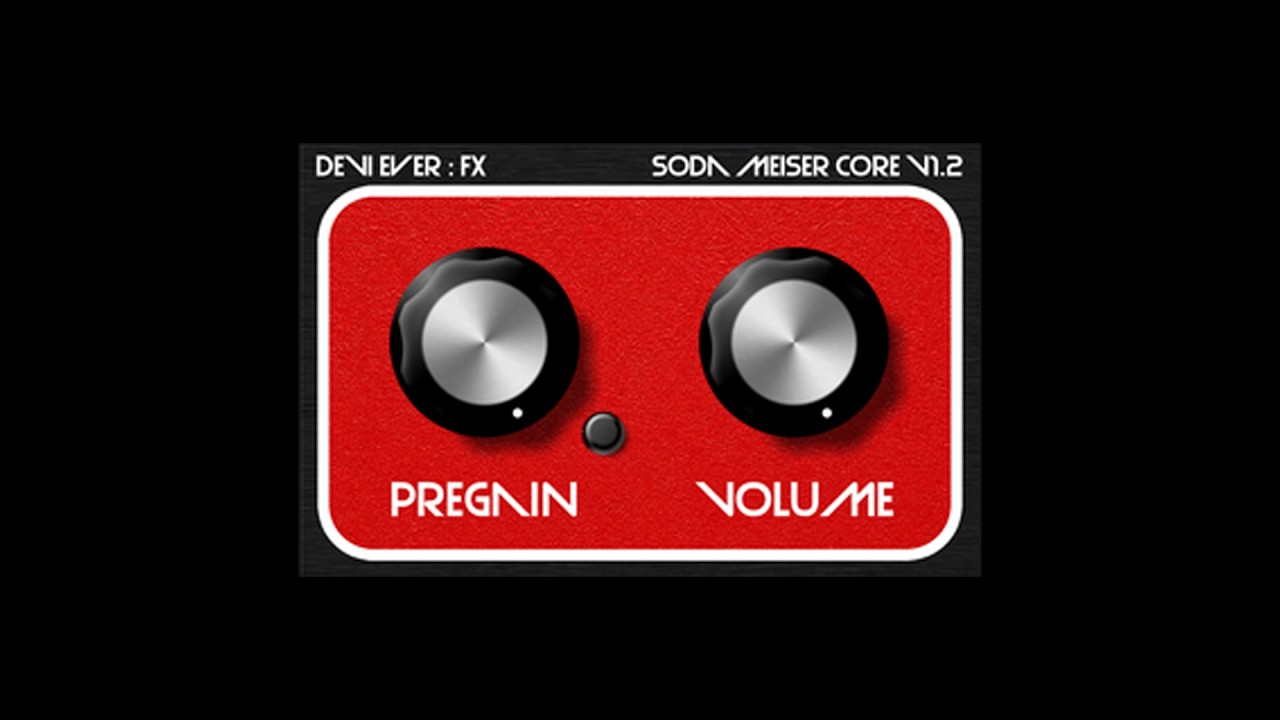
All four pedals share the same control setup: Pregain and Volume. It doesn't sound like the most expressive combination, but it is, while also having the benefit of being very simple. This was true of the physical pedals, as well. When you've already got a complex signal chain, and are facing option paralysis with all the audio tracks in your project, saturation and gain-type blocks being simple to dial in is absolutely crucial.
There's another similarity with the pedals in that for some, especially, say, the Zero Good, there's not a huge amount of range, because the pedal is voiced in such an extreme way. The pregain and volume controls are highly interactive of course, but the plugins all have a distinct character that can't really be tweaked away, for better or worse.
Devi Ever pedals generally didn't have a tone control anyway, but in a plugin where you have the facility to run a pre or post EQ, it makes even less sense. Even so, the range of the unit is important, which is why in addition to the standard interface of these pedals, there's a final control, Spectrum Taper, which "spreads tone more evenly across the pregain."
Depending on your taste, this may or may not be useful, but it's almost like having a fixed two-mode tone control on the plugin. The flexibility is certainly welcome.
Sounds

On Devi's new site, there's a video of NIN playing, using her pedals, and that kind of says it all
Before talking about specifics, it's worth remembering what Devi Ever effects are, and what you can expect.
Just like boutique builders of a similar vintage like Death By Audio, Devi Ever was always about pushing the envelope sonically, not making controllable or easy-to-categorize pedals. This makes it difficult to describe them. However, on the plus side, it goes to show why plugins might be, if anything, as good if not better an avenue for experimentation than 'just' pedals.
In general, my take is that all of them work with most of the sources I threw at them, but which sounded best was highly contextual. I used my usual vintage-voiced Telecaster pickups, and Gibson Les Paul humbuckers into Neural DSP's Petrucci Mark II+C Suite, dialled into something of a Fender-y clean tone, with a bit of the new Tone 3000 plugin for some 5150 sounds via NAM A2 captures. On the synth side I used MIDI soft synths and pads as well as my trusty Arturia Mini Brute.
On Devi's new site, there's a video of NIN playing, using her pedals, and that kind of says it all. If you're the sort of person that heard 'Devi Ever plugin' and jumped immediately to the idea of running drums through it, then you're going to enjoy these.
Goddess Zero Core

The Goddess Zero has velcro-like tendencies, but enough oomph that except at very low pregain settings it still punches through.
Like the other patches, it's highly interactive with the volume control, but very much feels like it has two speeds: off and on. Nevertheless, its extreme saturation suits synth parts and certain guitar and bass sounds due to its slightly darker voicing.
Soda Meiser Core
Unlike many of Devi's pedals, which are biased to gate in a velcro-like way, the Soda Meiser at higher pregain levels – which is where it sounds best – starts to escape containment.
The only consistent drawback I found across the plugins was that the Spectrum Taper control didn't do much, at least to my ear. It was most noticeable when pushing drums through them, but here's where the Soda Meiser wins hands-down.
We know it's decent on guitar and bass, but it's the only plugin that really added much to drum sources. In their own way, all the others had a unique voice, but not enough flexibility for the kind of industrial drum processing that I prefer.
Vintage Fuzz Master Core

The VFM is, as described by Devi, "sort of Muff and Octavia-like".
In some ways, this is the most 'normal' of the pedals here, and that does lend it a strange utility. It's weird enough to generate ideas but not so weird that they immediately need work to contextualize them. Case in point: I threw a melodic pop sample at the VFM maxed-out and the overall effect was quite like a smashed limiter, albeit with octave artifacts.
Print that to a channel, use Ableton's 'convert to MIDI' feature to capture the weird overtones the fuzz pushed to the fore, then you have two useful channels of output already. You could sidechain the noise pad you just created to the MIDI notes, then attach a MIDI synth to that track. Instant industrial joy.
Zero Good Core
If all these pedals are on a continuity of gated and velcro-like to runaway feedback, the Zero Good is the most gated and crunchy. It works well for guitar, less well for synth, but okay for samples, and, if you really want a totally bitcrushed, blown-out sound, some drum breaks.
Verdict

In the plugin market, $25 isn't quite the steal that it would be in physical pedals. Still, if you are experimentally-minded and have a recording setup, then $100 gets you four very useful, unpredictable distortion and fuzz boxes.
Which one is for you will depend on your taste.
Which one is for you will depend on your taste. For my money I'd start at the most extreme of the usable pedals, the Soda Meiser or the Vintage Fuzz Master, depending on how much you like velcro fuzz. After all, every DAW has some pretty serviceable stock gain and distortion blocks in it. Weird is good.
The plugins are locked into their voice and offer limited flexibility, but the studio setting means that anything about them can be edited pre-and post using additional effects and studio techniques.
Guitar World Verdict: Overall, the value you will get out of these plugins, and which will seem the most useful to you is heavily dependent on taste. Owning all of them is probably not necessary, even for noiseniks. However, at $25, having one in your back pocket to spark ideas seems like a little bit of a no-brainer.
Hands-on demos
Devi Ever FX