

Some bassists lie back, but not Gary Shea – as he tells Bass Player, “Always remember: no bass, no party!” And it’s been quite the party for Shea, who’s played in New England, Warrior and Alcatrazz with John Fannon, Vinnie Vincent, Yngwie Malmsteen and Joe Stump.
“I always wanted to be the bass player on the jukebox original track as opposed to the bass player playing the song in a bar,” he says. At 74, he continues to do just that with New England and Alcatrazz. “I’m very fortunate to have played with some of the best of the best over the years.”
He admits that involved dealing with some tough customers: “I set out to find the music that inspired me and met some incredible musicians along the way. Not bad for a left-handed guy living in a right-handed world! All talented musicians can be difficult. That’s what makes them special – they stick to their guns and follow their vision.”
What sounds were you going for when you formed New England?
New England was a progressive rock band that played short songs. With Jimmy Waldo’s Mellotrons and an array of other keyboards, we had a huge palette of color that could take us from heavy orchestral rock to quiet ballads. It was a great opportunity to play some very creative basslines. New England is a great fit for my style.
What was your rig like then?
I used three Ampeg SVT heads with four 8x10 cabs and two Cerwin-Vega B48 MF 18'' reflex horns, each with a front-loaded 12'' speaker. I also had Moog Taurus bass pedals. I used my 1965 L Series Jazz Bass with a P neck and Tele pickguard.
I played with my fingers, using my fingernails for more clarity and attack. I also had a 10-string Explorer bass, a Hamer Blitz bass with a Kahler bar, and an 8-string Cruise bass, custom-built by Paul Hamer.
The 10 strings had a high B string and could be tuned to fifths for more chordal work. I had one of the last ’76 Bicentennial Gibson Thunderbird basses from the factory. I had the top painted white by a young Mike Pedulla, who lived nearby.
What was it like having Paul Stanley produce New England’s debut? Was he miscast in that role?
On the contrary – working with Paul was very comfortable. We were all the same age and had the same influences like Free, Terry Reid and The Move. Our goal was to re-record our 16-track demos to 24-track, and Paul was an excellent fifth voice in making it sparkle.
We also had ace engineer Mike Stone from the Queen camp, who got massive sounds for us with his expertise at the recording desk. Being part of The Kiss Army was nothing to sniff at; it got us on their 1979 Dynasty tour.
Despite strong material, New England fell short. What happened?
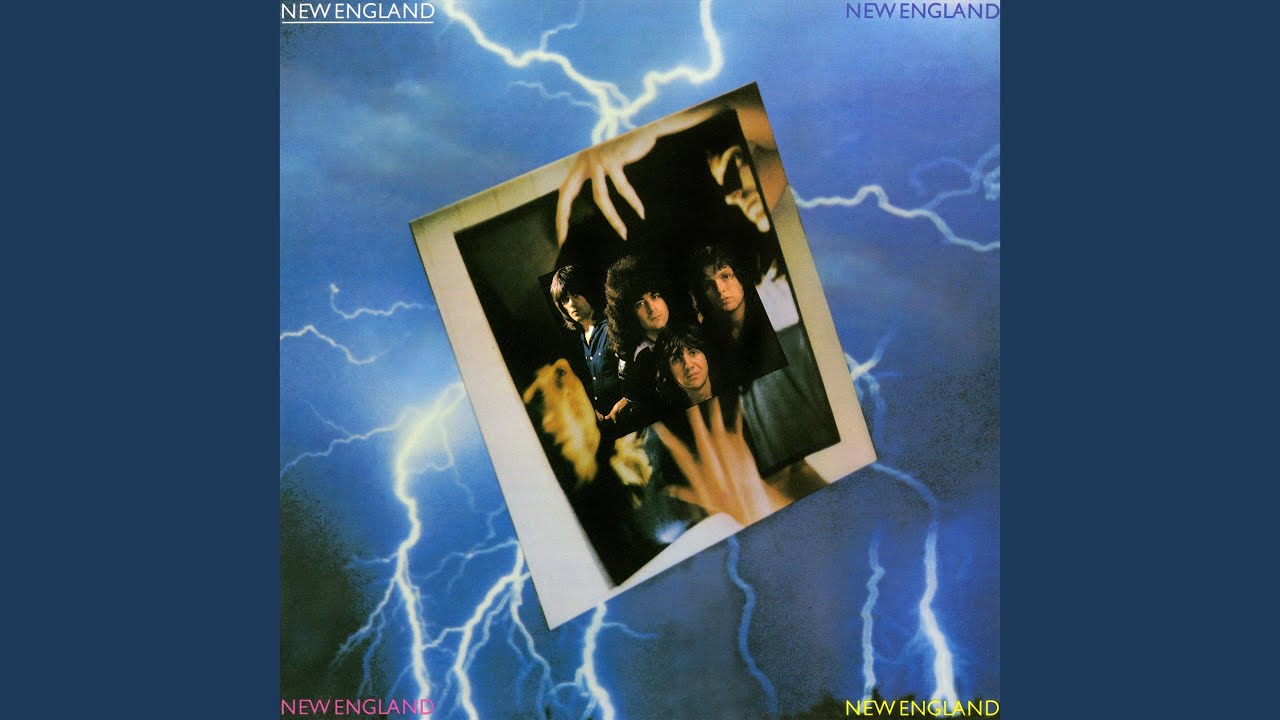
Our big problem was that our record company, Infinity/MCA, folded during its first year of business, just as we’d started tracking our second album. We had six major-label offers for our first album, and chose to go with Elektra for our second and third albums.
The transition took precious time. Although we were doing great musically, working with Todd Rundgren and touring, Elektra let us down on the promotion side of things. You can hear what would have been our fourth album on our Cherry Red boxset.

Is it true that New England’s management was focused on Kiss and neglected your band?
I have what I call the David-and-Goliath theory of management. You can have your cousin manage your band, who’ll lay his life down for you, but has no major contacts. Or you can go with Mr. Big, but he has big-name clients that you must compete with for attention.
We chose Bill Aucoin for his vision, experience and direction. It was up to us to be great and earn attention. We’re all still friends with Kiss. I recently played at a convention in Finland with Bruce Kulick.
Unbeknownst to Vinnie, we learned his demo tape. We blew his mind when we played his music
How did you meet Vinnie Vincent and form Warrior?
As New England went into pre-production for its fourth album, guitarist John Fannon left the band for family reasons. We put the word out to replace him and got some great inquiries. The best one was from Gene Simmons, who told us of a guitarist named Vinnie Cusano who was writing with them for their new album in L.A. [Creatures of the Night].
They were looking for a replacement for Ace Frehley, but there was a concern that Vinnie was too short to be in their band. Gene suggested we contact each other. Vinnie sent us a demo tape that we really liked. It was in the Foreigner vein but a little heavier.
He flew to Boston to audition for us, and, unbeknownst to him, we learned his demo tape. He played our music very well, but we blew his mind when we played his music. He smiled and said he couldn't find anyone who sounded like us in LA. We decided to pool our resources and start a whole new band in Los Angeles.
Tell us about the recordings you did with Vinnie.
At the time, Vinnie was very together musically. As well as working with Kiss, he was working on the television show Happy Days. Prior to that he’d played with Dan Hartman and Edgar Winter.
His style was more like Jeff Beck, and the music was straight-ahead, radio-friendly rock. Vinnie has a cool voice, but didn't want to sing and play guitar. We auditioned Fergie Frederiksen, who would later join Toto.
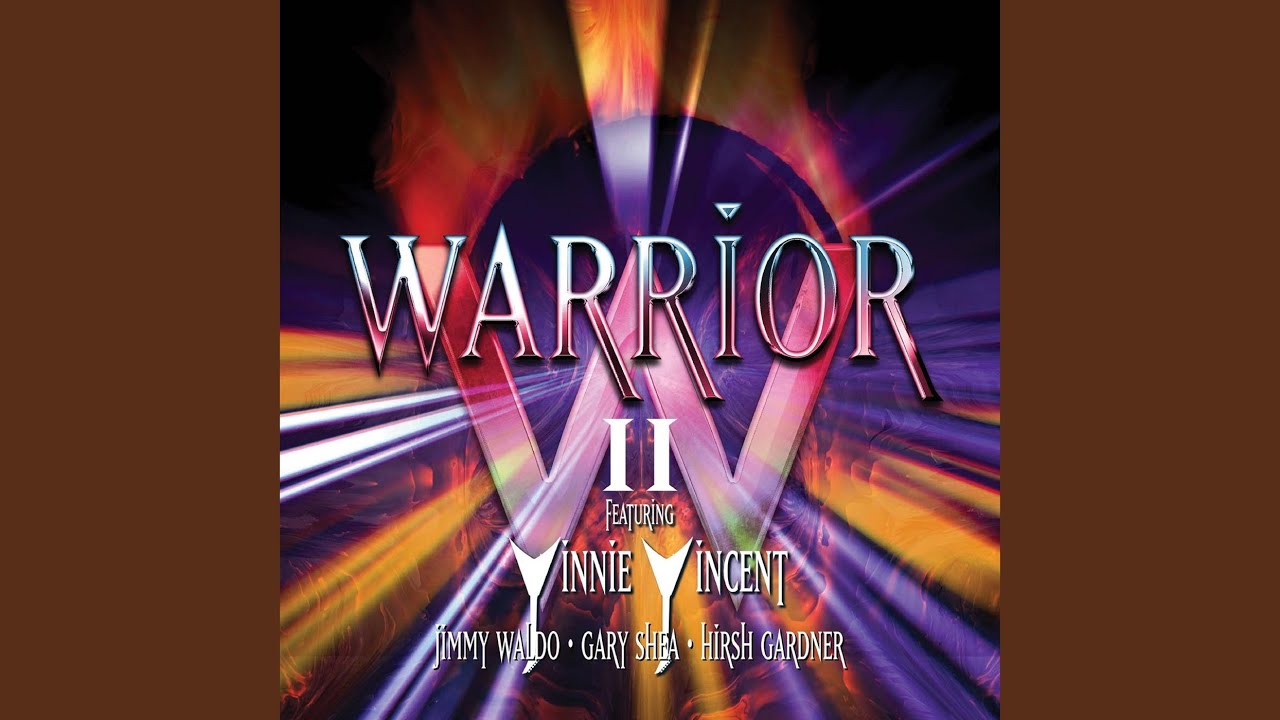
I taped rehearsals on my Sony TCS 350 cassette deck for my own benefit. A few years ago, a CD was released of these sessions under the name Warrior that we were floating at the time. The tapes are bass-heavy because I wasn’t taping the whole band.

I had a great roaring midrange sound at the time, using my 1980 G&L 1000 bass, played with a pick. I was playing through a very beat-up Acoustic 360 bass amp rental at SIR Sunset. I offered to buy it on the spot, but they declined!
Is it true that Vinnie took some of Warrior’s material and used it for Kiss and The Vinnie Vincent Invasion?
Warrior only lasted two months when Vinnie was asked to join Kiss full-time. Great for him; not so great for us, but a deal hard to refuse. We kept in touch a bit as time went by. Vinnie had many songs, and we’d touched on some that showed up later down the line on his solo albums. His only shortcoming at the time was stressing over making final decisions on arrangements and mixes.
I put in an arpeggio at the intro. Yngwie told me I was stepping on his solo. But the lick stayed
How did Alcatrazz form?
Jimmy Waldo and I decided to stay in LA rather than go back to Boston. I got a call one night from manager Andy Truman, who was a neighbor of Graham Bonnet.
Graham had just left the Michael Schenker Group and Rainbow. They were looking to start a new band as opposed to a solo artist band. Barrymore Barlow from Jethro Tull was to be on drums and Zal Cleminson on guitar. Andy asked if I knew a keyboard player, and I mentioned Jimmy.
Jimmy, Andy, Graham and I met at the Hyatt Hotel bar on Sunset and discussed forming a band with a European rock feel. We were offered a record deal with no demo on Rocshire/MCA through our freind Bob Sifkin, A&R for MCA.
How did the young Yngwie Malmsteen come into the picture?
Barry was asked to play on Robert Plant’s solo album so he stayed in England. Zal was not in the picture. We auditioned two guitarists that weekend – Laurence Juber from Wings and a young Yngwie.
Laurence is a great player; but obviously, Yngwie was what we were looking for to complement Graham's background with Ritchie Blackmore. I came up with the idea of using Alcatrazz as the band name. Later on, we added an extra Z like in “jazz” or “nazz.”
What was your rig like by then?
I had my three Ampeg SVTs and four 8x10 cabs that I’d brought out from Boston. Later on I switched to a Randall endorsement, using their RB 500 solid-state heads and eight 2x15 cabs.
I continued to play my G&L 1000 and later switched to Aria Pro SB Elites with EMG pickups and Badass bridges. Yngwie got me in with Aria basses, and I got him in with my D’Angelico endorsement for strings and picks. I later sold all of my Ampeg gear and cases to Yngwie’s band – I didn’t want to deal with tubes any longer.

Yngwie takes a lot of credit for the music he made with you. How accurate is that?
Yngwie actually has a great sense of humor in private. Of course, he didn’t write all the songs, vocals, keyboard parts and basslines. Island in the Sun was a New England song that Jimmy had written. Graham wrote new lyrics for it, and he wrote General Hospital.
We were a band, not a solo project. I put in a B minor ascending arpeggio at the intro of Hiroshima. Yngwie told me I was stepping on his solo, but the lick stayed. He did write a major part of the music but it was no-one’s solo album. Because of the band’s structure, he played some of his most memorable solos on No Parole.
Once again,a guitarist of ours was offered a deal you can’t refuse! This time it was from David Lee Roth
What led to Yngwie leaving, and how did Steve Vai enter the picture?
Yngwie was replaced for becoming difficult to work with. We’d auditioned Chris Impelliteri and Steve Vai in secret. We chose Steve, but both are brilliant guitarists. This was prior to going a major tour with Ted Nugent in the summer of ’84. Our label agreed to the swap, but asked that we do it going into our next record. We all agreed to that.
Steve seems much easier to work with.
Yngwie is great, and Steve is awesome. They’re bookends. Steve was a joy to work with musically and brought a whole new bag of tricks from the Zappa camp. I’m very proud of the level of musicianship on Disturbing the Peace. Along with producer Eddie Kramer, I felt we’d come into our own sound and looked forward to more down the road.
What led to losing Steve, and Graham torpedoing the band?
Once again, a guitarist of ours was offered a deal you can’t refuse! This time it was from David Lee Roth. Of all the guys David could get to play with after Eddie Van Halen, he chose Steve Vai. We split amicably and are still good friends.
Graham refused to record some outside material Capitol Records A&R suggested to us, and they didn’t renew our contract for a third album. That’s life in the big city.
What led to New England and Alcatrazz both reforming?
New England got back together in 2003. We realized we had great chemistry and we’d been away for too long. Our first rehearsal produced two great songs, which led to some spot live appearances.
Eventually we took things further by playing over a dozen shows on the East and West Coasts as well as Tokyo. We’ve recorded an EP and a live album over the last 10 years on a part-time basis.

Alcatrazz reuniting morphed out of The Graham Bonnet Band. Jimmy was asked to play some keyboard tracks on an album, then joined as a touring member. Joe Stump was added as lead guitarist.
I went along on a Graham Bonnet Band tour doing an Alcatrazz set, testing the waters on a few gigs in the Southwest and Japan. It went very well and led to reforming Alcatrazz properly, signing a record deal with Silver Lining Records. We took drummer Mark Benquechea and guitarist Joe Stump with us.
Vinnie seems to be in a rough spot, and I wish him well
Would you work with Yngwie or Graham again?
Over the years I’ve learned to never say never. Music is a very liquid gift. It ebbs and flows in sometimes strange ways. All of us have worked extremely hard making music together, and that strength shows when we get back together as if nothing happened. Life is mysterious, and I rule nothing out. Keep an open mind and a warm heart.
And you finally put out those long-lost Warrior recordings.
Yes – a combination of live rehearsal tapes and demos done at the Record Plant in LA. It’s a showcase for what might have been.
What are your thoughts on Vinnie charging hundreds of dollars per song?
I don’t know any more than everyone else knows! He’s welcome to sell his music however he wants. He seems to be in a rough spot, and I wish him well.
Out of John Fannon, Vinnie, Vai and Yngwie, who’s the best guitarist you ever worked with?
That’s the old question – which flavor of ice cream is best! Ther’s no definite answer. I love them all, each for a special reason. I must also add Joe Stump to the group. He’s a master shredder. He has also been an associate professor at Berklee for the last 20 years.
What’s next?
Most of our shows are fly dates. I recently played on Hirsh Gardner’s new solo album, Three Times the Charm. My latest endeavor is my new book, No Bass No Party – it’s about walking into a department store, buying an inexpensive guitar, and eventually playing Madison Square Garden. It’s a story of patience and persistence, navigating through the music business with its pitfalls of contracts, lawyers and record deals.
Alcatrazz has begun work on the band’s seventh studio album, due for release later this year. Touring will resume at that time.
- Warrior Featuring Vinnie Vincent: The Complete Sessions is out now via Cherry Red. Shea’s book No Bass No Party is available via BWL Publishing.

