



![[L-R] Joe Satriani wears dark shades and smiles as he solos on his Ibanez JS signature model; Ian Anderson strikes a pose as he plays the flute; Yngwie Malmsteen pulls his aviators down to give the camera some eye-contact in this portrait from 2019](https://cdn.mos.cms.futurecdn.net/qpBDNvdaGjWXpBHjWdQG7S-1920-80.jpg.webp)
Jethro Tull are one of prog’s most uncompromising acts, one of its trailblazers, the band who give blues-rock an evolutionary push and shove into more adventurous terrain, seeking out the wide-open sonic pastures of English folk, applying classical flourishes, following their musical curiosity to see where it might take them.
But for co-founder and vocalist/flautist/acoustic guitar player Ian Anderson, that musical curiosity has to be reined in a little when it comes to lead guitar.
When recording Jethro Tull’s latest studio LP, Curious Ruminant – an album that finds Jack Clark officially making his debut on electric guitar – Anderson admits he gave Clark some advice on what to do and, just as importantly, what not to do when taking a solo in the studio.
In a recent interview with Louder, Anderson said Clark knew the value of restraint when it came to guitar solos.
“Turns out Jack’s a really good lead player, too,” says Anderson. “On this record he impressed me with intelligent, measured guitar solos, which have lots of semi-quavers in the right places, but Jack’s not afraid to hang on a note, either.”

For Anderson, restraint in lead guitar goes a long way. Or, in other words, he isn’t looking for technical audacity.
“That was something I impressed upon him when he first joined,” he says. “‘If you have a 16-bar guitar solo, please don’t turn into Yngwie Malmsteen or Joe Satriani.’”
Clark would no doubt have been aware of his brief already. He has been involved with Jethro Tull for some time now, filling in on keys and guitar.
“This is Jack’s first LP with us, but he had already played with Jethro Tull a number of times,” says Anderson. “He stood in for David Goodier when David was having surgery, and then for John O’Hara, covering some of his keyboard ground, but on second guitar.”

In other words. Clark knew what he was getting into. But Anderson – whether wild-eyed and hopping on one leg with a flute in his mouth, or in the control room overseeing a take – nonetheless knows what he wants from a guitarist, and he is a man who believes in speaking plainly.
Does he think about the idea of Curious Ruminent, an album that is freighted with his introspections, as a career milestone? “Not really,” he tells Louder. “It’s just a collection of songs, in the same way that Aqualung was a collection of songs.”
Anderson might have vetoed the technical ecstasies of Satriani and Malmsteen’s lead styles, but some of Jethro Tull’s greatest lead guitar moments have come under the influence of the hottest players in guitar at the time.
Take 1971’s Aqualung, which features one of the greatest – if not the greatest – solos in Jethro Tull history from Martin Barre. Speaking to Guitarist in 2025, Barre explained how Leslie West of Mountain inspired his tone.
“I’d met Leslie West, and like a lot of guitar players, you couldn’t meet Leslie West and come out unscathed,” he said. “I loved him to bits. I loved his playing, I loved his presence. And I loved Mountain.
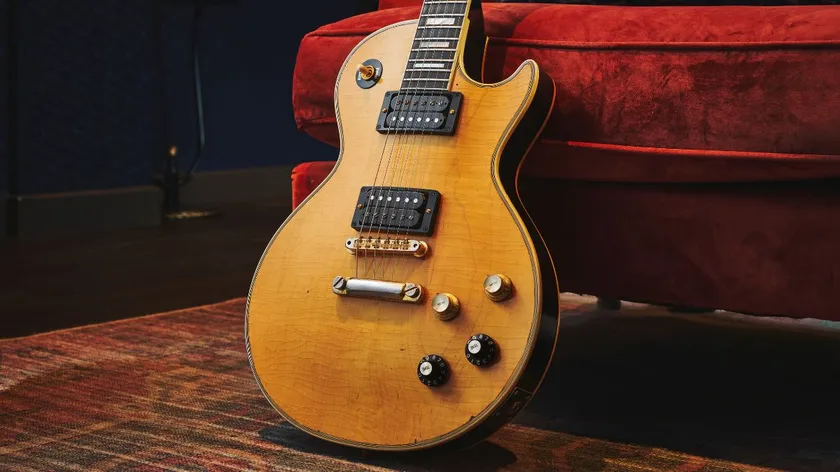
“Everything about them was a learning curve. Not just the guitar playing but everything about their arrangements. So, like a lot of people, I bought a Gibson Les Paul Junior because Leslie had one.”
Barre used his Junior and a Fender Stratocaster, both from 1958, plugged them into a Hiwatt and let the amp do the heavy lifting.
“It was simple – no pedals, nothing,” said Barre. “Just a guitar into the amp – and off you go.”

