




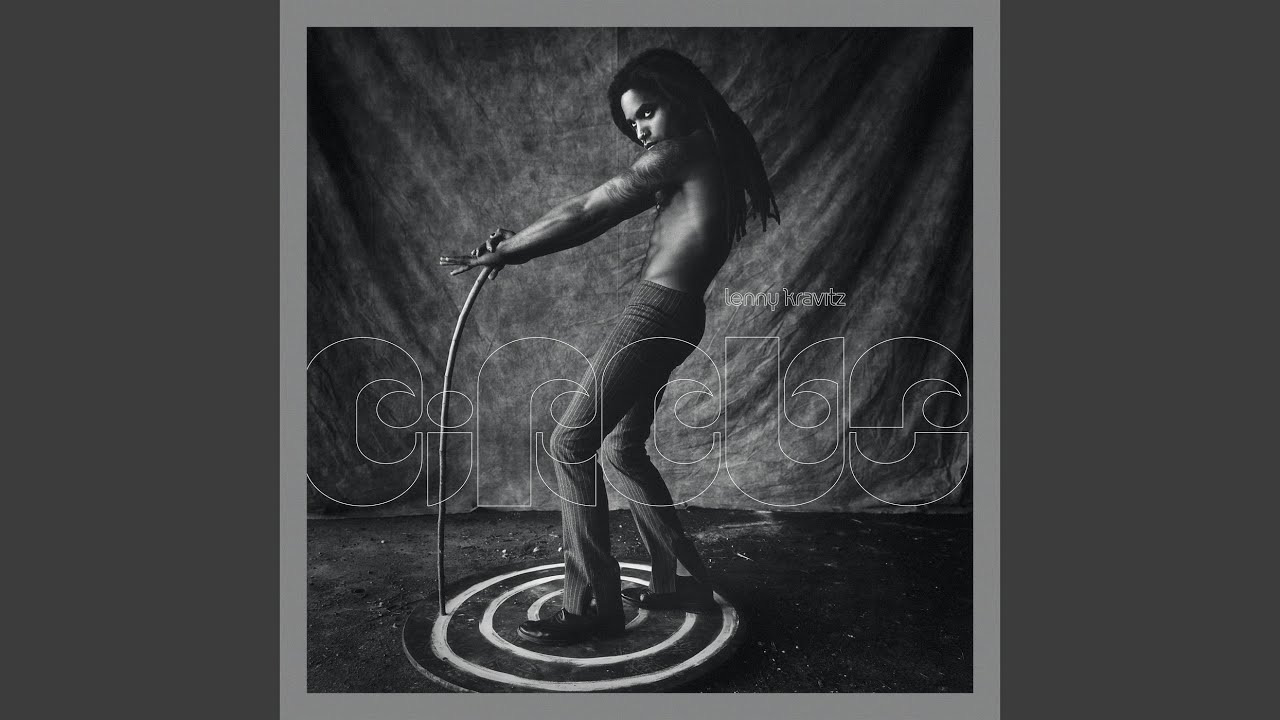
When Lenny Kravitz released Circus, his fourth album, in 1995, he was coming off the back of the career-defining, global success of 1993’s Are You Gonna Go My Way.
That album – and the single of the same name – saw him scoring huge success in every market around the world, maintaining his seemingly constant upward trajectory; his second album, 1991’s Mama Said, had already comfortably surpassed the impressive sales of his debut, 1989’s Let Love Rule.
Kravitz and his longtime guitarist/collaborator, Craig Ross, sat down with Guitar World to revisit Circus, which has recently been rereleased as an expanded 30th-anniversary deluxe edition that sports a hefty helping of bonus tracks.
Circus came on the back of the huge success of Are You Gonna Go My Way, which had been your biggest record to date. Did that cause you to feel any pressure, either from yourself or your record company?
Lenny Kravitz: Not really; we were too busy. We were on tour a lot at that time, and we were basically almost making the albums back to back. We knew we just wanted to move forward. We began by renting a chateau in France, about two hours outside of Paris.
We started to work on the songs without any preconceived notions or feelings; we were just geared to accept whatever was given to us. I don’t try to control the record or say what theme I want or anything; I just go with whatever I feel.
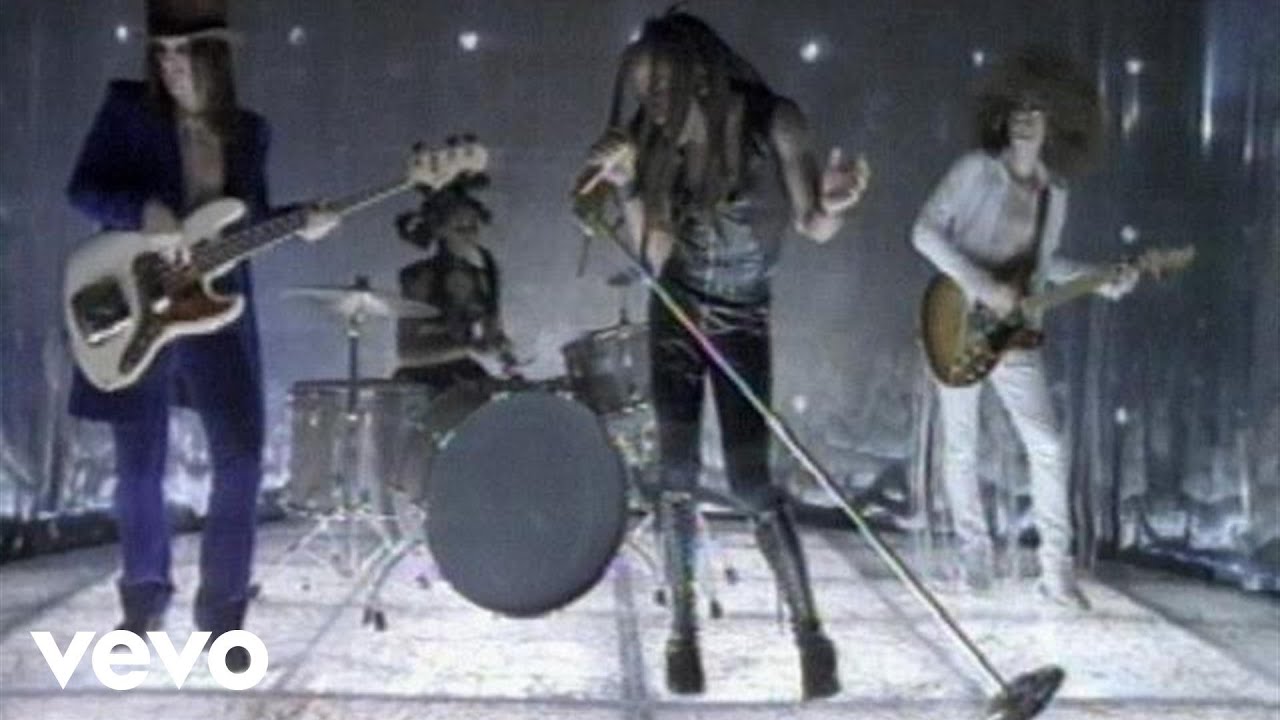
Some of the original reviews of Circus called it a “spiritual concept album.” Is that a valid description?
Kravitz: Music is always a spiritual situation, but I was going through a lot at that time. My mom had been sick and passed away, and I was dealing with the whole crazy explosion that the success of Are You Gonna Go My Way generated. Life was changing in all directions.
Given the increased success and visibility, did you feel disillusioned with the way things were going?
Kravitz: It was a lot of attention that I wasn’t necessarily prepared for. It was definitely an adjustment, but the music always came first. It’s always all about the music, regardless of whatever noise might be going on around you – people telling you what they think you want to hear or whatever.

When you revisit an older album from your catalog, are you able to hear it with fresh ears, or do you find yourself wishing you’d done things differently?
Kravitz: You can’t do that, really; you have to accept that the record is what it is, and that it captured where you were at when you did it. It’s a snapshot of a moment. You can hear things you might think could be a little improved here or there – small tweaks – but you accept it for what it is.
As with all of your albums, great guitar tones are a given. What were your go-to choices for Circus?
Craig Ross: We’d really started to get a lot of great gear around the time we did Are You Gonna Go My Way, so it was a case of continuing the exploration – trying a whole lot of different amps. When we got to Europe, we hired a bunch of cool stuff as well, as we didn’t take a lot of what we had. We rented some really great Marshall and Vox amps.
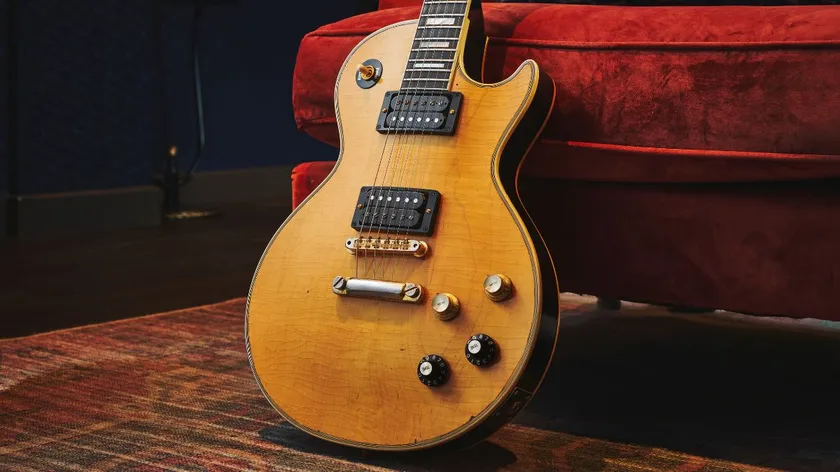
Kravitz: We took our normal array of vintage guitars, though – Les Pauls, Teles and Strats and a couple of additions – a cool Gretsch Tennessean and an old Gibson ES-330.

What’s the writing process when you get ready to record a new album?
We used to do very long soundchecks at that time, and that would spark ideas, but in the end most of the stuff happens in the studio
Lenny Kravitz
Kravitz: It depends. There isn’t one standard method that we use. Sometimes I’ll write the whole song myself and bring it into the studio, but then some songs will be written with Craig and some just arise out of us jamming together. For example, the opening cut, Rock and Roll Is Dead, was done at Waterfront Studios in Hoboken, New Jersey, where I’d already come in with the whole idea.
We used to do very long soundchecks at that time, and that would spark ideas, but in the end most of the stuff happens in the studio. You need a couple of things in your pocket to start off with when you go in there, but once you get into the groove it’s like the sky opens; there’s an energy flow. You go with that flow and let it take you where it wants to go.
Quite a lot of my songs come from dreams. I remember I dreamt Can’t Get You Off My Mind in its entirety. I called Craig to come over to my loft, told him I had a song that sounded kinda country, and we just jammed it out in no time. It didn’t come from any country influence; I hadn’t been listening to that kind of stuff when I dreamt up the song, it was just a reflection of how I was missing my partner when I was on the road.
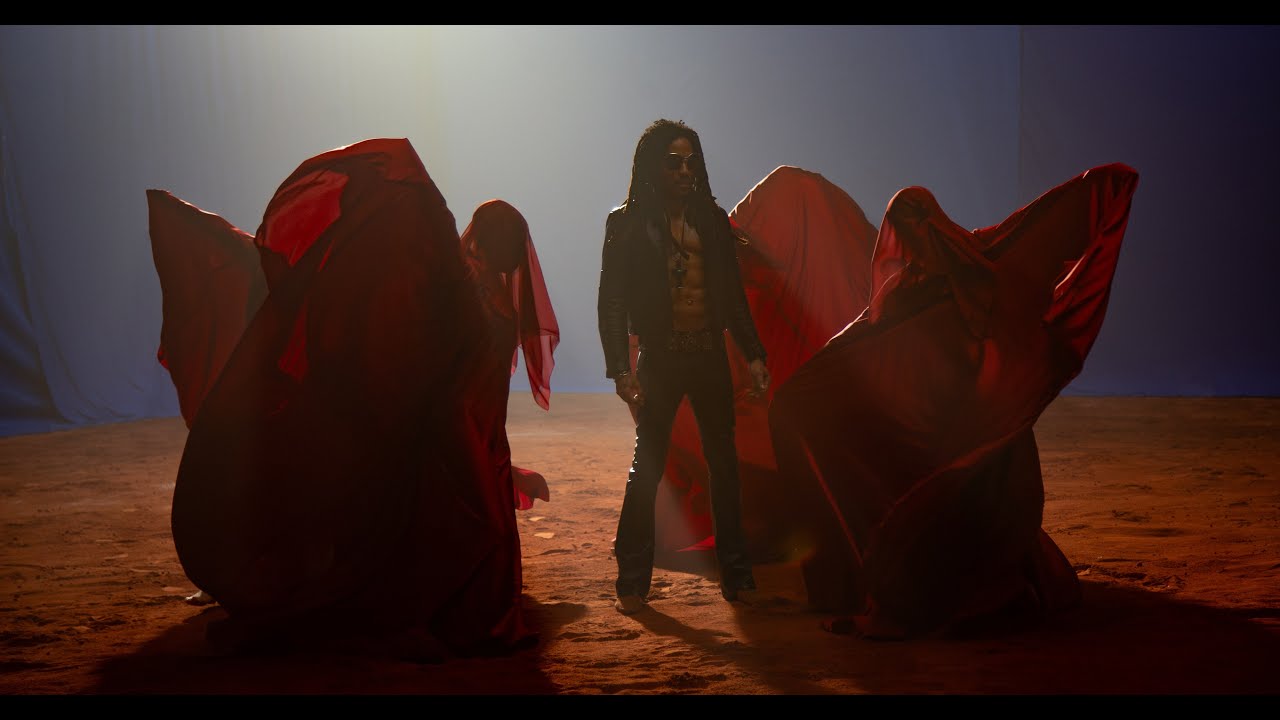
Beyond the Seventh Sky has a real John Bonham groove on the drums.
Ross: We worked that one out on a soundcheck. Lenny played the drums. Robert Plant was singing and riffing over our groove.
Kravitz: He was our guest on the tour – though we didn’t end up using his melody. Bonham is one of my favorite drummers; he’s one I try to channel when I play drums.
Ross: That was another one we did in the big room at Waterfront.
Kravitz: It was a huge, warehouse-sized room. We used one mic to capture the whole drum sound.

When one of you comes up with an idea, does the other one instinctively know what to play to complement it, or do you spend time experimenting?
Ross: For the most part, it comes immediately – even down to the tones. It’s all about staying out of the way and making the arrangement work. Sometimes I’ll just think a track needs an acoustic or maybe something that sounds totally different from what Lenny is playing.
Kravitz: We’re very instinctive after playing together for so long; I think that’s just a natural evolution in any longterm musical relationship.
The solos always seem to be exactly what the song is asking for, minus any showboating.
Kravitz: Everything is about the song. The song tells us what to do at all times. We just make quick decisions; I’ll say to Craig, “This is you, or this one is me.” The song is always king, though.
Ross: Without a doubt, the song kicks things off; it tells you what works and what doesn’t. The secret is to listen to what the song wants and work with that. If you don’t have a great song, it doesn’t matter how good the solos are. They’re not gonna save the track.
The sequencing of the album is interesting, with Can’t Get You Off My Mind and Magdalene together, right in the middle. They’re outside the usual things you’d expect to hear on a Lenny Kravitz album, and their juxtaposition against the more familiar sounds is quite striking.
Kravitz: The sequence for me is about what I feel at that time – how the song that ends feeds into the next one. I just felt that they really seemed to need to sit together. Magdalene is a real quirky song with an unusual pop feel. I can’t really explain where the feel for Can’t Get You Off My Mind came from, but I really liked the way they sat together; they seemed to complement each other perfectly.
The tone on the Tunnel Vision solo is great. Is that a wah?
Kravitz: Yeah, that was me playing that. It was a Vox wah and a Roger Mayer Fuzz Face, both from the ’60s. They weren’t owned by Jimi Hendrix, but they’re from the same period – and they’re the same models as the ones he used. I traded Elliot Easton an old left-handed Telecaster for them. I think I did really well with that trade. [Laughs]
So much of the characteristic sound of your albums is about the warmth of analog and vintage gear. Do you think you could get the same sound with modern equipment?
Kravitz: It ain’t the same, man. It really isn’t the same. I A/B test everything, and while technology has come a long way and some things are very close, they’re just not close enough. Plus, there is the effect of the accumulation of one thing on top of the other, one old piece combined with something else vintage; it begins to build up a sound that modern equipment can’t reproduce. Just look at old guitars – the age of the wood, you know? That’s something almost indefinable.
Ross: Wood ages and dries; it’s almost like there’s something in the air that imparts a unique sonic effect. I think you can’t deny that the pickups in old guitars age in a way that is very hard to reproduce.
Given that you’re such avid collectors of old gear, what are the latest guitars you’ve bought?
Kravitz: The Goldtop I’m using now on tour. I have several, but this one is a conversion; someone in its history put PAFs on it and took off the tailpiece. It is the most amazing sounding guitar. I think it’s from around ’54.
Ross: I got a ’56 Les Paul Custom that had already been routed for the bridge pickup to hold a PAF. I wouldn’t want to be the one who routed out a vintage guitar, but if it comes to me that way, I’ll happily take it.
We’ve got another album on the way. It’s already recorded; in fact, we’ve got two albums recorded and ready to go
Lenny Kravitz
I remember you saying that once you started to get some success, you’d get people trying to sell you old guitars in the parking lots at your shows. Do you still pick up much that way?
Kravitz: No. If they’re bringing them now, they want a ridiculous amount of money. Many times it’ll be a professional dealer with prices to match. Back then there was no internet, people didn’t research values and the market was different. People would come with some great old Gibson that had been under the bed or something. [Laughs] It’s not what it was, that’s for sure.
What’s coming up?
Kravitz: We’ve got another album on the way. It’s already recorded; in fact, we’ve got two albums recorded and ready to go. Every break we have, we love to record. Recording is like breathing for us. It’s something I can’t stop doing, so I’m thankful that the music continues to turn up. I do this for me. I’d never want to just tour on the old hits. I’ve got into this to create music. That’s what it’s all about for me.
- Circus is out now via Virgin.
- This article first appeared in Guitar World. Subscribe and save.

