


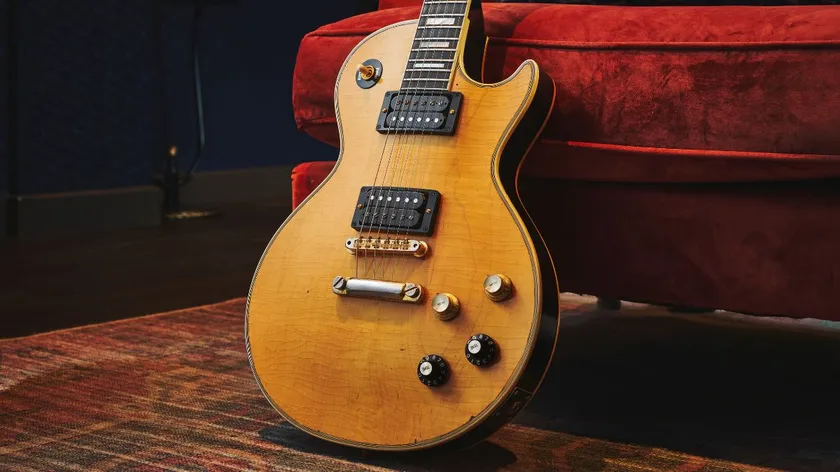


Mark Kendall’s contributions to Great White provided a blues-based alternative to the straight-up “hair metal” popular in the ‘80s. Songs like Rock Me, Once Bitten Twice Shy, and Desert Moon have proved memorable, even if Great White’s legacy has come to be defined by two-fold tragedy.
First, there was the Station nightclub fire in 2002, in which 100 people died and another 230 were injured. More recently came the death of wayward vocalist Jack Russell, who succumbed to his addictions in 2024.
But when Kendall – who’s currently battling cancer – looks back, he does so with gratitude.
“We came out of a garage, got signed, and our little band sold millions of records,” he says. “We went through tough times, kept fighting back, and we didn’t quit. This business isn’t easy.”
His sunny outlook is refreshing, as is the news that his health is on the upswing. His biggest regret is associated with Russell, whom he calls a brother: “We said our goodbyes in court,” he says. “I didn’t really talk to him after that. But I was never hasty in the press. It was just him being sick that separated us. It was his demons.
“But when he was really sick at the end, I wish I’d flown to see him. It was never personal. I’ve never taken anyone’s addiction personally. If someone is struggling and gets on a better path, that’s great. Unfortunately, his addiction overpowered him.”

Before Great White you formed Dante Fox. How did that come about?
I was in another band and the singer couldn’t quite hit the higher notes, and I was getting discouraged. Jack Russell came to an audition, and we decided to make our own band.
But Jack was in all kinds of trouble and had to go to a youth prison, so I had to start from scratch and I started Dante Fox.
Jack served 11 months in prison, and when he came out he auditioned again and joined Dante Fox. We played around Hollywood for around two years and Enigma signed us, but just for distribution.
We recorded an EP and our song ended up on KMET, the biggest station in LA. It was unheard of – we were in rotation with Queen and Tom Petty and we didn’t even have a real record deal. Alan Niven ended up managing us, and the first thing he said was he hated our name.

Is that when you became Great White?
Yeah. He said that it was a way better name than Dante Fox. We didn’t really like it at first, but when we thought of the shark, we thought, ‘Okay, that’s pretty cool.’ And the name didn’t dictate what type of music we’d play, like the name Slayer, where every song has to be like, ‘Kill your parents!’”
Rock Me, from the Once Bitten album, was Great White’s first hit. Was that expected?
When we finished the record, Capitol Records and the A&R people came down to the studio to listen, and when Rock Me played, they were jumping around the room, going, ‘This is it!” But I didn’t really know what we’d done.
The ‘80s were getting a little watered down. You could almost predict the lyrics before you heard a band
When you’re recording, you kind of have tunnel vision on your parts; you keep rewinding the tape and trying to do this or that. So, I didn’t really know how good the song was until I heard it back all mixed.
Interesting choice for a single, given that it’s seven minutes long!
That was the thing we were concerned about. We weren’t like Phil Collins, who had 80 hits behind him! I was like, “Is a seven-minute song gonna work?” But I guess the song was good enough. It has a lot of dynamics to it, where it doesn’t feel like seven minutes.

And Alan Niven – it was almost like a joke – listed every song from the record at 3:59! They sent the single to the radio stations and that’s what it said. By the time they figured it out, it was already a hit.
What gear did you use on Once Bitten and its follow-up …Twice Shy?
I used a Fender Bassman a lot, and Marshalls too. I like traditional amps, and the Bassman was a 1962, pre-CBS amp. You could turn it up and the tubes would saturate and give natural distortion.
For guitars, I used my 1974 Fender Telecaster Deluxe a lot. I also used a guitar Kramer made for me, after I met Buddy Blaze in the ‘80s when we toured with Whitesnake. And I had a guitar by Music Works made by Jim Foote, a Redondo Beach guitar maker, who had a music store.
…Twice Shy had another big hit in Once Bitten, Twice Shy.
That was kind of by accident. Alan Niven brought us that song and said, “Let’s not be done yet. Let’s do this song.” He loved the lyrics, which were about being on the road. We were total road dogs who never went home, except to make another record; so it was a good song for us.
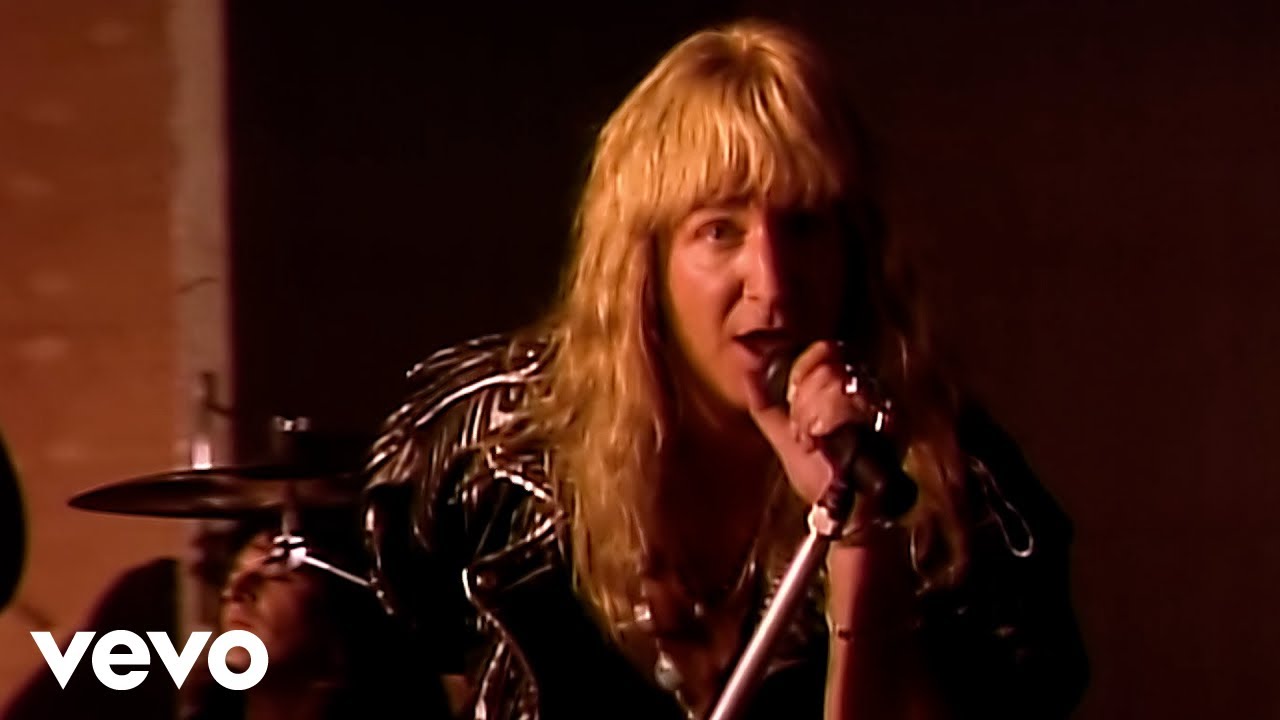
I guess it turned out good, because the record company kind of demanded that it be the single. We changed the lyrics a bit on the chorus, and it took on a life of its own.
Unlike many ‘80s groups, Great White didn’t fold in the ‘90s.
We never stopped touring. We kept making records and did three albums in the ‘90s. But when we first saw Nirvana, we were blown away by those guys. I thought it was the greatest. Those guys didn’t care, wore flannel, and had a really good melody to their songs.
The wall was on fire in just a small area. I unplugged my guitar and went out into the parking lot
I thought Alice in Chains were awesome. I thought the ‘80s were getting a little watered down toward the end. You could almost predict the lyrics before you heard a band. Grunge was refreshing, even though it kind of hurt our genre a little bit. But we never stopped, and just kept things pretty simple, until we disbanded in 2000.
Infamously, after Great White reunited, the band came to be defined by the tragic Station nightclub fire in 2002.
It’s kind of weird to be associated with what happened. Jack had made a solo album and was touring with his own band. They called me, and I was told he was on a solo tour playing clubs, and that attendance wasn’t very good. He asked if I would help out, which I did. I came out to find they’d started calling the band Jack Russell’s Great White, which I thought was weird.

They were using these sparkler fireworks things. I go, “Hey, when you’re gonna use that stuff, can you give me a warning?” At that place they had foam on the walls. Soundproofing foam was blue, but this was the black foam you’d use to ship stuff in the mail, and they had it on their walls.
Do you remember the fire starting?
I felt heat on my back; I turned around and the wall was on fire in just a small area. I unplugged my guitar and this guy opened the side door by the stage, and I went out into the parking lot, just kind of waiting for it to be put out or whatever.
I was standing with my guitar and I called my wife, saying, “You’re not gonna believe it – this sparkler thing set the wall on fire. But they’re gonna put it out and we’ll finish the show.”
But the fire kept getting bigger; the draft from the open door, I guess, made the fire grow. It got super serious. I could see this was becoming a big deal. And some of the doors had been chained shut to stop people sneaking in. It was all a shock.
What can you remember about the immediate aftermath?
They made us stay in Rhode Island for like seven days. The police, or some kind of agents, were interviewing me. I explained I was just a hired gun for this guy’s solo tour, and I didn’t know anything about the pyro. My band, Great White, never used pyro, even in arenas. We were more about fog and lights.
In the end, they sued Jack for like a million dollars. His insurance paid for it. And man, what a tragedy. I spoke to my pastor and all kinds of psychologists about how to mourn properly and deal with it. Here I am going on with my life like a normal person, but all these people died. It was a lot to deal with.
You hate to see addiction take somebody’s life like that. He was one of the all-time great rock singers
How did that impact your relationship with Jack?
We had a big hiatus. We hadn’t been together as Great White since 2000, apart from me going out and helping with Jack’s solo tour. We didn’t get back together until 2006. We made two more records, but then Jack started to struggle with opiate addiction.
He was starting to fall down on tour; it was getting really bad. He got injured from falling and broke a bunch of bones in his hip. He had to get screws put in and he was a mess. We told him, “Go get well, and come back when you’re doing good.”

But instead of doing that, he got guys who would play with him in his condition. We got singers to fill in and we just kept touring. We thought he was gonna come back and get himself together – but he made a band called Jack Russell’s Great White.
Which is kind of bizarre, given that you’d formed the band and recruited him.
It was nuts. He tried to take our name and just call himself Great White. We sued, and it took two years in court. In the end he was allowed to have his band be Jack Russell’s Great White, and we continued as Great White.
But it’s unfortunate, because we were brothers. Jack and I were the best of friends for years. We never got into an argument. It was the addiction that separated us. He couldn’t perform to his potential, and then he died. You just hate to see addiction take somebody’s life like that. The guy was one of the all-time great rock singers.
You’ve been battling cancer, but you seem to be doing well.
The cancer started with me having “irregular urine.” They gave me a Z-pack, and then it happened again a couple of weeks later. I got a full physical, they gave me the probe, and that’s how they found the cancer in my kidney.
They got me on immunotherapy, and the cancer shrank to 11cm, then 8cm, and now 5cm. So it’s isolated and very small, and keeps getting smaller. The goal is to have no sign of the disease, and then get checked every six months. I’m kind of lucky; what I have isn’t curable, but it’s manageable, and it didn’t spread into my whole body.
What’s next for you and Great White?
I’m recording at my friend Tracy G’s place – he used to be in Dio. It’s really great. And I’ve got a singer, Brett Carlisle from Alabama. I don’t think we’ll release a whole album, but we’ll record a bunch of songs.
Today people don’t have that human connection from the past, where you know everybody’s name in the band. Kids today just download songs. So we’ll do a song, and a video, and just keep touring.
- Catch Great White on the road.

