



The objective for Jake Kiszka is the same as ever – to play guitar-driven rock ’n’ roll from the heart. But after years of success with Greta Van Fleet, Kiszka stepped away, formed another mega-band in Mirador and, shall we say, expanded his portfolio. Circling back to Kiszka’s objective, with his attention back on Greta Van Fleet via a new album, 2026’s Palace for the People, yeah, it’s the same, but with a twist.
“The sonic identity for me, from a guitar perspective with Greta Van Fleet, is to do something much wider than I’d ever done before,” Kiszka tells Guitar World. That meant Kiszka needed to take inventory of what the guitar meant to him, what it could do for him and how he’d wield what he calls “Excalibur” in the studio and on stage.
“It’s a utility of projection,” he says. “It’s a vehicle that can take what’s in your heart, mind and body, and translate it in some ways.” This mindset extended to the rest of Greta Van Fleet while recording Palace for the People. Also on the band’s mind is the Internet’s habit of slogging the band at every step.
Not that this is a hindrance. “It’s never really a factor,” Kiszka says. “Experientially, we see it as if you’re an artist, if you’re not pissing someone off, you’re probably not making great art.”
Greta Van Fleet has certainly done plenty of that. Sure, their social media following is in the millions. The members – brothers Jake, Sam and Josh Kiszka, along with Danny Wagner – have become cultural icons on the backside of hit records, including 2018’s Anthem of the Peaceful Army, 2021’s The Battle at Garden’s Gate and 2023’s Starcatcher, but that hasn’t stopped people from labeling them as “imitators.”
Further complicating matters is the mantle of “saviors of rock ’n’ roll” that was unfairly thrust onto the band. And then they delivered the goods – but critics and certain sectors of fans still turned on them. But through it all, Kiszka remained level-headed and is more confident than ever as the band prepares for the post-Palace windfall.
“This album is an interesting intersection of our musical journey,” Kiszka says. “It just sort of came about through having more worldly influences than ever before.
“A big part of the project itself was the title. It comes from the Alexandra Palace in north London. The idea was, it’s this palace built for the people by the British monarchy, and we thought that was a beautiful concept. It became identifiable, a modus operandi and our philosophy for this record.”
Kiszka reflects on his journey like a man beyond his years. He broke in so young, and it seems like he’s been around forever, so it’s hard to believe he’s just 30. Couple that with the shots he’s taken versus the immediate and ongoing praise, and you have an artist with thicker skin than most.
“No matter what you are, you’re fighting an uphill battle,” Kiszka says. “The idea, or the objective of the spirit, of the fighter, or the reluctant one, is that in the soul of the artist, we’re not only going to climb the mountain, we’re going to the summit of the bastard!” [Laughs]
Kiszka’s laughter reminds us that there’s plenty of levity left in his spirit. Coming from the right place from the jump saw to that.
“With music, and specifically the guitar, I really feel like the boy who pulled the sword from the stone,” Kiszka says. “And that’s beautiful. I guess it’s been a self-fulfilling prophecy in some ways, you know? There was hope and destiny that I’d find some sort of freedom through this thing – and that’s exactly what happened.”
Ironically, that proverbial sword has brought Kiszka everything he could have asked for, but it’s also brought the greatest challenges of his life. “I couldn’t have imagined it would have happened so young,” he says. “There was this explosion; Greta Van Fleet’s first record absolutely erupted.”
This brings us back to the never-ending cycle of pop culture-driven love and hate that Kiszka and his cohorts experience. But Kiszka is here for all of it. “That just kept going,” he says. “It was a rocket, an explosion. It’s been an enchanting, wild and frenetic adventure ever since.” For Kiszka, it’s all about perspective, which can only be gained through the give and take, the push and pull, his career has afforded him.
“To wrap up why we’re put here… yeah, there’s been a lot of achievements,” Kiszka says. “On paper, I guess you could look at it that way. But I think the greatest accomplishment for us so far is the beauty in seeing the lives we’ve touched, the love we’ve conveyed to people and the hope we’ve brought. But all of that comes with great sacrifice, and this is still just the beginning.”

That last bit ensures that the rumors that Kiszka is breaking up Greta Van Fleet in favor of Mirador or going solo can be put to rest. If anything, Greta Van Fleet are stronger and more apt to take on a cruel world than ever.
“This is who we are,” Kiszka says. “We’re just the same as everybody else. We’ve got a beautiful story to tell. All we want to do is bring that love and light to the world.”
As for Kiszka personally, who in recent years has seen his success elevate him to A-list status when it comes to six-strings, he’s aware of it, but not letting it inflate his ego.
“I’m now a piece of the lineage,” he says. “I’ve walked in the footsteps of my heroes. In so many ways, I’m just very grateful, you know? I’m just another guitar player. In some ways, I’m just another guy who fell in love with the guitar and rock ’n’ roll.”
The last few years have certainly raised the stakes for you. But you’re still so young, and it’s still early in your journey. Have you taken a step back and thought back to when you first picked up guitar, and what that young kid might have thought about all this?
That’s a profound question!

Gotta get you thinking right out of the gate!
Exactly! At this point, in achieving the things we’ve been grateful to achieve, and putting out work that I suppose the world has come to appreciate and herald… that feeling of reciprocation and reaffirmation that what we’re doing has a social or popular-culture impact… that’s the main thing. It’s surprising in so many ways.
Dig into that for me.
When I picked up a guitar when I was a kid, it was this object or artifact… a monolith of freedom and self-expression. Being raised in the place we were raised in [Frankenmuth, Michigan], I think when we’re all coming up, we’re learning who we are, what we’re meant to do and where we belong.
And the guitar helped you with that?
There’s this sense of great repression in some ways – social confines. To me, the guitar was something no one could take away. I had so much taken away at a young age, and this was sort of a defiance against structure and systems. It was an object of fighting for freedom, like Excalibur or something. I really felt that way.
With that object of freedom, you’ve made a cache of memorable records. But this is the Internet Age, where artists are peppered with criticism, especially a band like Greta Van Fleet, which has gotten so big so fast. So, while the guitar gave you freedom, it also, ironically, presented challenges for you to navigate at a young age on a big stage.
That’s interesting, isn’t it? The idea of freedom, and, I guess, creation and the idea of dreams, right? Like, everything that surrounds us, in some ways, is brought through this filter of human imagination, with guitars being one of those things.
So, that question becomes paradoxical in a sense because the sole reason why I do what I do, why I play guitar and why Greta Van Fleet does what it does is we’re trying to bring a sense of imagination, hope and love to a generation through rock ’n’ roll.
Have you always seen rock music as a vehicle for that sort of imagination, hope and love?
I guess it’s the one that chose us, you know? That’s just what we grew up with, so that’s the music we play. And in some ways, it’s ironic to see the turmoil or the sense of cultural degradation – or even devolution – in the realm of the internet.
As in keyboard warriors and the like?
It’s the lack of, I guess, consequences – or even accountability for things people say. If no one is held accountable, they don’t feel an obligation to be sensible or caring.
There’s no sense of character anymore when it comes to the internet. It’s like this Wild West and free form of shit-talking and spreading hatred… but I guess that sort of applies to everything and everyone.
In that context, your mission, if we can call it that, of spreading imagination, hope and love feels important.
That’s why the human experience is so important. That’s why music and many other forms of art hold ground so strongly against devices of evil. It’s the human experience. When we’re all at a concert, we’re sharing this emotive collective energy, this consciousness, where everybody feels each other, and there’s this emanation of spirit. That polarizes the hypocrisy of the internet and the hate.
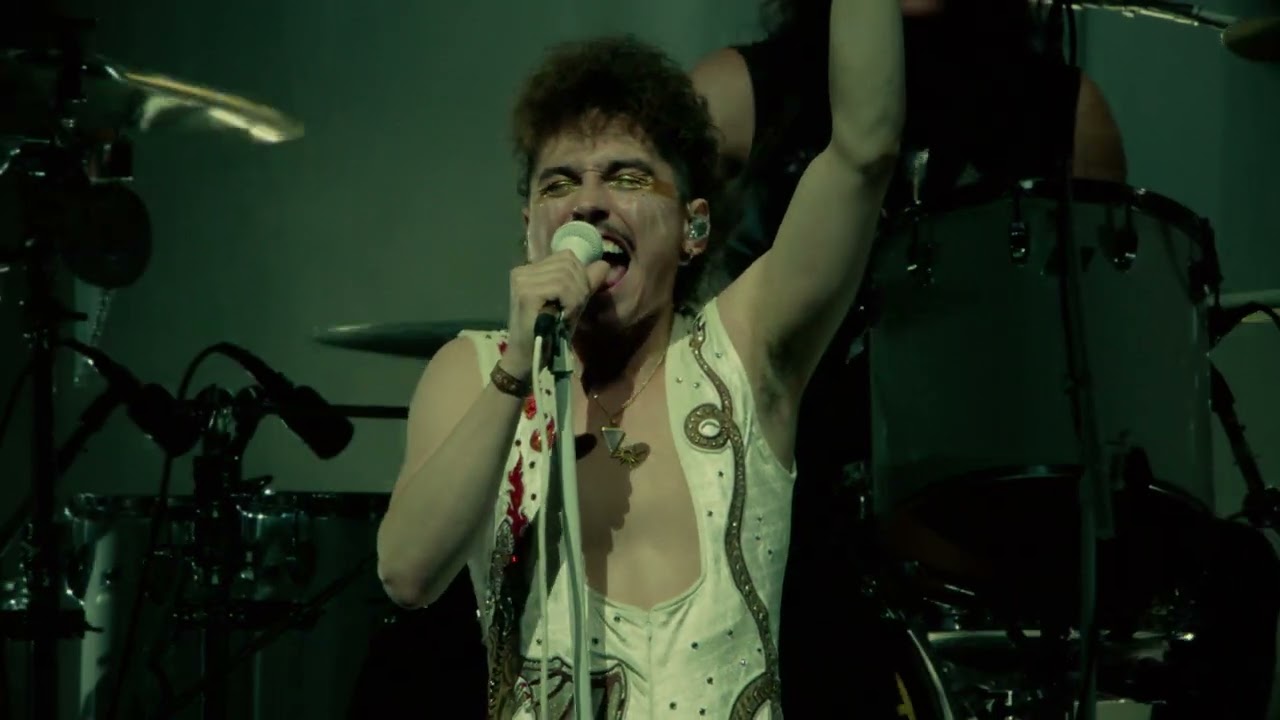
With that comes pressure, which you’ve managed well over the long haul. But have you ever felt the need to step back and go within? And if so, how did that help you grow?
That’s the challenge. Having a sense of soul really does help. I can’t speak to those who have walked this path alone because I’ve done it with my brothers in many ways. That sense of shared experiences and brotherhood, you know, siblinghood, is a support in having a unified mission statement.
But there’s that point where we as humans – there’s this idea of stagnantness, whether it’s guitar or any art, that follows us through our journey in life. It always comes to these points where we have to surrender the pieces of us that no longer serve us to reinvent them.
It becomes that mythological story of the phoenix in some ways, like being reborn. Greta Van Fleet has been turning up the road below us for years, and all of a sudden, we had to take a step back.
We started when we were kids, so the majority of life has been in the spotlight. I think walking away and returning, so much of ourselves had changed. So much of the introspection had happened. A sort of rebirth had occurred, and I think we approached our music and returned to our instruments in a very different way.

During that time away, you had success with Mirador, which must have been gratifying. Can you track where you were as a player and songwriter when you returned to Greta Van Fleet after so much success outside it?
It spreads you out a bit further. It expands that conscious thought of approaching something musically. For me, working with other people in Mirador, those guys are all English and European, so the approach to music and their thought process was different.
I’d only ever shared that sort of kinship with my brothers, and in that sense it was a different lens. So, you’re always learning something, and that’s the object.
There’s this insatiable lust to try to find something new beyond the horizon. It feels like constantly pushing against the wind. I discovered a lot of that, and I was able to bring some of that self-discovery and new ideas to Greta.
It really felt like a new creation. I think we were surprising each other. Everyone was going, “What if we did this?” And then, it was like, “Where are you even coming from with that idea?” There was a lot of excitement in that. We were sort of trying to impress each other, like we might have when we were teenagers in our parents’ garage. [Laughs]

Diving into Palace for the People, you can hear that. The classic rock riffs are there, but there are underlying prog influences and other new sounds throughout, too.
I would say this record’s influence is far more eclectic than anything we’ve previously recorded. The problem we’ve always had – which is in opposition to most people’s problems – is we’ve had too much material. That’s a good thing in the long run, but it’s about pulling apart all these different things.
But I’ll say this: it’s when we put something through the Greta Van Fleet filter that it comes out a certain way. There’s always going to be elaborate guitar pieces, riffs, heavy, explosive drums, soaring vocals, and bass and keys that will be interesting and detailed. That’s the siphon, so it’s about filtering influences through Greta Van Fleet in a way we hadn’t done before.
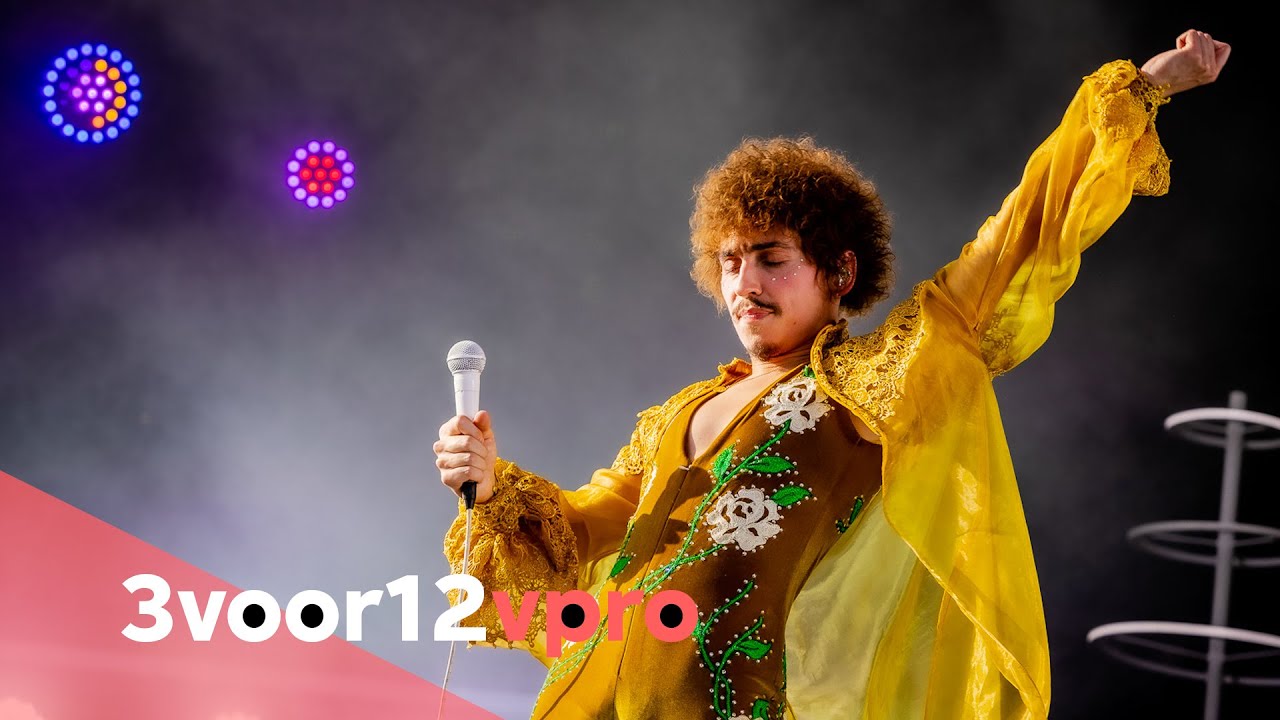
Tell me about Tear It Down, which features a sort of off-the-rails guitar solo.
Yes. [Laughs] Mike Elizondo produced the record, and his studio is battle-ready. There are all these amplifiers strung up on the wall, and cabinets out in an isolated booth. You could press any button, and pretty much activate, or make combinations of amps, and throw those through any cabinet you want.
And then, there were pedals laid out, like, built into this shelf Mike put together. It almost removed the entire factor of having to find the equipment, pulling it off shelves and finding the sounds. It was really just plugging in and playing with it. It was a really quick workflow for me. It also gave me the ability to just be, you know?

I probably played more guitars through more amplifiers than any other record I’ve ever recorded. [Laughs] It was very electric, but with Tear It Down, that was my ’61 [Gibson] Les Paul SG going through a modern Fender Champ.
And there might have been a Klon [overdrive] and some stereo reverb from an EMS outboard. I think I used that on the solo as well – which I’ve never used before. But I used it a lot across the record. And specifically on the solos, I used a Dan Armstrong Orange Squeezer. It’s a physical compressor box that I’d stick onto the guitar.
It’s really strange, but Mike had one, and he was like, “Do you want to try this?” I’d used a compressor pedal before, but this was on a whole other level. I think Ry Cooder used that quite a lot when he was playing with John Lee Hooker.

Another memorable track is Dreams You Told, which has an underlying, almost quasi-’80s metal-meets-prog vibe. There’s a vibe I couldn’t quite put my finger on, and that’s very different from typical Greta tracks.
Yeah, that’s a really strange one. [Laughs] That song was written, probably two or three years ago. But I think it was written in the consciousness of the rest of the record, where there were pieces and an arsenal of songs.
But yeah, that one started with the riff, as many Greta tracks do. What was interesting was the idea of taking all these alternative concepts and putting them together, and then you had Sam exploring with synthesizers, which was huge. Sam’s interpretation brought this edge of modernity to it.
The highest and most singular objective, you know, the mission statement for me as an individual, and with Greta Van Fleet, is to create things we’ve never heard before. It’s channeling different concepts to push into new territories and not stagnate. When we heard that, it was mesmerizing, like, “Boom. We hit the mark.”
It’s something we’ve never heard before. I think you’re right [about the sound of the track], but your interpretation is interesting. I hear it in a certain way, and some of the stuff you said I totally agree with, but some of it I hadn’t thought about until now. I think you’re totally on it, but it was just a product of combining different ingredients.
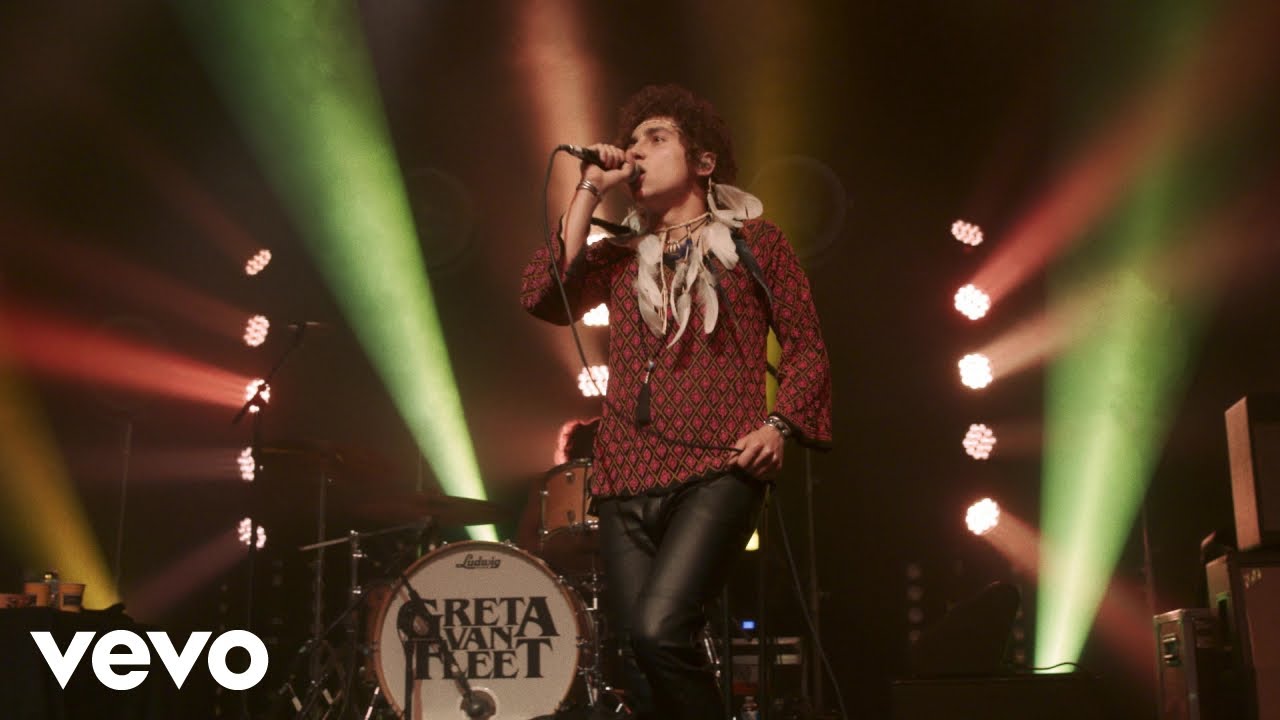
Toward the back end of the record, there are two really memorable solos on So You Stand and Call My Own. Both are soaring, but your work on Call My Own is atmospheric and casts you in a different light, sonically.
Call My Own was an interesting one. It was done on my Telecaster with a B-bender, which has very early T-Top humbuckers. Honestly, most of the solos on this record were done through combo amps, and Call My Own was probably an old Magneto, and there was a lot of stereo reverb.
That gives everything much more space, where you can put vocals right through the middle. So, there’s a lot of stereo slap, and stereo phasers and stereo reverb. If you listen to the record on headphones, you’ll get the full effect. [Laughs] It’s quite radical!
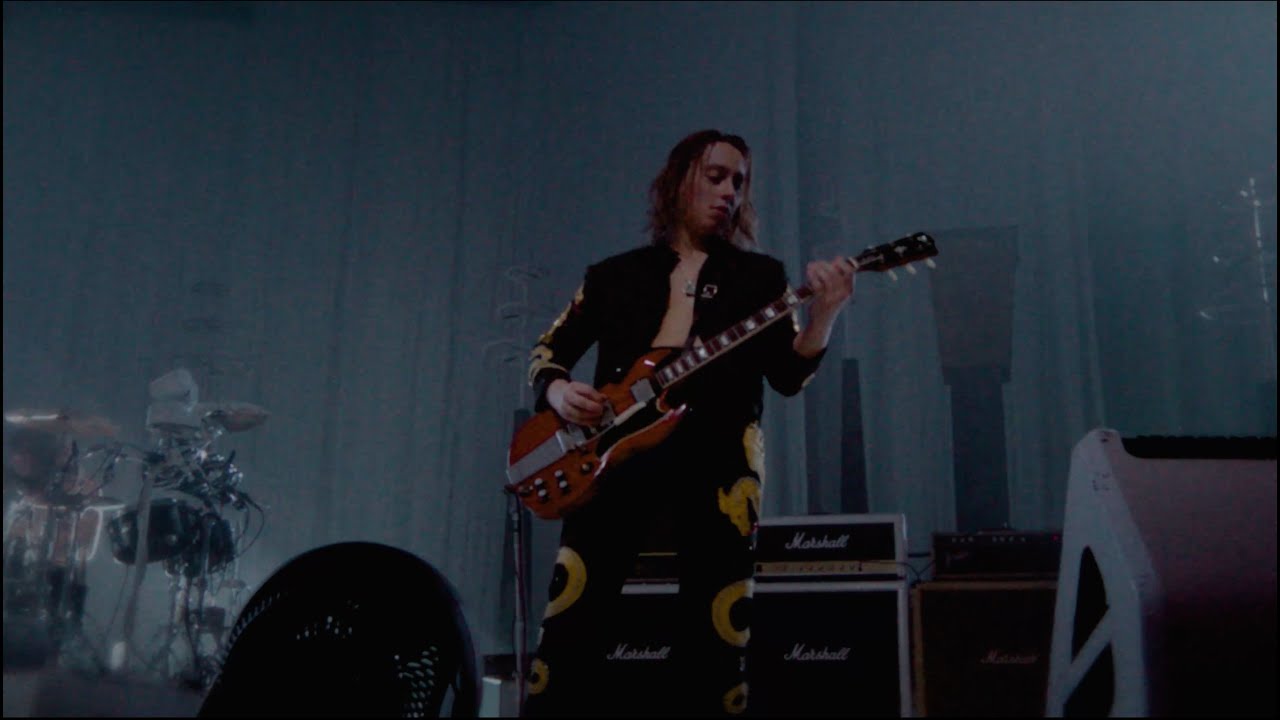
What gear did you use for Saw You Stand?
That was my ’61, the beloved Number 1 [Gibson Les Paul SG]. But that was another one, where, you know, I don’t like to take more than a few takes of a solo. Typically, I can somewhat get it early on, but I also sort of design it in my head.
Why is that?
Because there’s a separate, I think, for me as a guitar player. I often approach something with an idea I construct in my mind, then have a layout with a map or blueprint and parameters to work within. But then some solos are off the cuff and very much made up in the moment. I think Saw You Stand was one of those solos I had already orchestrated and wasn’t improvised. And because it’s quite a long solo, if I continued to do takes, it might have sounded too refined for me… maybe too manufactured.
It’s not about perfection – it’s about a vibe.
I don’t want to play it perfectly. I want to play it from the gut. I want to shoot from the hip. I want it to feel human. So, with Saw You Stand, I came back the next day and had it in one or two takes; on that second day, that’s how it landed.
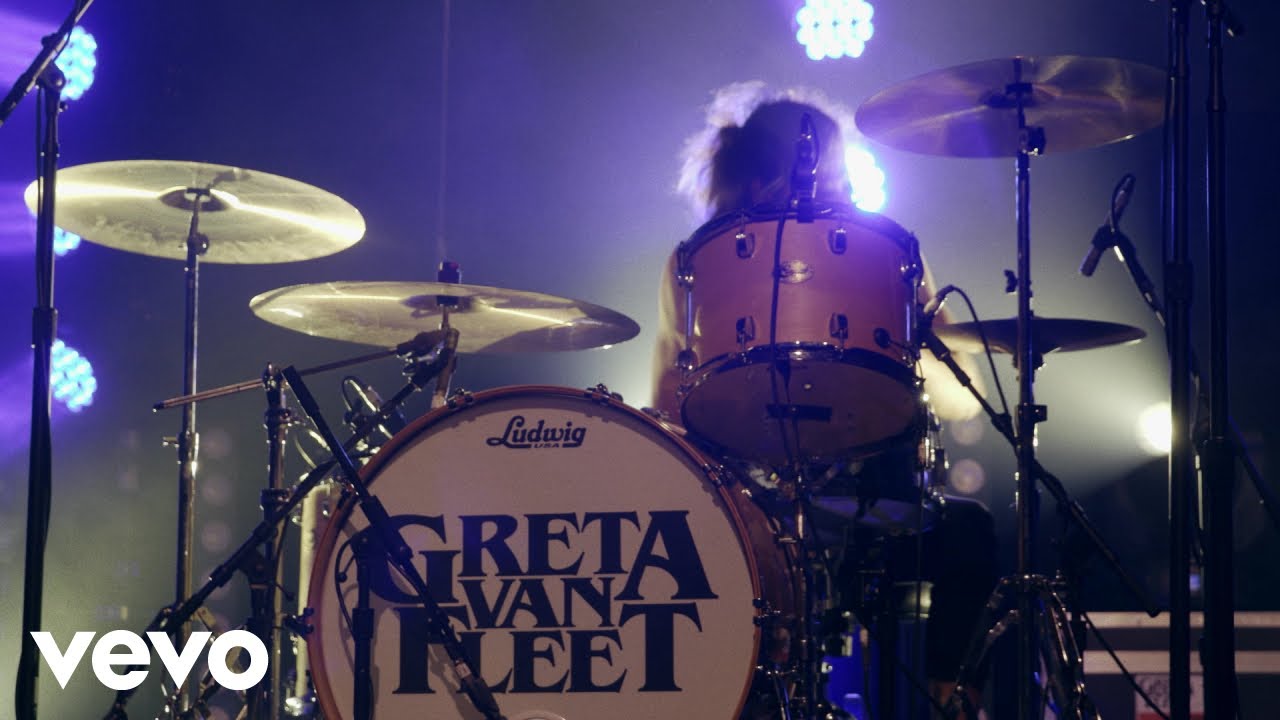
There is also some great acoustic work on Palace for the People. You have a sort of shaggy style, which interweaves really well with your electric tone.
I like it! That’s why they call me Shaggy Jake. [Laughs] But that’s brilliant! What a great term because, yeah… it is a bit shaggy, isn’t it? My playing is a bit messy. But I like that because I try not to perfect anything. That’s a good question because on this particular record, I tried to take the acoustic element of Greta Van Fleet a little bit further.
On Boughton Bliss, for example, there’s acoustic layering with electrics throughout. But there’s moments on the record where it’s more prevalent, so I was trying to push that a bit further. And I used a lot of Nashville tuning, some Martin 12-string. And for the solo on Boughton Bliss, typically, that’s something I’d have been inclined to take up with an electric guitar. But instead, I favored a classical guitar with nylon strings, so that was another thing where I pushed into stranger territories.

Pushing boundaries, having the confidence to lay down solos in fewer takes and owning your sloppiness – in a good way – it all shows the trust you have in yourself and your growing confidence as a player. Have you had time to reflect on that?
It took a long time for me to approach my instrument that way. It took a long time to get my playing to where I’d be able to record something and just let it be what it is. That’s a byproduct – and also the essence of – feeling comfortable with your identity as a player.
And that’s what’s taken me the longest. I’ve played since I was quite young, and Greta has been going for a decade, so it’s been a really long journey from the boy who pulled the sword from the stone, you know, this manifest destiny, to being here now and coming to terms with who I am as a person.
But also, the identity as a guitar player, and how I approach the instrument itself, you know? I’ve been through some things at this point with Greta, music and life, and I’m strong in my identity. I’ve been able to just let it be recorded as imperfectly and as humanly as possible, you know, to let it bleed.
All of that has seen you elevated to an A-list player by most people’s accounts.
I don’t know… for me, it’s the highest honor that, in some ways, maybe… yes, I’m conscious of the fact that perhaps people celebrate my guitar playing. I’m really grateful for that. In some ways, my greatest achievement as a guitar player is that, as a kid, the guitar heroes I looked up to, and the dreams, influence and inspiration they imparted on me and awakened in me – perhaps I could do the same for this generation or the next.
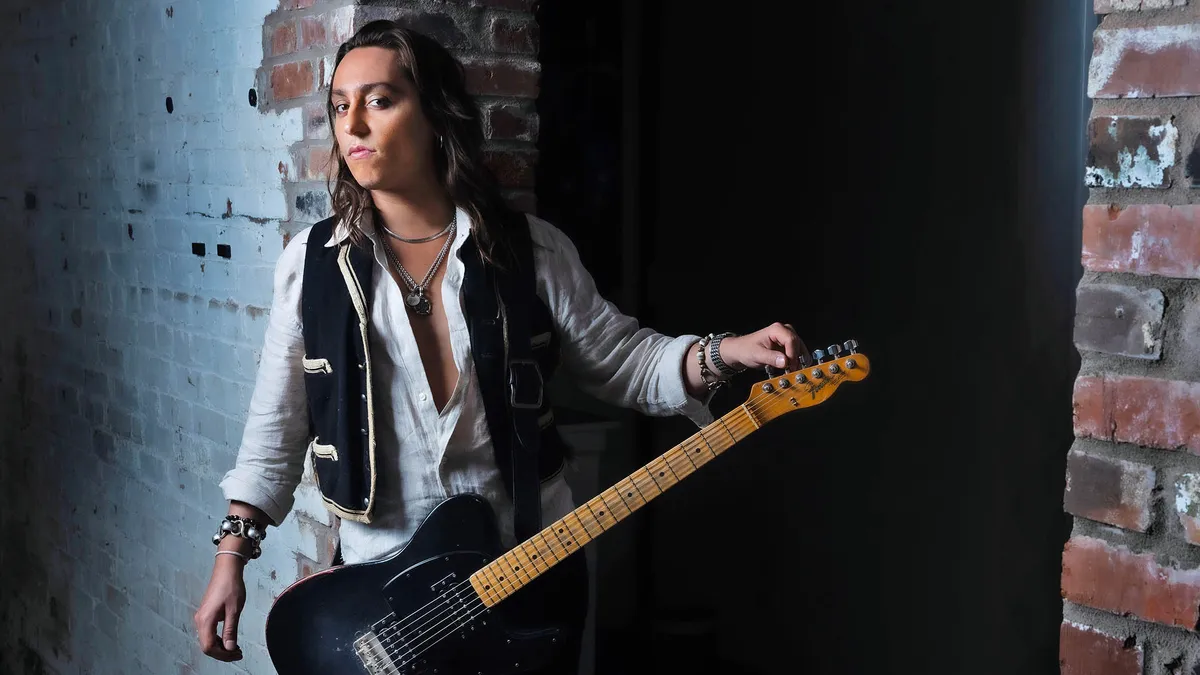
Earlier, we talked about the almighty Internet culture swirling around us. Within that context, Greta Van Fleet – and Jake Kiszka – aren’t just musicians or a popular rock band; you’ve become cultural icons and had tracks in video games, yet people still take a lot of shots. With that, the negative perception doesn’t always align with reality. From your perspective, what do people get wrong?
I suppose in a sense… I guess there’s the social or political construct or people saying, “There’s a lineation between innovation and imitation,” right? In many ways, people perceive our sound to be one way, but in reality, it’s far more complex and nuanced than that.
Can you dig deeper into that?
I’m not necessarily saying just strictly music, but the story, and who we are as human beings. A lot of people have looked at Greta Van Fleet, and, as you said, there’s a lot of controversy on the internet, which has expedited and proliferated it, where it was a fire in the corner, and now it’s a conflagration of some sort. That being said, Greta Van Fleet has become quite a massive thing – to my surprise – in some ways.
But we’re polarizing, I think, so there’s a lot of attention on that. Some said we were the “saviors of rock ’n’ roll,” or whatever, and I think that’s a misconception as well. All of that, I think, is balled up in one, and it makes it sort of an inaccurate representation of us.
So, who are you really?
I think we’re a bunch of young guys who grew up in mid-Michigan, in a little town somewhere, and in a garage, we fell in love with American blues and music of all cultures from all places. We fell in love with the idea of manifest destiny and adventure. We became a part of that.
People can perceive this as one or another, and there’s a lot of attention. Let’s say there’s a lot of negative commentary that perhaps comes from the evolution of Greta Van Fleet, and how quickly it exploded and how polarizing it has become. I think that would be something that people misperceive or get wrong.
The “saviors of rock ’n’ roll” thing has always been sort of ridiculous to lay on anybody. It’s really a label perpetually thrust on young bands, and when they don’t deliver – because no one can – it’s used against them, just as it has been against Greta Van Fleet. And really, does rock ’n’ roll really need saving anyway?
Exactly! It’s an interesting thing, man. Because is rock ’n’ roll dead? I don’t think so. It never truly dies; it just lays in wait, you know? And then it’s there for the next generation to pick up.
To be an artist, I think, is to want to be understood. If you are understood is another matter entirely. What do you want people to understand about you?
That’s a complex question, and it’s deserving of a complex answer. Ultimately, do you mean as a human being or an artist?

Both. There’s certainly an intersection, if you’re an artist, where your humanity overlaps the artistry.
As a human being, I’m as imperfect, flawed, ridiculous and mad as anybody else. I’d certainly have to be a little insane, or a little mad, to carry the torch or climb this hill
Yeah, absolutely. Perhaps in both senses, as a human being, I’m as imperfect, flawed, ridiculous and mad as anybody else. I’d certainly have to be a little insane, or a little mad, to carry the torch or climb this hill. [Laughs] In that sense, I bleed just like everybody else. But I enjoy the human experience, all the pain, all the beauty and all the things I’ve seen in this lifetime. And so far, all of that has greatly informed the music I create and the guitar I play.
All of that has become sort of a manifest. It manifests in myself, in my music and my guitar playing and as an artist overall. I think that’s the idea… with all of the good and evil in the world, it’s the artist's job, or the modus operandi, to take all those things, internalize them intrinsically and reflect them back onto society.
Sparking not just curiosity within yourself, but within others…
Yeah. In some ways, you question things. Like, how to create what the universe cannot naturally. We take the emptiness of these voids, and we inherently intersect them, sew them back together, and weave them to bring them back to the people. I think that’s what we’ve done.
Salvaging what’s there culturally, I think, is sort of what Greta Van Fleet is about. But also, as an individual, I think the conveyor of truth is there’s a lot of people – and there’s no right or wrong with this – who play an instrument, or an artist, and there’s some sort of persona in place.
And that’s brilliant in so many ways that someone can take a creation and characterize themselves with that. But I will say that, with Greta Van Fleet, and with myself as an individual, I don’t so much do that.
We truly are who we are on that stage, as much as we are off of it. I’m maybe a personification of myself on that stage – but it’s truly me. I play that way. I truly play through my experiences, through my life, my head and my heart. And so, through and through, I suppose that, in part, is who I am. So maybe I’d like to just state that what you see is just the truth.
Where does Greta Van Fleet go from here?
Only up, Andrew! Right to the top! [Laughs] I don’t know… I just think it’s marching forward boldly and gorgeously. We’ve said it in this interview, but there’s been quite a bit achieved at a young age for us. We’re young men now, but there’s a long, long way to go. And yeah, it’s exciting because there’s so much to invent, you know?
There’s so much to create and so much to bend and break. But we’ve got a lot of surprises for this year for sure – and for the coming years within the musical sphere and realm. And even outside of that as a creative entity. I suppose we’re looking forward to all of it.
- Palace for the People is out on October 9 via Lava/Republic.
- This article first appeared in Guitar World. Subscribe and save.

