


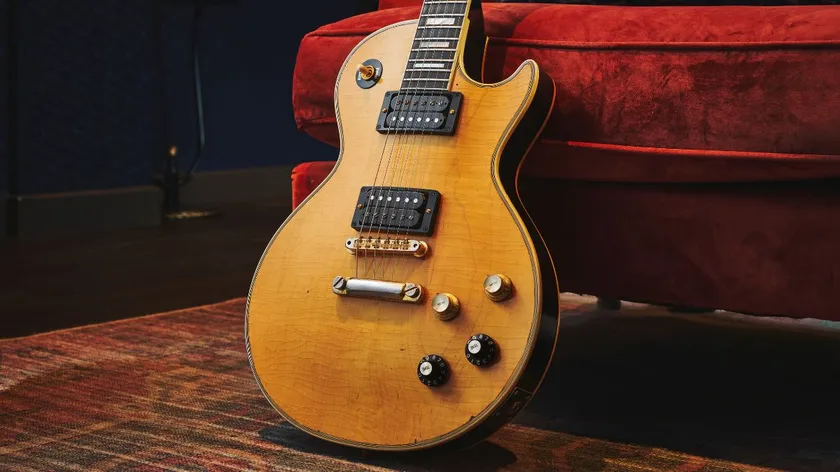


Compared to the “holy triumvirate” of the Gibson Les Paul Standard and Fender Stratocaster and Telecaster, the Gibson SG Standard is the solidbody guitar equivalent of Rodney Dangerfield – it doesn’t get anywhere near the respect it deserves.
Although the SG Standard is probably heard on a near-equal amount of classic recordings as the Les Paul, its status as a truly iconic guitar – particularly in the worlds of hard rock and metal, where it has often played a dominant role – rarely gets mentioned.
However, during the highly influential periods from the mid-Sixties through the entire Seventies and beyond, our unscientific estimate is that the SG was actually more prevalent and popular than most guitarists realize.
The Gibson SG model (with “SG” meaning “solid guitar”) got off to a confusing start in 1959. Actually, Gibson’s very first SG models (the SG Special and SG TV) were just the company's regular double-cutaway late-Fifties Les Paul Special and Les Paul TV with Les Paul’s name removed.
The SG body style that we all know and love came around in late 1960 when Gibson completely revamped the Les Paul Standard with the pointed “devil horn” double cutaway body that provided easy access to the entire neck and a mahogany slab body that did away with the maple top layer, featured beveled edges, and measured a little less than half an inch slimmer than the single-cutaway Les Paul Standard.

The electronics configuration of dual humbucking pickups, individual tone and volume controls, and three-way pickup toggle still remained from the Les Paul, but the output jack was moved from the side to the top. This iteration maintained the Les Paul Standard name until 1963, when it officially became the SG Standard.
During the Sixties, the SG/Les Paul and SG went through a variety of changes. Initially, all SG/Les Paul and SG Standards had a vibrato tailpiece, with the earliest versions available in three variants: the much-hated Sideways Vibrola, a short Bigsby, and a short Maestro Vibrola with a decorative ebony block with pearl inlays.
By 1963 only the long Maestro Vibrola with a plated tailpiece cover engraved with a lyre logo was offered as standard equipment. Starting in late 1965, the SG design transitioned to a larger “batwing” pickguard where the pickups are mounted directly to the pickguard instead of mounting rings.

Gibson temporarily discontinued the SG Standard for about a year between 1971 and 1972 with the introduction of the SG Deluxe, but the Standard quickly returned and has remained in production ever since. Incidentally, 1972 was also the first year that Gibson offered the SG Standard with a stop tailpiece instead of a vibrato.
Exact details of the SG’s specs varied considerably over the years, including neck and headstock angles, 500k vs. 300k pots, PAF/patent decal/T-top pickups, etc., so it’s highly advisable to try before you buy if you’re considering a vintage model.
As far as famous guitarists who played the SG Standard… how long have you got? George Harrison recorded numerous classic Beatles songs with his 1964 SG Standard starting in 1966.
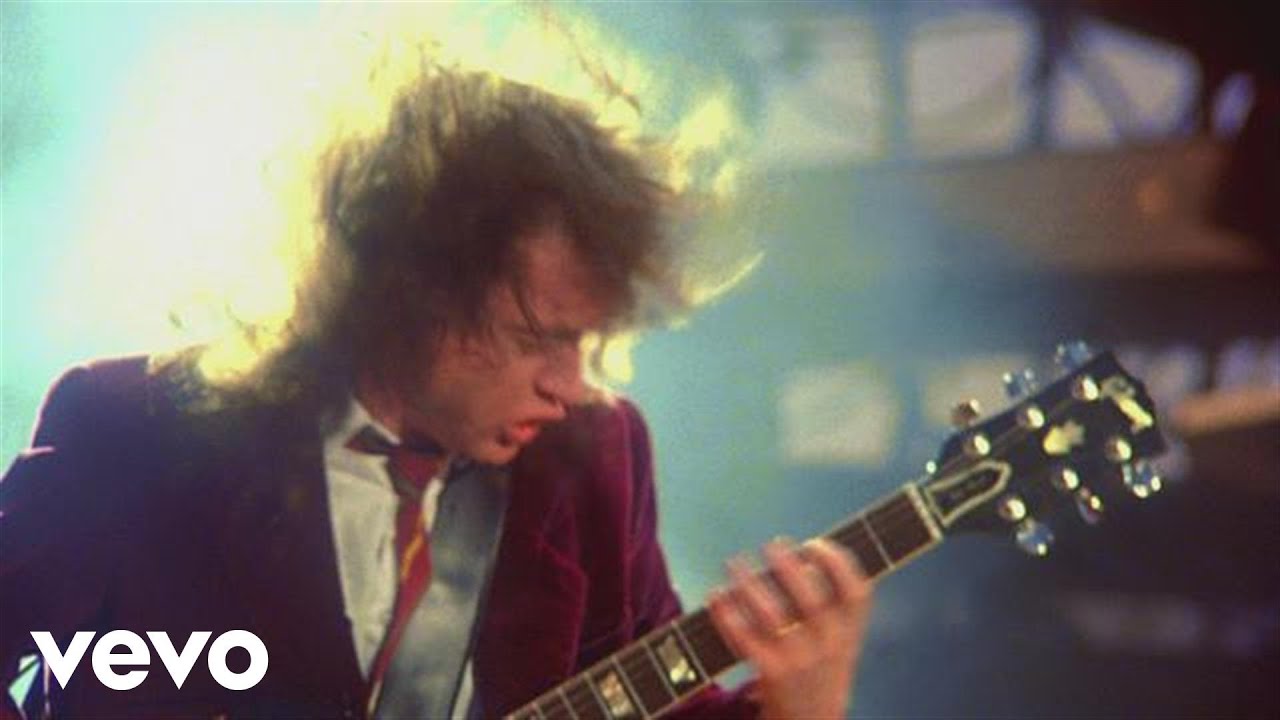
Eric Clapton also played a ’64 featuring a psychedelic paint job by The Fool with Cream, which he used to summon his famous “woman tone.” Robby Krieger tracked most of the classic Doors tunes with his SG as well.
Seventies players include Angus Young, Tony Iommi (in addition to his SG Specials and custom-made SG-style guitars), Buck Dharma, Frank Zappa, Jerry Garcia, Mick Taylor, and Bob Marley. Even Barry Goudreau’s bitchin’ leads with Boston were played on an SG Standard.
Slide players like Duane Allman and Derek Trucks have chosen the SG for its unrestricted fretboard access. Recent SG enthusiasts include Daron Malakian of System of a Down, Frank Iero of My Chemical Romance, and Nameless Ghoul of Ghost.
- This article first appeared in Guitar World. Subscribe and save.

