




While craft pedal makers existed before the turn of the millennium – soldering circuit boards in their basement workshops, putting together one-of-one pieces for their friends – we’ve experienced a hell of a boutique pedal boom this past quarter century.
It’s been a golden era of tone-chasers discovering small-batch stompboxes outside the norm, with humble-sized companies busting out massive sounds – whether remixing classic fuzzes or ringing up freaked-out modulations major manufacturers wouldn’t dare deliver off the assembly line, en masse.
“Some smaller companies are willing to take bigger chances – fuzz pedals that have atypical controls, or total chaos machines,” says EarthQuaker Devices founder Jamie Stillman, somewhat summing up the specialized sonic ethos his business has harnessed since 2004. “A big company wouldn't tend to touch that, because it doesn’t reach a wider audience.”
Along with fellow boutique trailblazers at Keeley Electronics and Wampler, Stillman got his start as a hobbyist working from home – specifically while trying to fix a busted DOD 250 Overdrive.
The Akron, Ohio, native started cruising online messageboards for schematics, which put him into contact with likeminded pedal enthusiasts around the world. Eventually, he started fooling around with his own designs.

One early pedal was inspired by a Green Russian Big Muff circuit, which he’d dirtied-up with a hybrid Germanium/Silicon transistor. Black Keys guitarist Dan Auerbach slapped one onstage while Stillman was tour-managing the band, and word of mouth spread quickly.
Stillman started spray-painting enclosures and hand-drilling product to sell on eBay. Eventually, this morphed into EarthQuaker’s flagship pedal, the Hoof Hybrid Fuzz.
EarthQuaker grew from a one-man operation into a team of dozens working on a well-rounded line of drives, polyphonic pitchshifters and “noisemaker machines.”
You’ll find similar success stories with Keeley Electronics – founded in 2001 within pedal-modder Robert Keeley’s kitchen, some of its favored effects including the Katana Clean Boost and the Klon-cloning Manis Overdrive. Brian Wampler similarly began Wampler Pedals out of his garage – developing must-stomp dual-channel boxes along the way.

Beyond the sonics, people can be drawn to boutique pedal makers for various reasons. Some are attracted to the intentional small-batch scarcity built into companies sourcing rarer parts than those which a major manufacturer could ever provide to the wider public, making the handcrafted wares coveted collector’s items.
Social media, meanwhile, is helping to establish deep bonds through posts feeding us friendly memes, product walkthroughs and an intimate look at the inner workings of places like Walrus Audio and Chase Bliss – arguably leading to consumer choices based on vibes and values, as well as sick tones.
While word of mouth spreads organically through Instagram, Stillman says a shout-out from a top player helps the cause, too.

“I do think there is a correlation between the biggest names [being] the ones looking for the littlest companies,” Stillman says, noting the chain effect this can have on pedal desirability.
In addition to the Hoof’s Black Keys connection, EQD has teamed up with drone-metal masters Sunn O))) for a few models of their monolithic, distortion-octave-and-boost-combining Life Pedal. Jack White’s Third Man Records co-signed Canadian company Union Tube & Transistor’s ultra-fuzzed Bumble Buzz.
Brad Paisley has a signature Wampler drive. JHS teamed with instrumental virtuoso Lari Basilio for the Violet Distortion in 2024, while John Mayer began demoing products online for JHS this summer, as founder Josh Scott was recovering from a traumatic cycling accident that kept him off-camera.
Stillman also speaks to a unique positivity within the industry itself, noting how boutique businesses often root for each other in this “weird little world” of theirs.
He recalls palling around with the Catalinbread team the first time he went to NAMM; EQD and Death By Audio forged their collaborative Time Shadows multi-effect in 2024.
“You don’t really see that a lot with competitors in other industries – throwing parties together, doing joint releases, supporting each other online,” Stillman says.
“Josh Scott from JHS is an excellent example in that he’s pretty much always talking about other people’s stuff. It's a great example of how close-knit this industry is.”
As for the challenges of running a small business, Stillman cites parts shortages as having been a concern over the years. He notes that the Covid pandemic caused an industry-wide sales-spike in 2020, with musicians at home craving new sounds to fool around with through social restrictions.
That bubble eventually burst, which Stillman says led to a flood of gear hitting third-party markets, and a major sales dip.
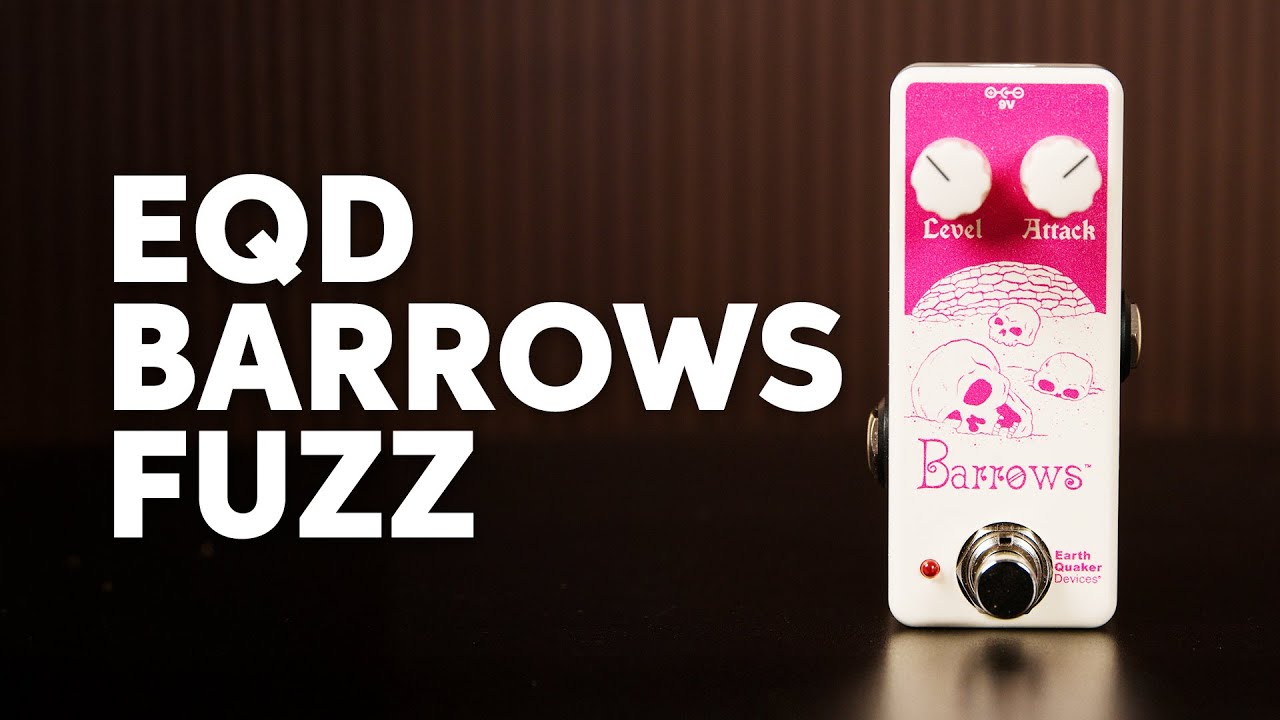
EarthQuaker’s founder expects a natural ebb and flow with consumer engagement.
There’s always going to be an interest in what’s out there to manipulate the sound
On that note, the stop-start nature of the 2025 global tariff crisis has proved to be chaotic for the pedal industry – the ever-shifting parameters causing cost-of-production instability, supply-chain concerns and price‑hike worries for companies like his.
“It’s making it so we can't plan for the future, because we don't know if our semiconductors are going to be taxed 300 percent, 100 percent or nothing. Is the tariff rate going to be paused forever? Do we need to raise prices?”
Despite those challenges, “there’s always going to be an interest in what’s out there to manipulate the sound,” Stillman says, with pedals being “an affordable way to change your tone” – whether you’re cranking it up through a traditional stack or pre-amping into a DAW.
- Browse Stillman's creations at EarthQuaker Devices.
- This article first appeared in Guitar World. Subscribe and save.

