

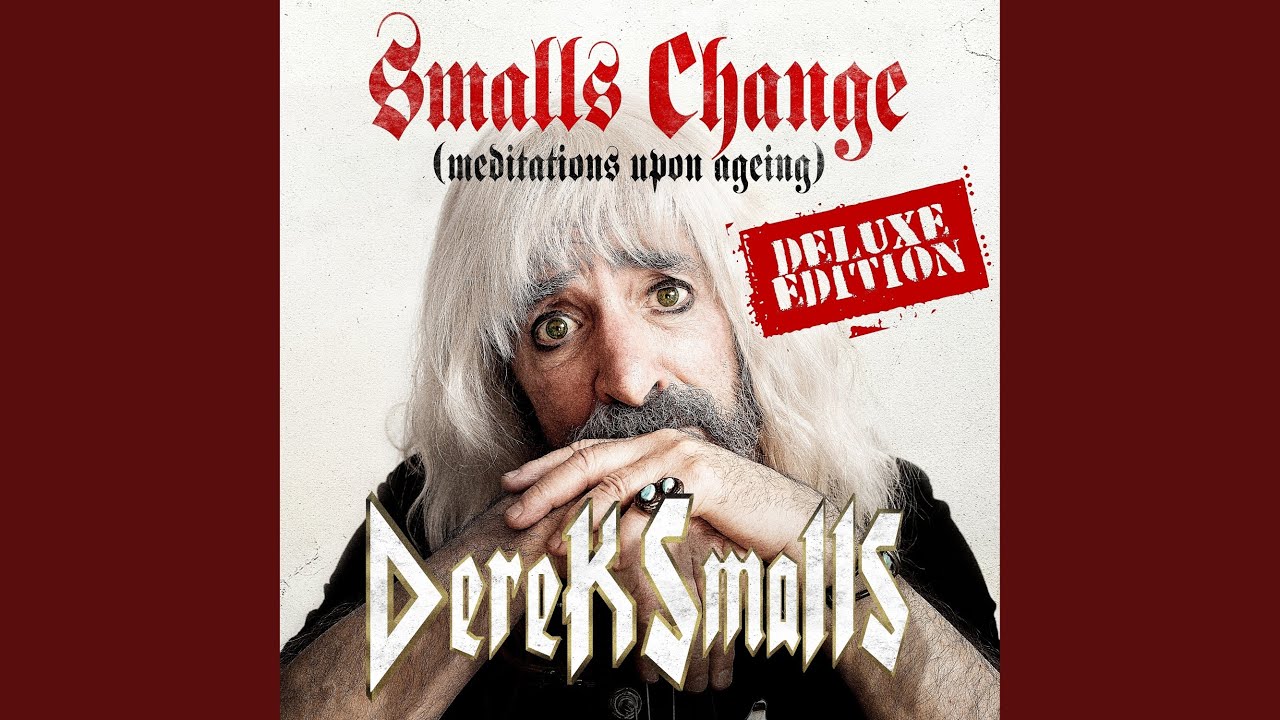
Back in 2018 we learned that Derek Smalls, the legendary bassist of Spinal Tap, had completed a 10-month studio marathon to record his first solo album in over 40 years, Smalls Change (Meditations Upon Ageing).
The album featured a stellar array of guests – from Keith Richards to Donald Fagan to Steve Vai to Larry Carlton to Joe Satriani to Dweezil Zappa, plus a historic bass duet with Snarky Puppy bandleader Michael League.
“Michael is a world traveler,” said Smalls in the May 2018 issue of Bass Player. “We recorded separately. I think Michael was in Turkey, or he was doing something with a turkey. So it’s either a duet or a duel; you decide.
“I would hear what he did, and then I would answer him. It’s obvious who’s playing which part though, isn’t it?”
League first met Smalls on a Paul Allen cruise featuring the brightest from the fields of entertainment, for which Snarky Puppy was the house band.
Smalls next sat in for an encore of Spinal Tap’s Big Bottom at a Snarky Puppy show in New Orleans. Offers League, “After that, Derek contacted me and said, ‘Hey mate, I'm making this record, and I want you to do a bass duet with me.’ I immediately thought, ‘This is the most important project I’ve ever done!’”
The pairing opens the album’s final track, When Men Did Rock, for which League played a Fodera Monarch strung as a tenor bass (ADGC).
Smalls Change is an epic journey through medical procedures, septuagenarian sex, and other senior moments, featuring wall-to-wall orchestrations that would make Queen or ELO blush.
“The vision of this project was to both reach higher and reach lower at the same time,” said Smalls. “To see how far I could push the boundaries before I hit the wall. But I can understand why pigeonholing this record would be difficult. You would need more pigeons.”
And it was all made possible by the British Fund for Ageing Rockers?
This is a fairly large project, so it took a grant from people who saw that I still had something to say and that it needed to be said – and, having been said, it needed to be heard – and, having been heard, it didn’t need to be said anymore.
Your singing on the record is admirably low in pitch. Have you always been interested in creating bass frequencies?
It seems to be where my body resonates. I’ve done high parts; there’s a song on Break Like the Wind, Cash on Delivery, where I’m singing a bit high. But that’s where my ear goes, and where my ear goes, my fingers and voice follow. My ear always goes down, and I’ve never said, ‘Here, come, let’s go the other way, ear.’
Do you remember the first time you ever played a bass?
My mates and I were sitting around, having a bit of a smoke, as you would, and there was a bass guitar sitting there. As soon as I plugged it in, I was mesmerized by the sounds. I almost scared myself with what I was doing. I wanted to do more of that, and of course it got less scary as time went on.
In the video for Smalls Change, who built your dollar-sign bass?
Tobias Guitars, for the Break Like the Wind tour in ‘92, before they sold out to Gibson. It’s a great bass because it looks like it's a bit heavy, but it’s actually quite lightweight – especially given that it has two necks, which are identical.
David and Nigel are conspicuously absent from the all-star guest list. Are you on good or bad terms with them?
Yes, I would say I’m on good or bad terms with them. It fluctuates. With most bands, they’ll get together and they’ll bicker, they’ll break up, and maybe they’ll get back together for the money. And then they’ll bicker and break up again.
Tap was different: We never bickered. We would just sort of move away from each other, like celestial bodies that had run out of gravity. And when we got more gravity, we got back together.
How much of a hand did you have in writing Big Bottom?
I had a significant hand in writing the riff, which is the centerpiece of the song. The lot of us were about the table when the lyrics were being bashed out, and I was there. I may have come up with the concept, just because I was looking for a way to have the bass step forward at some point in the band.
People have said, ‘You put the bass on the map with that song,’ although I said, ‘I couldn't even find the bass on a map, so I don't know what you're talking about.’
Who are some of your loudest influences?
I have to say, John Paul Jones in Led Zeppelin. He not only set the table, he sat down and ate at it. And Jack Bruce – the blokes who were playing in trios, because they had to fill so much of the sonic landscape.
The bass seemed to power over those bands. I aspired to have that kind of subtle dominance over even four- and five-piece bands.
Other than sheer loudness, would you say Big Bottom is your greatest legacy?
My epitaph may very well be those notes. But not written down as dots and lines – maybe there would be a little chip that would play it as soon as you come near my headstone, so it’s not wasted on an empty graveyard.
Do you have any advice for readers who also happen to be aging rock gods?
Take care of your body, and your body will take care of you. You can do yoga, or you can just hang from rings – I’ve seen that done. The body is not a temple, but it is a machine, and like any other machine, sometimes it needs an oil change.
