




With their electrifying mix of Afro-Cuban rhythms and moody surf tones, London-based trio Georgie Hume & The Pity Party are making a name for themselves as purveyors of a more unusual, tropical kind of jazz.
Led by guitarist Georgie Hume, their new self-titled album is the kind of recording that draws influence from far and wide, with some truly breathtaking results.
Mellow Mood
What’s perhaps most interesting about this debut album is how it all feels led by the songs themselves; it’s less about noodling and more about telling a story through repetition and atmosphere.
“I guess I wanted this music to feel quite song-driven, rather than starting with a head, me soloing for however long and then going back to the head,” says Hume. “I have hundreds of those kinds of records and love them, but our songs will have A and B sections, and then a middle eight.”
Cheers To The Landlord
The band was born in an East London pub. With no beer garden or sports on TV, the landlord decided to showcase music to attract more customers.
“We were all working musicians in London,” Hume recounts. “We’d play every Saturday from four until six, which was nice because everyone could go off afterwards. There wasn’t much rehearsal, as most of it was done live. I’d have an idea and we’d just have to see how it worked. That’s the beauty of instrumental music: people can engage if they want to, while others might just want a beer at the back.”
One Note Samba
“My biggest influence is Jim Campilongo, who has been called the ‘Picasso of the Telecaster’,” says Hume. “He taught me a lot about guitar culture through his Vinyl Treasures [Guitar Player] column, which showcases obscure records. I ended up collecting things like Mambo Sinuendo by Ry Cooder and Manuel Galbán from the Buena Vista Social Club or The Fabulous Roy Lanham where he’s holding his Jazzmaster, wearing this amazing moustache on the cover.
“Another big one for me is Marc Ribot, who has worked with Tom Waits. He has that angular diminished sound unlike anyone else, mixed with influences from Haiti and Cuba. Our song Little Eddie took inspiration from that.”

Swing To Bop
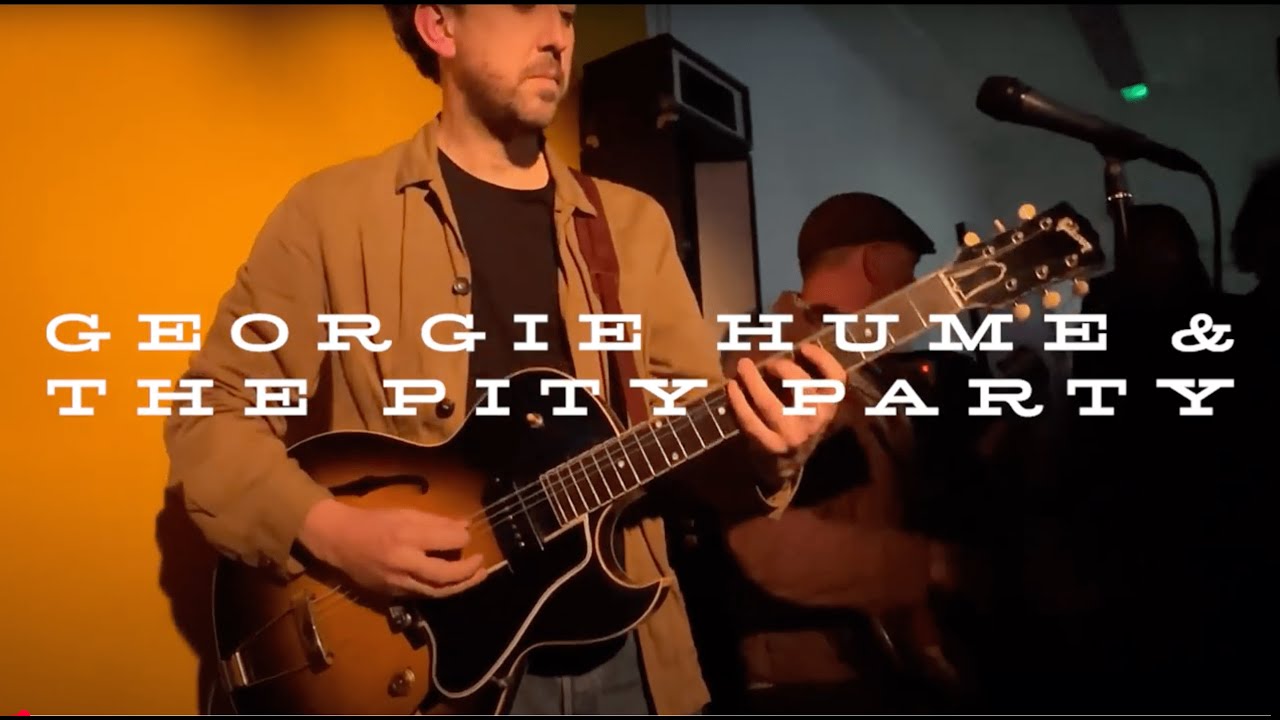
For the recordings, Hume stuck with vintage gear made in the 50s and 60s. His main guitar is a 1956 Gibson ES-225 – a double-pickup hollowbody that essentially served as a precursor to the ES-330.
“It was my only opportunity to get into that world at an acceptable price,” he says. “The P-90s from that period are wild. It’s like trying to tame a beast, but the 225 fills space better than a Tele. I like hearing the struggle with a guitar. There’s a charm and personality there.
“My main amp is a 1960 DeArmond RT5, which is an incredible little amp, but I also own a 1964 black-panel Deluxe Reverb and a 1966 black-panel Princeton Reverb. It’s all vintage originals with me, maybe because my dad was an antiques dealer and I took that mindset to guitars.”
Humble Bossa Nova
The group’s latest single, Parquet Parakeet, was the final track to be written for the album and is indicative of where they’ll be heading in the future.
“Some tracks are heavily indebted to the 50s easy-listening guitar records,” Hume says. “It’s a more gentle sound or, as I like to call it, a humble bossa nova. I can feel the band moving towards something slightly darker, which I call ‘surf exotica’, similar to the diminished-style direction of Parquet Parakeet; it’s more adventurous.
“I want to incorporate more West African influences, this whole other territory of guitar. It’s all doublestops, not a million miles away from soul, but the rhythms are different.”
My secret weapon: Georgie Hume on the pedal that he could not live without
A lot of guitarists would say their favorite pedal is some kind of overdrive or delay. That, however, is not the case with Georgie Hume.
“My Demeter TRM-1 Tremulator is my secret weapon,” he says. “Ry Cooder himself helped with the design. It has this boost that I simply can’t get out of any other pedal. Even if the tremolo is doing nothing, the circuit does something to the sound and creates this sweet spot.”
- Georgie Hume and the Pity Party's self-titled debut is out now via Zero Fret
- This article first appeared in Guitarist. Subscribe and save.

