

When Led Zeppelin were in session, Jimmy Page was on top of everything. He knew the arrangements. He knew exactly how he wanted his guitars to sound. And he expected everyone else to be on point, too.
The sessions for Physical Graffiti are a cautionary tale of what can happen when someone takes their eye off the ball – you can lose something great. That nearly happened to Page.
Speaking to Guitar World in 2005, he explained how disaster struck when one of the hottest engineers in the business turned out to be not the best for LedZep. The band had repaired back to holy ground, at Headley Grange, and it was time to put the finishing touches on a track they had sitting around on tape since 1972 and the epic sessions for Houses of the Holy at Mick Jagger’s country manor, Stargroves.
“The Rover was originally recorded at Stargroves during the making of Houses of the Holy, with Eddie Kramer using the Rolling Stones’ mobile recording unit,” said Page. “When we began recording Physical Graffiti, we continued working on the track at Headley Grange. At the time, we were using [Faces bassist] Ronnie Lane’s mobile recording truck and an engineer called Ron Nevison, who everyone was recommending at the time.”
The Rover wasn’t the only holdover from the Stargroves. Led Zeppelin had recorded Black Country Woman out in the garden at Stargroves, like a field recording capturing the world’s biggest rock band. You see photos from the time, Page, bearded, in his element playing a Martin D-18.
It was a legendary location. The Stones tracked there. The Who recorded there. Doctor Who was filmed there, too. It was all going on. Lane’s recording truck had a state-of-the-art Helios console with 16 tracks.
Page had some great stuff recorded for The Rover – but he had some ideas on how to finish it off. He told Nevison to roll the tape. There was a take incoming. Oh, and he had a word of warning before the red light came on…
“I had an acoustic guitar overdub that I wanted to put on the verses of The Rover, and I told him, ‘Be sure you record this onto an empty track,’” recalled Page. “I went back into the hall at Headley Grange to record the part, but I thought the track sounded a bit odd through the headphones.”
Something was not right.
“When I went back into the mobile studio, I saw why it sounded that way,” said Page. “He erased one of the original guitar tracks, which we’d recorded with two microphones across two tracks. For some reason, he’d rubbed the damn thing out. I’d told him what to do, but he hadn’t paid attention and erased this wonderful, fat-sounding guitar.”
This was a five-alarm fire. The Rover had been rattling around Page’s mind for nearly five years. He started working on it in 1970, initially envisioning it as an acoustic song. Listening to it now, that’s hard to believe; Page’s Les Paul sawing its way across the mix, the metallic sheen of the modulation (the Eventide FL 201 Instant Flanger entered the picture during the Physical Graffiti sessions)… It’s just so electric.
Also, how all that hard-rock strut gives way to the chorus melody is primo Led Zeppelin. After all this time it was coming together and now it was ruined. But Page knew who might be able to fix it.
“When it came time to mix the song, we went to see Keith Harwood, who I had a great relationship with and who was really sympathetic to the band, and we went about salvaging it,” said Page. “Keith took the safety copies of the originals, but we discovered then that there was a problem: it sounded like someone had thrown a blanket over the guitar.
“Keith went to [London’s] Olympic Studios and ran some cables from Studio 2 to Studio 1 and he re-EQ’ed the signal to put more treble on it.”
![Led Zeppelin - Trampled Under Foot (Live at Earl's Court 1975) [Official Video] [HD] - YouTube](https://img.youtube.com/vi/6qhS_sMZExU/maxresdefault.jpg)
Harwood and Page copied sections of the track then dropped them in and fixed it up. Harwood worked miracles. Little wonder he got a special thanks in the liner notes. Nevison, who, for the record, denies Page’s account of events and says he never recorded the overdubs, got a barb aimed at him. Thirty years on, Page’s feelings with regards to Nevison had not changed.
“It was an amazing salvage,” he said. “I remember Ron Nevison saying, ‘Oh, never mind…’ when I’d ask him something. I thought he should change his name to Ron Nevermind – because after Physical Graffiti, that was what I thought of him. [laughs] No, he didn’t work with us again, though later, he did work with Heart.”
What Nevison did next might have been the source of Page’s ire, or at least contributing to it. The Physical Graffiti sessions started late. The band had to wait around playing Elvis covers until John Paul Jones got there.
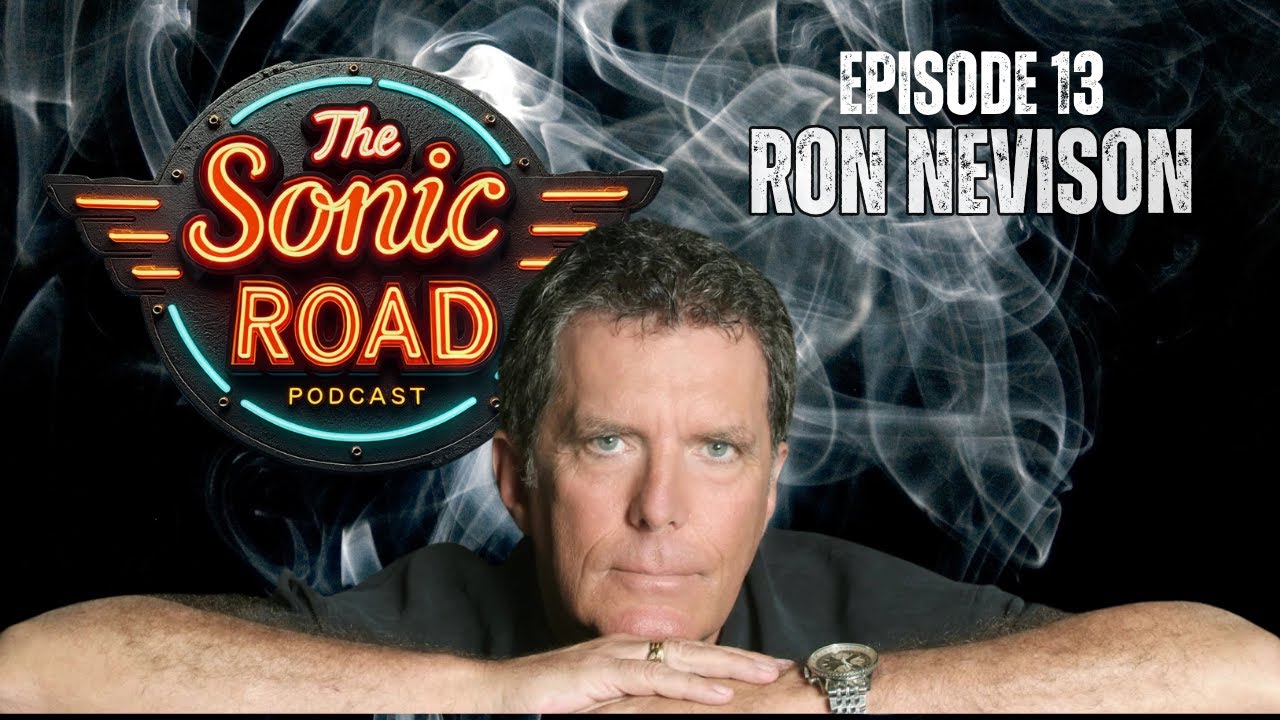
Nevison says he didn’t even know it was a double album when they started. “I don’t know if anybody knew that it would be a double album,” he told The Sonic Road Podcast last year. “But at some point in the recording, they decided to take some tracks from Houses of the Holy.”
Nevison had a hard deadline. He was booked to work on the Tommy film with the Who.
“I called up and said, ‘Look, I can’t continue working on the record,’ and they weren’t really happy about that,” he said. “I guess nobody quits Led Zeppelin, right?”

