

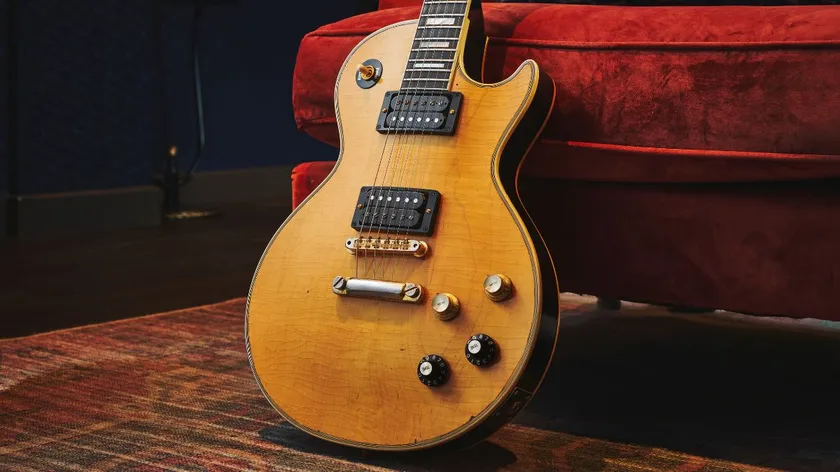


Picture a battle-scarred single-cut electric. The sunburst finish has worn down to the grain. The body is pockmarked with dings and nicks. The hardware has tarnished like the hull of an old tugboat. The fretboard is pitted, peeled and a shade that suggests it has spent the past half-century in the nicotine fog of the Stones’ dressing room.
Tell people this guitar is a ’50s original and they’ll coo admiringly. Reveal the truth – that it shipped from the factory last month – and things get a little more divisive.
It’s ironic that one of the early 21st century’s major gear trends is underpinned by our desire to own a guitar from the mid-20th. The roots of relic’ing – that is, the art of distressing a new guitar to replicate the wear of a historic road-warrior instrument – can be traced to the repair shops of the ’80s.
Busy at their workbenches, craftsmen realized how stupid it looked to replace a corroded tone control on a beat-to-hell ’50s Esquire with a box-fresh dial that gleamed like a silver tooth.
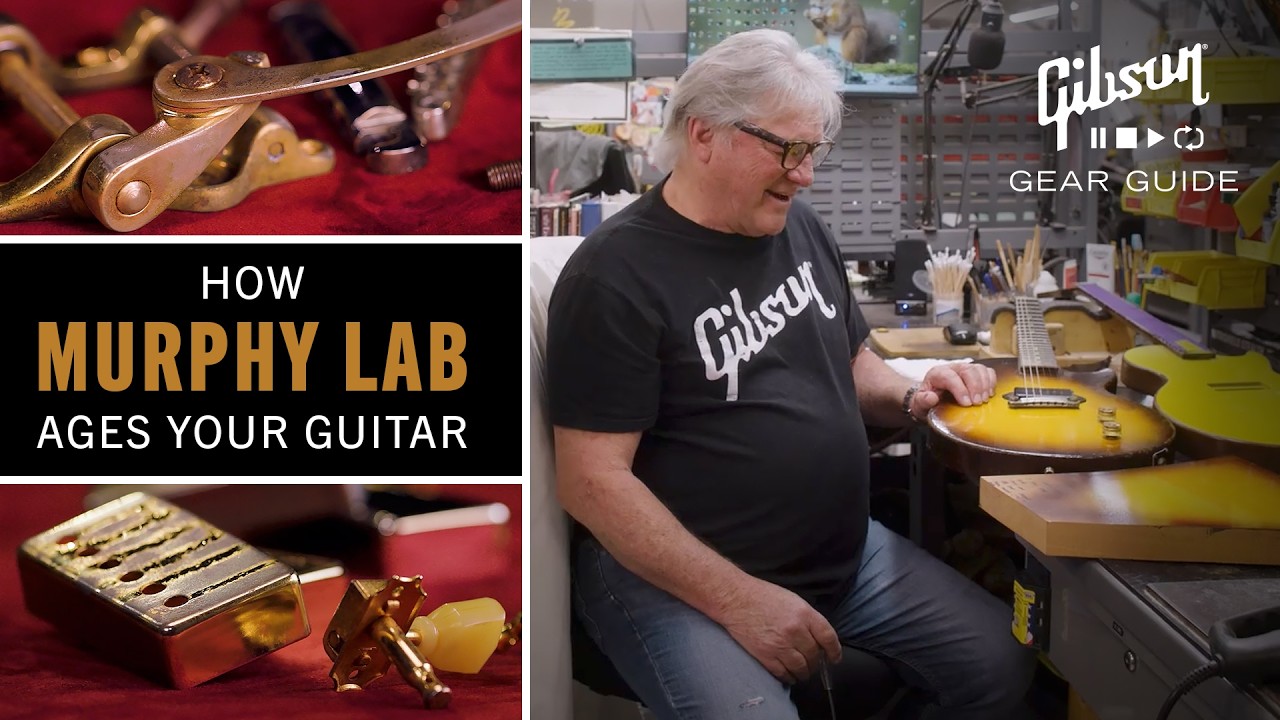
“I never planned to make a living making new guitars look old,” says Tom Murphy, now acknowledged as the relic’ing master for his impeccable aged instruments released through Gibson’s Murphy Lab since 2019.
“Back then, that wasn’t even a thing. But I thought it was valid in [the field of] restoration to age part of a guitar so it didn’t look shiny, new and redone. And I had some highly regarded luthiers saying, ‘That’s pretty cool.’
“I knew relic’ing was coming, so I did it myself, to my own guitar, very crude and primitive. I put that first guitar on a stand at a guitar show, with no strategy. And it changed everything.”
Murphy’s early creations – with due credit to other seminal figures like Fender’s JW Black and Vince Cunetto, responsible for the Relic Series of the mid-’90s – sparked an uptick in demand for pre-worn instruments.
But from those early days, the concept drew stinging criticism, too. There was nothing more pathetic, argued the haters, than a cherub-faced schoolboy toting a gnarled battleaxe whose scars implied a showdown in a biker bar – but in reality were applied by a Custom Shop employee for a premium.

“I hate the idea of relic’ing a guitar on pure principle,” posted one Harmony Central user in 2008. “I think less of people who buy them. Pay more for a guitar that’s been mutilated so other people will think you’re an old veteran of the axe? It’s tantamount to carving scars into your face to make people think you’re a badass.”
We now find ourselves at the end of the millennium’s first quarter-century, and while those opponents of relic’ing are still out there, they’re not as loud. So what’s changed?
There’s a few theories. No doubt, the quantum leaps made by aging technology have helped boost the image of this once-maligned discipline. In the early days and the wrong hands, says Murphy with a sad shake of his head, relic’ing was a byword for low-tech brutality.
“If you just start banging on a guitar with no purpose, then it can get a little out of hand. And it’s not going to look like an old guitar.”
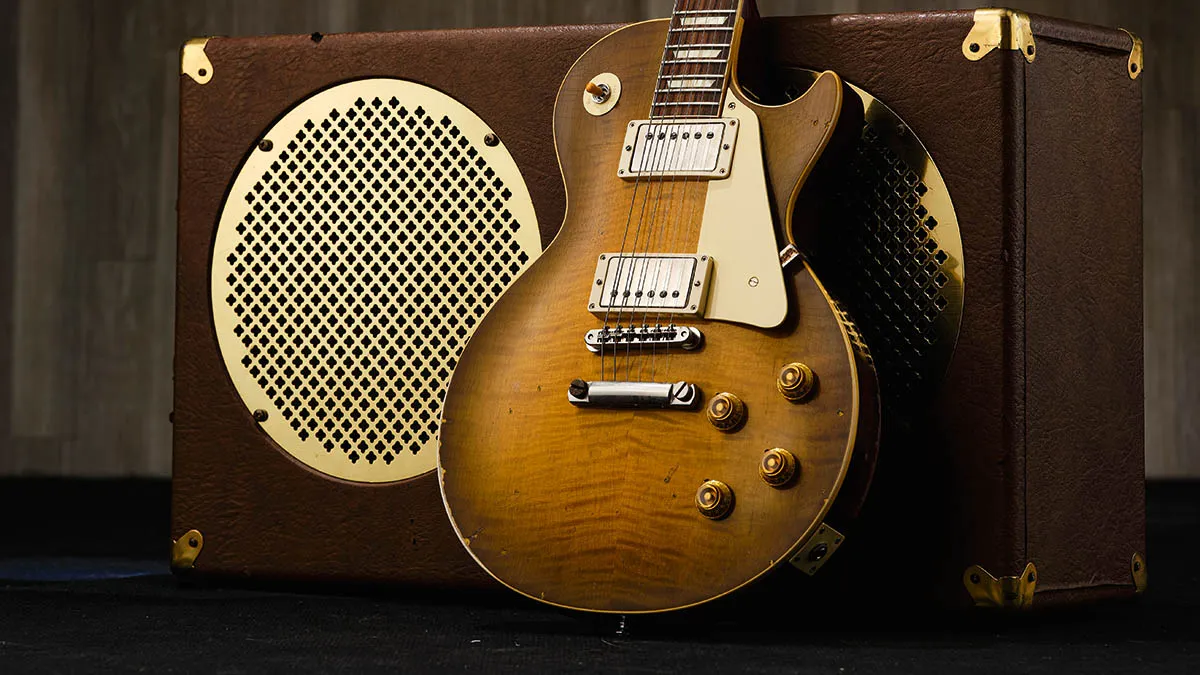
Now, from Fender’s Mike McCready Strat to the Gibson Custom Shop’s forensic replica of the Greeny Les Paul, both launched in 2023, the best relics are mouthwatering and so meticulously executed that connoisseurs routinely fail the blindfold test. That’s no accident, says Murphy. Walk through the Lab these days and you’ll find a creative space where art collides with science.
There are revolutionary lacquer formulations that check to perfection. State-of-the-art cooling chambers. Thermally aged soundboards… and it’s no longer just electric guitars and basses, with the Murphy Lab recently rolling out a well-received family of relic’d acoustics.

What about the accusation that relics are for posers? Well, another burgeoning argument for aged guitars is that it’s more about feel than aesthetics. Pick up a Murphy Lab instrument and you’ll note the ‘rolled’ fretboard edges that feel instantly inviting, like a true played-in classic.
“I was always bothered by new [fretboards]... it feels so good without that edge on,” Murphy says. “If I see a new person in the Lab working on the rolling, I’ll walk up and say, ‘Y’know, that’s the most important part of the job. Because even if a player doesn’t see the wear, he’ll feel that. And if it doesn’t have that feel, then there’s no point us making it look old.’ And I always sorta kid them: ‘No pressure!’”
Furthermore, adds Murphy, there’s a pragmatic reason why players have warmed to relic’ing.
Even in the unlikely event that a working musician could match the rocketing prices commanded by genuine vintage instruments, they could never play that guitar in anger without risking their investment. By contrast, he explains, modern players are waking up to the joys of attacking a ruggedly engineered and comparatively affordable relic.
“If you have a beautiful vintage guitar and you scratch it just one time, you’ve lost the value. But it doesn’t matter how beautiful our Murphy Lab guitars get, you can still just lean them against your amp on a set break.”

The only problem with setting such a high bar, of course, is to top it. Ask Murphy where relic’ing goes from here and he isn’t sure. But he’s betting that at the end of the production line, you’ll always find a highly skilled human with a blunt instrument.
“The tools we use are pretty crazy,” Murphy says. “I have a big bunch of car keys that has been used from day one. And I can divulge that one of my main tools for specific dents or burnishing edges is a railroad spike.
“I don’t foresee a machine that will ever age guitars better than my staff. It sounds a little lofty, but you almost have to see the end result before you start. A machine can’t do that.”
- This article first appeared in Guitar World. Subscribe and save.

