


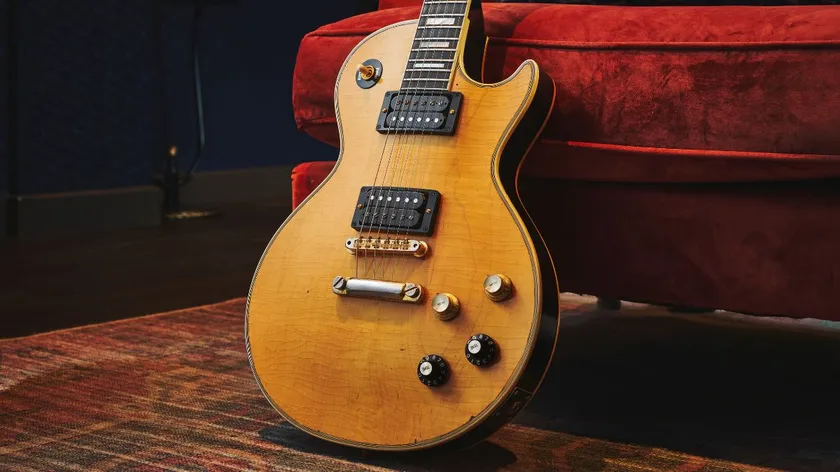


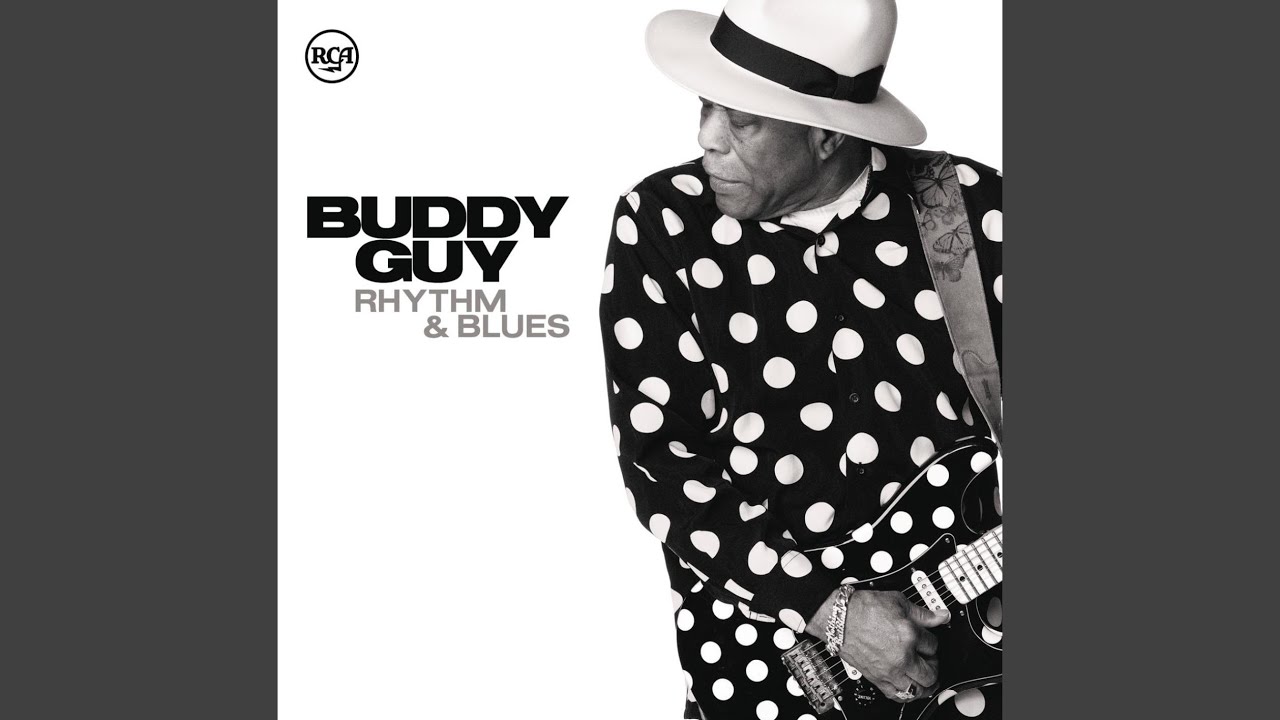
The blues can rock out, it can be solemn and balladic, or it can throw down some R&B and funk. A prime example of the latter is Buddy Guy's ode to his hometown, Meet Me in Chicago, from his 2013 album Rhythm & Blues.
Credit Guy's producer/co-writer/drummer Tom Hambridge, who helped expand the legendary guitarist's stylistic palette beyond traditional blues. Also credit Hambridge for calling up the late Nashville session ace Michael Rhodes to tackle the riff-based 16th-note bassline.
Speaking to Bass Player in 2017, Rhodes, who queried Hambridge about the song, said, “While Tom was in Chicago recording Robert Randolph for Buddy's previous album, he heard Robert play a riff that caught his ear. He had him play it again and recorded it on his phone, and later he wrote Meet Me in Chicago based on the riff, giving Robert a co-write.”
For the 2013 session at Nashville’s famed Blackbird Studio, Rhodes recalled Guy (who sat next to him), Hambridge, guitarist David Grissom, and either Reese Wynans or Kevin McKendree on keyboards, all playing live in the main room.
“Buddy had a stunt singer in the booth so he could play live with us and react to the vocals and play his solos, and then he overdubbed his vocal later. Tom had provided a demo track, and there was a Nashville number chart on which we could put any additional notation needed. We probably ran it down once or twice and then did no more than a couple of takes."
The bass was recorded direct via an Avalon US DI/preamp and Tube-Tech CL1B compressor, and also miked via a Fender Bassman head into Rhodes’ signature Euphonic Audio Rumbleseat, a ported 200-watt cabinet he’d sit on with an 8-inch speaker inside. Rhodes played his ’57 Fender Precision, which has a Seymour Duncan Single Coil ’51 P-Bass Stack pickup and Sadowsky flatwound strings.
The track begins with a drum fill into Grissom playing the main guitar riff, for which Rhodes drops some 12th-fret slides and then momentarily kicks on his Dunlop Cry Baby Bass Wah for the double-stop slide up in bar 4.
In bars 5-8, Rhodes joins in on the riff for the first half of the bars, adding his own answers at the back end, creating two two-bar phrases. He also purposely doesn't match the riff note-for-note.
The A section at 00:21 has a verse feel for the first half and the main riff and chorus lyrics in the second half. At first, Rhodes is on his own and plays the downbeat with funky responses. Then it's back to the riff at 00:31. He mirrors this approach the second time around.
“With the riff already doubled, I kind of pick and choose where to double it, to keep it loose and not so static. Maybe I'll catch the jewelry of the riff every so often, just to prove to myself I can do it.”

The bridge or B section kicks in at 01:01. Here, Rhodes eases back to eighths for his descending notes against the D (IV) chord.
“That was in contrast to everything being so staccato, to open it up and let it breathe a bit. I typically play off the lyric, jumping in the gaps.”
In a cool compositional twist, for Guy's solo at 01:23, the harmony shifts to the V chord. As before, Rhodes doesn't exactly double the riff (now in E), at times leaving out the downbeat and creating his own measure-ending fills.
The third and fourth verses (listen for where Rhodes steps out at 02:12) lead to a breakdown section at 02:23, for Guy's second solo.
The bridge section returns at 02:42, this time with Rhodes working some of his trademark reharmonization magic at 02:53.

“I thought, why not move up instead of down, and re-name the chords in the process? That's the beauty of what the bass guitar can do.”
Finally, Guy's third solo is at 03:06, and he continues to blow through to 03:25, where the chorus background vocals come back. Here, Rhodes breaks from the riff to freelance with some descending lines before the band plays the closing riff four times and the vocalists end the track.
“I'm sitting back a bit in the pocket, to anchor everything else that's on the beat or pushing. Listen to our interpretation and find the important elements of the part. Once you have the essence, feel free to make it your own.”
