


When grunge exploded in the early ’90s, bands like the Lemonheads – whose roots in the Boston punk scene gave them crucial indie cred – dialed down the rage. “What we were trying to do, Nirvana fucking nailed,” says frontman and sole constant member Evan Dando.
“We were trying to do a Sabbath, Replacements thing, and when Nirvana came along we were like, ‘Well, I don't think my strengths lie in that direction, and there's someone doing it perfectly now anyway, so they can do it for us and all the while make it easier for bands like us to do better.’”
Instead, Dando and producers the Robb Brothers stripped away the brash sounds of previous Lemonheads music and used his writing – at the time more informed by the country-rock of Gram Parsons than Hüsker Dü – to create their tuneful and energetic breakthrough album, 1992’s It’s a Shame About Ray.
Its biggest hit wasn’t even a Dando composition. An amped-up cover of the 1968 Simon and Garfunkel hit Mrs. Robinson, tacked on as an afterthought, took the band from MTV’s alt-centric show 120 Minutes to the Billboard charts. Ray was eventually certified gold, as was its 1993 power-pop follow-up, Come On Feel the Lemonheads.
After a long recording hiatus, Dando is back with a new Lemonheads record, Love Chant, their first album of original music since 2006 and their 11th overall. It was made possible by kicking a decades-long dalliance with substance abuse, which he chronicled his recent memoir, Rumors of My Demise.

We caught up with Dando in Nashville, where he was recording an album of Townes Van Zandt covers before heading off on tour.
Love Chant shows a different side of your guitar playing. There are some noisy passages that seem to show a Greg Ginn influence.
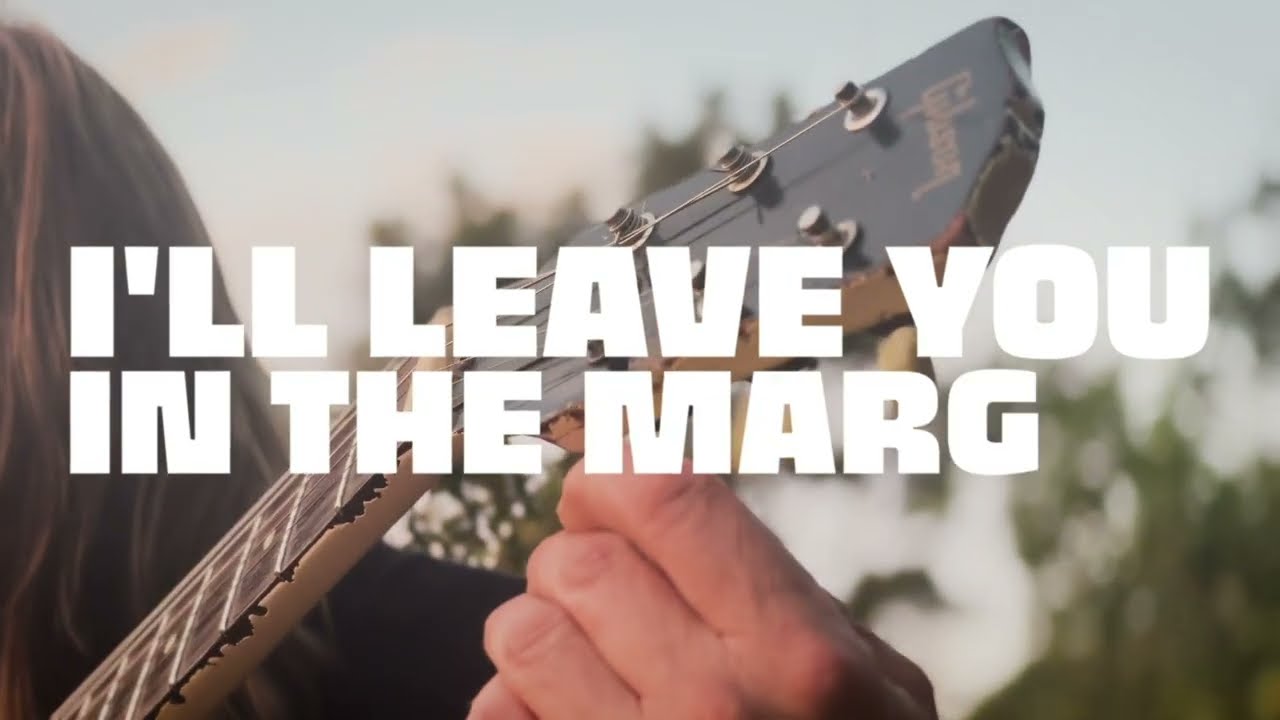
That’s always been there; there’s definitely some tritone action in the solo for In the Margin. The forbidden interval – you could go to jail for that shit, or get burned at the stake!
That solo was the rough track, first take. It came out great the first time so we left it. We didn’t do a lot of guitar tracks on this record; I think that’s why it sounds better. I love Never Mind the Bollocks, but that’s got a lot of guitar tracks. There’s a time and a place for that, but this is more jazzy. We wanted to bring it back to something natural – livable, as Keith Richards says.
Hearing Nirvana Sliver in 1990, you realized the mainstream was coming round to your style of music. But on It’s a Shame About Ray you turned down the electric guitars in the mix. Why?
We were going for an AM radio sort of sound. It sounded really different; it stuck out at the time. My mom was like, “What are you doing? Your kind of music has gotten really popular. Why are you changing it?” She was worried.
I thought it was a good idea longterm – just like the Mrs. Robinson thing was a bad idea longterm, except Martin Scorsese saved the day when he put it in [2013 movie] The Wolf of Wall Street]. All of my friends gave me so much shit about that song!
You’re rooted in punk rock, but some shredders have been part of the Lemonheads over the years. You had Corey Loog Brennan of Bullet LaVolta and now John Strohm from the Blake Babies.
We went totally metal on the European tour in ‘89! We were super loud and we made up all these extra metal parts, like the intro going into Luka. We had (The) Door already [a metallic cruncher from 1990’s Lovey].
John and I co-wrote Togetherness Is All I’m After on Love Chant – it was his song initially. He played that clean arpeggiated part and enunciated the riff in a way I didn’t really do initially. I’m playing all the leads, but he did some really good, important arpeggiation there.
In 1991 you played your first solo dates as an opener for Fugazi in Australia. What did that teach you about yourself as a performer?
Oh man, that was just pretty much pure joy! I had my favorite guitar, which I bought for $300 bucks – a 1984 Gibson SG, and I got to use a Gretsch Chet Atkins starting in the middle of the tour. I don’t know if I learned anything, because I just had so much fun!

I did learn that Fugazi were so fucking cool. I did a version of a Minor Threat song, really drunk. At the end of the set, Ian [MacKaye of Fugazi and Minor Threat, whose song Straight Edge galvanized the sober-punk mentality], was like, “I’m very flattered – but, you know, you might want to stay sober for it.” And I was like, “I gotcha!” You want to be lectured by your heroes. It’s better than cozying up to them.
If you’re good at doing other people’s songs, that’s a whole thing too: to interpret songs and just be a lover of music
That’s when we wrote the song It's a Shame about Ray. Tom Morgan and I finished it on that trip. I work good with other people; I write the riff, and if I don’t get around to words, I get a friend to collaborate. On Roky, Nick Saloman from the Bevis Frond wrote the words. It was a tribute to Roky Erickson. We were in Austin the day he died in 2019, and when we were sound checking that riff just came to me.
Is that why you've recorded so many cover songs in the Lemonheads? On top of the hits Luka and Mrs. Robinson, you’ve released two entire albums of covers.
That could be one reason. I don’t think it’s like a lesser thing – if you’re good at doing other people’s songs, that’s a whole thing, too: to interpret songs and just be a lover of music.
I write good musical parts, and I love to write lyrics. You just have to be with the guitar. Like J. Mascis said, it’s like fishing; you sit with the guitar and you might get a bite. Maybe I’m not prolific, like our man Robert Pollard from Guided By Voices.
I’ve never been able to do the exercise of writing a song, even if it’s really bad, just to finish it. When I write a song like Ride with Me or Stove or My Drug Buddy, that’s the best. But I also really enjoy putting my heart into other people’s songs and collaborating with other people.
- Love Chant is out now. Catch The Lemonheads on tour.

