


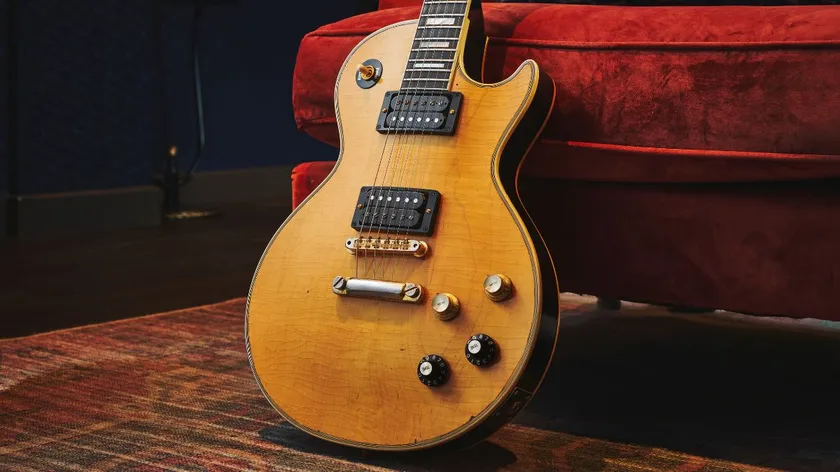


![Michael Shannon and Jason Narducy [on the white Telecaster] perform on Late Night with Seth Myers.](https://cdn.mos.cms.futurecdn.net/eX6S7nn9FNajPVn3zcPXdM-1920-80.jpg.webp)
It was an unlikely project that stemmed from unusual connections and happy coincidence. And about a decade after its inception, Chicago alternative-music fixture Jason Narducy and Oscar-nominated actor Michael Shannon (Death by Lightning, Boardwalk Empire, The Shape of Water, Revolutionary Road), toured the country as an R.E.M. cover band.
Not only did they receive accolades from the band’s most devout fans, they even had the blessings of the guys in Peter Buck’s legendary group.
On February 28, 2025, all four members of R.E.M. took the stage together for the first time in 17 years to join Michael Shannon, Jason Narducy and Friends (the official-ish name of the collective) for a performance of Pretty Persuasion at the 40 Watt Club in Athens, Georgia, R.E.M.’s hometown.
“It’s overwhelming to us that the four people in this massive band actually support us,” Narducy says from his home. “For them to take the stage with us was mind-boggling. A week after we did a show in Chicago, Michael Stipe said, ‘Can I sing with you guys in Brooklyn?’ I’m like, are you serious? Of course you can! How many bands got that big, remained friends and would be open to something like this? I can’t think of any.”
Shannon and Narducy first performed together in 2014 when their mutual friend, unconventional alt-country star Robbie Fulks, invited them to join him at one of his legendary weekly residency gigs at the Hideout in Chicago. The group played Lou Reed’s 1982 album, The Blue Mask, in its entirety and had a great time.
After Fulks relocated to Los Angeles a couple of years later, Shannon contacted Narducy to see if he was interested in putting together a band and playing more themed shows. They started in 2016 with the Smiths’ The Queen Is Dead, and over the next half-decade, Michael Shannon, Jason Narducy and Friends staged theme nights to celebrate Bob Dylan’s Highway 61 Revisited, the Modern Lovers’ self-titled debut, Neil Young’s Zuma, songs by the Cars and many others.
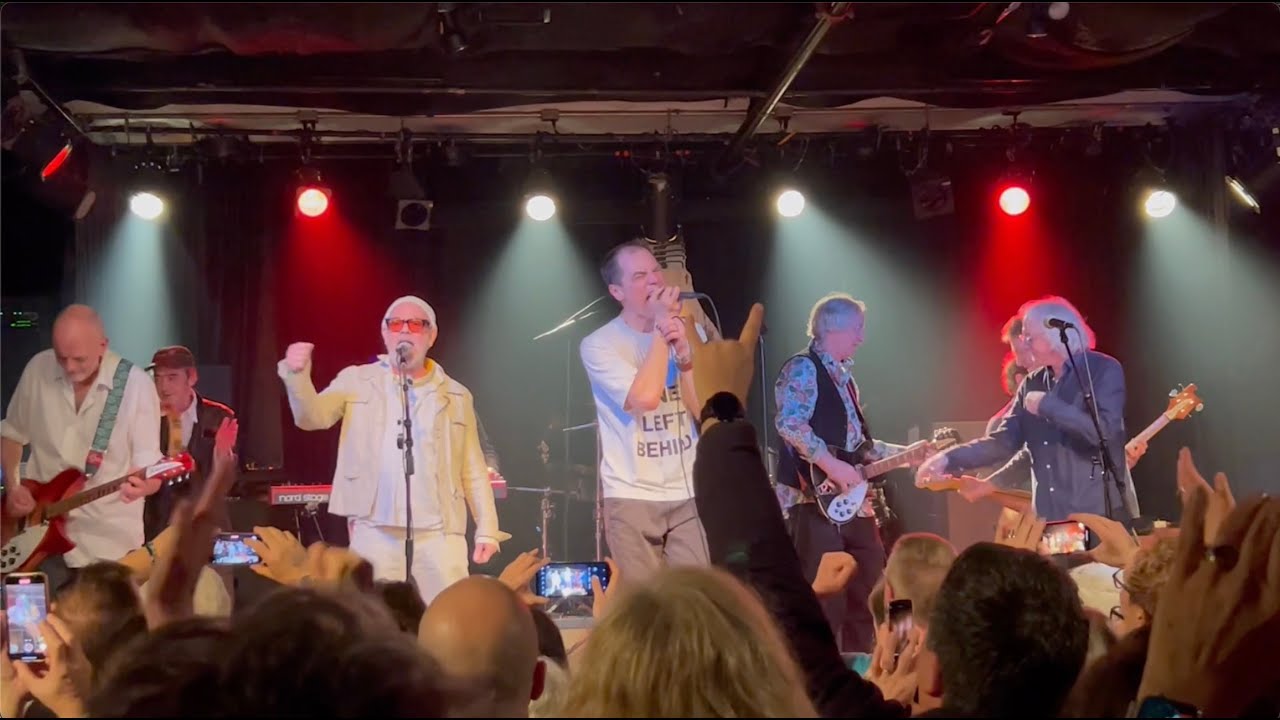
“It started out as this fun Chicago project we did, and a lot of the shows wouldn’t even sell out, partially because of how eclectic we were getting,” Narducy says. “It was mostly not mainstream stuff.”
That all changed when they booked a concert at the Metro in 2023 to cover R.E.M.’s 1983 album, Murmur, for its 40th anniversary. “Man, did people show up for that!” Narducy says. “The level of enthusiasm and excitement was unreal, and the project took off. I started getting emails from promoters around the country asking if we would bring it to their city. And I thought, ‘Okay, now we’re really onto something.’”
Michael Shannon, Jason Narducy and Friends played nine Murmur shows in 2023 that were so well-received the group returned to the road in early 2025 for 18 more concerts. This time they performed R.E.M.’s 1985 album, Fables of the Reconstruction, for its 40th anniversary. In August, they flew to Europe to play six additional shows in England and one in Dublin.
![R.E.M. photographed in 1985: [from left] Mike Mills, Michael Stipe, Peter Buck [sitting] and Bill Berry.](https://cdn.mos.cms.futurecdn.net/B6djWemmMkH2d8HpswhDBb-1200-80.jpg.webp)
Anyone who missed out on the tribute tours has another chance to witness a sliver of history. In 2026, Michael Shannon, Jason Narducy and Friends will head back out to celebrate the 40th anniversary of R.E.M.’s fourth album, Lifes Rich Pageant. Before they can cement the dates, however, they need to coordinate their schedules.
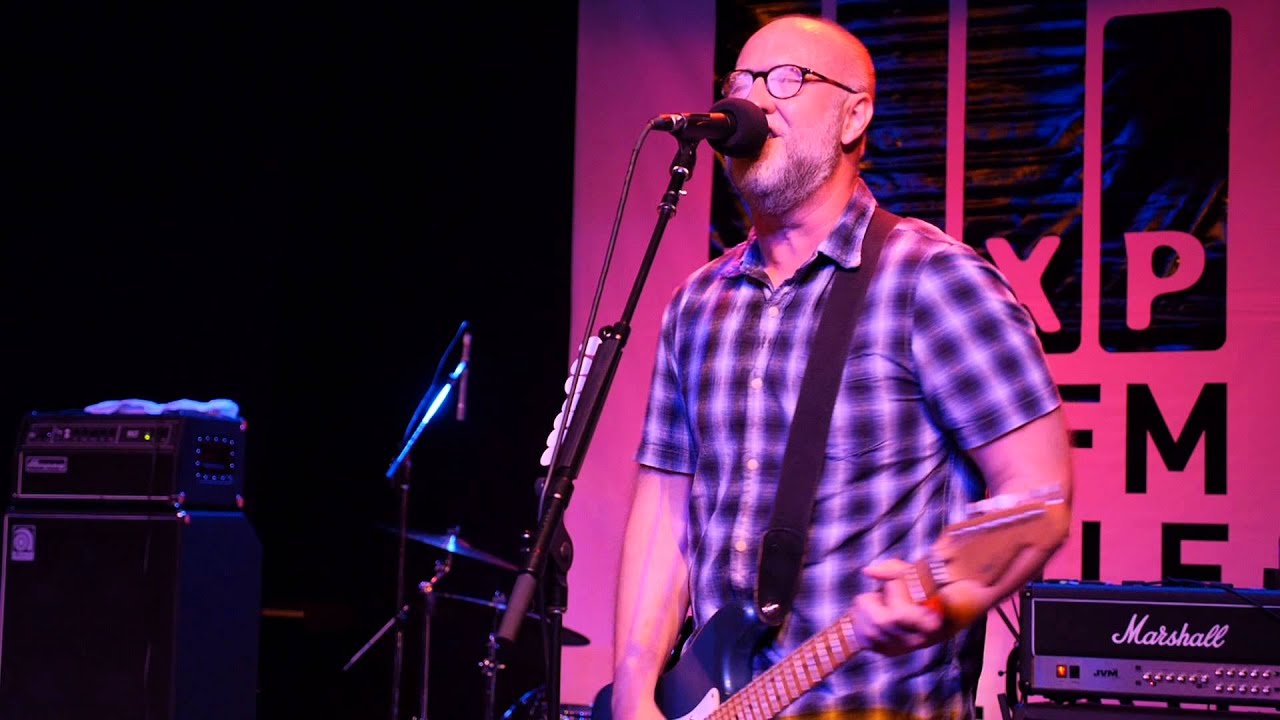
Not only does Shannon spend most of his time shooting movies or acting in plays, Narducy has been Bob Mould’s bassist for the past 20 years. He also plays bass on tour with Superchunk and has performed guitar with Sunny Day Real Estate. Then there are his solo shows and maybe some more studio work.
But while writing and performing his own music will always be Narducy’s favorite activity, he’s looking forward to hooking up with Shannon again to launch their third U.S. tour to celebrate one of their favorite bands.
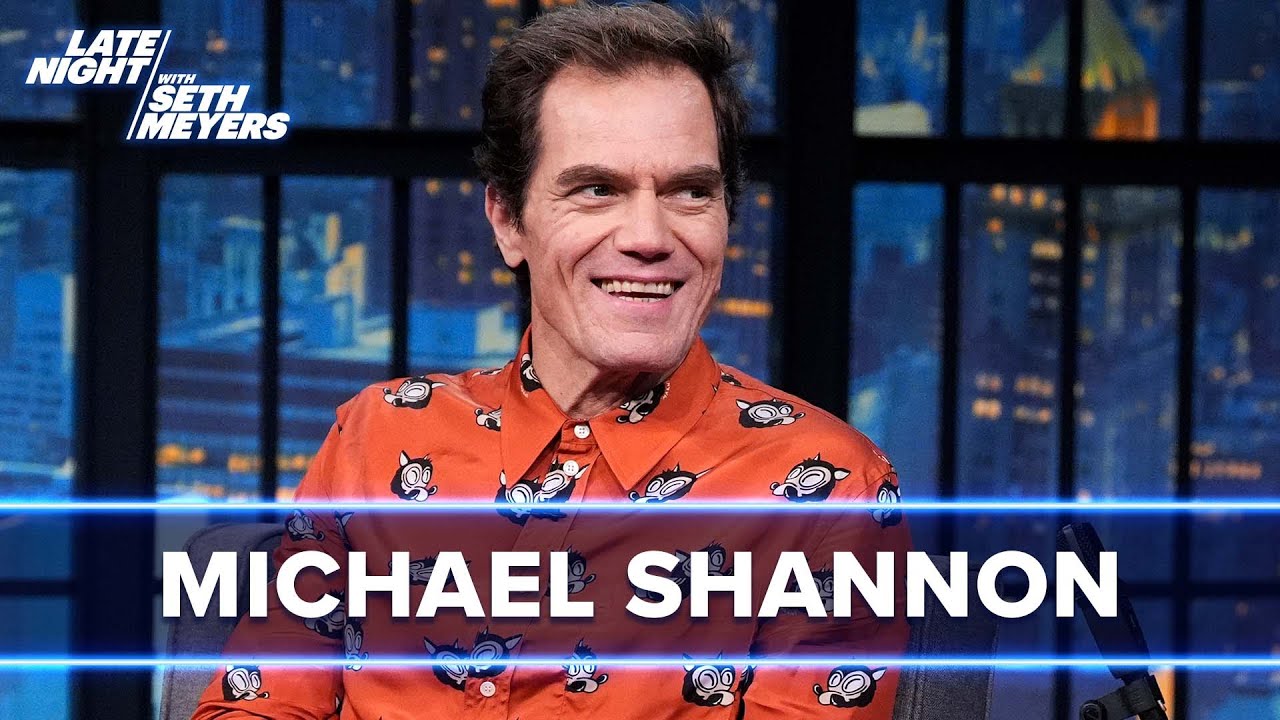
When did you first hear R.E.M., and what impact did they have on you?
I was 15, and my high school friend John Peters had gone to the UIC Pavilion in Chicago to see the Fables of the Reconstruction tour. He loved it, and after the show, he played me Can’t Get There from Here. I went, “This is awesome,” but it didn’t change my life or anything. I didn’t run out and buy the album.
The following year, I was up in Madison, Wisconsin, with some high school friends when Document came out [1987]. I bought it and as soon as I put it on and heard Finest Worksong. I thought, “Wow! This is incredible.” It’s thematic and beautiful, melodic and dark – everything I like about the band.
Did Document turn you into a diehard R.E.M. fan?
It did. It’s funny because I came from a background of punk and classic rock. But R.E.M. was one of those bands that was welcomed by the punk-rock community because, even though they didn’t sound like punk, they had that punk-rock ethos of anti-big-rock independence and progressive thinking. And their sound was so unique.

Were you inspired by Peter Buck’s guitar playing?
I related to his approach right away. He’d be the first guy to say he didn’t think he was a good guitarist, so he tried to figure out ways that made it sound like he was better than he was. He uses this arpeggiated open-string approach, and once I learned the songs, I discovered how many chords I could get from that technique.
I formed a punk band called Verboten with neighbors in Evanston, Illinois, and wrote original songs. We started playing gigs when I was 11
There’s an F sharp major with an open B and open E string that I use in so many songs. I don’t think I heard anybody use that before Peter Buck, and he used it a lot and played a lot of chords in that position.
When did you start playing guitar, and what were your first influences?
I got my first electric when I was 10. Pete Townshend was my first big influence; I found out he took the third out of a chord and got a powerful sound with the power chord. So I started to do that.
I formed a punk band called Verboten with neighbors in Evanston, Illinois, and wrote original songs. We started playing gigs when I was 11. Our singer, Tracey [Bradford] was charismatic and befriended a lot of punk bands. In 1983, we played a bar across from Wrigley Field called Cubby Bear and opened for Rights for the Accused, Naked Raygun and Negative Element.
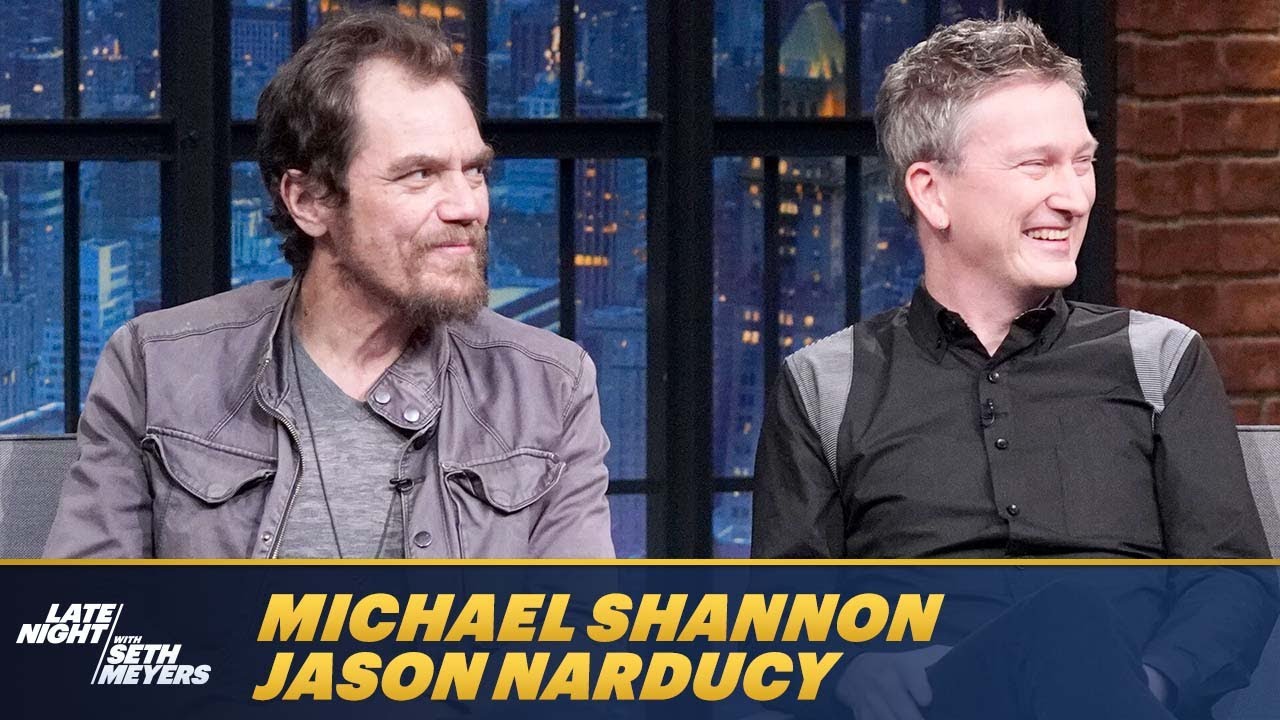
Tracey had some family connections.
Her cousin is Dave Grohl, and when he did the HBO Foo Fighters: Sonic Highways episode in Chicago in 2014, he told me he saw Verboten in rehearsal when he was 13 and it had a big influence on him.
You were in a band in 1994 called Jason & Alison, which released an album on an indie and then changed its name to Verbow and landed a deal with a major label. Bob Mould produced your first album, Chronicles, in 1997. Is that how you met him?
No, no. I was a superfan. I first saw him at the 9:30 Club in Washington, D.C., in 1991. Then I started going to a lot of his shows. I used to collect all the interviews he did with local papers. This was before the internet, and back then artists didn’t see most of their press. So I would show up at soundcheck with four or five articles and give them to him. He got to know me as a fan.
Then, in 1994, he was doing three sold-out acoustic shows at the Metro in Chicago. The promoter suggested Jason & Alison as the opener. Bob said, “Tell me more about this duo.” Nick described us and told him I was in the band and Bob said, “Oh, I know who Jason is.” So we opened up those shows, and then he took us on the road and we got a deal with Epic Records.
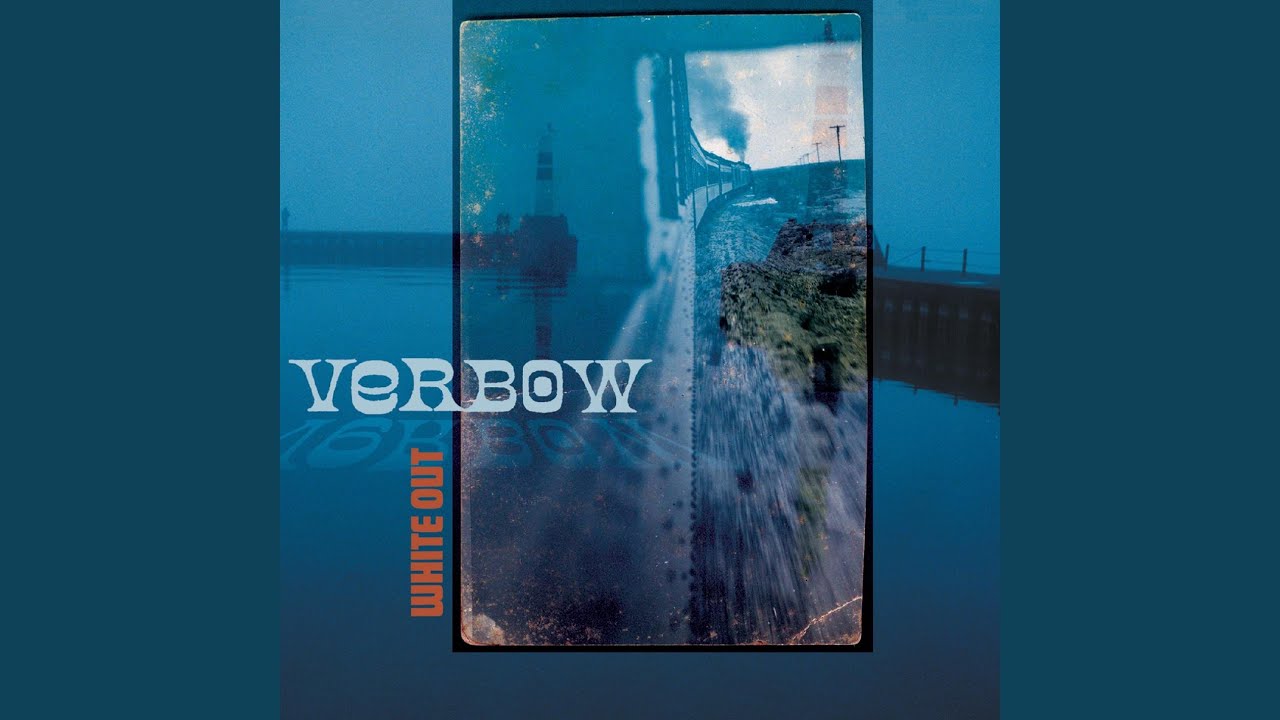
Verbow’s second album, White Out, was mostly produced by Brad Wood (Liz Phair, Sunny Day Real Estate, Veruca Salt). Epic dropped Verbow in 1990, but the contacts you made seem to have paid off.
After the label lost interest in Verbow, things died down so I started working as a bassist with Liz Phair and then Bob Mould. I did a show with the Pretenders and Eddie Vedder. I got a lot of work as a bassist because I tried to be a good band member, and I can sing backup harmonies. But really, I’m a guitarist that picked up the bass to get work. Guitar is my first love, for sure.
When you play R.E.M. covers, do you use gear Peter Buck used in the ’80s?
No, but we touch on things. The other guitarist, Dag Juhlin, plays a Rickenbacker and I play a Tele. I did some research about the first R.E.M. show at St. Mary’s Church and Peter is playing a Telecaster, so I thought I’d play one to approximate the sound.
I don’t like the idea of two guitarists playing the same guitars because they can cancel each other out. When I play with Sunny Day Real Estate, [guitarist] Dan [Hoerner] and [frontman] Jeremy [Enigk] are playing Gibsons and I’m playing a Fender, and it sounds great.
What guitar amps do you use for the R.E.M. shows?
I have a Fender Hot Rod Deluxe III that I like. It’s not very loud, but it breaks up in a nice spot, so it’s got a little bit of amp dirt in it. I think Dag is playing through a Vox AC30.
Do you play the R.E.M. songs note for note?
We’re not a tribute band. We’re straddling the line because the music means so much to us, but we’re not interested in using the exact equipment they used, dressing up like them and doing their moves
We listen to the records intently, and we try to get some things exactly right. But we’ve all been working in the business for a long time, and we all bring something new to the table. We’re not a tribute band. We’re straddling the line because the music means so much to us, but we’re not interested in using the exact equipment they used, dressing up like them and doing their moves.
Michael Shannon is a really good singer, but he’s not going to sing like Michael Stipe. No one can. So why not learn the songs as best we can and then let them grow from there? I often use a Strymon chorus pedal at the shows because on the records – especially the ones recorded with Mitch Easter – the guitars have a natural chorus sound to them. And I’m just trying to give it that nice jangle.
I learned about Strymon from my work with Sunny Day Real Estate because Greg Suran has used one for decades. But they’re expensive. So I sold some of my pedals that I haven’t used in decades that, for some reason, are worth a lot of money now, and bought two Strymons, the BigSky [multi-effects reverb] and the Mobius [multi-modulation] pedals.
Did you meet Peter Buck back when you were regularly touring?
I met [bassist] Mike Mills first. He’s very sociable and is always down to hang out and talk about music. Then, around 2010, I was in Seattle and I went to see Built to Spill at the Showbox and Peter was standing there alone. I introduced myself. Clearly he was not eager to talk. But when I mentioned I was Bob Mould’s bassist, he opened up to me because he realized I was a fellow musician and not just a fan. The last thing I wanted to do was punish him with a monologue about what his music meant to me.
How did that grow into a friendship?
As I got to know Mike better, Peter started to recognize me at different events and opened up to me more. Our relationship really changed after we did the Murmur show at the 40 Watt Club. Peter came up to me after the show and said, “Hey, check this out.” He’s holding a guitar, and he starts showing me something. We had made small talk over the years, but we didn’t talk about R.E.M. songs until that moment.
Did you and Michael Shannon hit it off when you played Lou Reed’s The Blue Mask with Robbie Fulks?
We got along okay. He had some knowledge of indie rock and we talked a little bit, but it wasn’t an intense connection. We didn’t exchange emails or phone numbers. When Robbie did a show at the Metro, we played Velvet Underground songs with him and Michael and I got along fine, but it was still casual.
After Robbie moved to L.A., Michael wanted to keep doing these shows, so in 2015 we covered the Smiths’ The Queen Is Dead. After the show, a man named Guy, one of the founding members of Chicago’s Red Orchard Theater, which Michael helped launch, came up and gave me a big hug. Michael asked how I knew Guy.
I said, “I knew Guy from 16 years ago when my roommate [the late playwright and actor] Ben Beyer was doing acting stuff with him. And Michael said, “What? You knew Ben Beyer? I went to high school with him and we started a theater together. I wrote a song about him.” That’s when Michael and I developed a real connection. We started to hang out even when we weren’t doing a show.
How did that friendship evolve into a touring R.E.M. cover band?
We did a bunch of covers-night shows where we’d learn an entire record for a set, practice it once and play it once. Then we’d move on to the next. There was no time to breathe and I loved that. I think it made me a better musician. In 2023, Michael was coming back to Chicago to help promote a local theater.
I texted him and said, “It’s the 40th anniversary of Murmur. Would you want to do a show in the summer when you’re in town?” I called Joe Shanahan, owner of the Metro, and ran the idea by him. He said, “It’s our 40th anniversary, too. And the first band to play the Metro was R.E.M. I think we’re on to something here.”
Sounds like it was kismet.
We came up with the idea a month before the show, which is unheard of and not really smart. But we put on the show and it sold 1,000 tickets. So, yeah, it was very spontaneous and organic. It was meant to be one night’s work for all the musicians, and it turned into much more than that.
You also played Europe late last summer.
It has extra significance for me because when I got Document as a kid, I wanted to absorb the rest of their catalog, and Lifes Rich Pageant spoke to me the most
We went to the U.K. and did one show in Dublin. That happened because R.E.M.’s manager asked me last year if we were going to play a show in London, which is where the band recorded Fables of the Reconstruction. I said, “It’s funny you should ask because Michael is going to be in London all summer doing a play, so maybe we can pull this off.”
So we did seven shows. Honestly, because of Brexit, it’s a money-loser. That’s one of the reasons so many of the bands I’m in haven’t been to the U.K. in the last six years. But we figured, well, we’ll lose some money on this but it’s cool that R.E.M. recorded the album there, and it’ll be good for us to pay tribute to that.
In 2026, you’re going to tour for Lifes Rich Pageant.
Yeah, it’s the band’s fourth album, and we’re doing them in order. It’s going to be the 40th anniversary of the album, which is my favorite R.E.M. record. It has extra significance for me because when I got Document as a kid, I wanted to absorb the rest of their catalog, and Lifes Rich Pageant spoke to me the most.
It’s a little poppier and more accessible than the first two, but it still has a great energy. And the sequence is perfect. Sometimes a great record is sequenced in a way that’s perfect for a record, but not for a show. Lifes Rich Pageant is sequenced perfectly for a show, so I’m really excited about doing that next year.
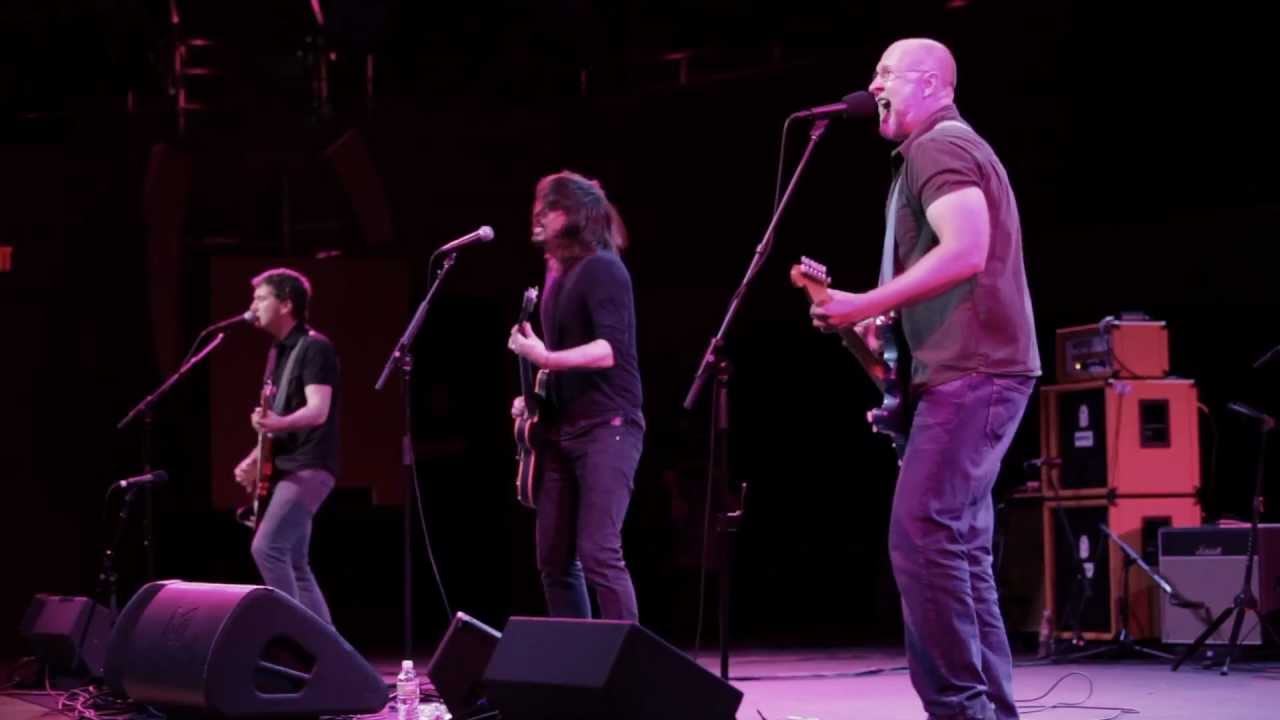
Were any of the songs from the first two R.E.M. records tricky to play?
Sure, Peter’s a great guitar player. So I’ve had to do a lot of careful listening to play some of those parts, and there’s a reason we don’t play some songs exactly the way they did.
Peter Buck is an innovative and skilled guitarist, yet he’s not considered a guitar legend.
He’s not a conventional guitar hero or a major part of player culture. Those people gravitate to the Yngwie Malmsteens and Van Halens. He’s more of a musician’s musician.
When I was with Peter in Portland recently, we were sitting on a couch, he picked up an acoustic guitar, and music just flowed through him. For someone like me who loves writing and creating original music, Peter is an inspiration. I said, “Hey, that sounds like a song. You should do something with it.” But he was just messing around. He oozes creativity, and that’s exciting to me.
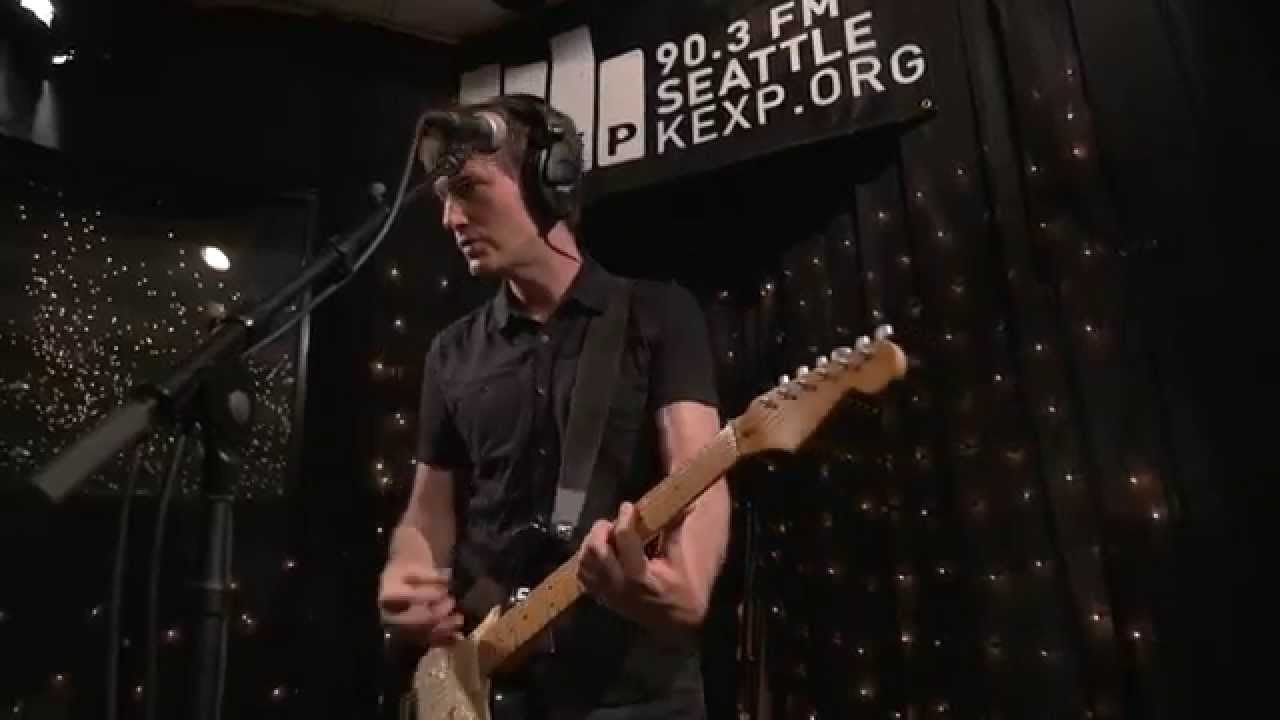
Have you talked about collaborating on something?
No. He has joined Michael Shannon and me onstage a few times, but that might be it for us. Peter’s so busy making music and touring. I can’t even keep track of all the projects and records he’s making. But a lot of my friends are fellow musicians, and we haven’t talked about doing projects together either because we only have so much time in the year.
In addition to playing with Michael, Bob Mould and Superchunk, you’re touring as a solo artist.
I play these living room shows. That makes me sound like I’m a vagabond, but it’s a great way for me to play my songs. I’m lucky there are people who appreciate my work and they open up their homes and sell 50 tickets and I play, then go to the next one.
I play every night and I can do three weeks of touring that way. It’s a nice way to get my music out there without playing the game with clubs. I don’t know how many people I could get to go to a club in Richmond, Virginia, but for the last six years, I’ve sold out this living room show there that holds 80 people.
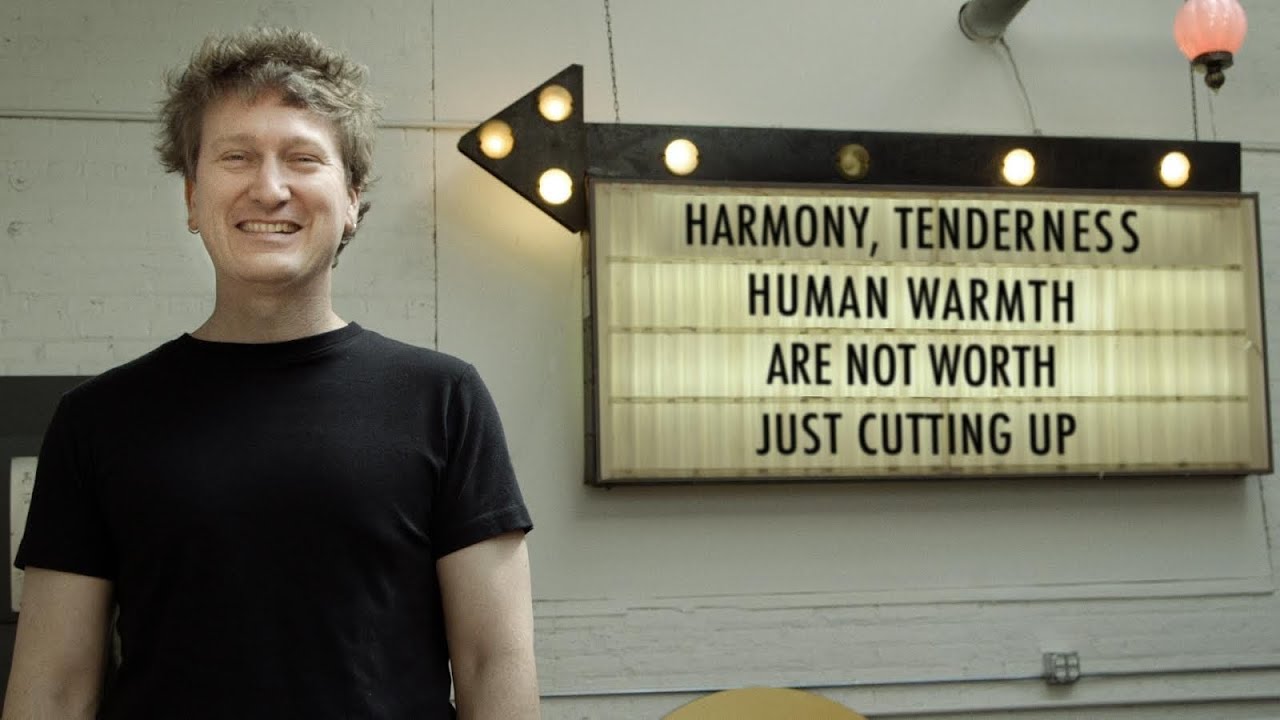
You wrote the songs and lyrics for a musical about your first band, Verboten, which debuted in Chicago in 2020. Would you like to keep working in musical theater?
I’m working on a new musical. I can’t say too much about it yet. I’m a little behind on the songs, or the writer is ahead with the script – however you want to describe it. But that’s something I’m looking forward to.
As a live musician for Bob Mould, Superchunk and Sunny Day Real Estate, it must be fulfilling to tour with people whose music and company you enjoy.
I’ve never been in a band that tours that extensively. I’m a musician that needs to pay the bills, so I work really hard and try to find lots of gigs. I’m a big fan of Superchunk and Sunny Day.
I respect what they’ve done and enjoy their camaraderie. So, yeah, you nailed it. I don’t tour with bands whose music I don’t love. I guess that’s why I call myself a band person instead of a hired gun. I’m not really for hire if I don’t like your band.
- This article first appeared in Guitar World. Subscribe and save.

